

Wayground
Roller Coaster Physics - Printable Science Worksheets 8th Grade - Wayground

Roller Coaster Physics

Elisabeth Rawling

Created by Elisabeth Rawling

20 questions

8th Grade

Science

Updated May 2026

Roller Coaster Physics is a Grade 8 science worksheet that uses 20 multiple-choice questions to review how forces, motion, and energy explain what happens on a roller coaster. Students identify kinetic energy, gravity, friction, mass, inertia, centripetal force, acceleration, and velocity, and connect these ideas to familiar examples such as a coaster moving down a track, traveling through a loop, or responding to balanced forces. The questions also check understanding of Newton’s First, Second, and Third Laws, including how net force and mass affect acceleration and how action and reaction forces work. This free printable worksheet is useful for introducing or reviewing foundational physics vocabulary and concepts before a lesson, during guided practice, or as a quick understanding check. It includes a complete answer key for efficient review and grading.

Worksheet settings

Font size

S
M
L
XL
WaygroundWorksheets

Roller Coaster Physics

Total questions: 20

Name
Class
Date
1.
Energy due to motion is ____________ energy. 
a)
Potential 
b)
Energy
c)
Kinetic
d)
Friction
2.
The faster an object moves, the ________ kinetic energy it has. 
a)
more
b)
less
c)
none of the above
d)
all of the above 
3.
Friction is a force that acts in an ___________ direction of movement.
a)
similar
b)
opposite
c)
parallel
d)
west
4.
A ______ is a push or a pull acting upon an object
a)
Acceleration
b)
force
c)
friction
d)
energy
5.

This is a force that moves a roller coaster car down the tracks.

a)

push

b)

magic

c)

gravity

d)

slide

6.
What is mass?
a)
the force of an object caused by gravity
b)
the amount of space something takes up
c)
the amount of matter in an object
d)
how fast something is moving
7.

The tendency of matter to resist a change in motion is...

a)

inertia/Newton's 1st Law

b)

gravity

c)

velocity

d)

kinetic energy

8.

The scientific law that states "for every action there is an equal and opposite reaction."

a)

Newton's 1st Law

b)

Newton's 2nd Law

c)

Newton's 3rd Law

d)

Newton's 4th Law

9.

The scientific law that "acceleration depends on the net force acting on the object and on the object's mass."

a)

Newton's 1st Law

b)

Newton's 2nd Law

c)

Newton's 3rd Law

d)

Newton's 4th Law

10.

What is the physics that keeps an object from falling out when a coaster goes through a loop?

a)

centripetal force

b)

inertia

c)

gravity

d)

velocity

11.

What is gravity?

a)

stored energy

b)

a force acting to pull two objects together

c)

energy and acceleration in motion

d)

the speed of an object

12.

What is acceleration?

a)

resistance an object to change its motion

b)

energy in motion

c)

the push or pull of an object

d)

an object changing speed or direction

13.

What is velocity?

a)

resistance an object to change its motion

b)

energy in motion

c)

the push or pull of an object

d)

how fast something is traveling: speed and direction

14.

At zero gravity, the people _____________ around the plane just like astronauts.

a)

float

b)

travel

c)

cheap

d)

expensive

15.
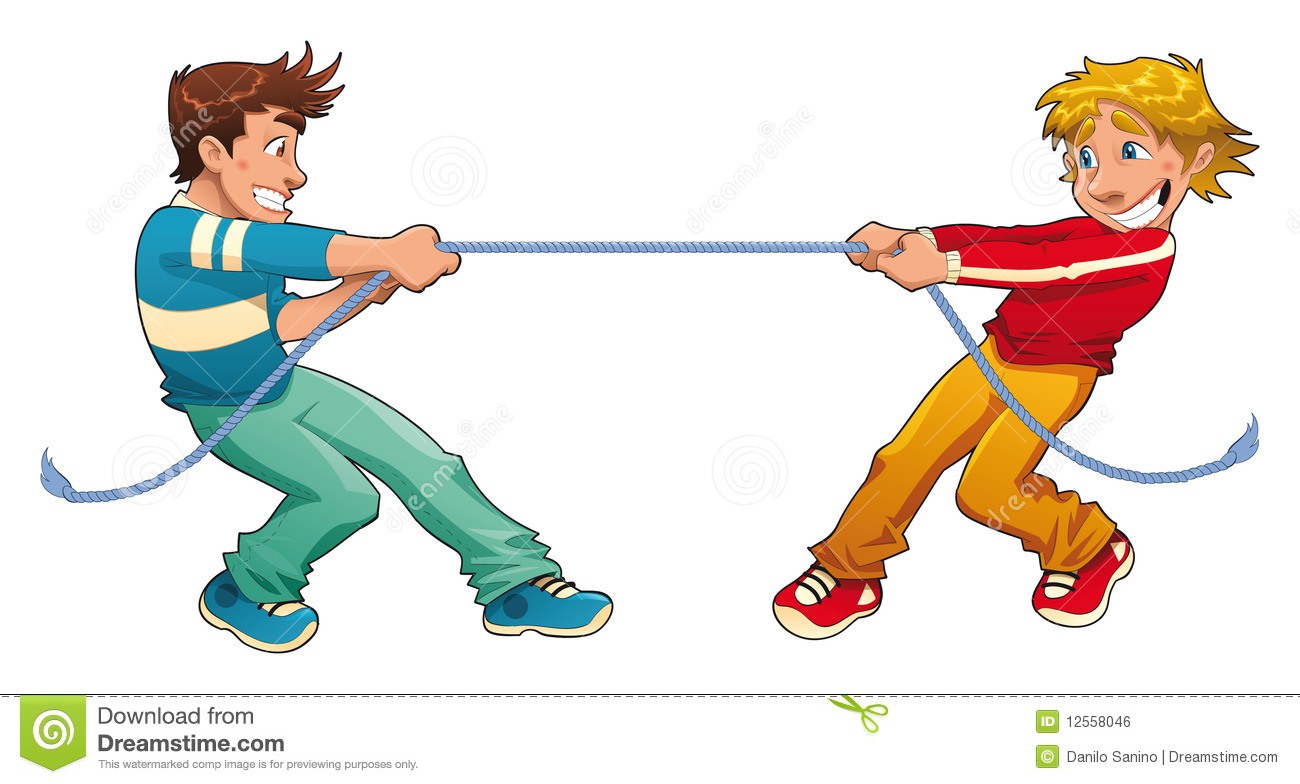
If these boys are pulling with the same amount of force. What will happen?
If these boys are pulling with the same amount of force.  What will happen?
a)
The boy in blue will win.
b)
They will not move at all.
c)
The boy in red will win.
d)
Both will fall down.
16.

Some early roller coasters caused whiplash and neck injuries due to ...

a)

drops that were too steep

b)

high g forces

c)

carts that didn't stay on track

d)

very low g forces

17.

Positive G forces typically occur on

a)

when a train goes around an un-banked corner, or a corner not banked far enough.

b)

when a train crests a hill at speed, or suddenly dips sharply downwards.

c)

banked turns or when the train pulls up a hill after going down a drop.

d)

The regular force of gravity when still.

18.

Negative G forces typically occur on

a)

when a train goes around an un-banked corner, or a corner not banked far enough.

b)

when a train crests a hill at speed, or suddenly dips sharply downwards.

c)

banked turns or when the train pulls up a hill after going down a drop.

d)

The regular force of gravity when still.

19.

1 G forces typically occur on

a)

when a train goes around an un-banked corner, or a corner not banked far enough.

b)

when a train crests a hill at speed, or suddenly dips sharply downwards.

c)

banked turns or when the train pulls up a hill after going down a drop.

d)

The regular force of gravity when still.

20.

Lateral G forces typically occur on

a)

when a train goes around an un-banked corner, or a corner not banked far enough.

b)

when a train crests a hill at speed, or suddenly dips sharply downwards.

c)

banked turns or when the train pulls up a hill after going down a drop.

d)

The regular force of gravity when still.

WaygroundAnswer Key

Roller Coaster Physics

Total questions: 20

1.
c) Kinetic
2.
a) more
3.
b) opposite
4.
b) force
5.
c)

gravity

6.
c) the amount of matter in an object
7.
a)

inertia/Newton's 1st Law

8.
c)

Newton's 3rd Law

9.
b)

Newton's 2nd Law

10.
a)

centripetal force

11.
b)

a force acting to pull two objects together

12.
d)

an object changing speed or direction

13.
d)

how fast something is traveling: speed and direction

14.
a)

float

15.
b) They will not move at all.
16.
b)

high g forces

17.
c)

banked turns or when the train pulls up a hill after going down a drop.

18.
c)

banked turns or when the train pulls up a hill after going down a drop.

19.
d)

The regular force of gravity when still.

20.
a)

when a train goes around an un-banked corner, or a corner not banked far enough.

FAQs

What does the Roller Coaster Physics worksheet cover?

This Grade 8 science worksheet uses 20 multiple-choice questions to assess core physics concepts through roller-coaster contexts. Students distinguish kinetic energy from other forms of energy, identify forces such as gravity, friction, and centripetal force, define mass, inertia, acceleration, and velocity, and match scenarios to Newton’s three laws.

How can I use this worksheet to teach roller-coaster physics?

Introduce the worksheet by asking students to predict what forces act on a coaster as it accelerates, moves downhill, and travels through a loop. Then have students complete the multiple-choice items individually or in pairs, requiring them to explain why an option such as gravity, centripetal force, or inertia best fits each scenario. Use the answer key to discuss how the questions connect observable coaster motion to Newton’s laws.

What mistakes should I watch for when students complete this physics worksheet?

Students may confuse kinetic energy with potential energy, or mistake velocity for speed even though velocity includes direction. Watch for confusion among inertia, gravity, and centripetal force in the loop question, and check that students distinguish Newton’s First, Second, and Third Laws rather than assigning every motion example to the same law. They may also overlook that friction acts opposite to movement and that equal opposing forces produce no movement.

How do I assign and grade the Roller Coaster Physics worksheet?

You can assign this worksheet as a printable PDF or as a digital quiz on Wayground. It includes a complete answer key, and printable submissions can be graded by scanning student work with the Wayground for Teachers app. The printable format also gives schools an option for reducing screen time while students review force, motion, and energy concepts.

How can I differentiate this Roller Coaster Physics worksheet for my students?

In the worksheet’s Advanced Settings, adjust font spacing and font size to make the 20 multiple-choice physics questions easier to read. You can also apply a dyslexia-friendly font or translate the worksheet into another language, helping students access the force, energy, and Newton’s law vocabulary.

Where can I find more worksheets like this on Wayground?

Wayground offers a broad collection of free printable worksheets and practice problems across subjects, with downloadable PDFs and answer keys to help students build essential skills and concepts. Browse more resources at https://wayground.com/en-us/worksheets.