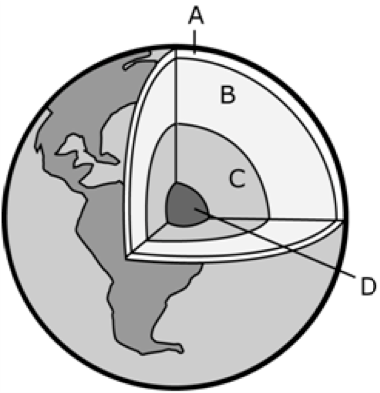
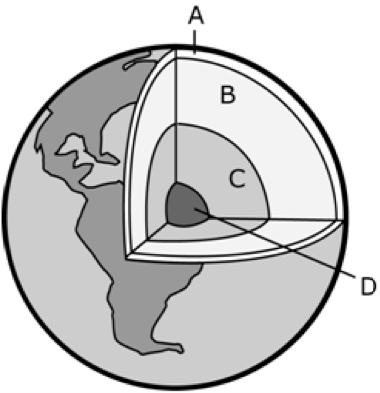
Diagram Quiz - Layers of the Earth is a free printable Grade 6 science worksheet that helps students identify Earth’s major layers and related plate-tectonic processes. The 10 multiple-choice questions use a labeled Earth diagram and ask students to match layers A–F with the oceanic crust, continental crust, mantle, outer core, and inner core. Students also identify convection currents and explain the movement of hotter and cooler material.
This worksheet supports visual interpretation, science vocabulary, and accurate identification of Earth’s internal structure. It is useful for introducing or reviewing how a diagram represents the crust, mantle, and core, as well as how convection relates to moving tectonic plates. Teachers receive a complete answer key, making the worksheet suitable for independent practice, class review, or a quick formative assessment. The worksheet is available as a free printable PDF.
Worksheet settings
Font size
S
M
L
XL
Worksheets
Diagram Quiz - Layers of the Earth
Total questions: 10
Name
Class
Date
1.
What letter in the diagram identifies the layer that is composed of moving continental and oceanic plates?
a)
layer A
b)
layer B
c)
layer C
d)
layer D
2.
Which letter in the diagram identifies the layer of Earth made up of solid nickel and iron?
a)
layer A
b)
layer B
c)
layer C
d)
layer D
3.
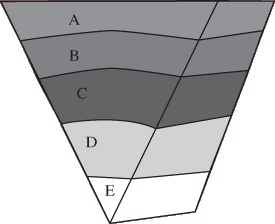
What is layer A representing?
a)
continental crust
b)
oceanic crust
c)
trenches
d)
mantle
e)
convection currents
4.
What process is layer B representing?
a)
crust
b)
continental crust
c)
oceanic crust
d)
convection currents
e)
mantle
5.
What is layer C representing?
a)
crust
b)
continental crust
c)
oceanic crust
d)
trenches
e)
mantle
6.
What is layer D representing?
a)
continental crust
b)
oceanic crust
c)
mantle
d)
inner core
e)
outer core
7.
What is layer E representing?
a)
continental crust
b)
oceanic crust
c)
mantle
d)
inner core
e)
outer core
8.
What is layer F representing?
a)
continental crust
b)
oceanic crust
c)
matle
d)
inner core
e)
outer core
9.
When hotter material rises and cooler material sinks, this process is called:
a)
trenches
b)
convection
c)
boundary
d)
tectonic plates
10.
What does layer D show?
a)
upper mantle
b)
lower mantle
c)
outer core
d)
inner core
Answer Key
Diagram Quiz - Layers of the Earth
Total questions: 10
1.
a)
layer A
2.
d)
layer D
3.
b)
oceanic crust
4.
d)
convection currents
5.
e)
mantle
6.
e)
outer core
7.
d)
inner core
8.
a)
continental crust
9.
b)
convection
10.
c)
outer core
140 %
Browse by subjects
Browse by grades
Browse by format
FAQs
What does the Layers of the Earth diagram quiz help students learn?
This Grade 6 science worksheet uses 10 multiple-choice questions to help students identify Earth’s layers from diagram labels A–F. Students match the labels to the oceanic crust, continental crust, mantle, outer core, and inner core, then connect convection currents with hotter material rising and cooler material sinking.
How can I use this worksheet to teach the layers of the Earth?
Introduce the labeled Earth diagram by having students predict what each layer represents before they complete the multiple-choice questions. Afterward, ask students to explain how the mantle and convection currents relate to moving continental and oceanic plates, using the worksheet’s label-based answers as evidence.
What mistakes should I watch for on this Earth layers worksheet?
Students may confuse the mantle with the crust or misidentify the outer core and inner core when selecting labels D and E. They may also choose a layer name instead of the process convection when answering the question about hotter material rising and cooler material sinking, or overlook the difference between oceanic and continental crust.
How do I assign and grade this Layers of the Earth worksheet?
On Wayground, you can assign this worksheet as a printable PDF or as a digital quiz containing the 10 multiple-choice questions. It includes a complete answer key, and printable submissions can be graded by scanning student work with the Wayground for Teachers app.
How can I differentiate this Earth layers diagram worksheet for my students?
Use the worksheet’s Advanced Settings to adjust font spacing or increase the font size so the diagram-label questions and answer choices are easier to read. You can also apply a dyslexia-friendly font or translate the worksheet into another language while students work with the Earth layers and convection questions.
Where can I find more worksheets like this on Wayground?
Wayground offers a comprehensive collection of free printable worksheets and practice problems across subjects, with downloadable PDFs and answer keys to support essential skills and concepts. Browse more resources at https://wayground.com/en-us/worksheets.

 Worksheets