Scale Copies is a free Grade 7 mathematics worksheet that builds understanding of scale drawings and scaled copies. Students identify what a scale drawing represents, define and interpret scale factor, determine whether factors greater than or less than one create enlargements or reductions, and recognize that corresponding lengths are multiplied by the same number. The worksheet also reinforces that scaled copies preserve the original shape while changing its size.
The 14 questions include 11 multiple-choice items and 3 multiple-select items. Students apply the vocabulary and rules to visual comparisons, selecting which portraits, images, and figures are scaled copies of an original. This format helps teachers check both conceptual understanding and students’ ability to evaluate several possible figures for proportional similarity. The worksheet is designed for Grade 7 math practice, review, or assessment and is available as a free printable worksheet with a complete answer key.
Worksheet settings
Font size
S
M
L
XL
Worksheets
Scale Copies
Total questions: 14
Name
Class
Date
1.
What is a scale drawing?
a)
A drawing that shows a real object enlarged or reduced
b)
A drawing of the weight of an object
c)
A life size drawing of an object
d)
A drawing that shows all the sides of a building
2.
_________ ________ is the number you multiply by the sides to create a similar figure.
a)
Scale Factor
b)
Corresponding Angle
c)
Pi
d)
Mid Point
3.
If the scale factor is greater than one, the new figure will be
a)
a reduction
b)
an enlargement
c)
a scale
d)
not proportional
4.
If the scale factor is less than one, the new figure will be
a)
an enlargement
b)
a reduction
c)
a scale factor
d)
bigger
5.
Which of the following are scaled copies of the original portrait? Select ALL the apply.
a)
A
b)
B
c)
C
d)
D
e)
E
6.
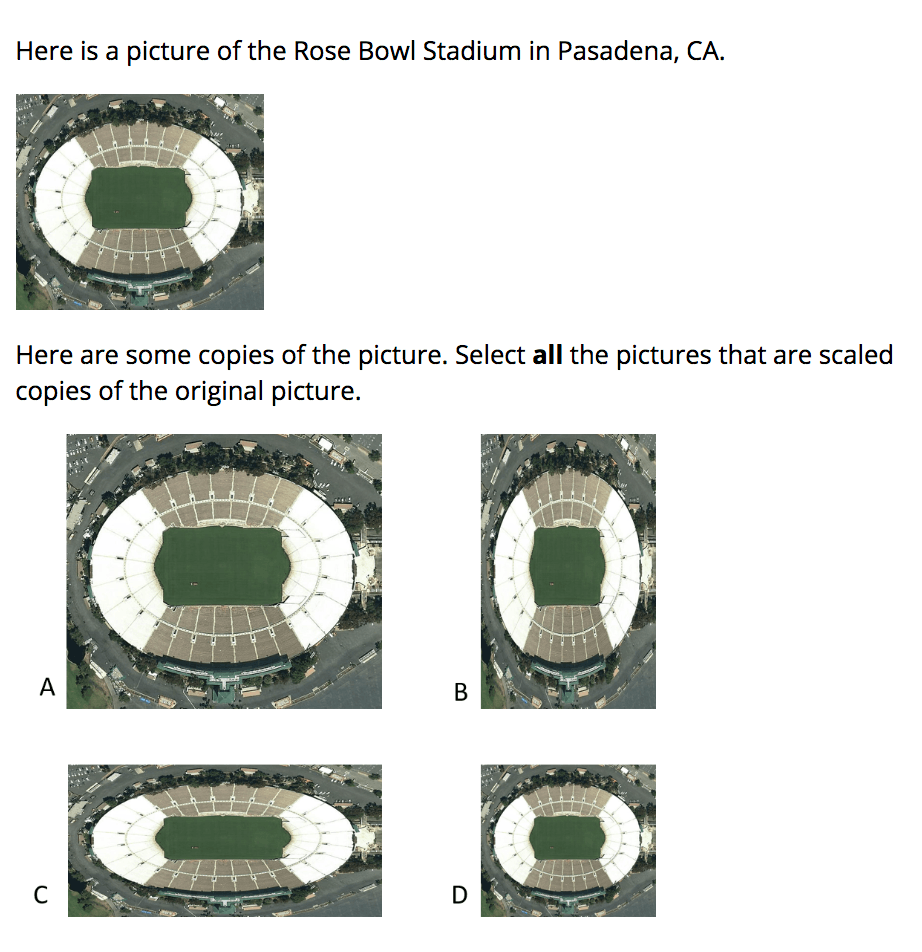
Which of the following are scaled copies of the original image? Select ALL that apply
a)
A
b)
B
c)
C
d)
D
7.
Which of the following is a scaled copy of figure A?
a)
B
b)
C
c)
D
8.
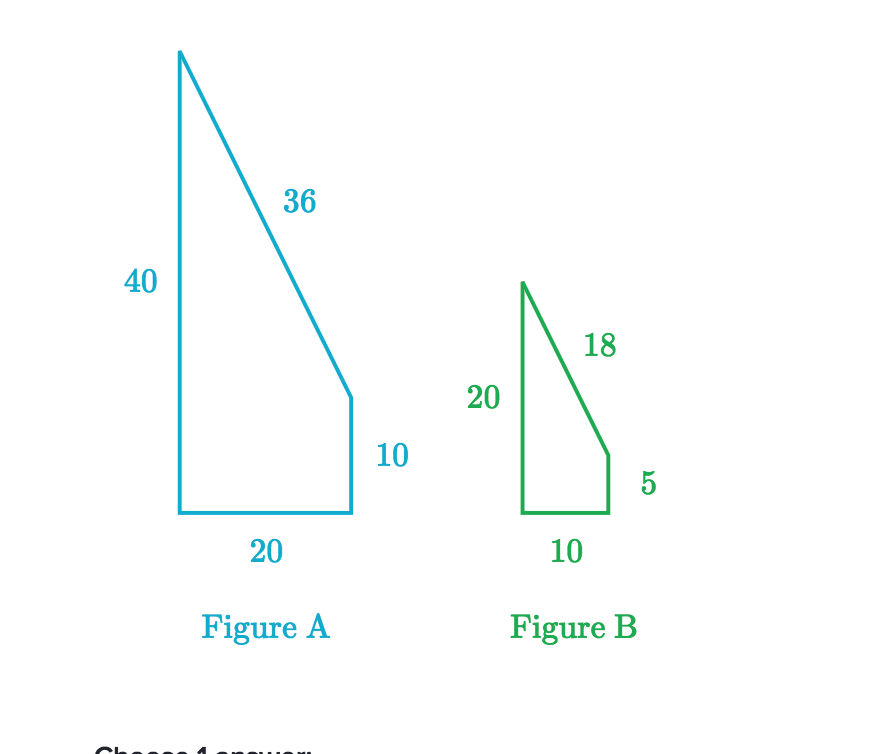
Is Figure B a scaled copy of Figure A?
a)
Yes
b)
No
9.
Is Figure B a scaled copy of Figure A?
a)
Yes
b)
No
10.
Which figure is a scaled copy of figure G?
a)
b)
c)
11.
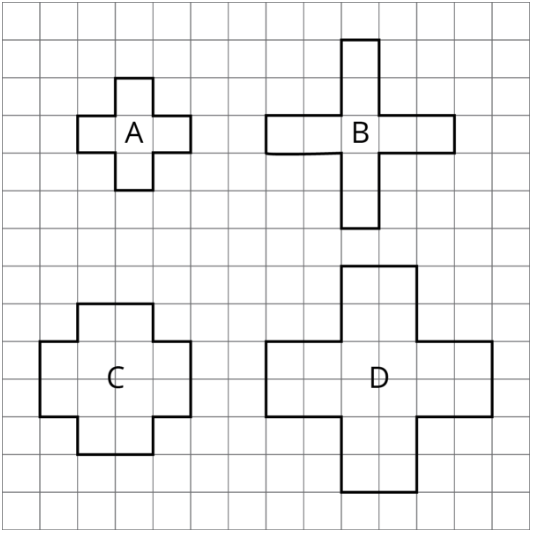
Which of the figures are scaled copies of A?
a)
B
b)
C
c)
D
d)
None
12.
Here is an image of Yoshi. Select all the images that are scaled copies of him.
a)
b)
c)
d)
13.
A scaled copy is a copy of a figure where every length in the original figure is _______________ by the same number.
a)
multiplied
b)
added
c)
divivided
d)
subtracted
14.
Scaled copy is _________.
a)
shapes that are the same size but different shapes
b)
shapes that are the same shape but different sizes
c)
a shape that look distorted from the original
d)
a slanted version of the original shape
Answer Key
Scale Copies
Total questions: 14
1.
a) A drawing that shows a real object enlarged or reduced
2.
a) Scale Factor
3.
b) an enlargement
4.
b) a reduction
5.
c)
C
, d)
D
6.
a)
A
, d)
D
7.
c)
D
8.
a)
Yes
9.
b)
No
10.
b)
11.
b)
C
12.
c) , b)
13.
a)
multiplied
14.
b) shapes that are the same shape but different sizes
140 %
Browse by subjects
Browse by grades
Browse by format
FAQs
What does the Scale Copies worksheet cover?
This Grade 7 math worksheet focuses on identifying scaled copies and interpreting scale factors. Through 11 multiple-choice and 3 multiple-select questions, students define scale drawings, distinguish enlargements from reductions, recognize that every length is multiplied by the same factor, and select visual figures that preserve the original shape at a different size.
How can I use this worksheet to teach scaled copies and scale factors?
Introduce the worksheet by reviewing that a scaled copy keeps the same shape while changing size, then connect scale factors greater than one to enlargements and factors less than one to reductions. Have students explain their choices in the portrait, image, and figure-selection items by describing whether the candidate preserves the original proportions. Use the multiple-select questions for discussion because students must evaluate every option rather than stop after finding one possible copy.
What mistakes should I watch for when students complete this scaled-copies worksheet?
Watch for students who confuse a scaled copy with a same-size figure, a distorted figure, or a slanted version of the original. Students may also reverse the meanings of scale factors greater than and less than one, or assume that adding or subtracting the same amount creates a scaled copy. In the multiple-select items, check that students assess all choices and select every valid copy, not just the first figure that looks similar.
How do I assign and grade the Scale Copies worksheet?
You can assign Scale Copies as a printable PDF or as a digital quiz on Wayground. It includes a complete answer key, and printable submissions can be graded by scanning student work with the Wayground for Teachers app. The PDF option also supports classrooms that want to reduce screen time while students analyze the scale-copy examples.
How can I differentiate this scaled-copies worksheet for my students?
Use the worksheet’s Advanced Settings to adjust font spacing or choose a larger font size so the multiple-choice and multiple-select options are easier to read. You can also enable a dyslexia-friendly font or translate the worksheet into another language. These changes can make the visual scaled-copy selections and scale-factor vocabulary more accessible without changing the practice content.
Where can I find more worksheets like this on Wayground?
Wayground offers a comprehensive collection of free printable worksheets and practice problems across all subjects, with downloadable PDFs and answer keys to support mastery of essential skills and concepts. Browse more resources at https://wayground.com/en-us/worksheets.


 Worksheets