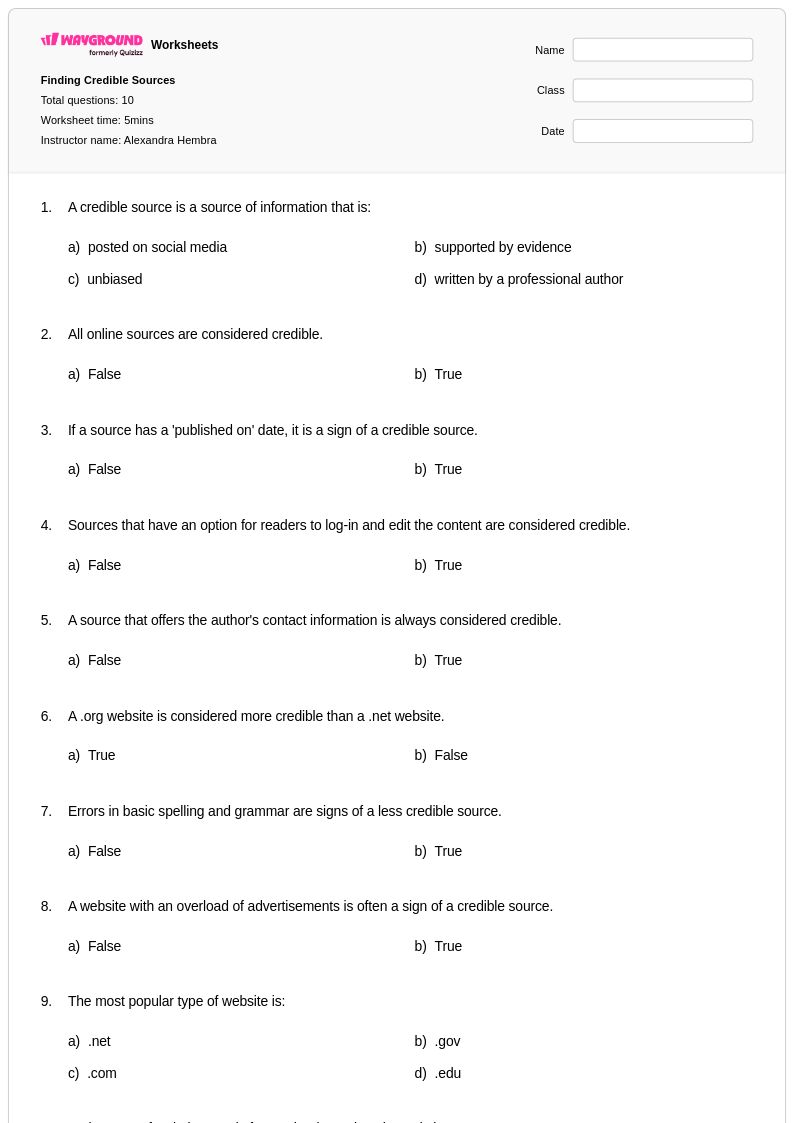
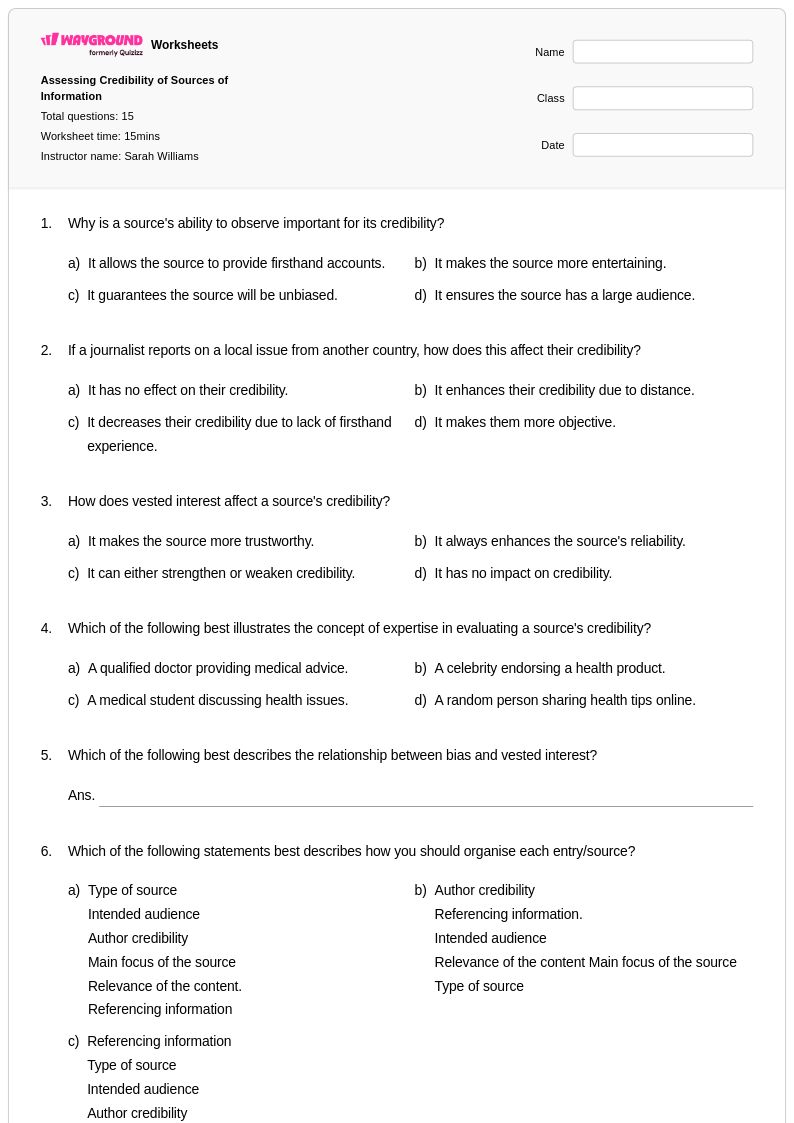
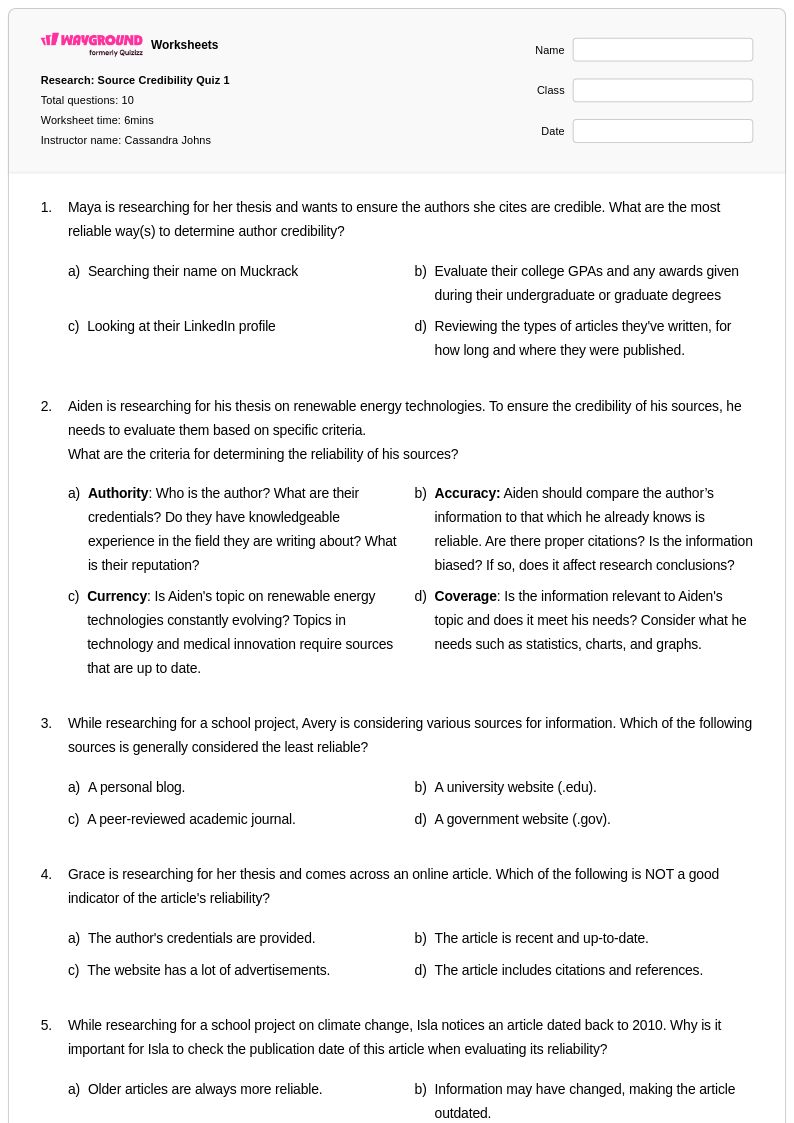
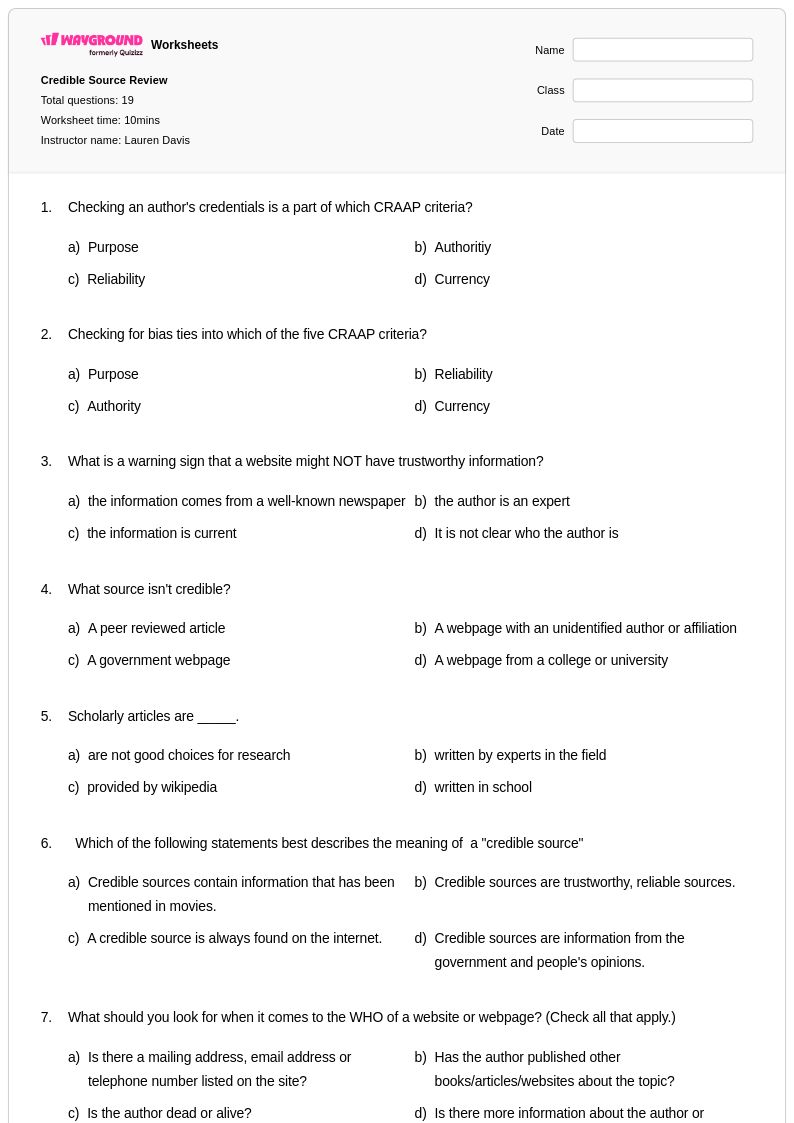
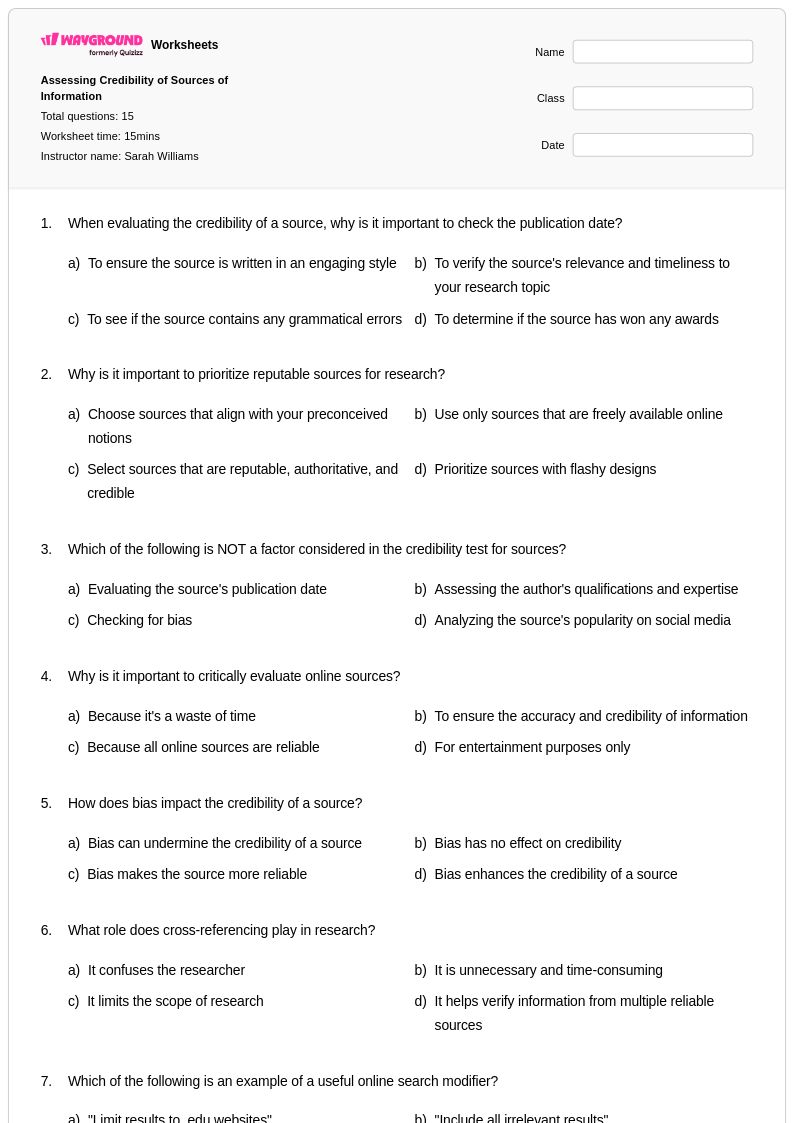
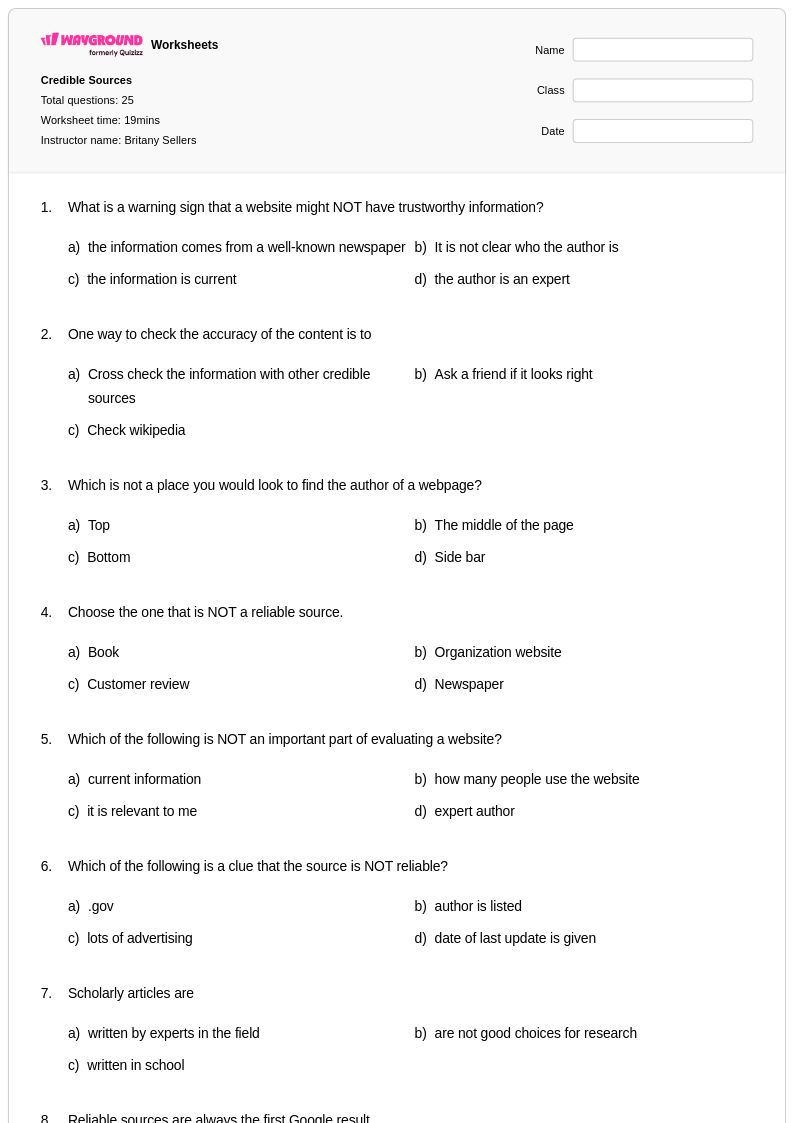
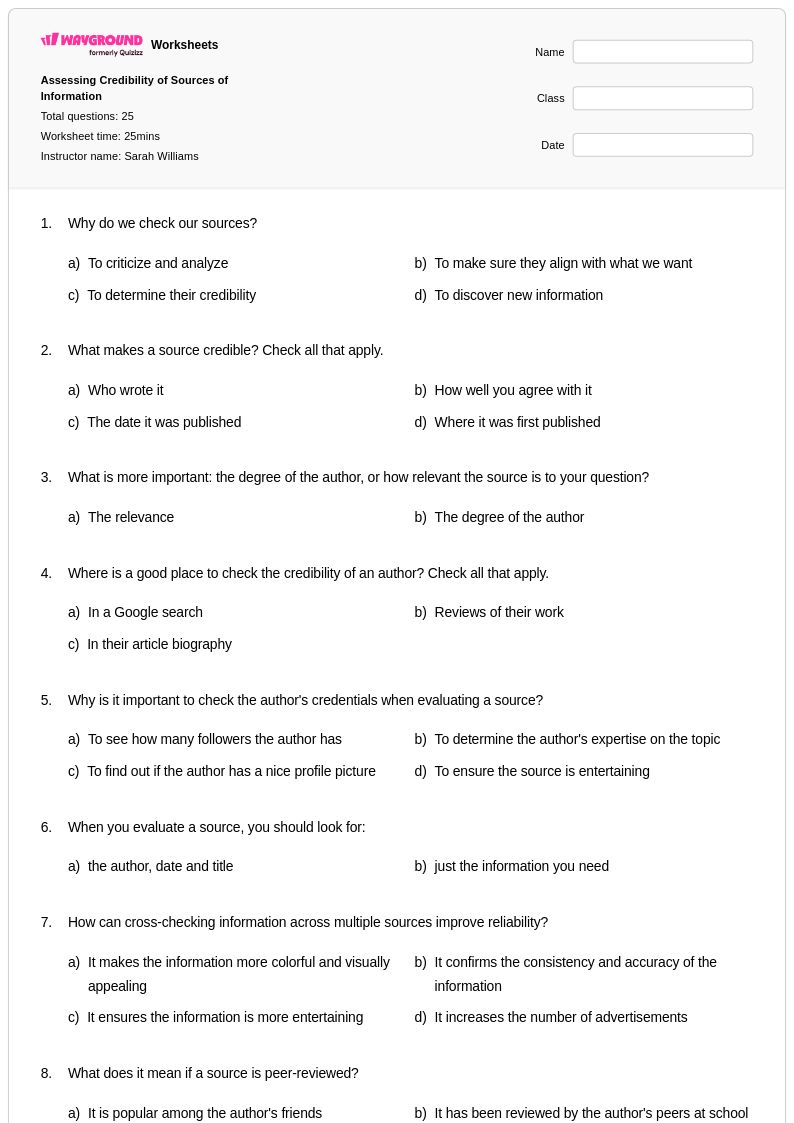
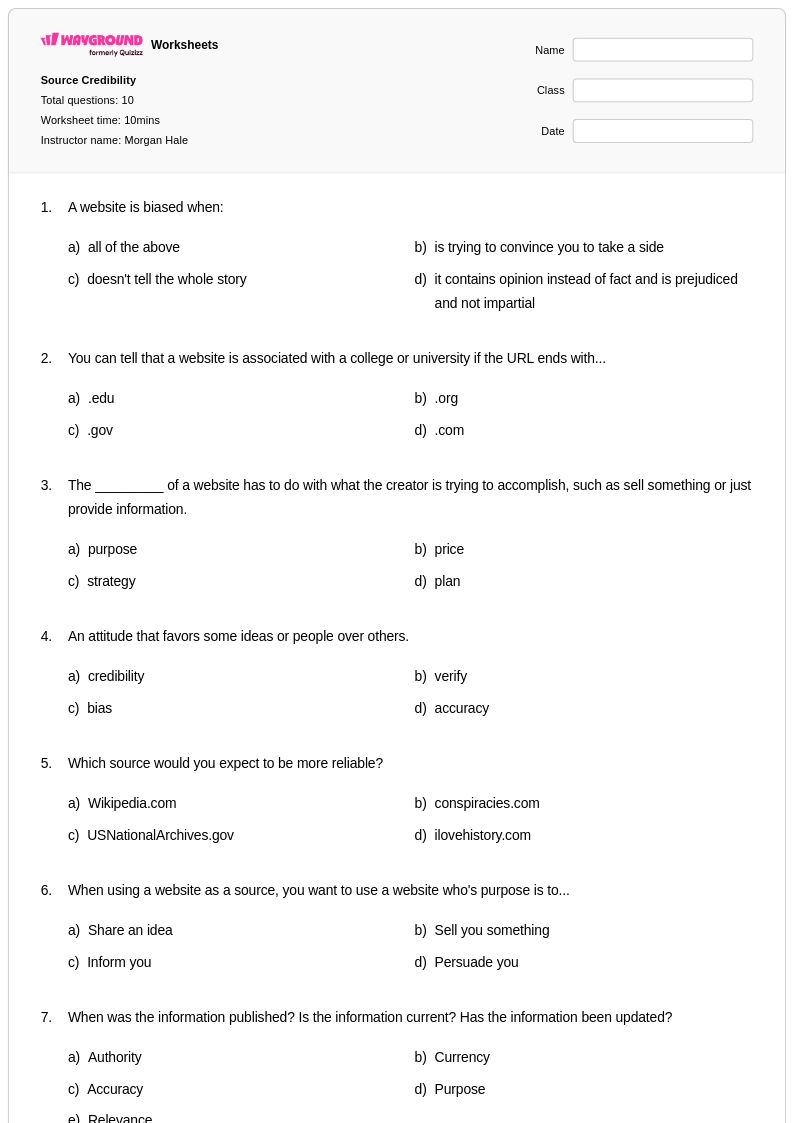
Free Printable Assessing Credibility of Sources worksheets
Enhance students' research skills with Wayground's free worksheets and printables focused on assessing credibility of sources, featuring practice problems and answer keys to help learners evaluate reliable information effectively.
Explore printable Assessing Credibility of Sources worksheets
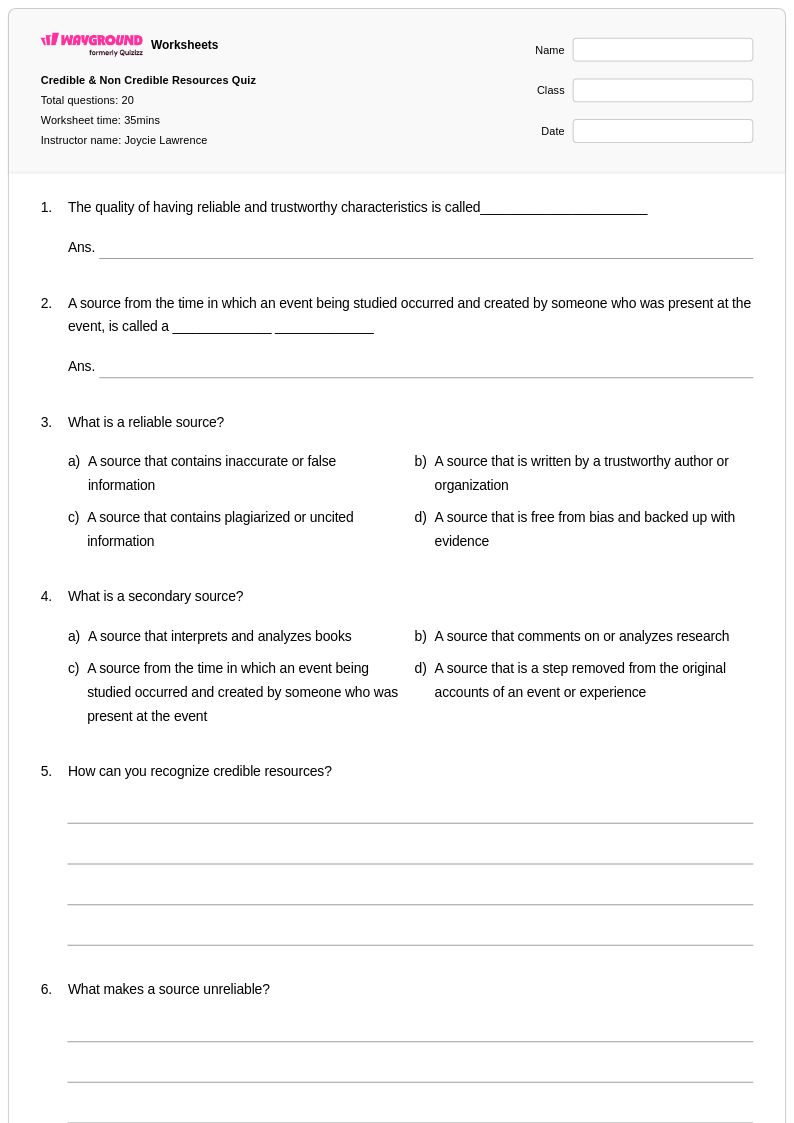
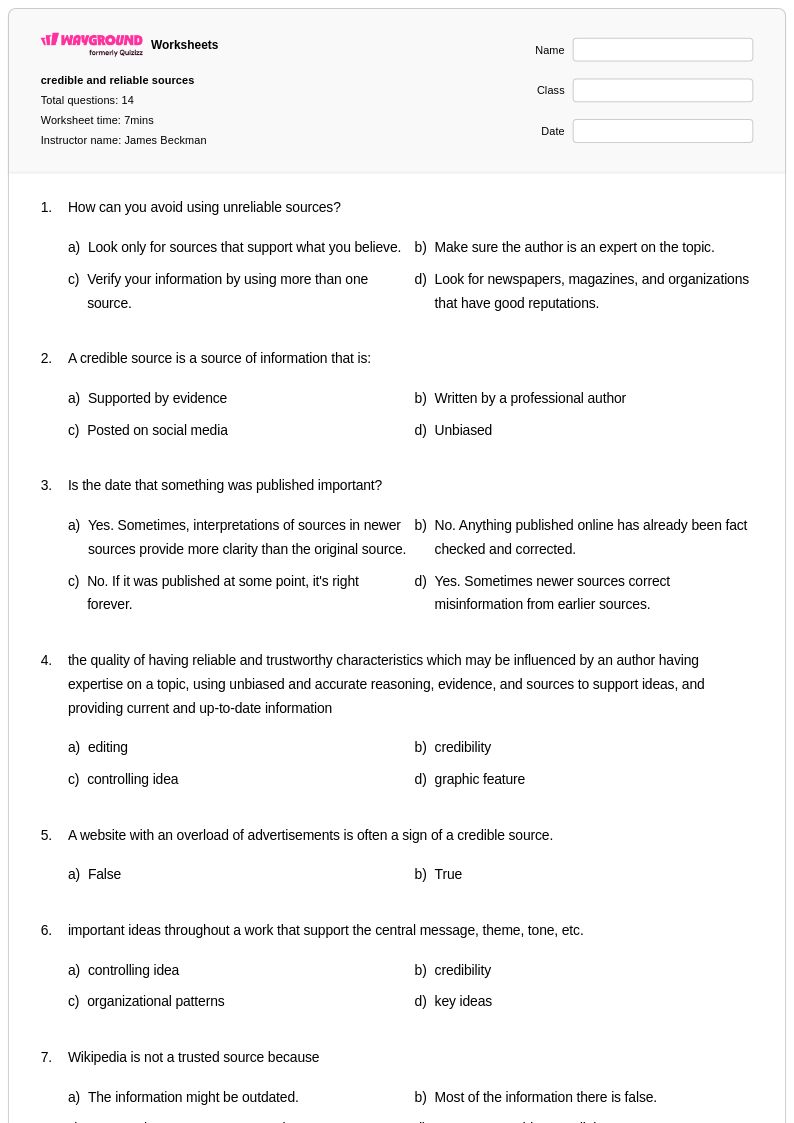
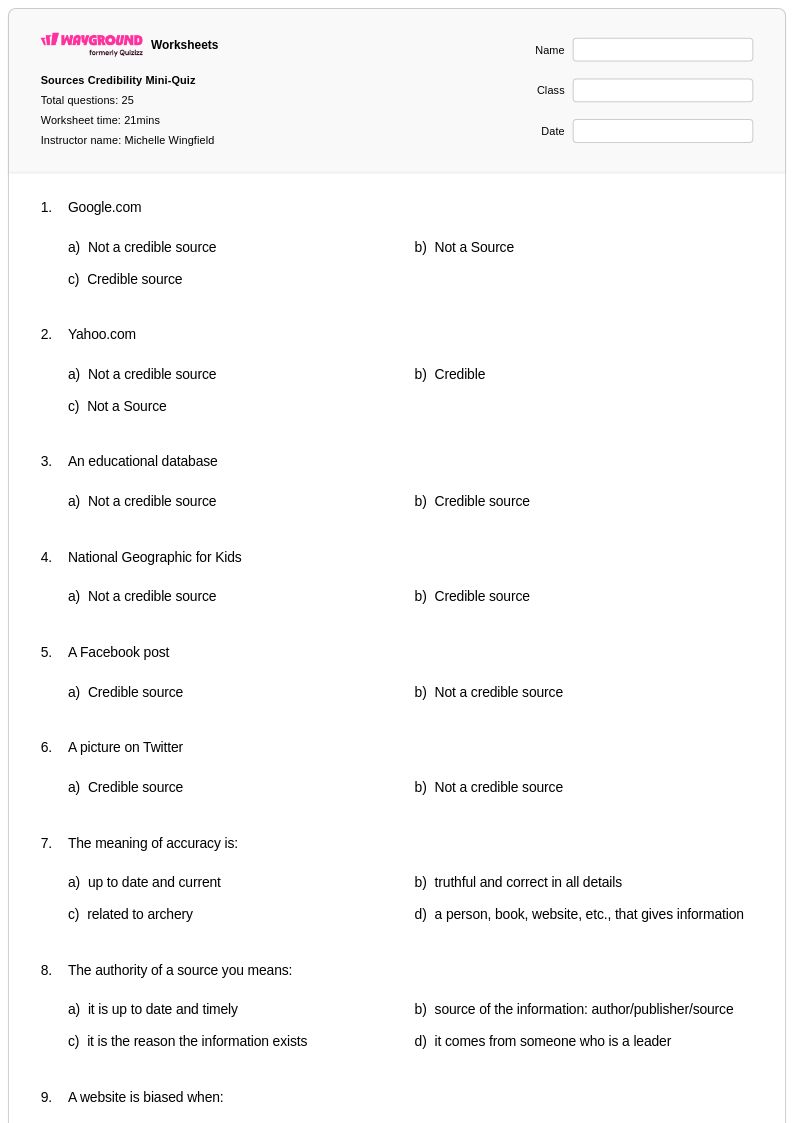
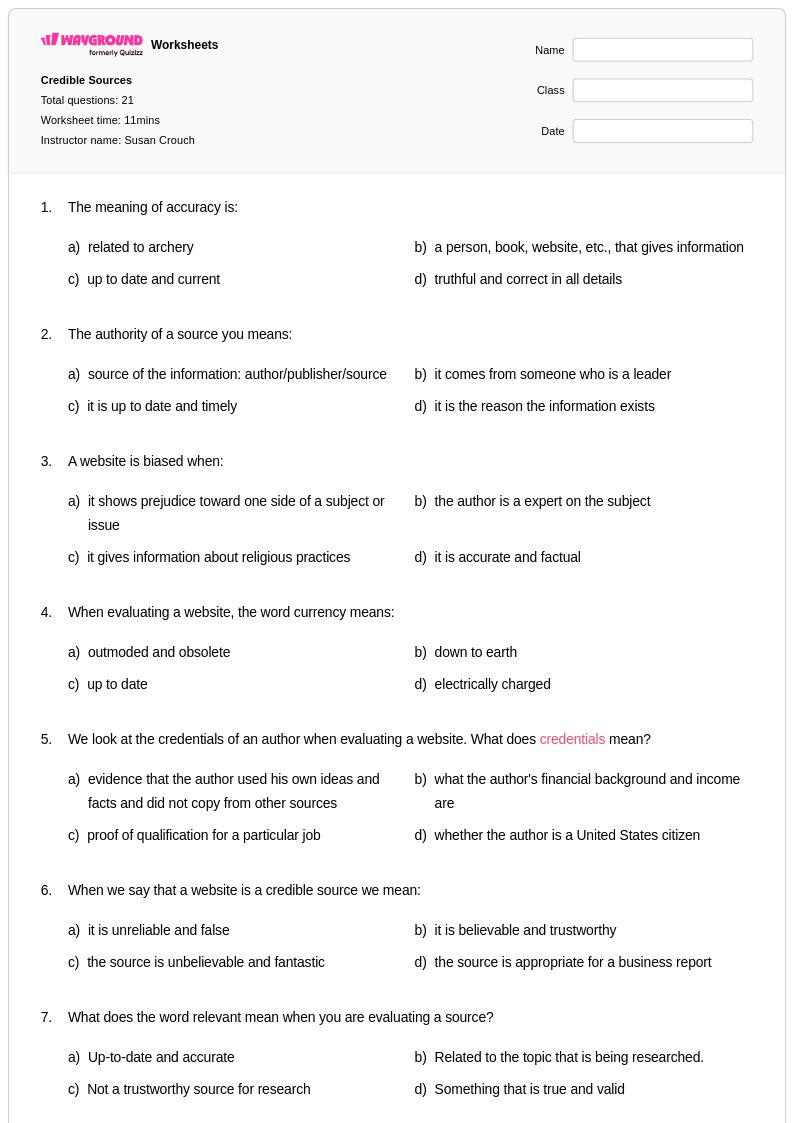
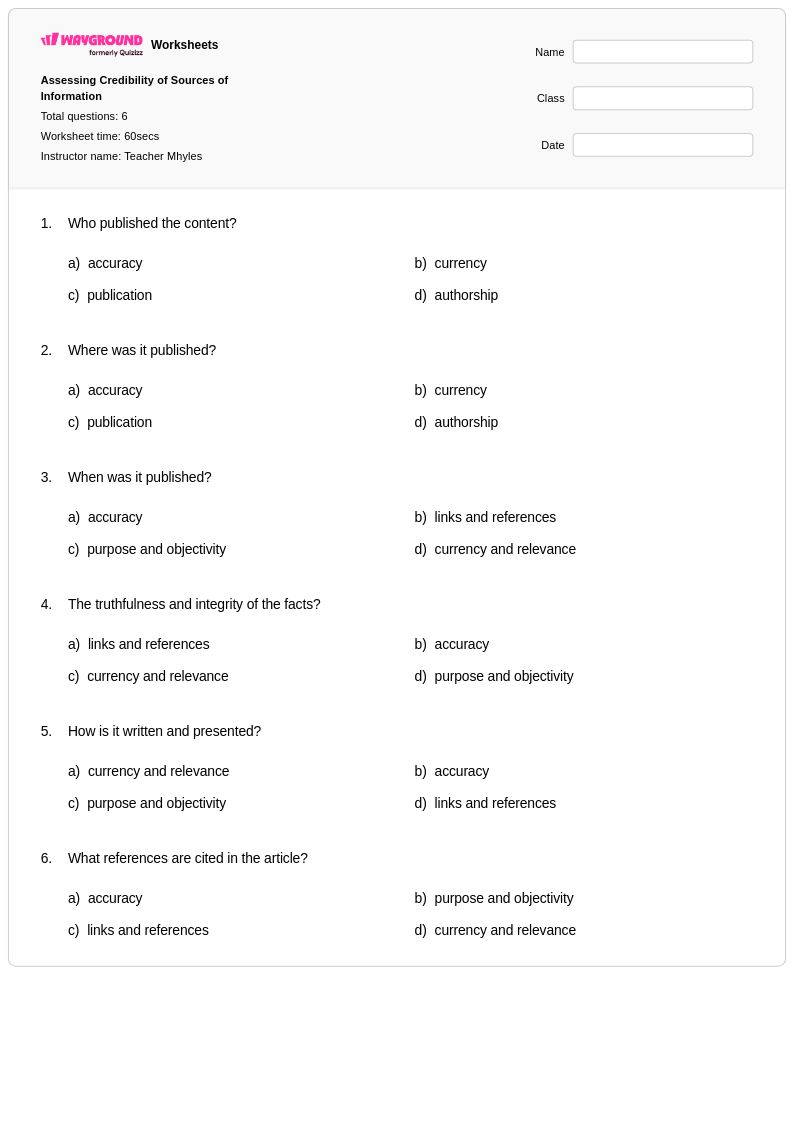
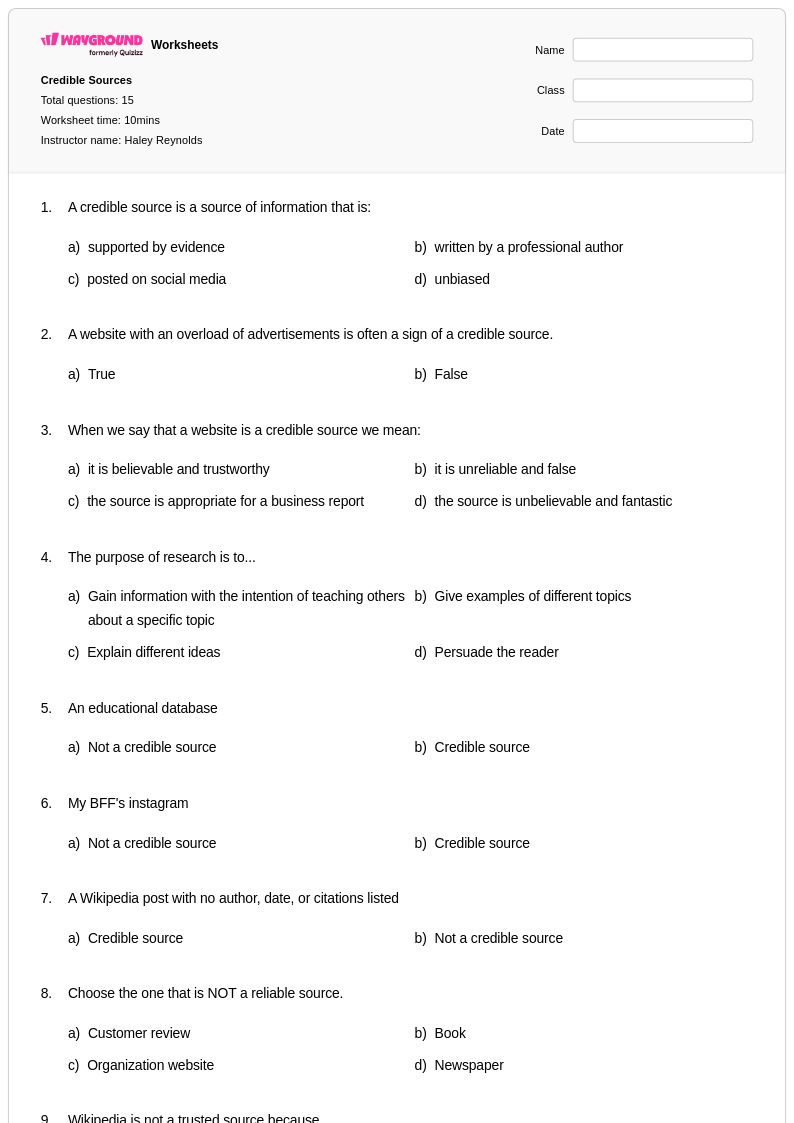
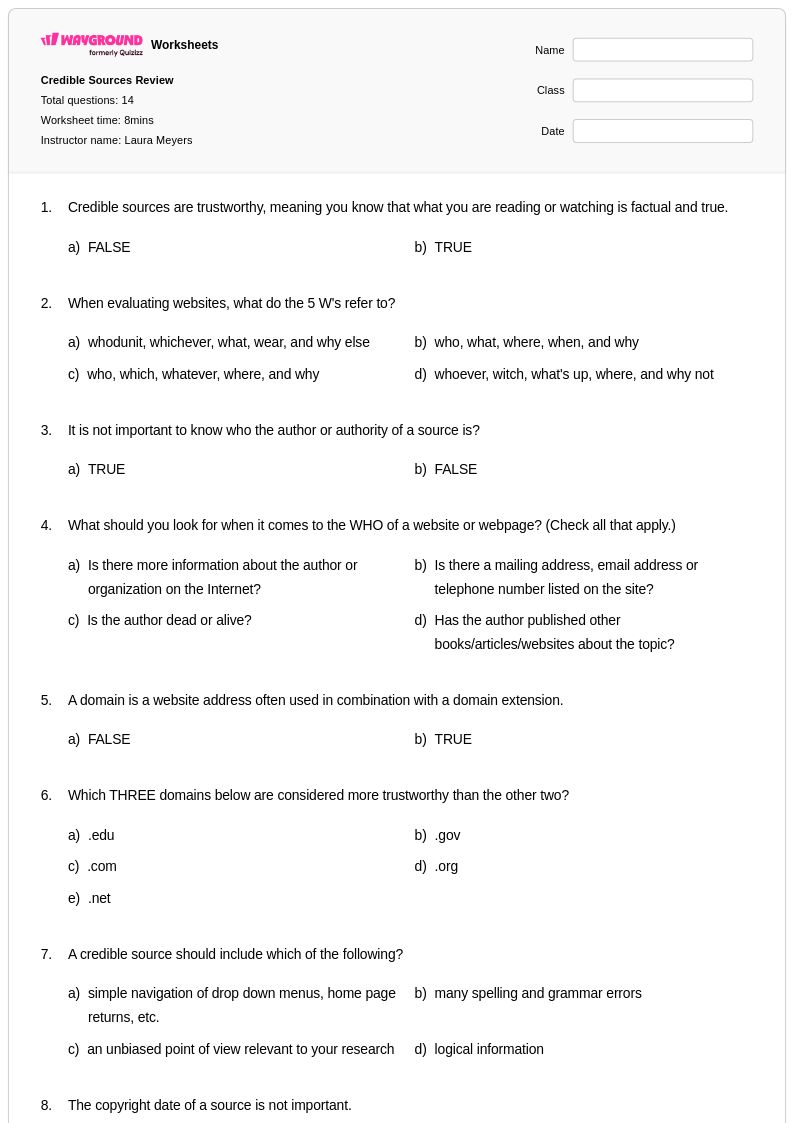
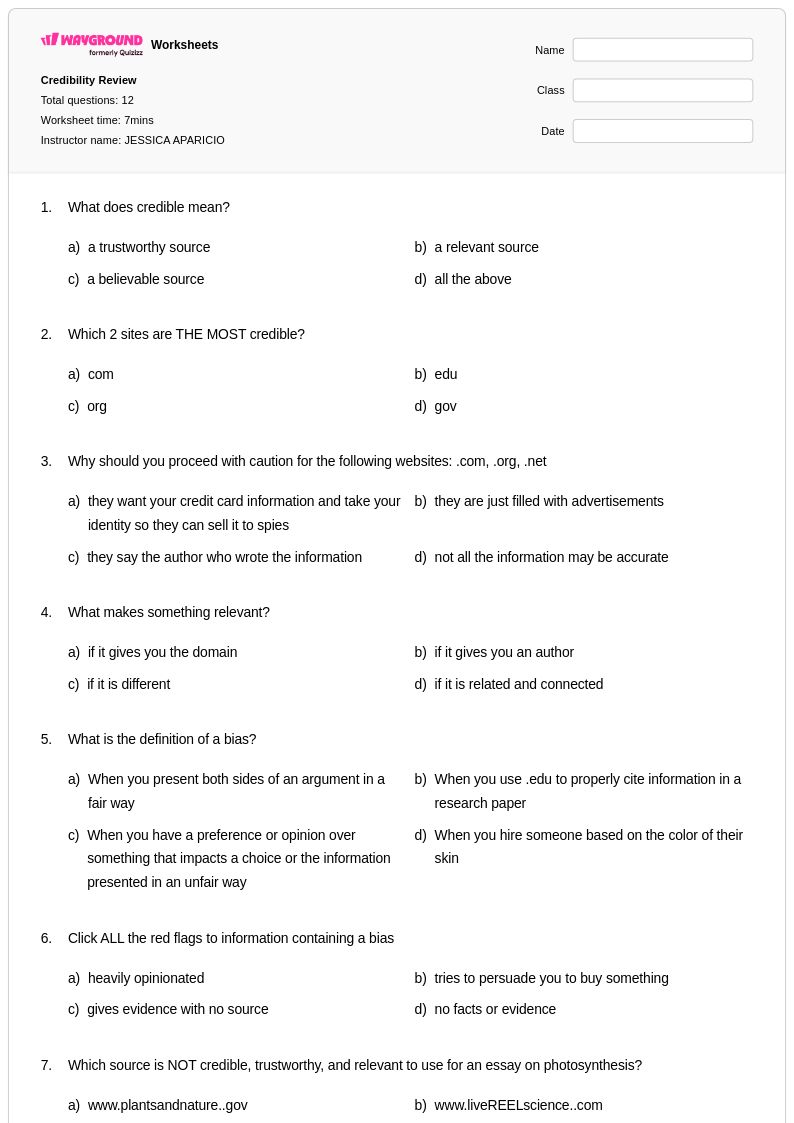
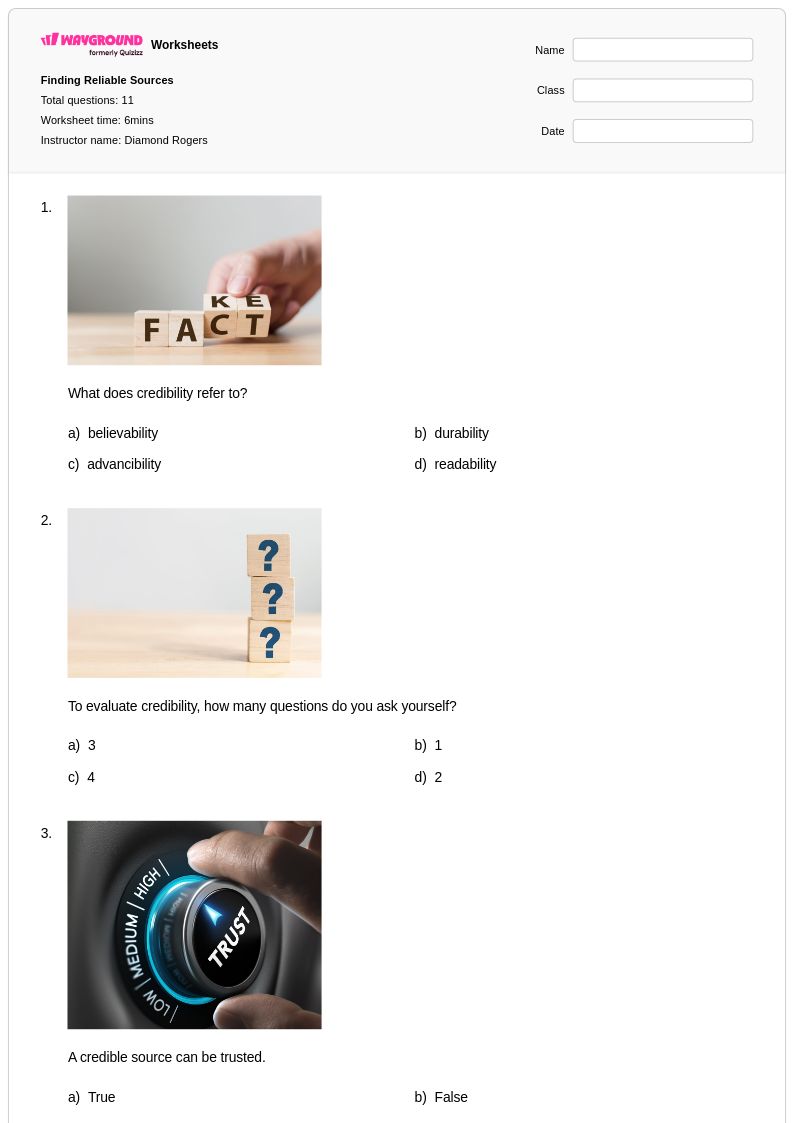
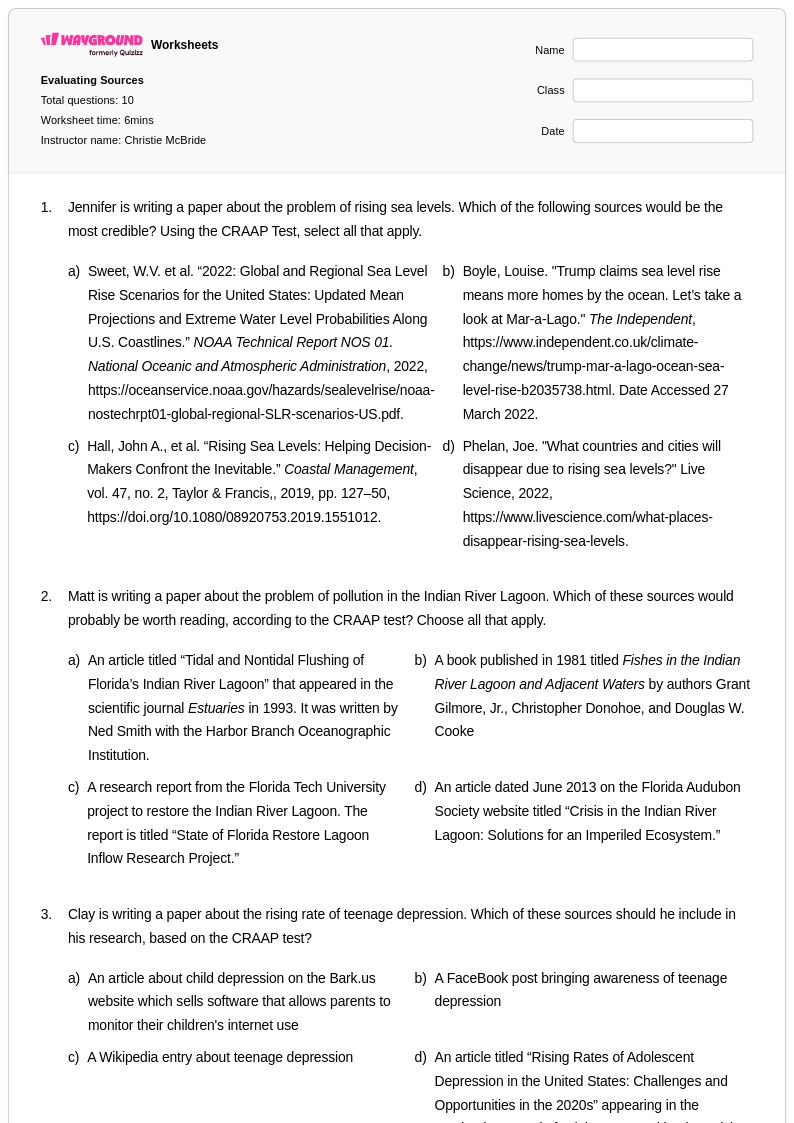
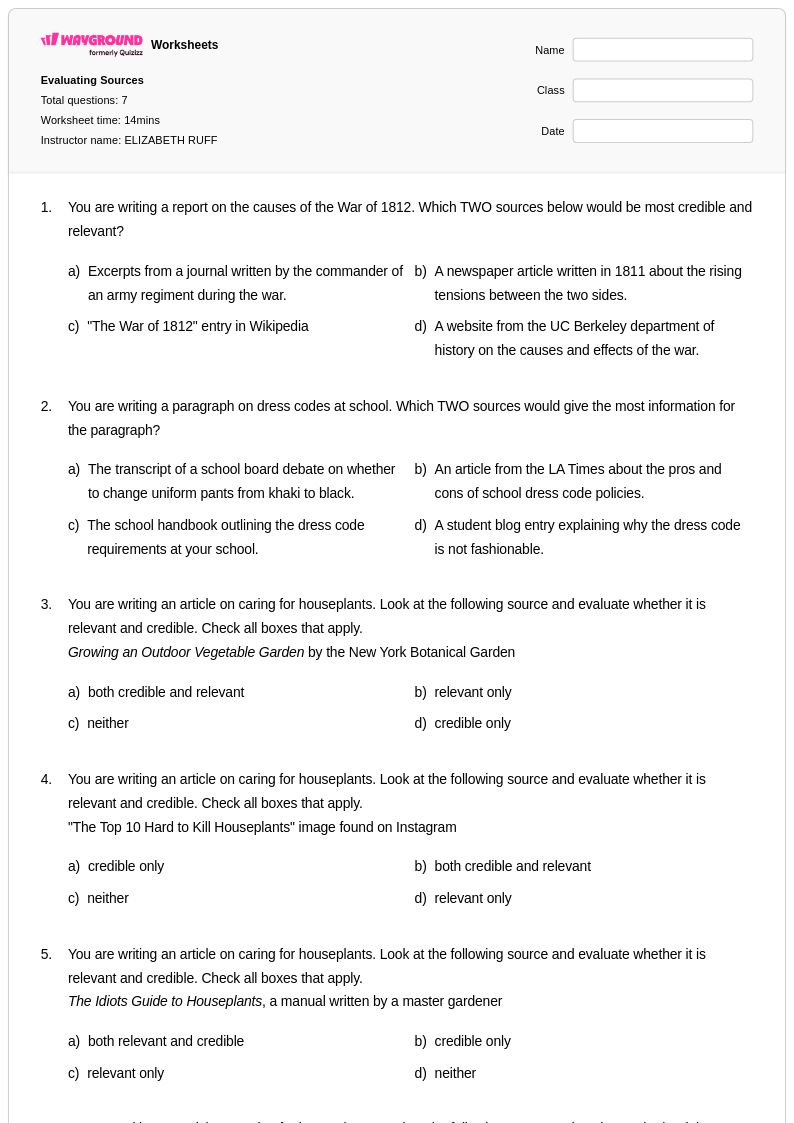
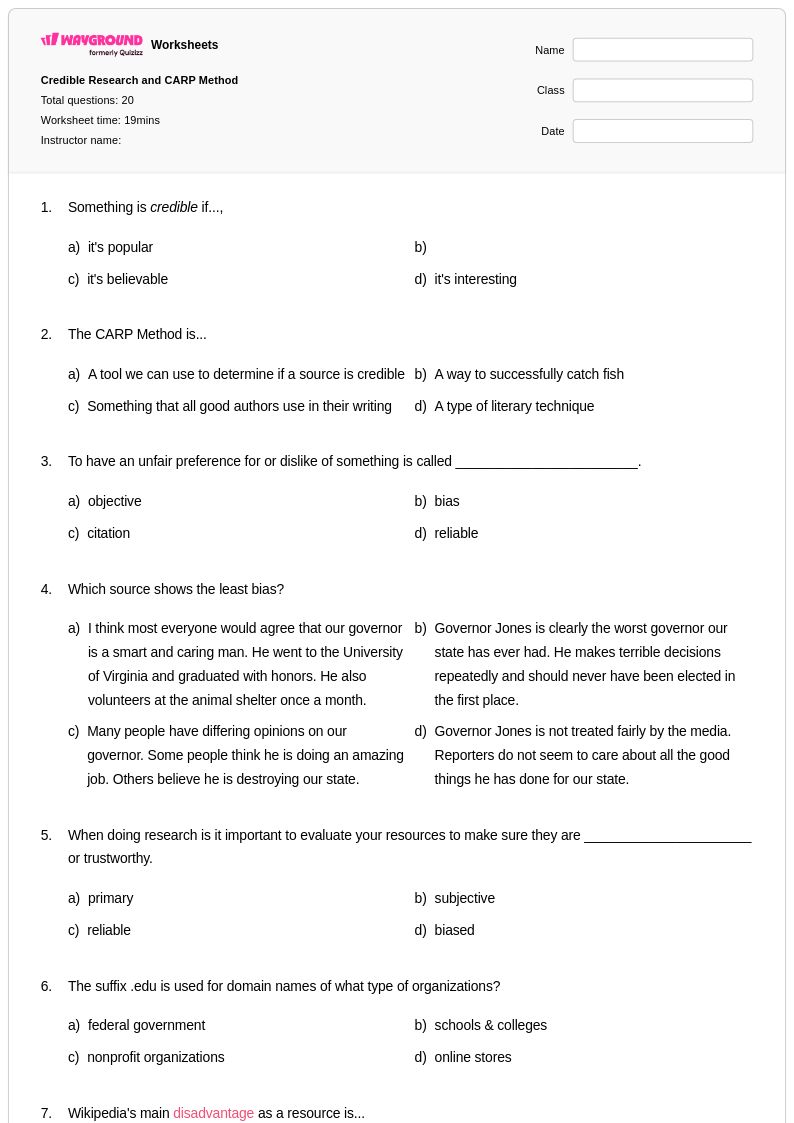
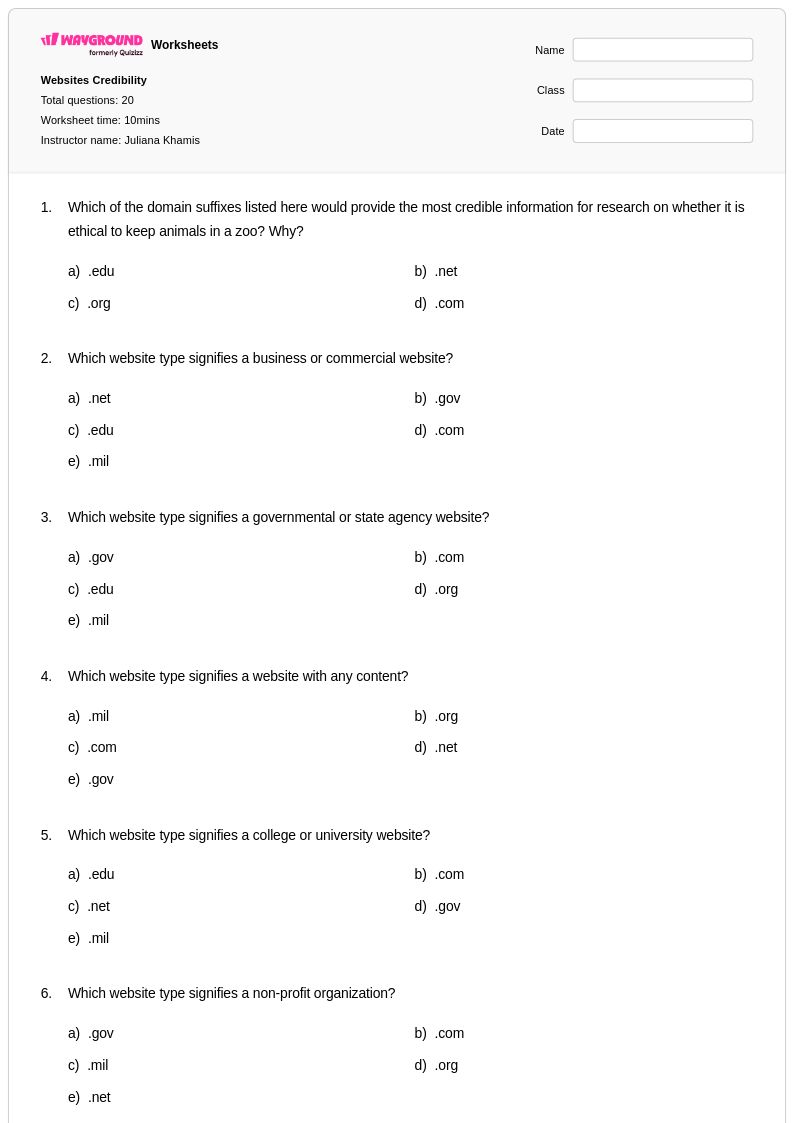
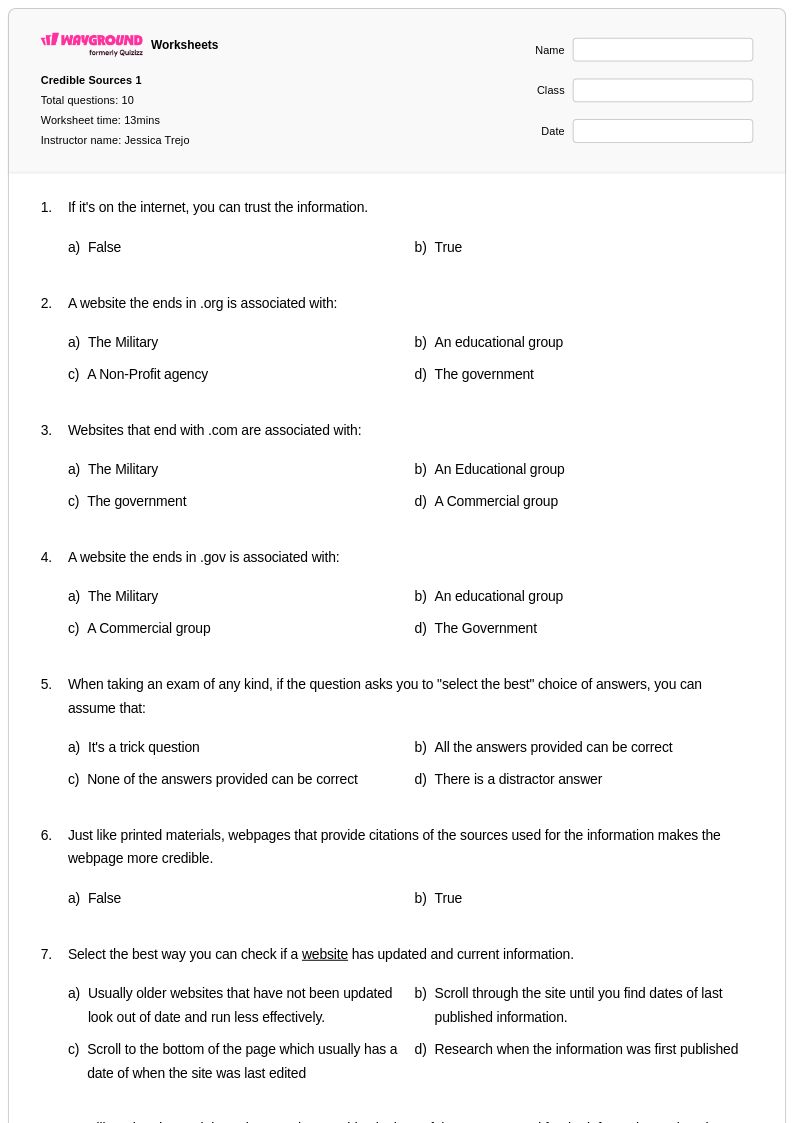
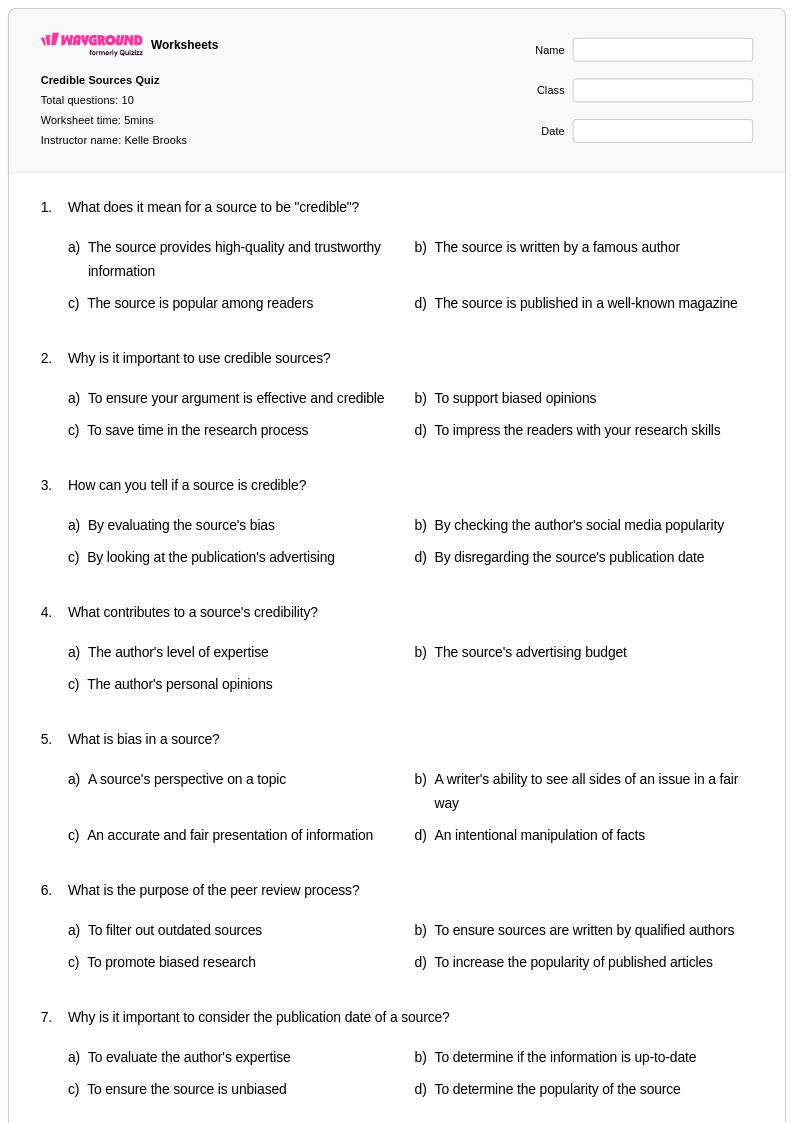
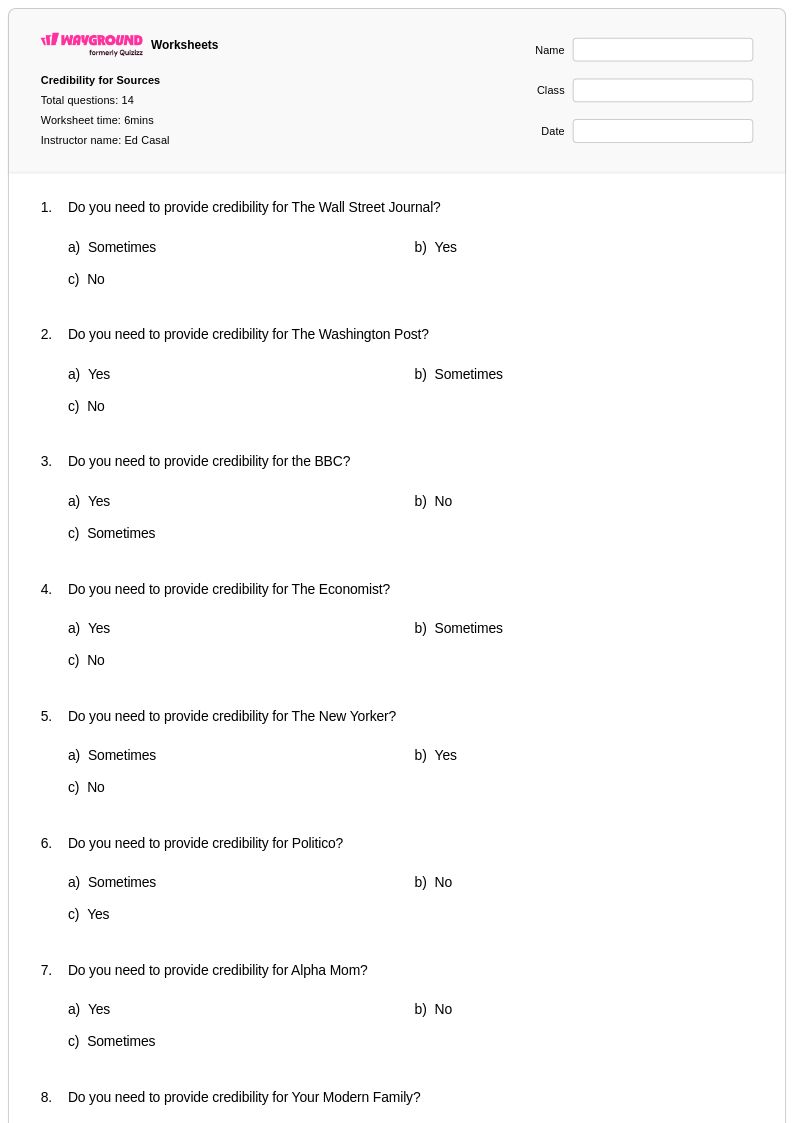
Assessing credibility of sources represents a fundamental skill in today's information-rich environment, and Wayground's comprehensive worksheet collection provides educators with essential tools to develop students' critical evaluation abilities. These carefully designed worksheets guide learners through systematic processes for examining source reliability, including evaluating author expertise, publication credibility, bias detection, and fact-checking methodologies. Students engage with practice problems that challenge them to distinguish between primary and secondary sources, assess the currency and relevance of information, and identify potential conflicts of interest or misleading content. Each worksheet includes detailed answer keys that help educators facilitate meaningful discussions about source evaluation criteria, while the free printable format ensures accessibility across diverse classroom settings. The pdf resources encompass a range of scenarios from academic research to everyday information consumption, strengthening students' ability to navigate digital literacy challenges with confidence and analytical rigor.
Wayground, formerly Quizizz, empowers educators with millions of teacher-created resources specifically designed to enhance instruction around source credibility assessment and broader research strategies. The platform's robust search and filtering capabilities allow teachers to quickly locate worksheets aligned with specific educational standards and tailored to their students' developmental needs. Advanced differentiation tools enable seamless customization of content complexity, supporting both remediation for struggling learners and enrichment opportunities for advanced students. Teachers benefit from flexible format options, including both printable and digital versions with comprehensive pdf downloads, facilitating integration into hybrid learning environments. These extensive worksheet collections streamline lesson planning by providing ready-to-use materials for skill practice sessions, formative assessments, and targeted interventions, while the collaborative nature of the platform ensures continuous content updates that reflect current best practices in information literacy instruction.
FAQs
How do I teach students to evaluate the credibility of sources?
Start by introducing a structured framework such as SIFT (Stop, Investigate the source, Find better coverage, Trace claims) or the CRAAP test, which prompts students to assess Currency, Relevance, Authority, Accuracy, and Purpose. Walk students through worked examples using real websites, news articles, and academic sources before asking them to evaluate sources independently. Explicitly modeling your own evaluation thinking aloud helps students internalize the criteria rather than applying them mechanically.
What exercises help students practice identifying reliable vs. unreliable sources?
Effective practice exercises include side-by-side source comparisons where students must justify which source is more credible and why, as well as lateral reading tasks where students verify a source by cross-checking it against independent references. Practice problems that ask students to identify author expertise, detect bias, assess publication credibility, and flag potential conflicts of interest build the analytical habits needed for independent research. Varying the scenario contexts, from academic research to everyday news consumption, prevents students from applying surface-level rules and encourages genuine critical thinking.
What are the most common mistakes students make when assessing source credibility?
The most frequent error is treating surface-level professionalism as a credibility signal: students often trust a source simply because it has a polished design, uses formal language, or appears at the top of search results. Students also frequently confuse primary and secondary sources or assume that any published or widely shared content has been verified. Another persistent misconception is conflating personal bias with factual inaccuracy, making it harder for students to recognize that a source can be both credible and editorially biased at the same time.
How can I differentiate source credibility instruction for students at different skill levels?
For struggling learners, reduce cognitive load by starting with clearly contrasting examples, such as a peer-reviewed article versus an anonymous blog post, before introducing more ambiguous cases. Advanced students benefit from tasks that require evaluating primary sources with conflicting interpretations or tracing the origin of a viral claim across multiple outlets. On Wayground, teachers can apply accommodations including reduced answer choices for selected students to lower the complexity of multiple-choice credibility tasks, while other students receive standard options, with no disruption to the rest of the class.
How do I use Wayground's assessing credibility of sources worksheets in my classroom?
Wayground's source credibility worksheets are available as printable PDFs, making them easy to distribute in traditional classroom settings, and in digital formats suited for technology-integrated or hybrid learning environments. Teachers can also host the worksheets as a quiz directly on Wayground, enabling real-time student responses and automated grading. Each worksheet includes a complete answer key, so teachers can facilitate structured discussion around evaluation criteria immediately after students complete the activity.
At what grade level should students begin learning to evaluate source credibility?
Basic source evaluation, such as distinguishing between books, websites, and personal opinions, can begin as early as second or third grade. However, more systematic credibility assessment involving author expertise, bias detection, fact-checking, and distinguishing primary from secondary sources is typically introduced in middle school and deepened through high school. Because misinformation exposure starts early, introducing age-appropriate credibility criteria in upper elementary grades provides a meaningful head start.
How does assessing source credibility connect to broader digital literacy standards?
Source credibility assessment sits at the core of most digital and information literacy frameworks, including ISTE standards and the American Association of School Librarians' frameworks, because the ability to evaluate information is prerequisite to virtually every research task. Skills like detecting bias, verifying authorship, and cross-referencing claims directly support standards related to argumentation, evidence-based writing, and media literacy across ELA, social studies, and science curricula. Teaching these skills explicitly, rather than assuming students absorb them incidentally, is one of the most transferable investments a teacher can make across subject areas.