
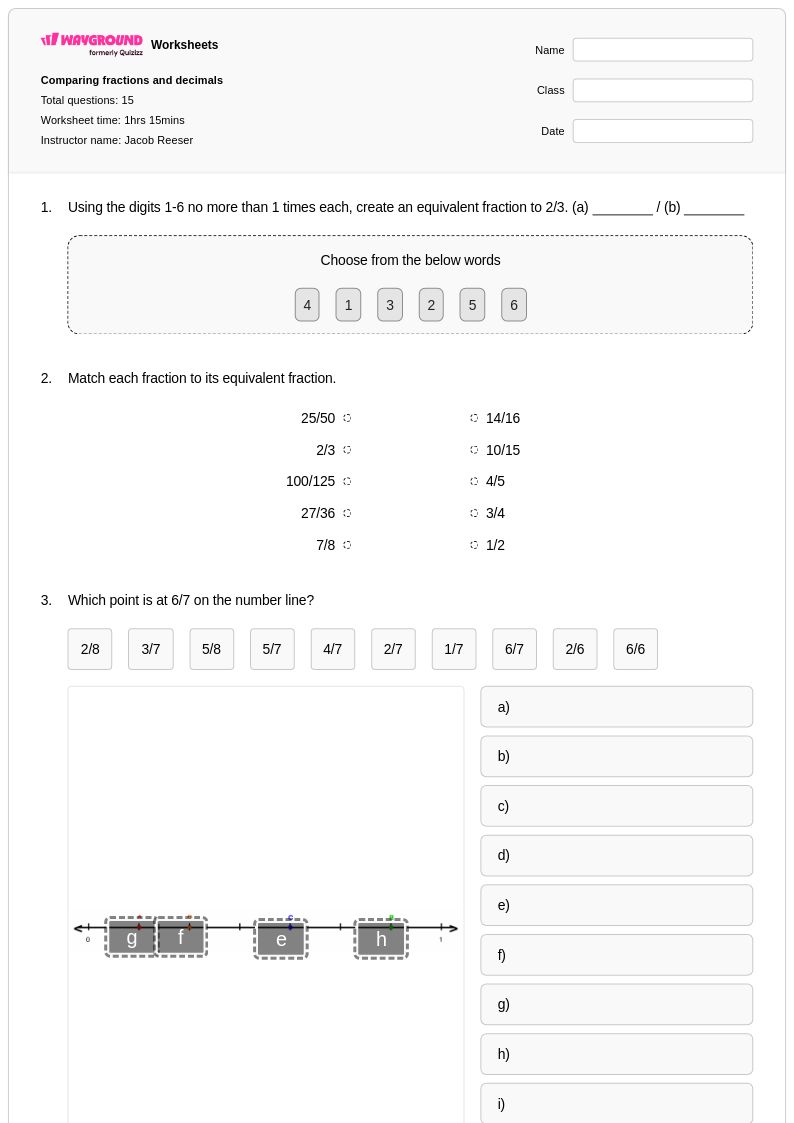
15 Q
5th
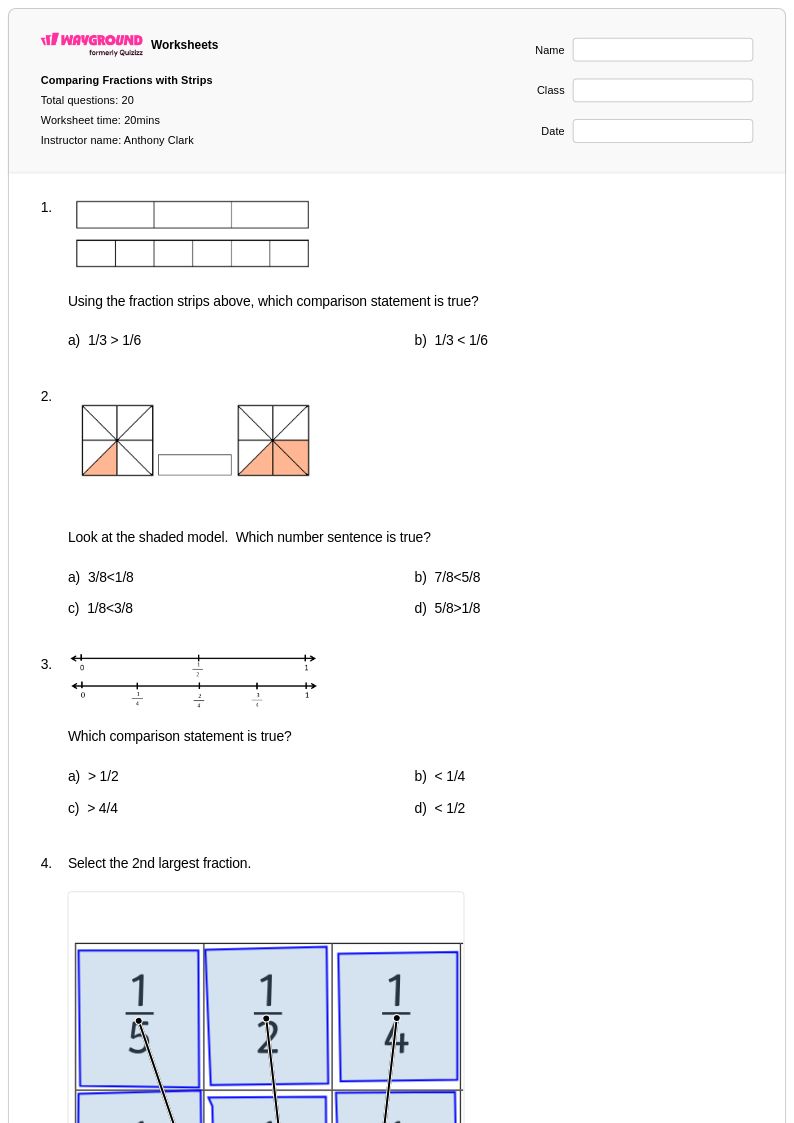
20 Q
3rd - Uni
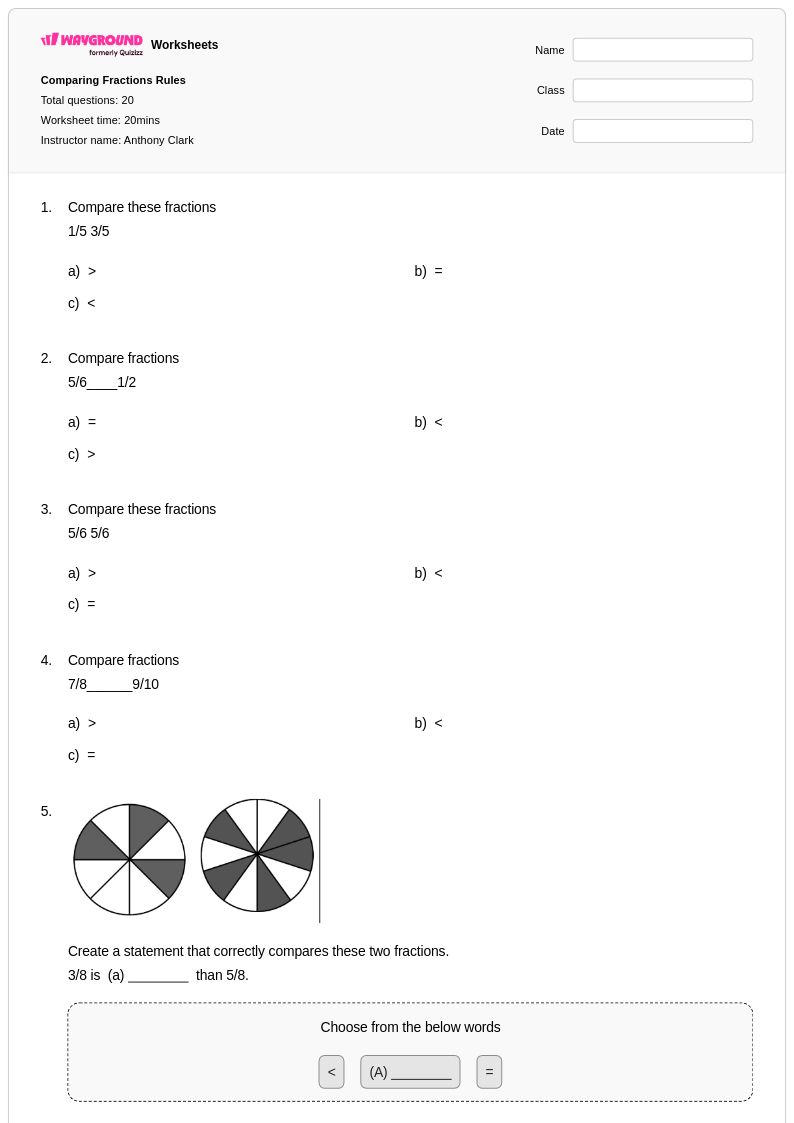
20 Q
5th - Uni
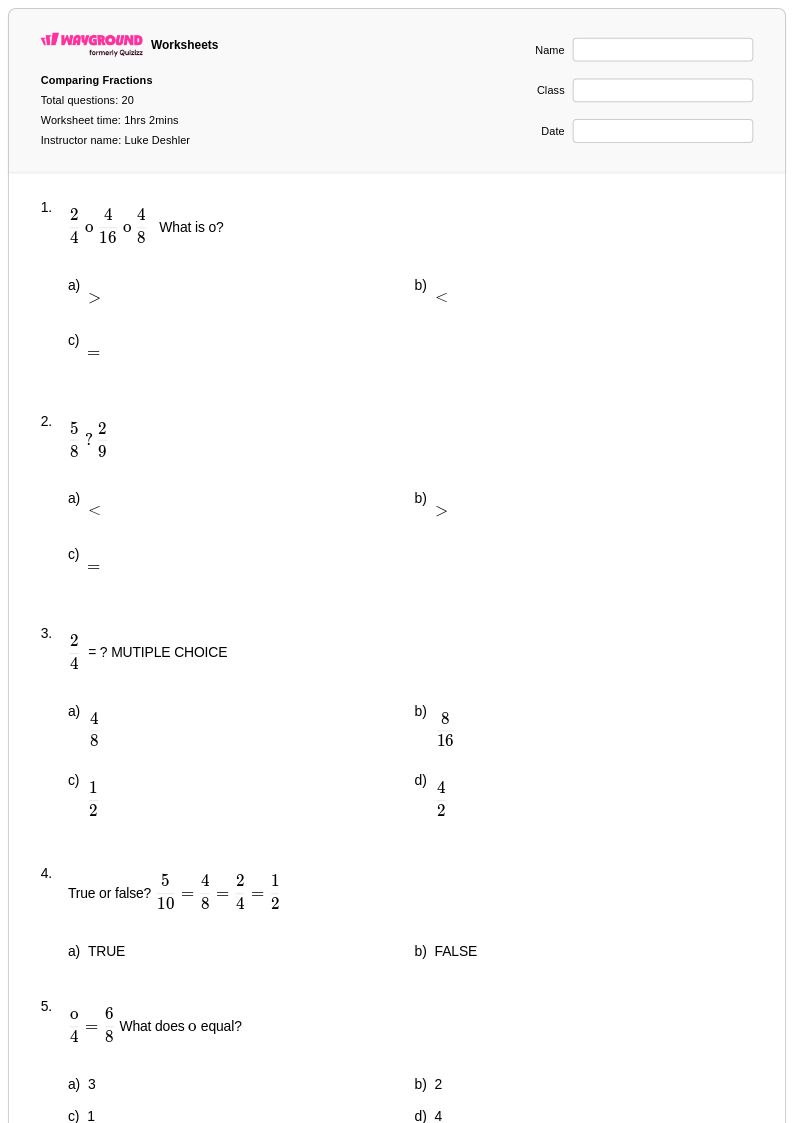
20 Q
3rd - 5th
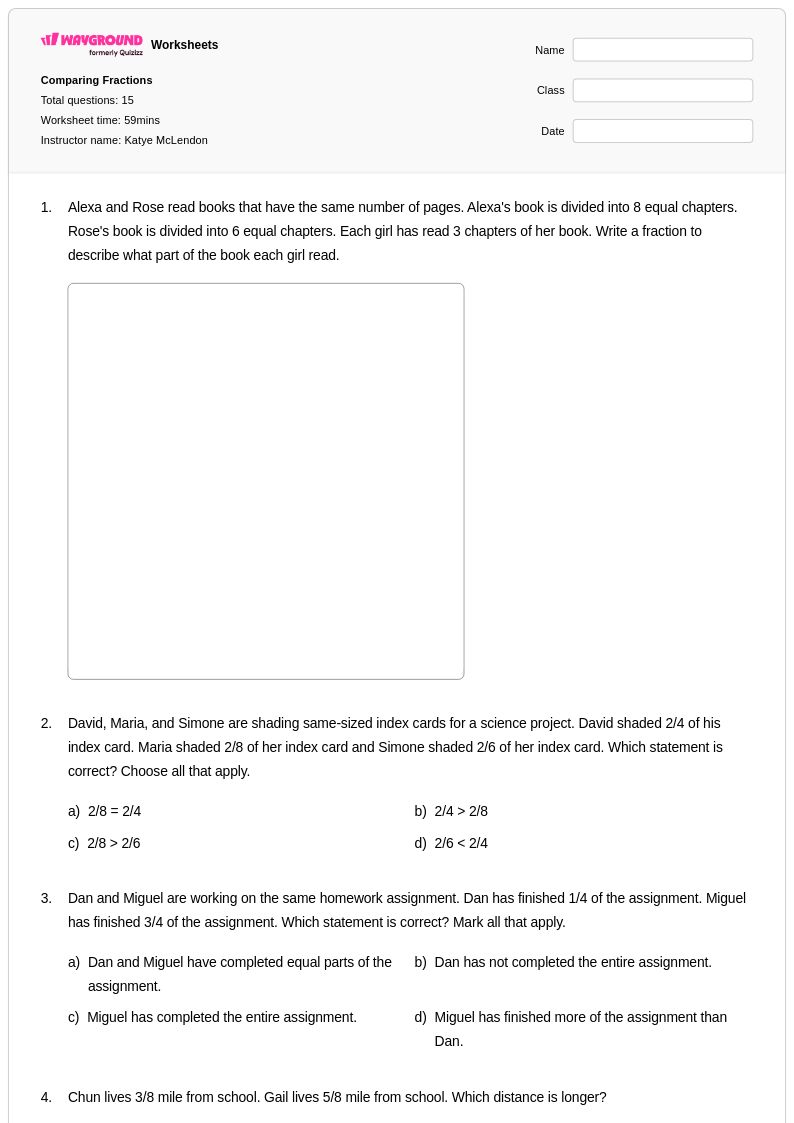
15 Q
3rd
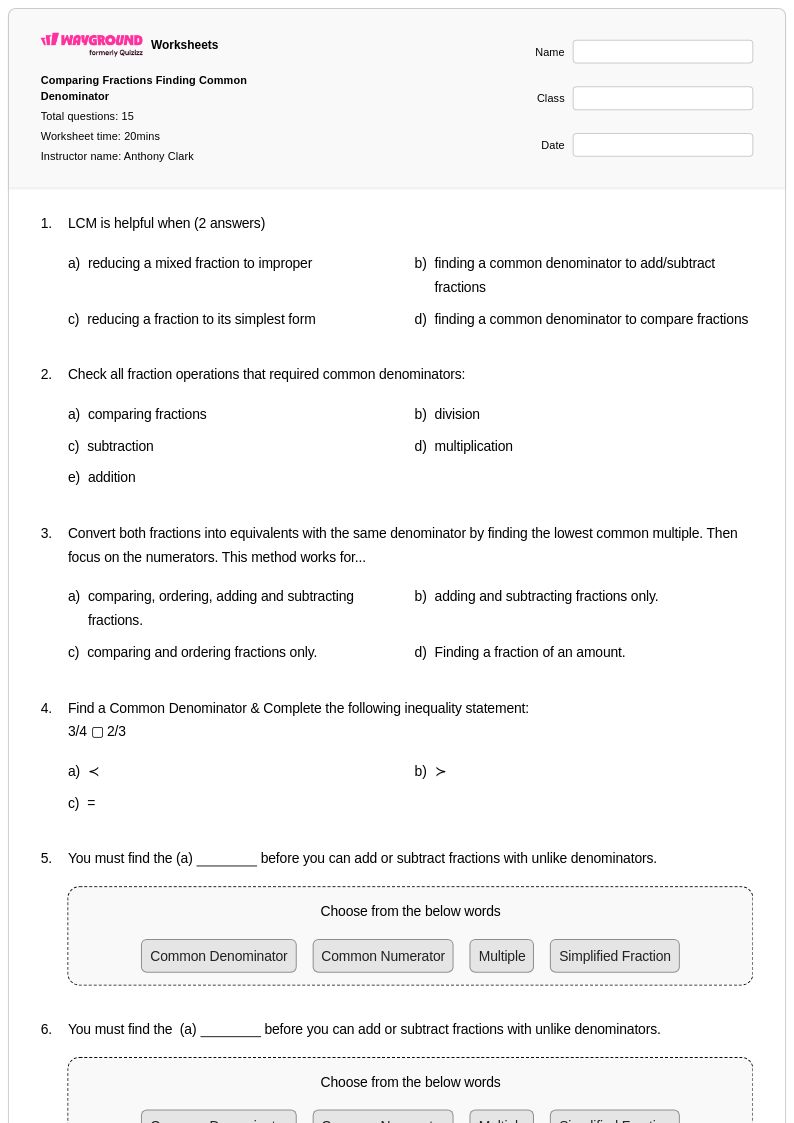
20 Q
4th - Uni
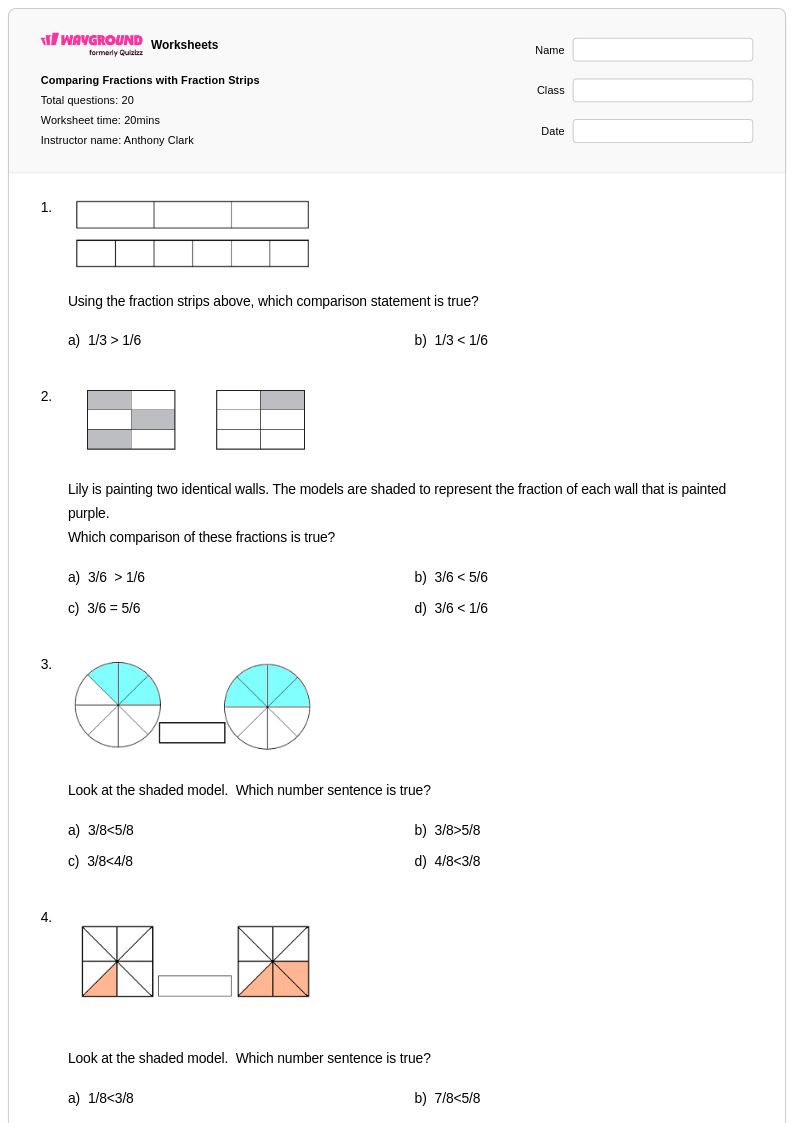
20 Q
4th - Uni

15 Q
4th - Uni
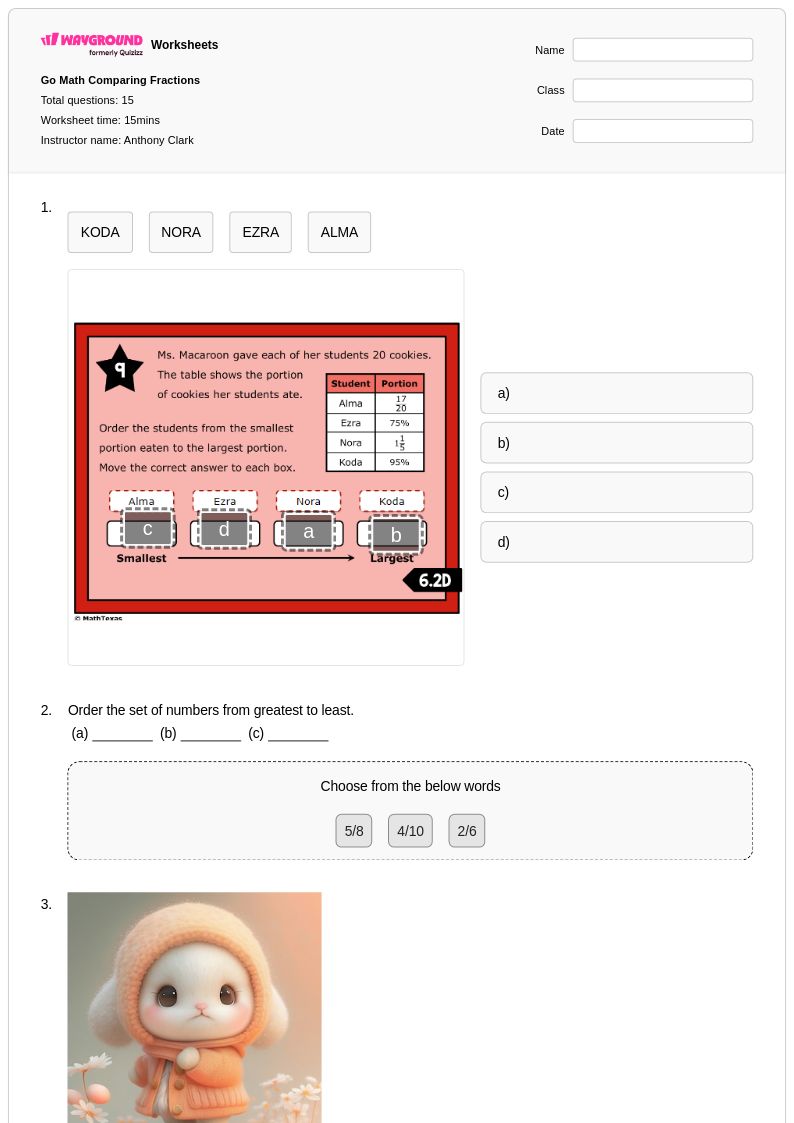
15 Q
4th - Uni
20 Q
4th - Uni
20 Q
5th - Uni
12 Q
4th
20 Q
3rd - Uni
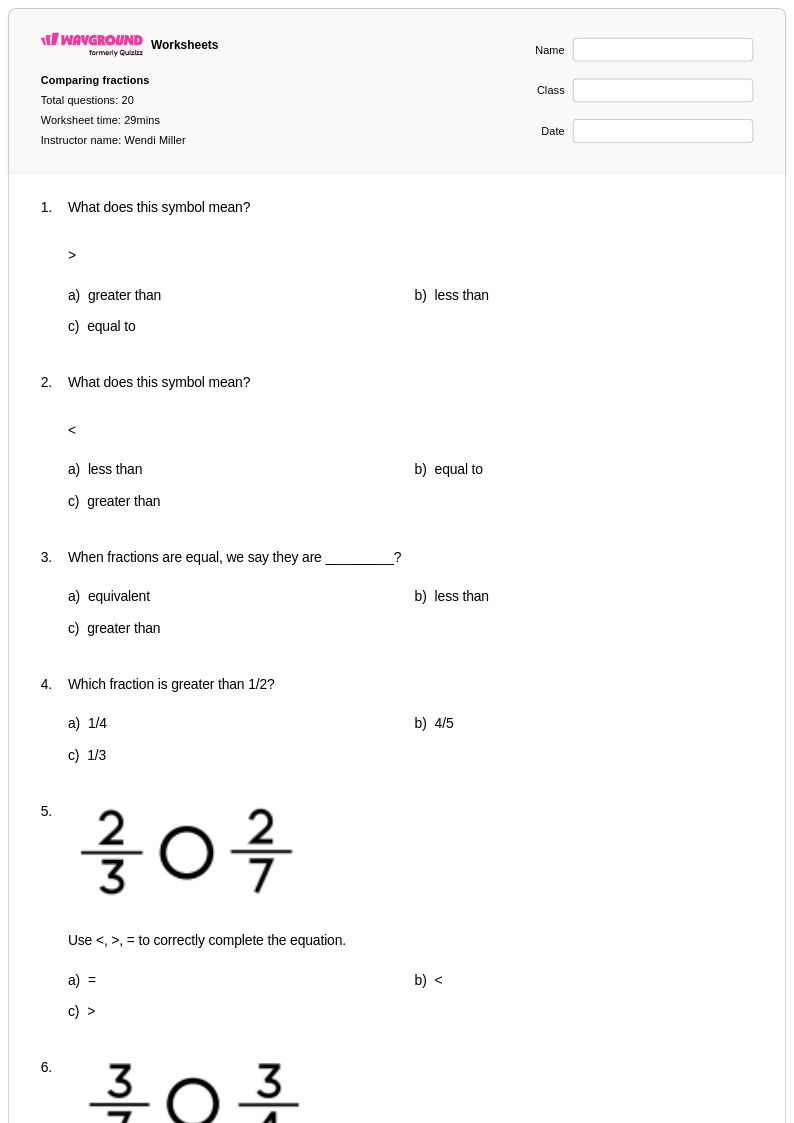
20 Q
6th - 8th
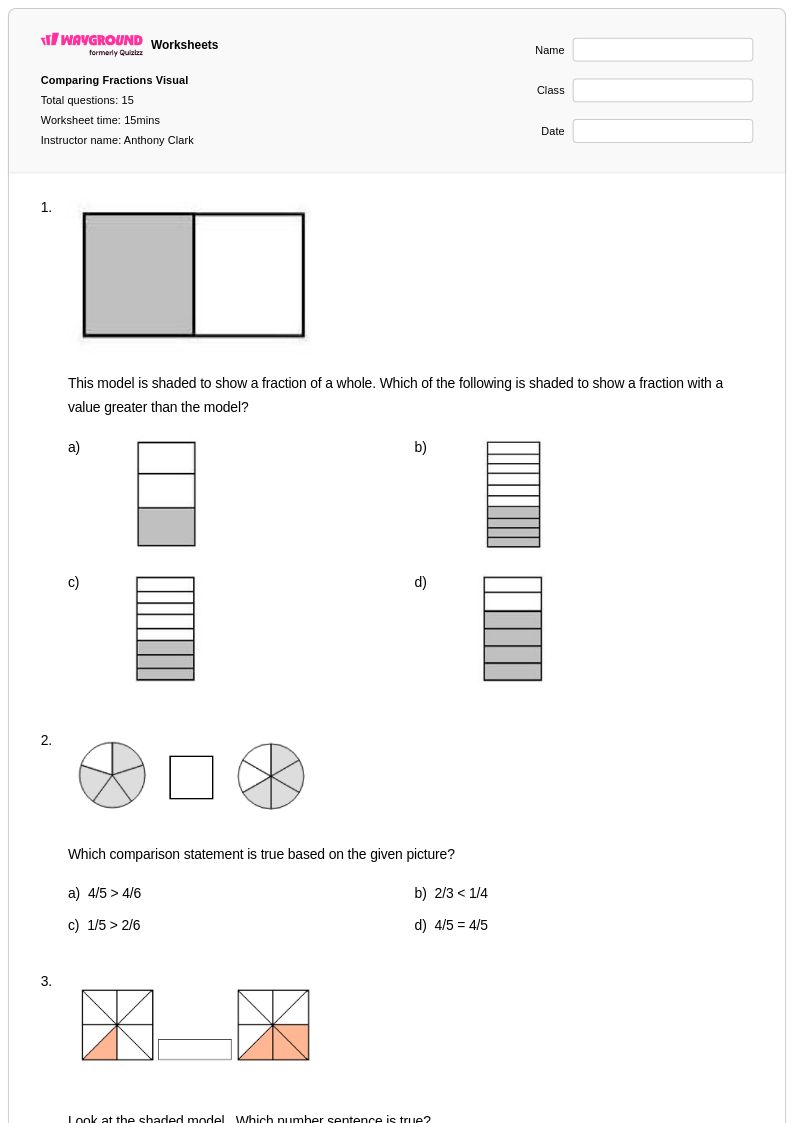
15 Q
4th - Uni

10 Q
3rd
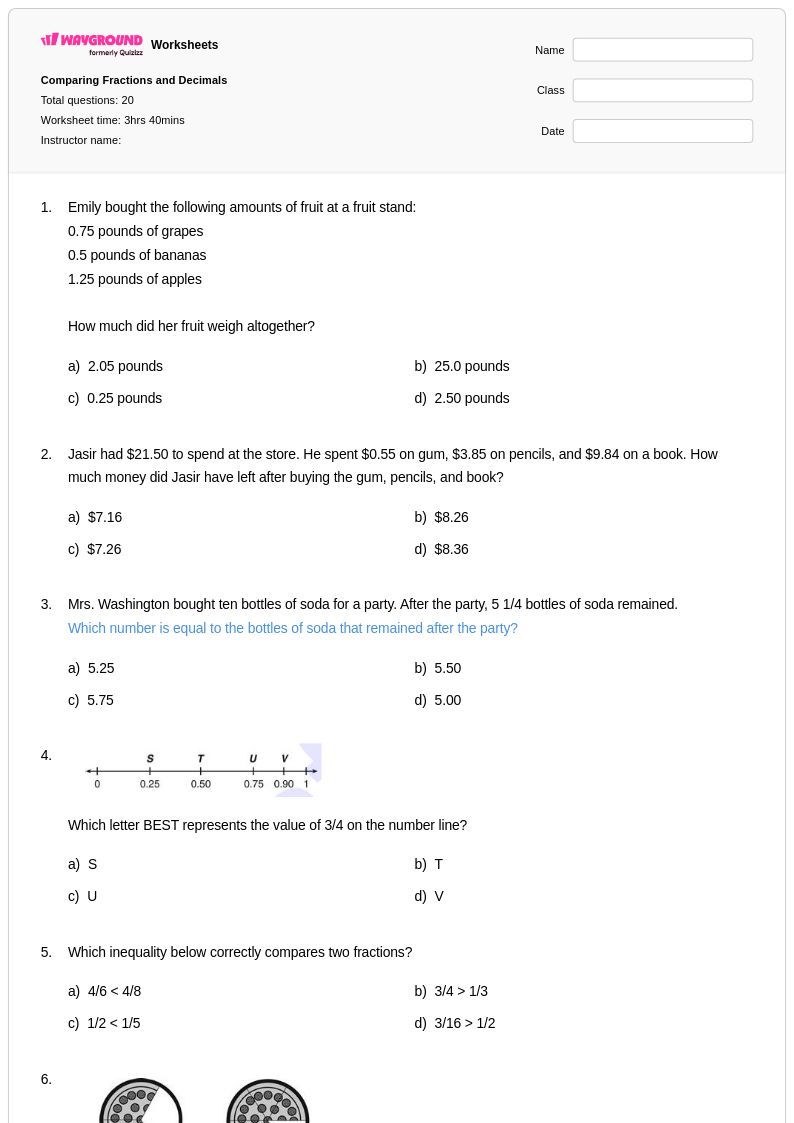
20 Q
6th
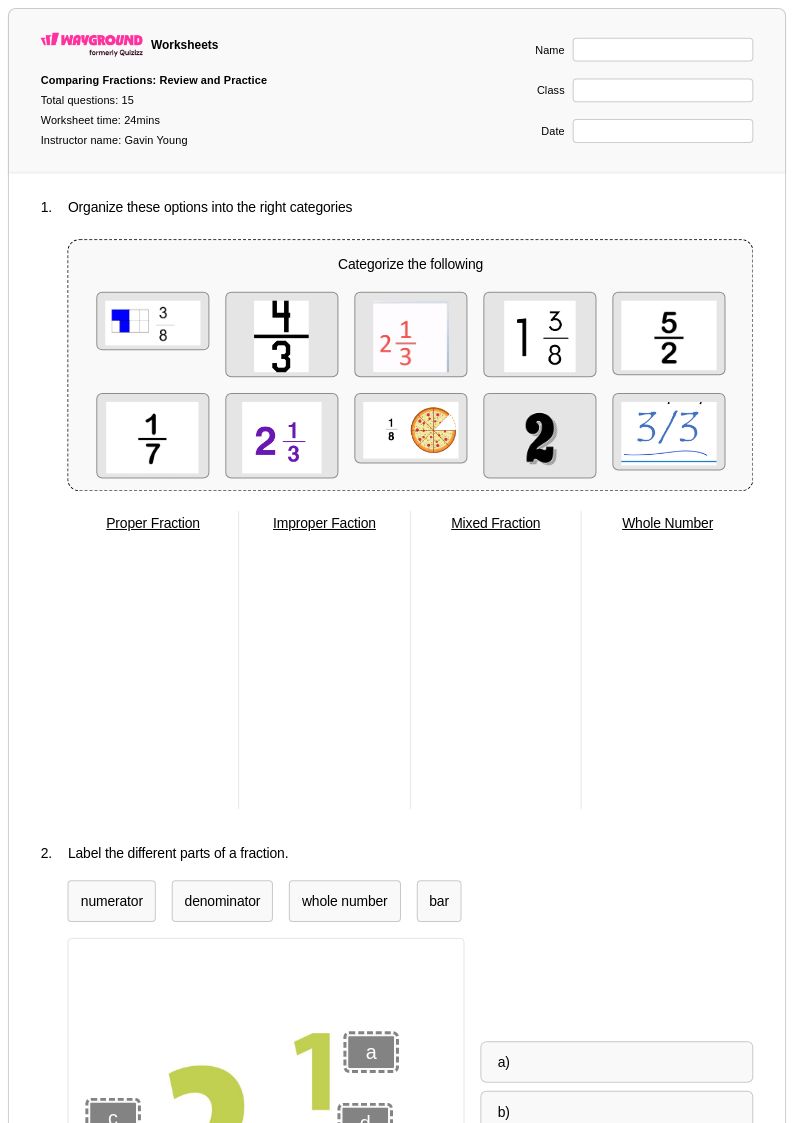
15 Q
6th
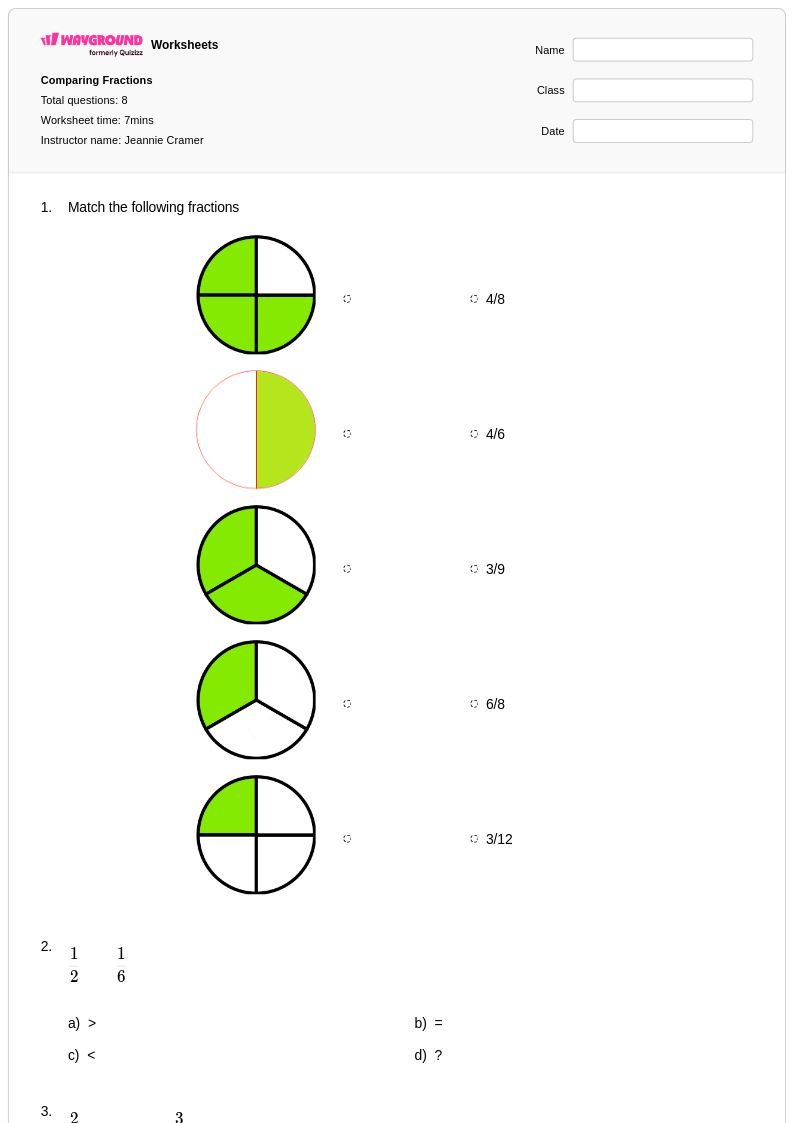
8 Q
3rd
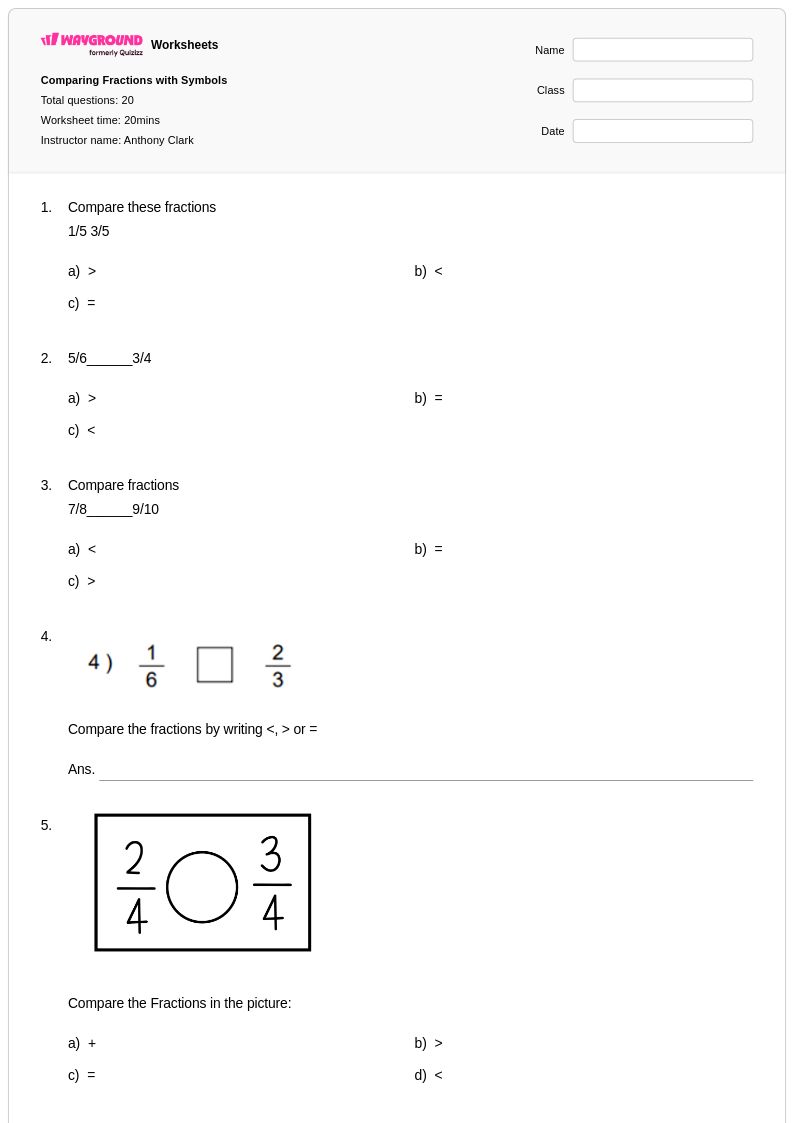
20 Q
5th - Uni
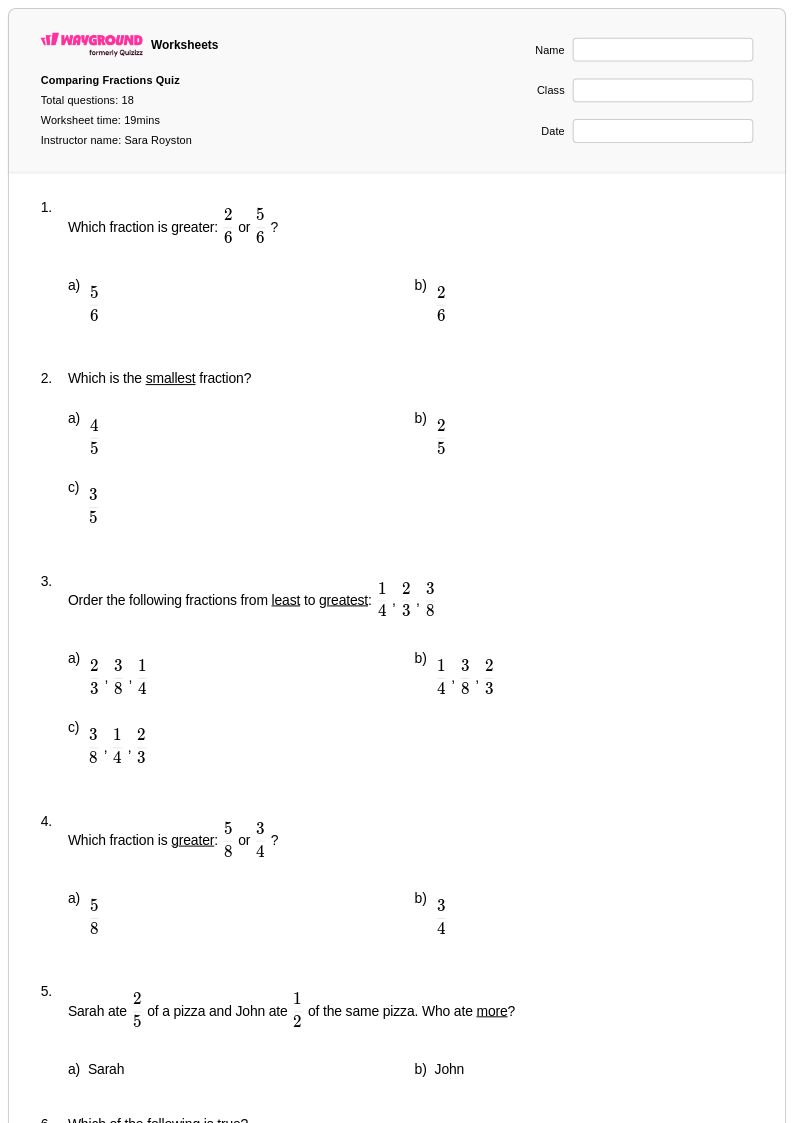
18 Q
6th
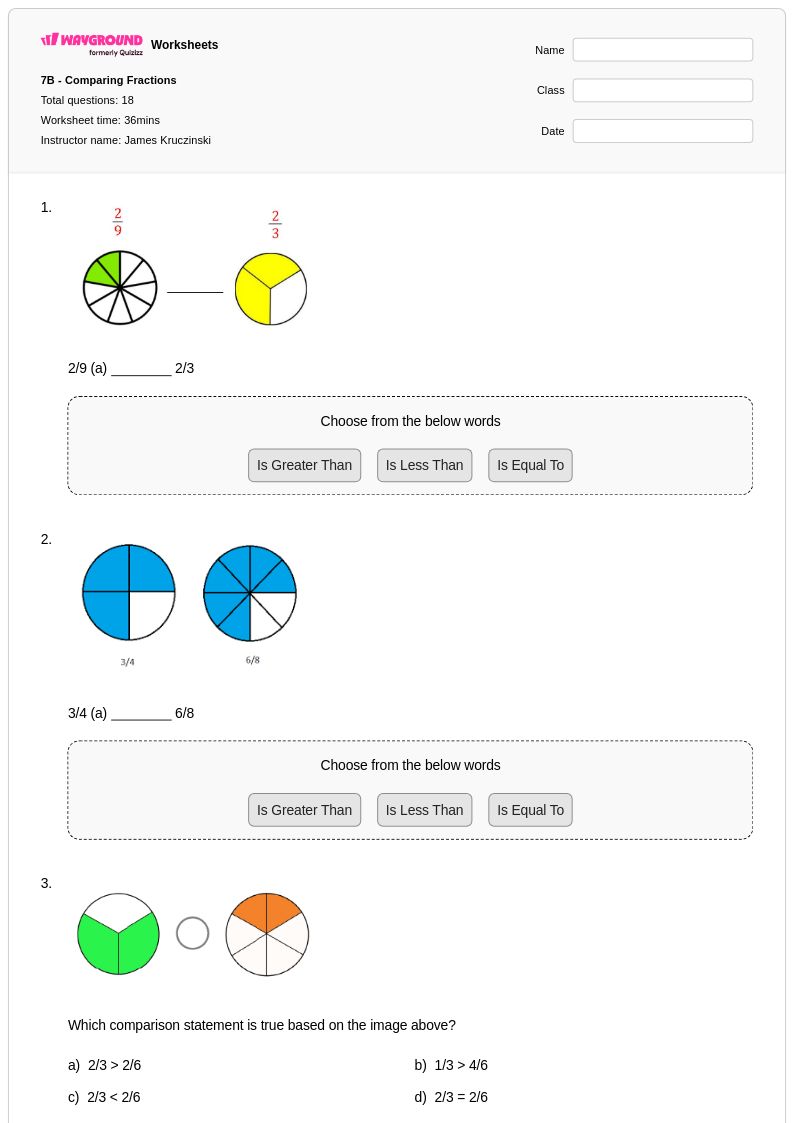
18 Q
KG - Uni
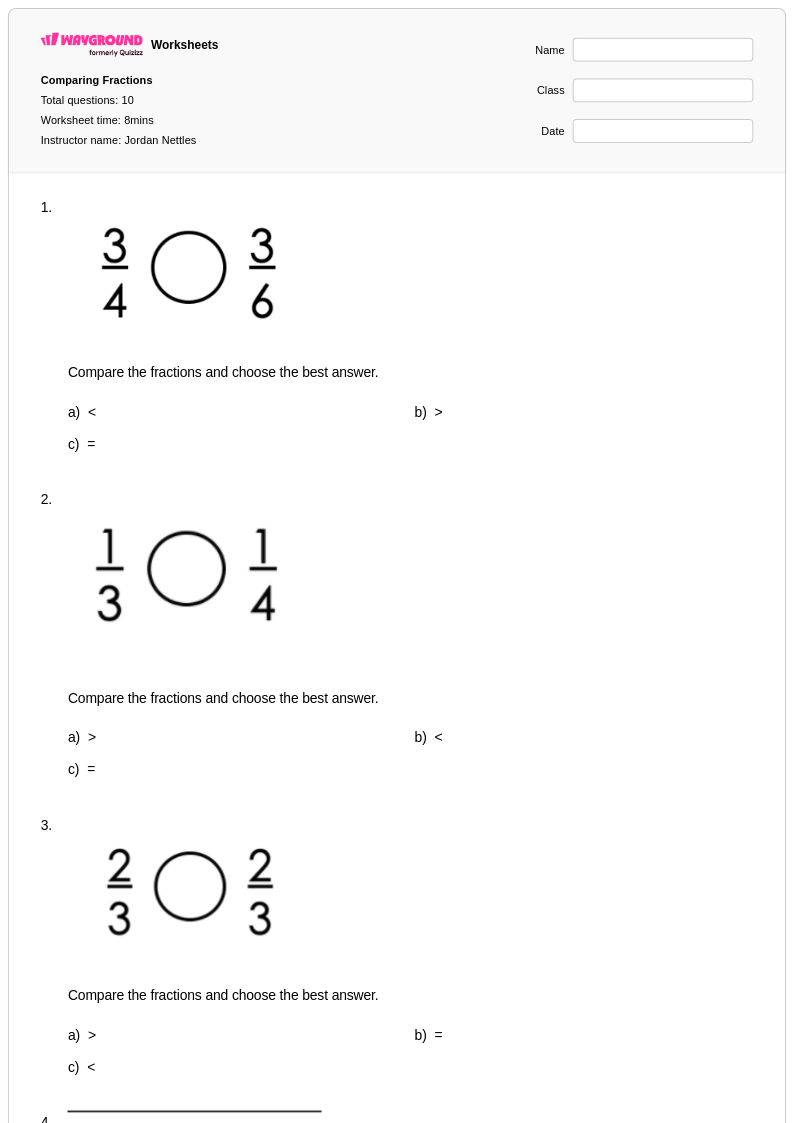
10 Q
4th
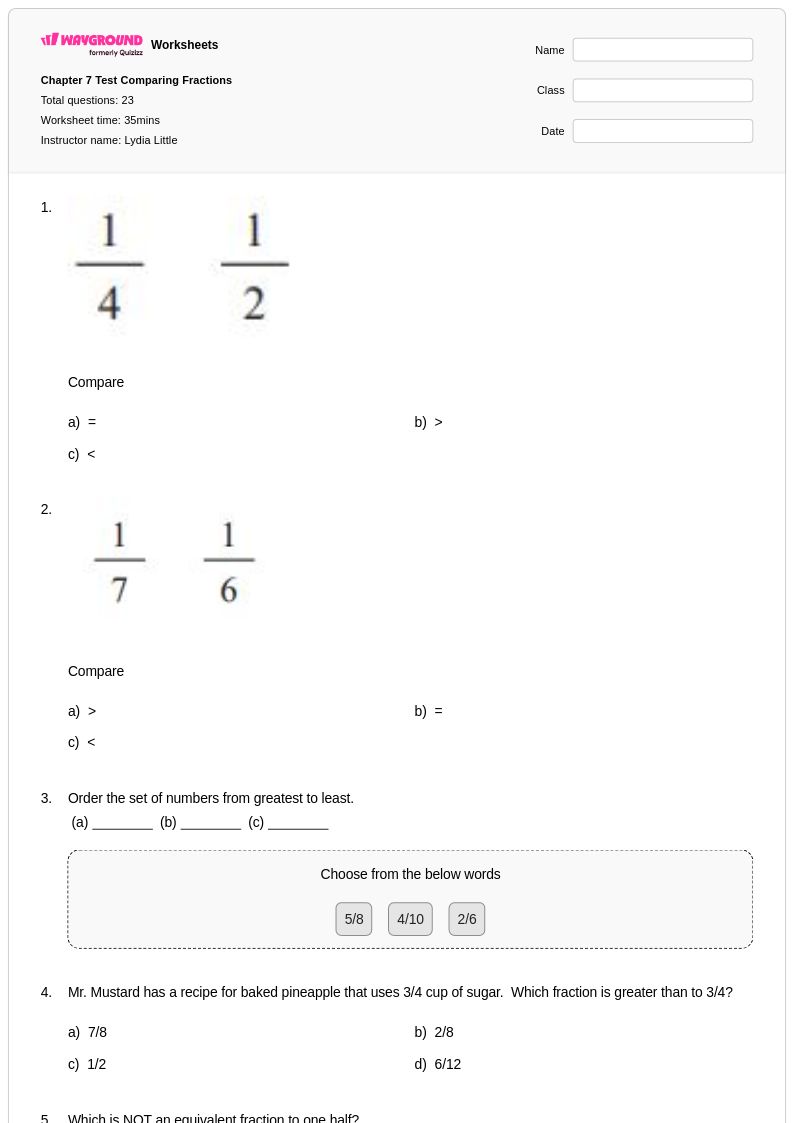
23 Q
4th
Explore Worksheets by Subjects
Explore printable Comparing Fractions worksheets
Comparing fractions worksheets available through Wayground (formerly Quizizz) provide students with systematic practice in determining the relative sizes and relationships between fractional quantities. These comprehensive worksheets strengthen essential mathematical reasoning skills by guiding learners through various comparison strategies, including finding common denominators, cross-multiplication techniques, and visual fraction models. Each worksheet collection includes detailed answer keys that support both independent study and classroom instruction, while the free printable format ensures accessibility for diverse learning environments. Students work through carefully sequenced practice problems that progress from basic fraction comparisons using like denominators to more complex scenarios involving mixed numbers and unlike denominators, building confidence and computational fluency through repeated application of comparison algorithms.
Wayground (formerly Quizizz) empowers educators with an extensive library of millions of teacher-created comparing fractions resources that streamline lesson planning and address diverse student needs. The platform's robust search and filtering capabilities allow teachers to quickly locate worksheets aligned with specific mathematical standards and learning objectives, while built-in differentiation tools enable customization for various skill levels and learning styles. These comparing fractions collections are available in both printable pdf formats for traditional classroom use and digital versions that support interactive learning experiences. Teachers can leverage these versatile resources for targeted remediation with struggling learners, enrichment activities for advanced students, or systematic skill practice across entire classrooms, ensuring that every student develops strong foundational understanding of fractional relationships and comparison strategies.