
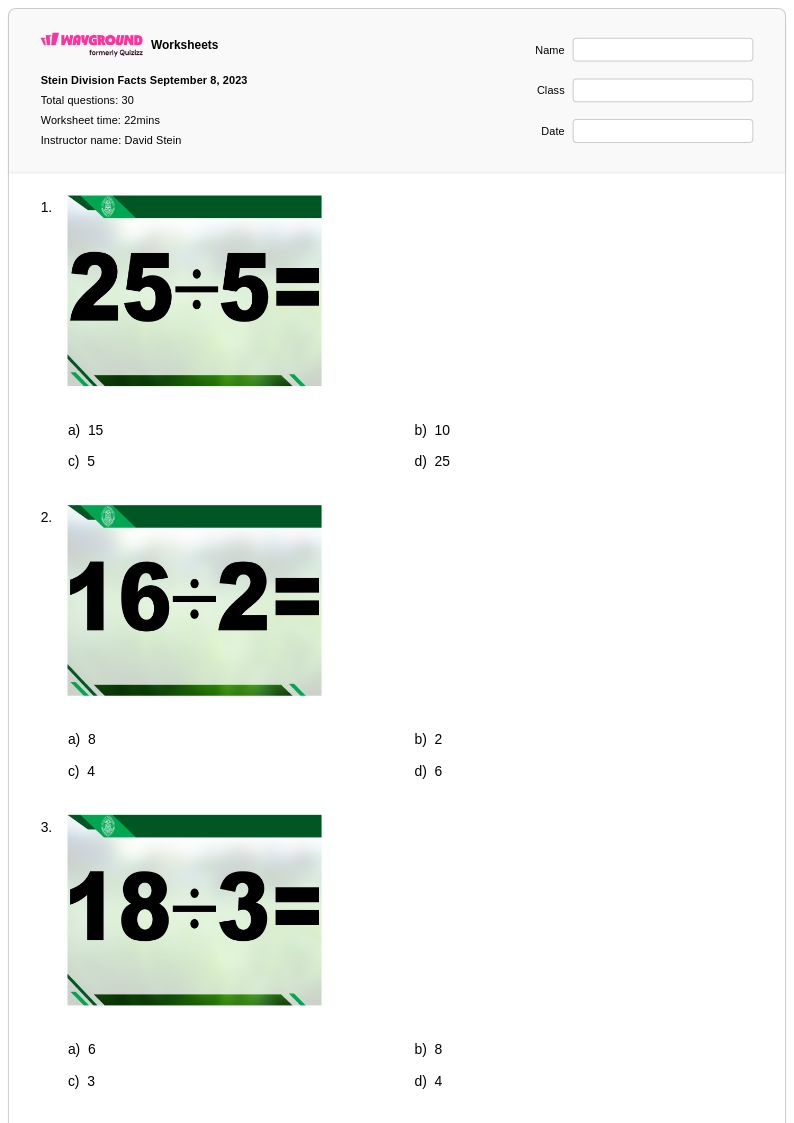
30Q
5th
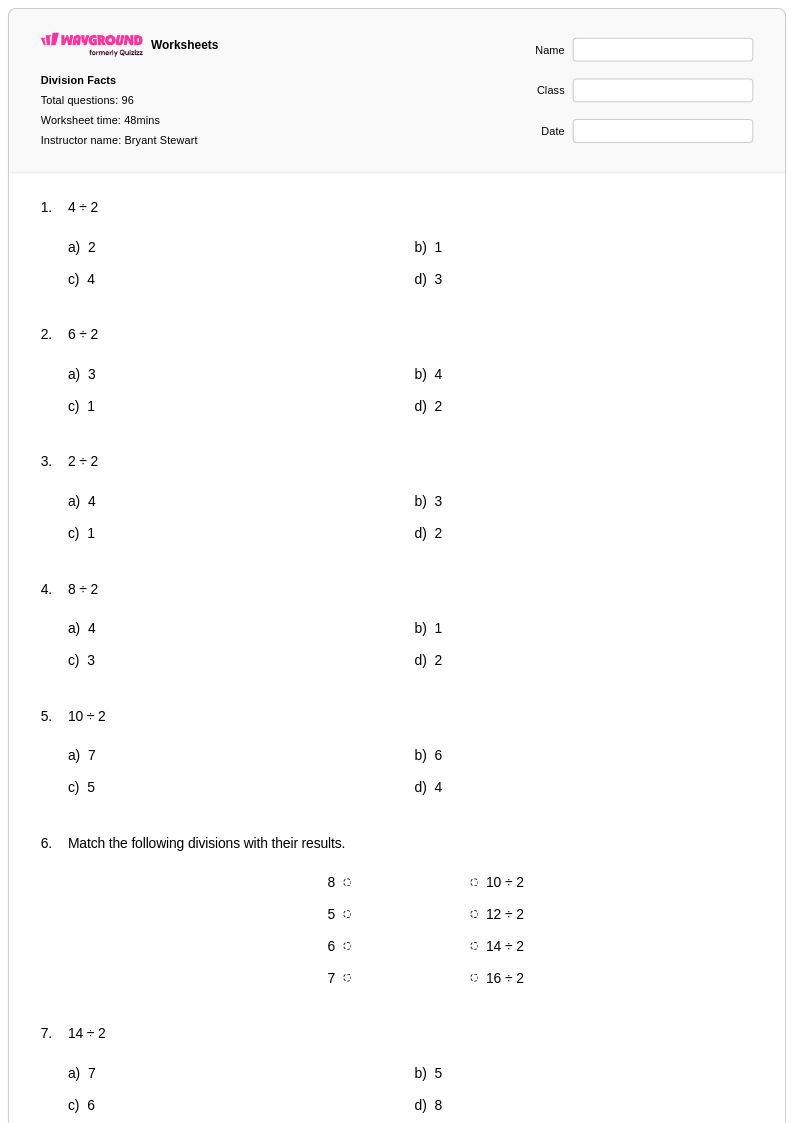
96Q
5th
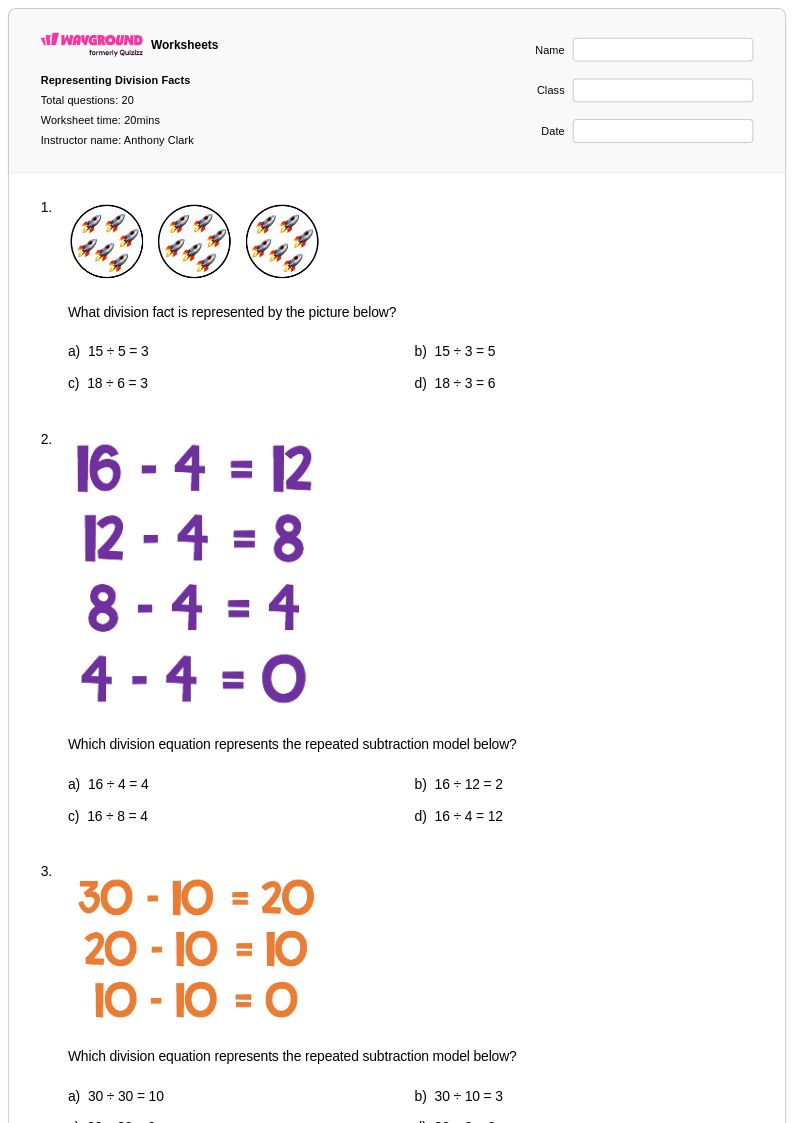
20Q
3rd - Uni
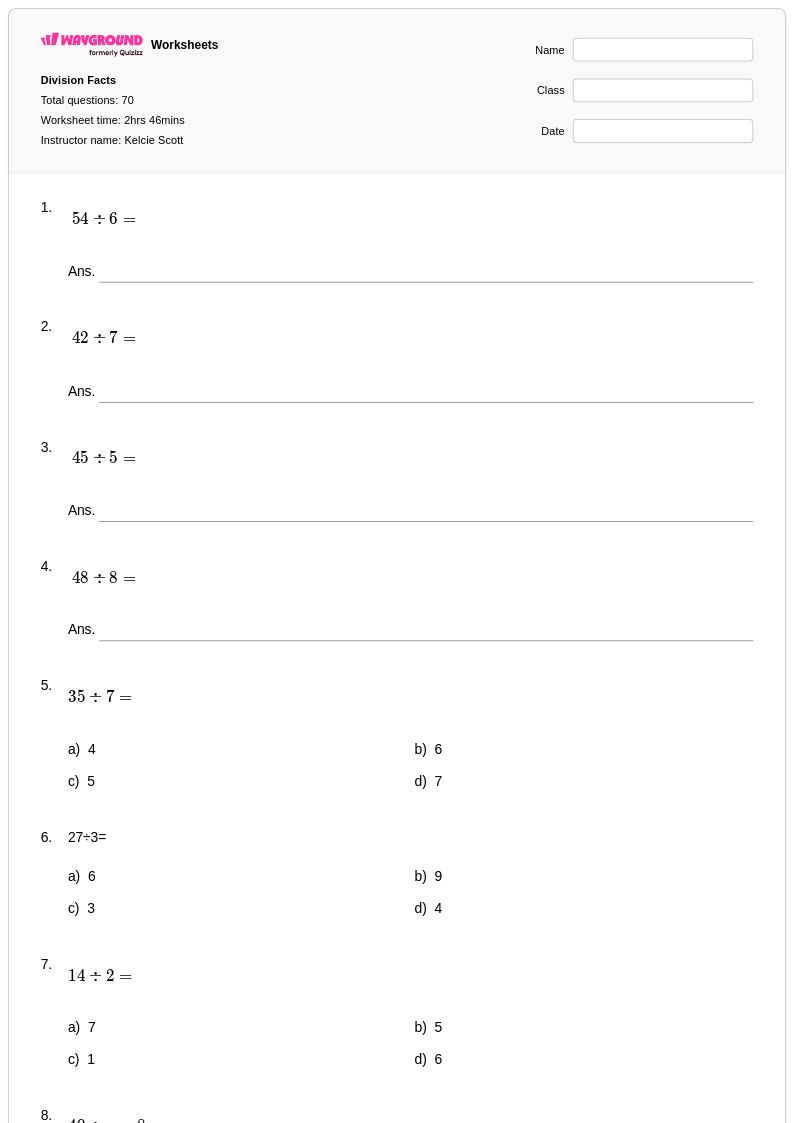
70Q
5th
20Q
3rd - Uni
20Q
3rd - Uni
146Q
3rd - 6th
19Q
3rd - Uni
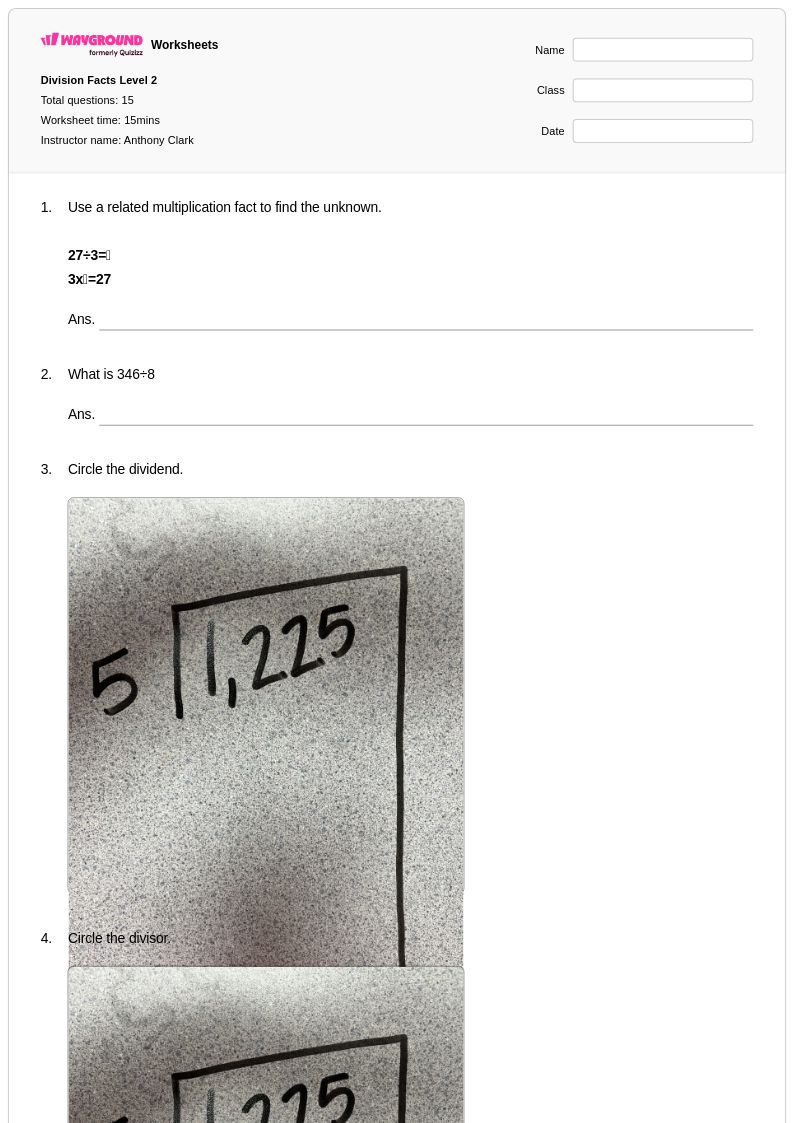
15Q
4th - Uni
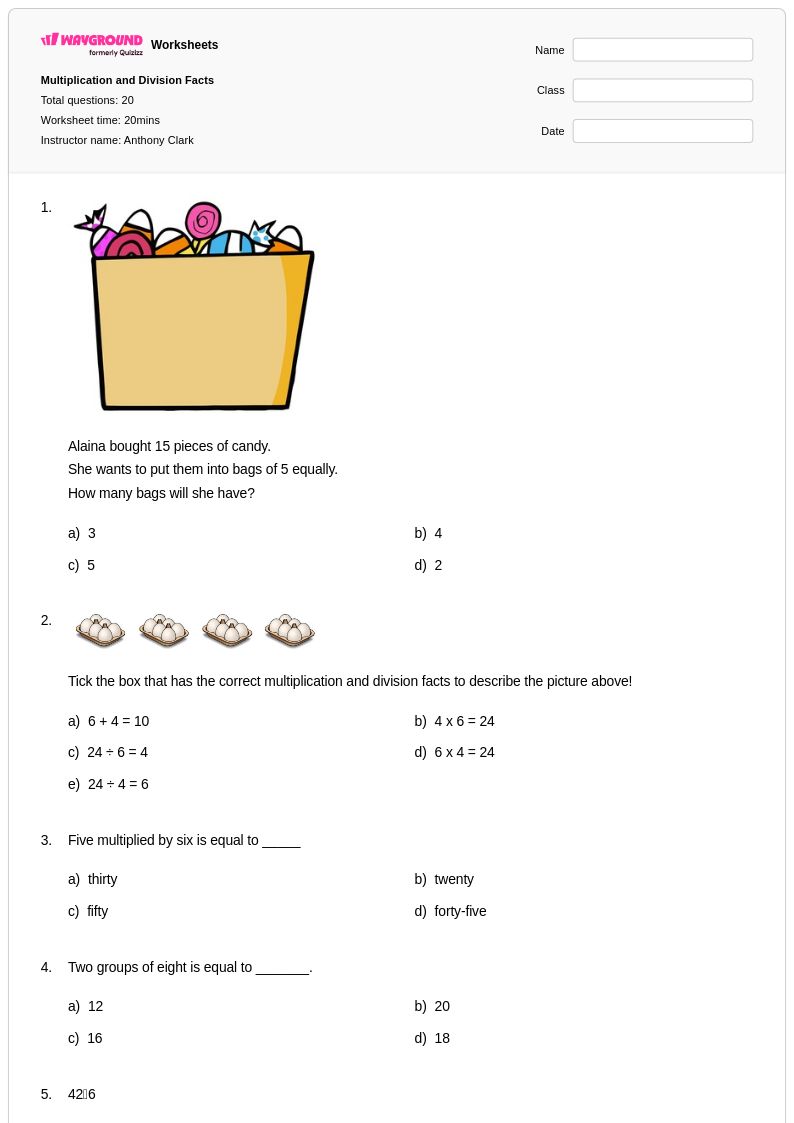
20Q
4th - Uni
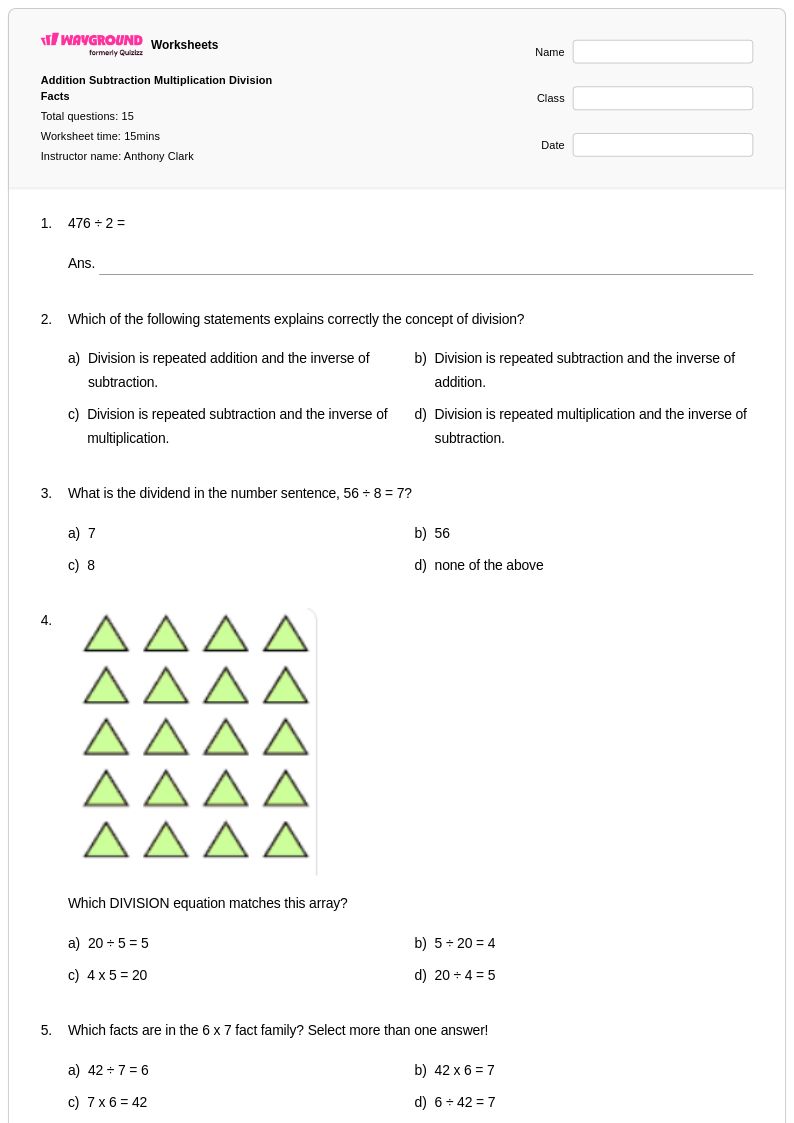
15Q
3rd - Uni
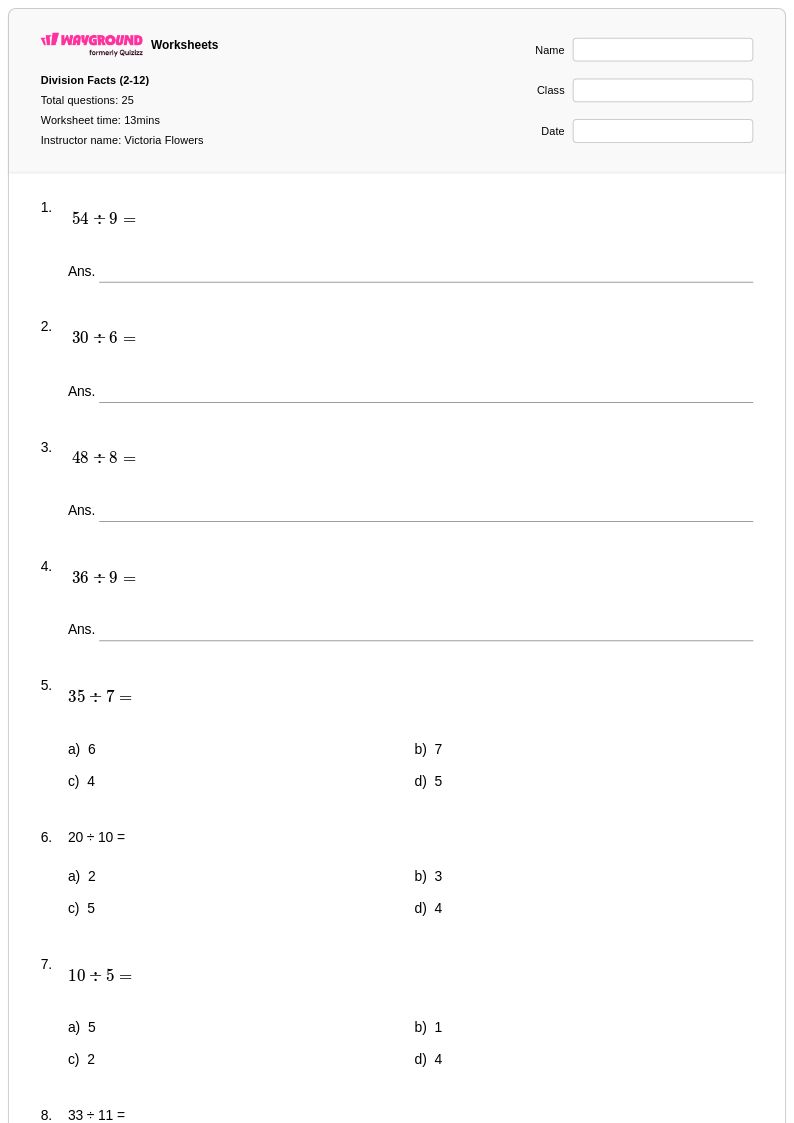
25Q
1st - 5th
20Q
3rd - Uni
20Q
3rd - 5th
10Q
5th
11Q
3rd - Uni
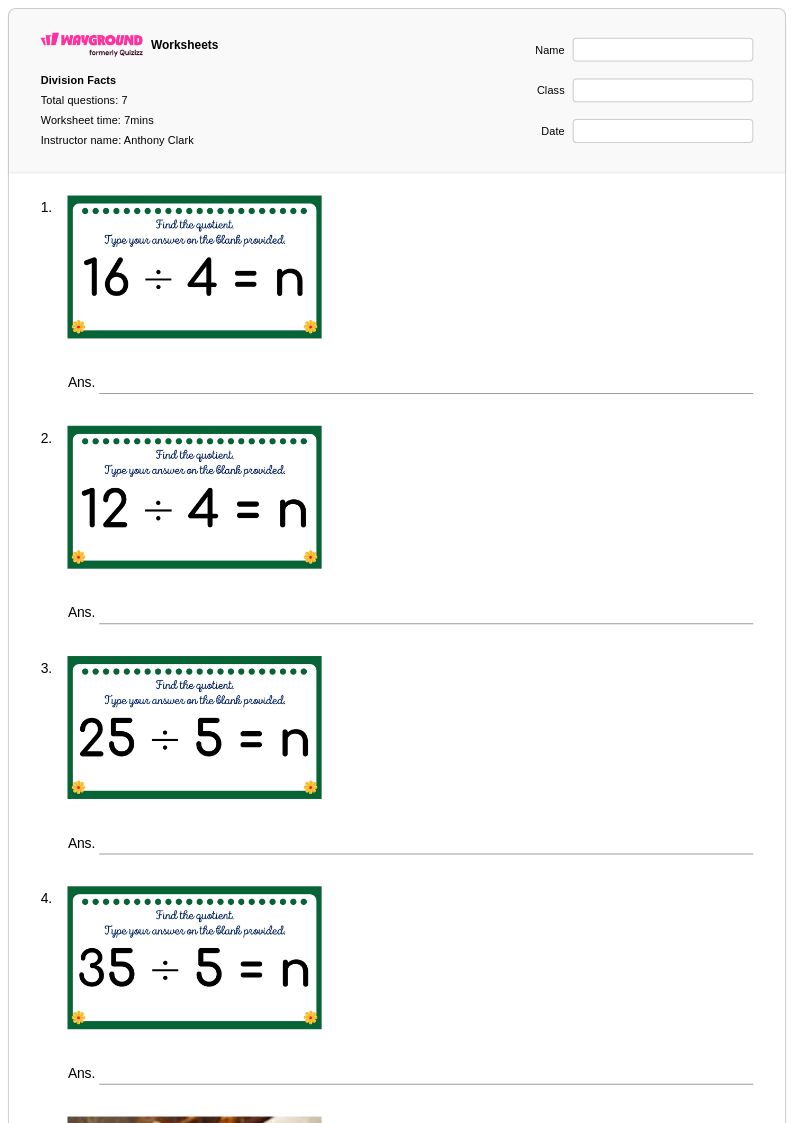
7Q
3rd - Uni
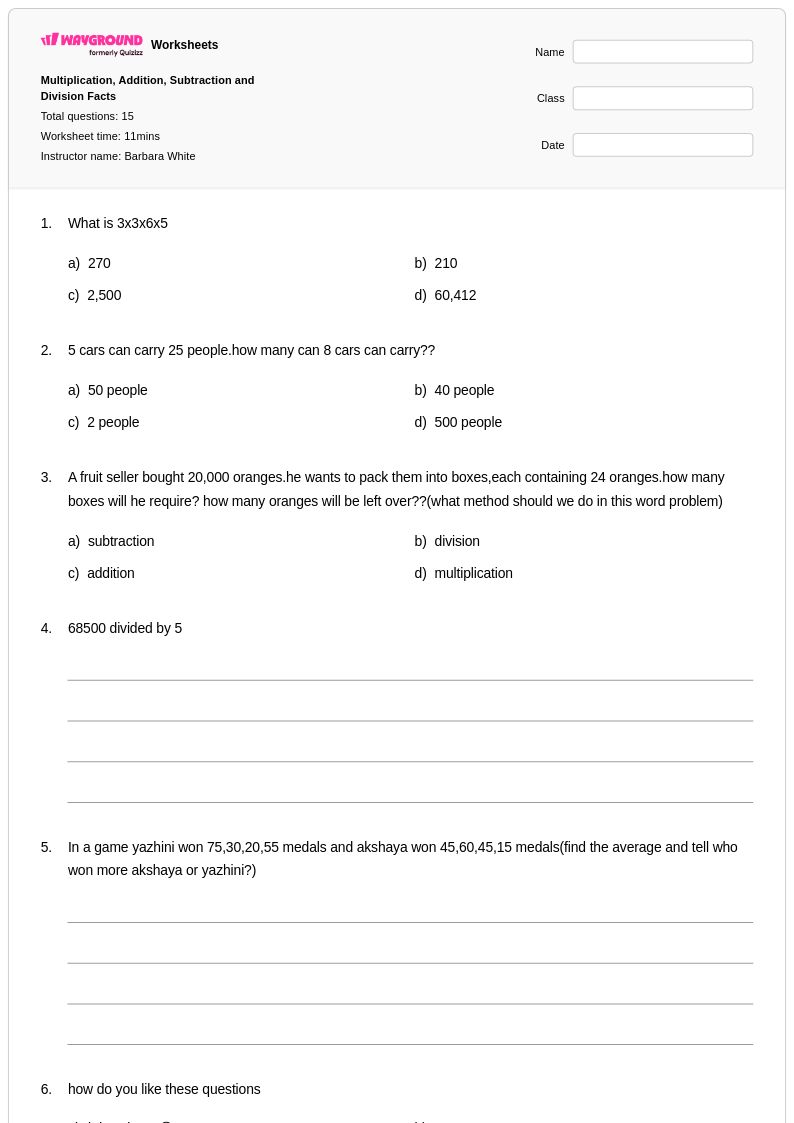
15Q
5th
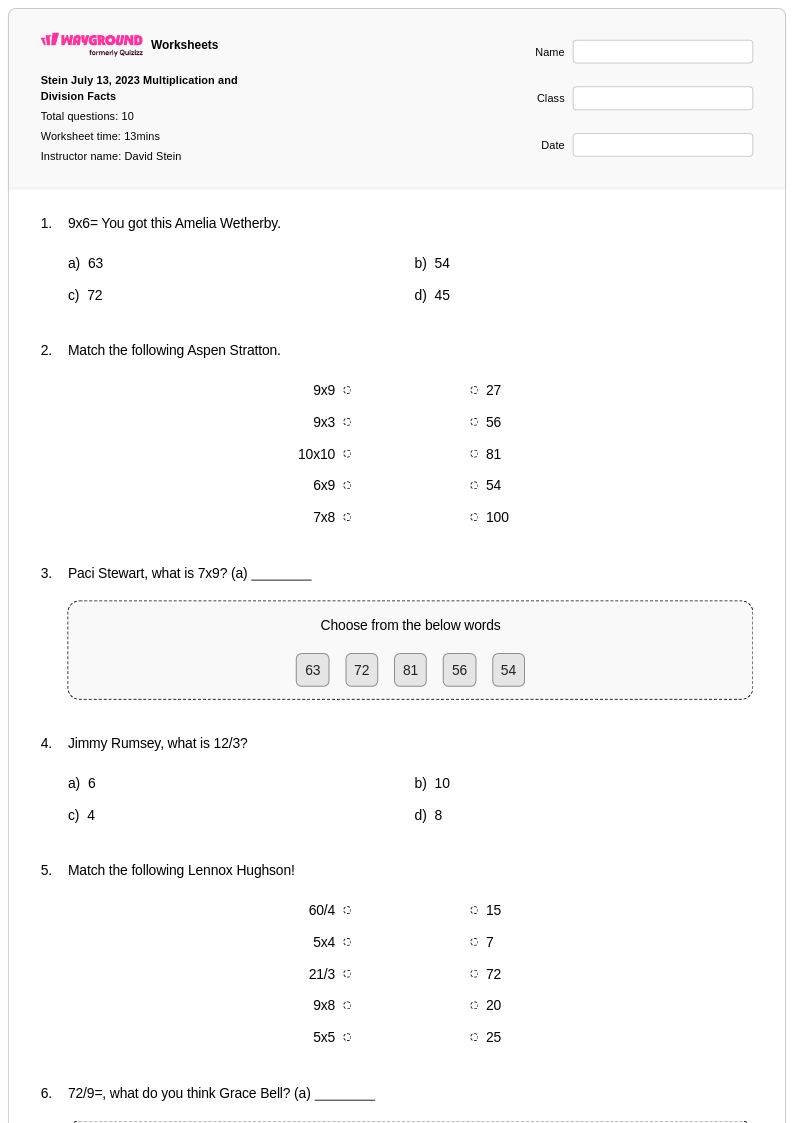
10Q
5th
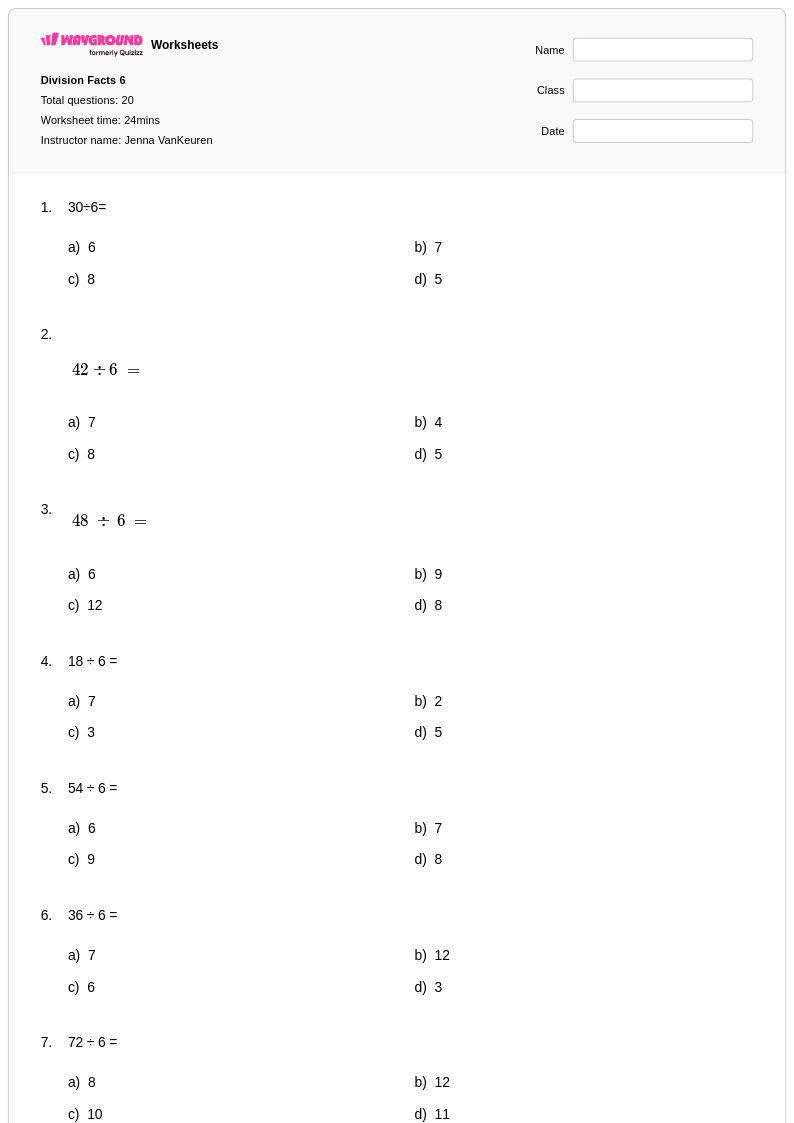
20Q
5th - 6th
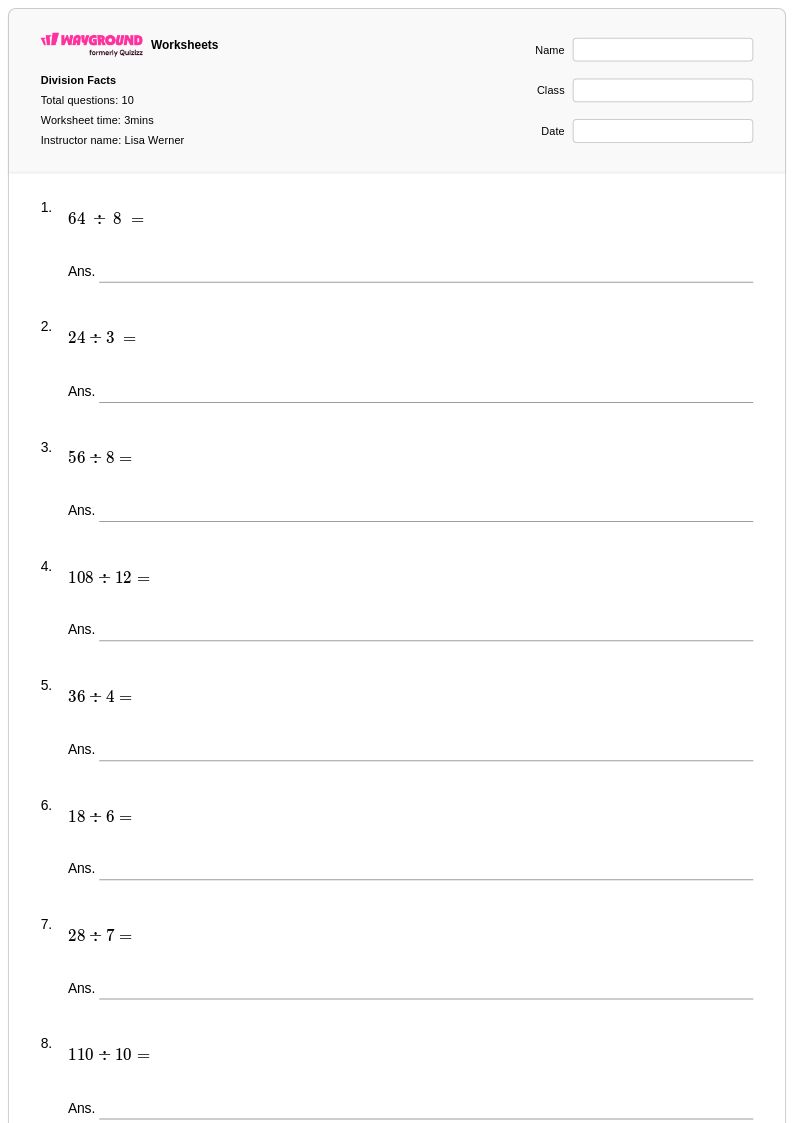
10Q
5th
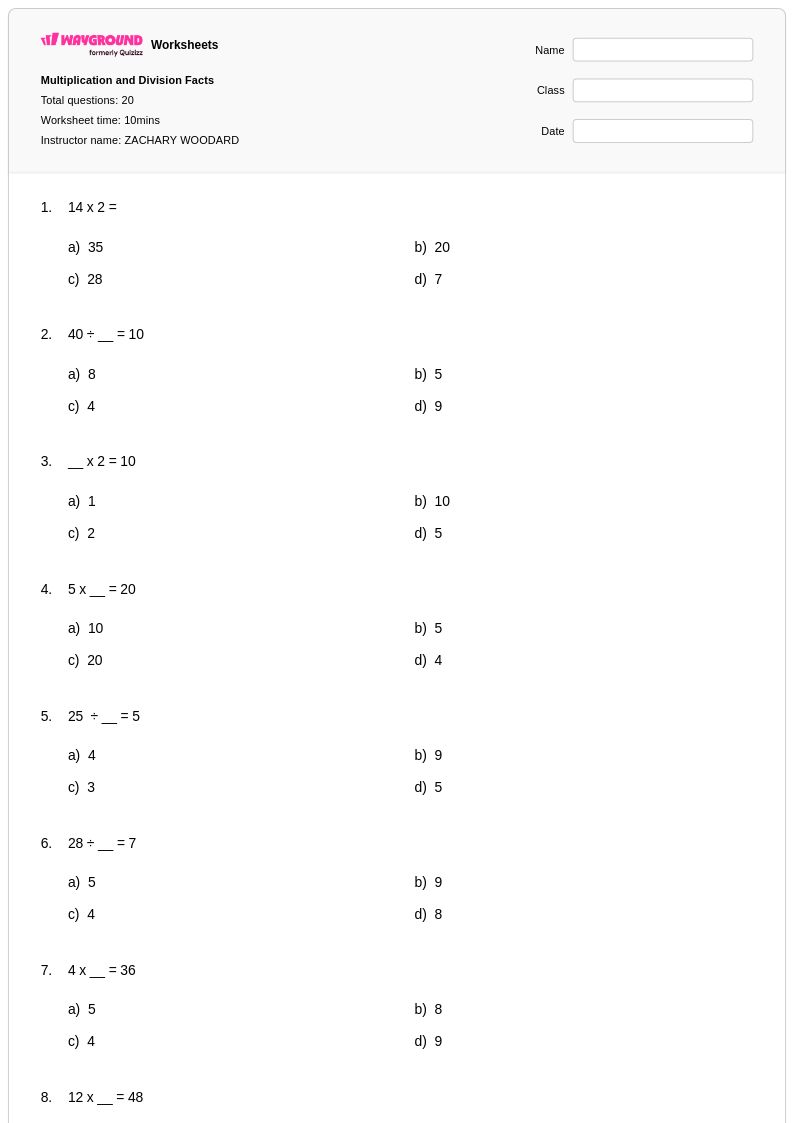
20Q
5th - 6th
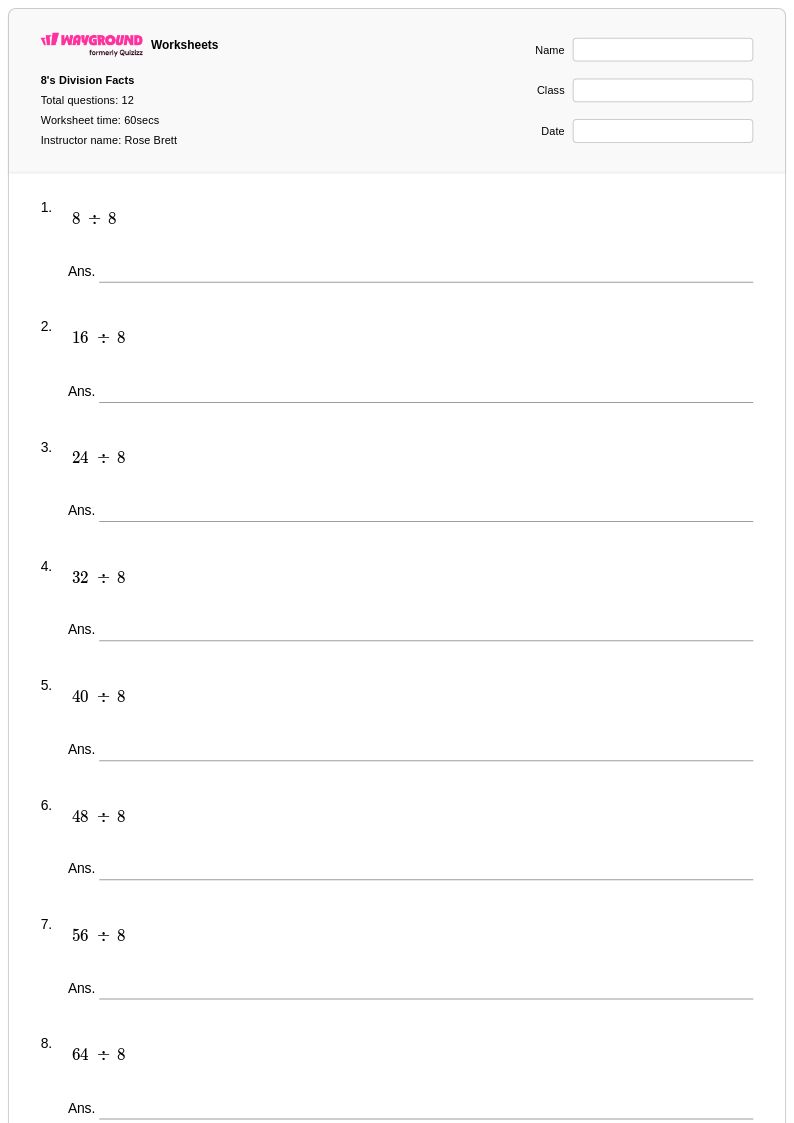
12Q
3rd - 5th
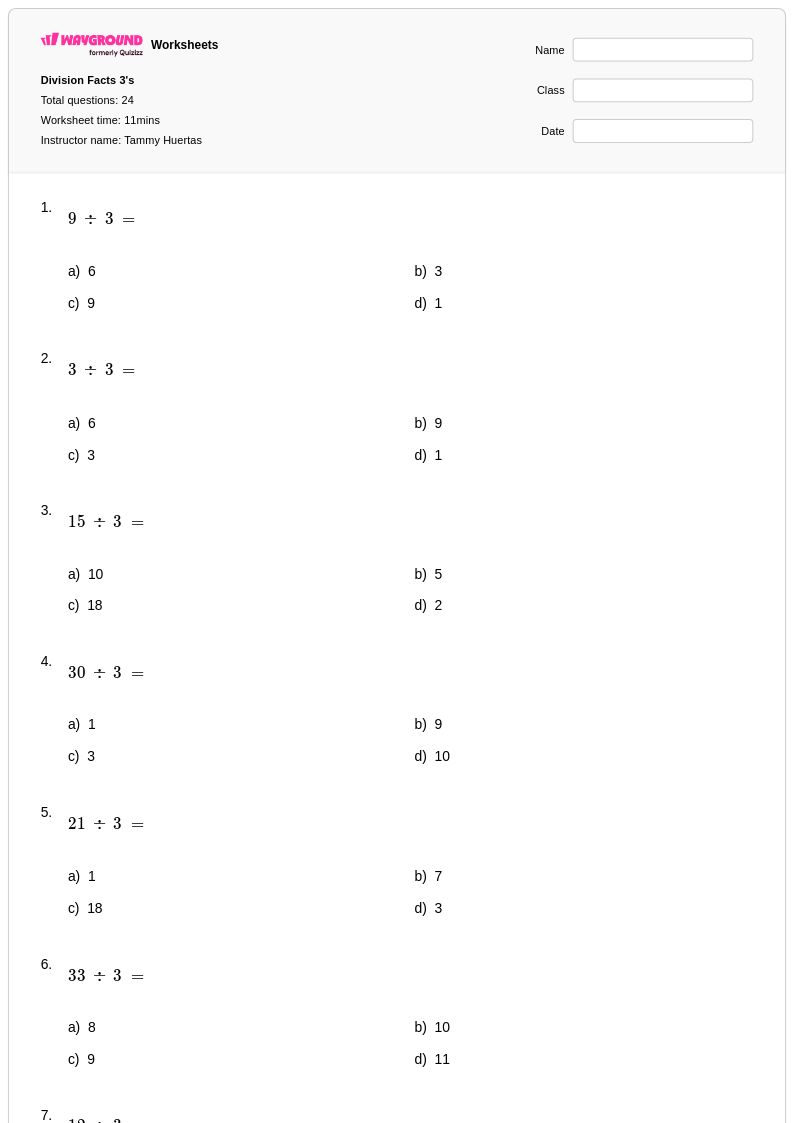
24Q
3rd - 5th
Explore otras hojas de trabajo de materias para grade 5
Explore printable Division Facts worksheets for Grade 5
Division facts form the cornerstone of mathematical fluency for Grade 5 students, serving as essential building blocks for more advanced mathematical concepts. Wayground's comprehensive collection of division facts worksheets provides targeted practice that helps students master fundamental division relationships through systematic repetition and application. These carefully designed printables focus on developing automatic recall of basic division facts, enabling students to solve problems efficiently without relying on time-consuming calculation methods. Each worksheet includes a complete answer key and offers varied practice problems that reinforce the inverse relationship between multiplication and division, while building the computational confidence students need for success in fractions, decimals, and multi-step problem solving. Available as free pdf downloads, these resources ensure that teachers can provide consistent practice opportunities that strengthen mathematical foundations.
Wayground's extensive platform, built from the foundation of Quizizz, empowers educators with millions of teacher-created division facts resources that can be easily customized to meet diverse classroom needs. The robust search and filtering capabilities allow teachers to quickly locate worksheets aligned with specific standards and skill levels, while built-in differentiation tools enable seamless adaptation for students requiring additional support or enrichment challenges. These division facts collections are available in both printable and digital formats, providing flexibility for traditional classroom instruction, homework assignments, or technology-integrated learning environments. Teachers can efficiently plan targeted intervention sessions, create remediation packets, or design enrichment activities that challenge advanced learners, all while maintaining focus on the critical skill development that ensures students achieve automaticity with essential division facts before progressing to more complex mathematical concepts.