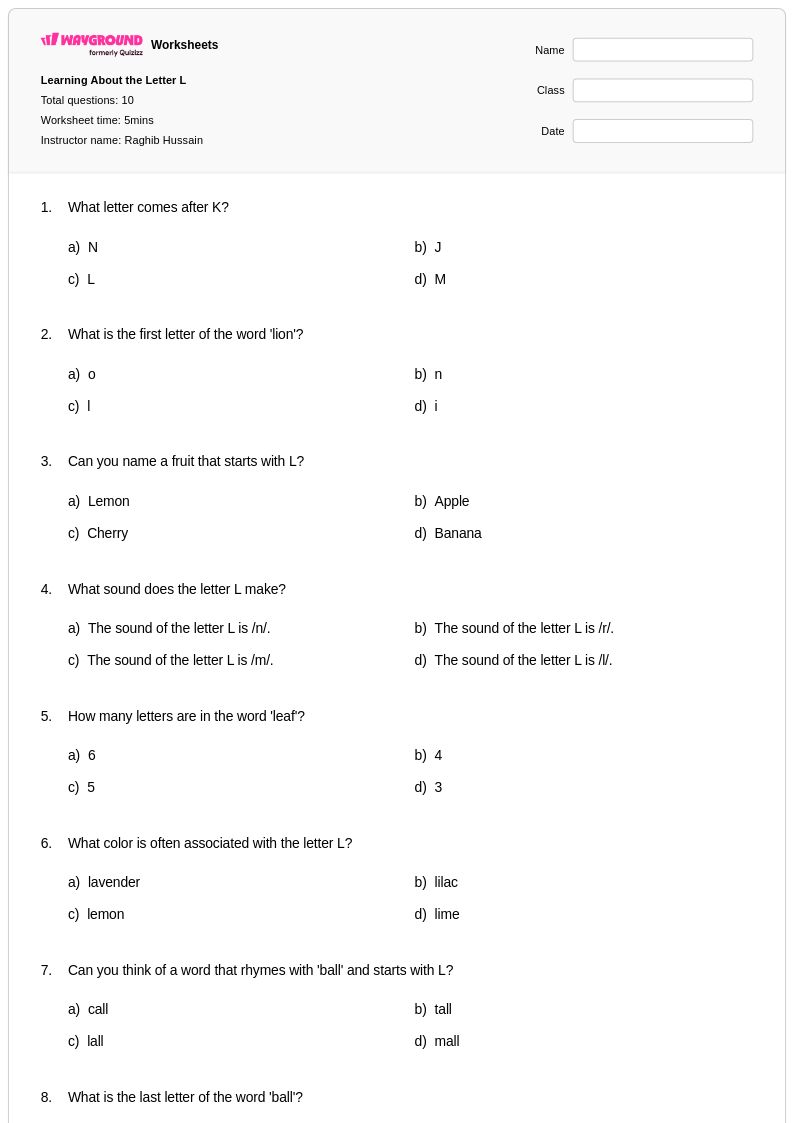
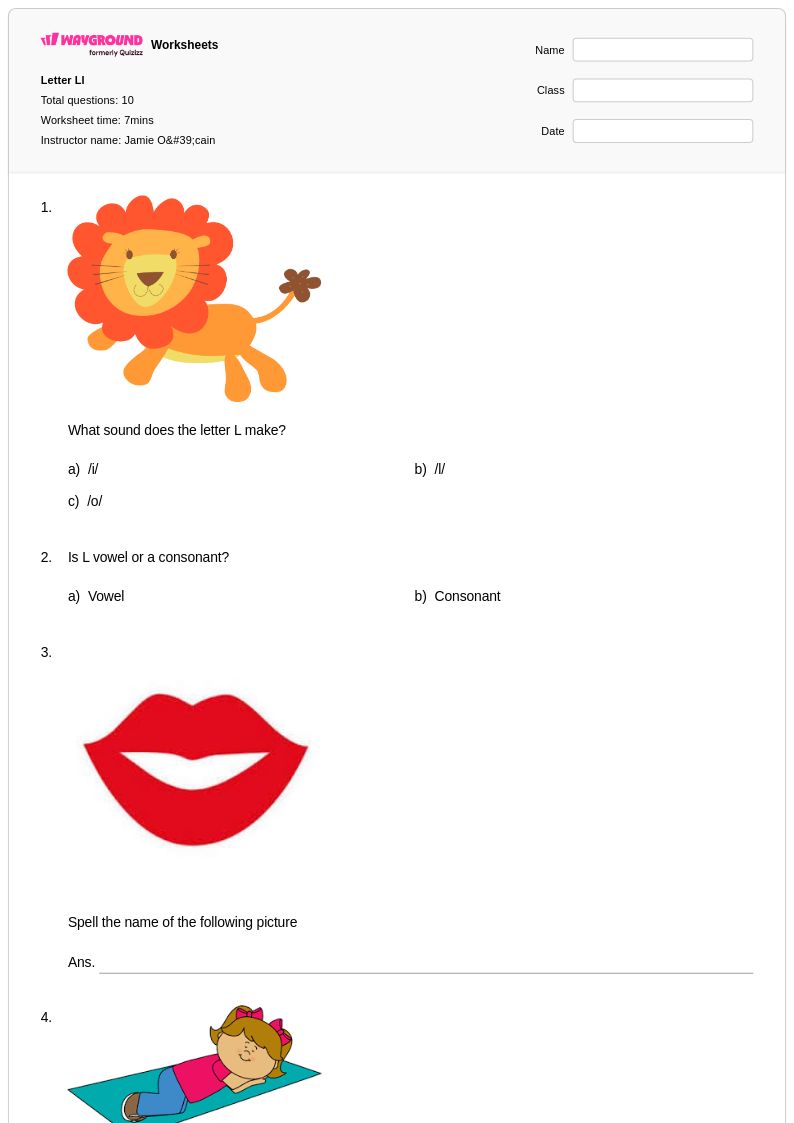
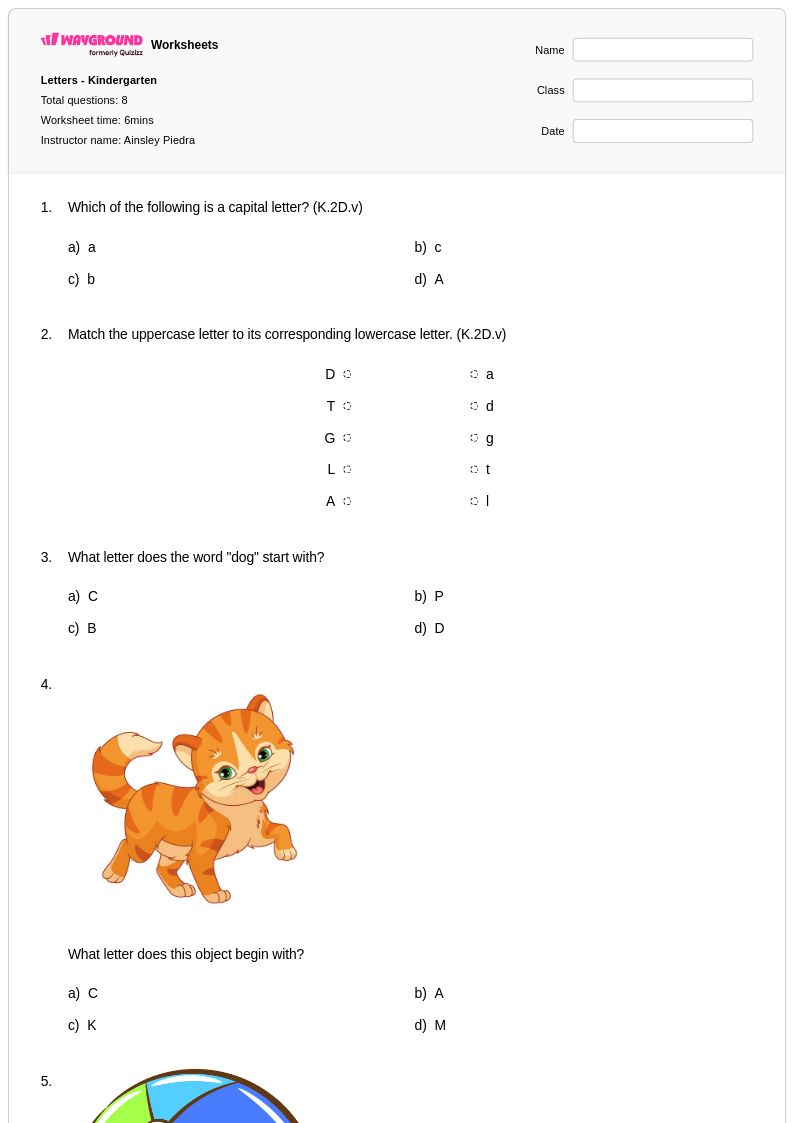
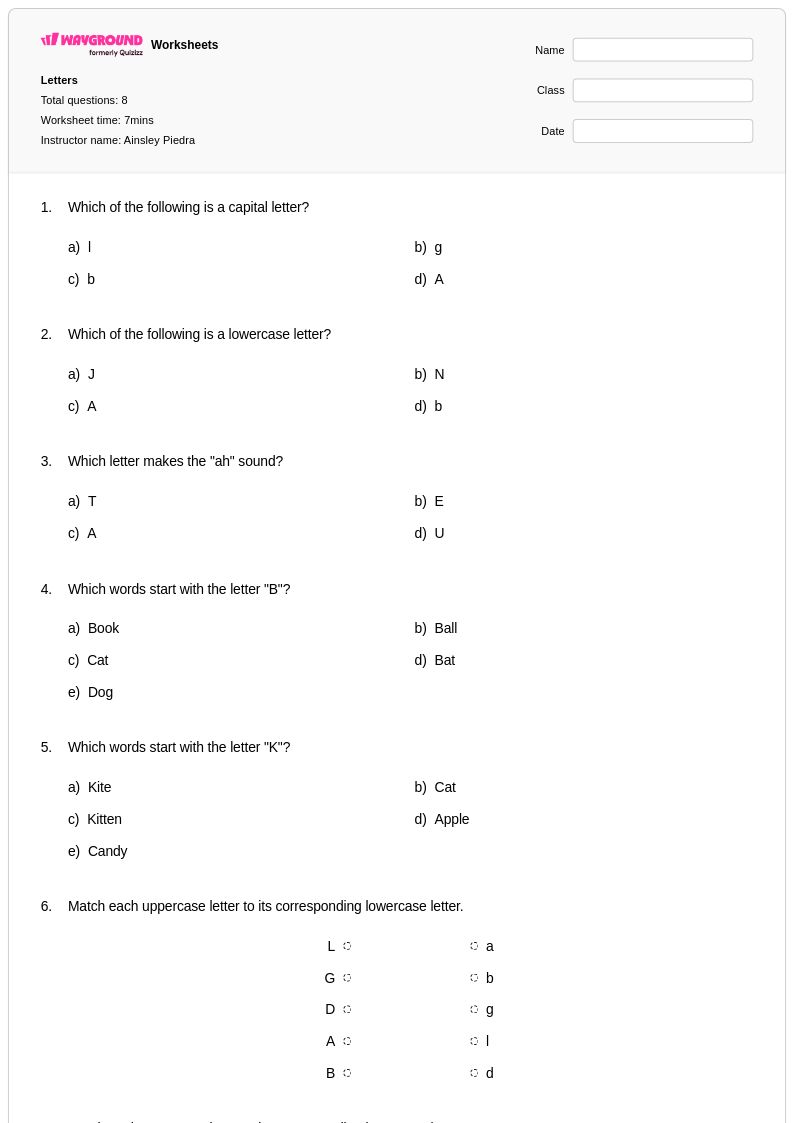
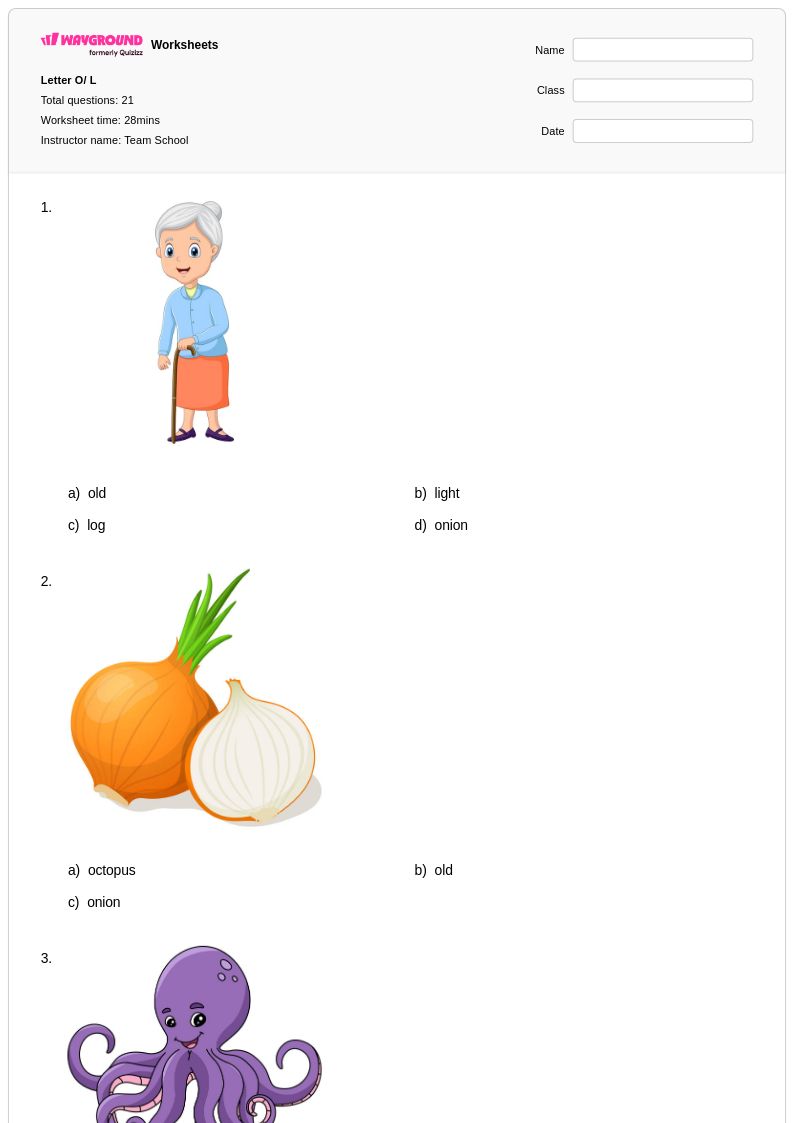
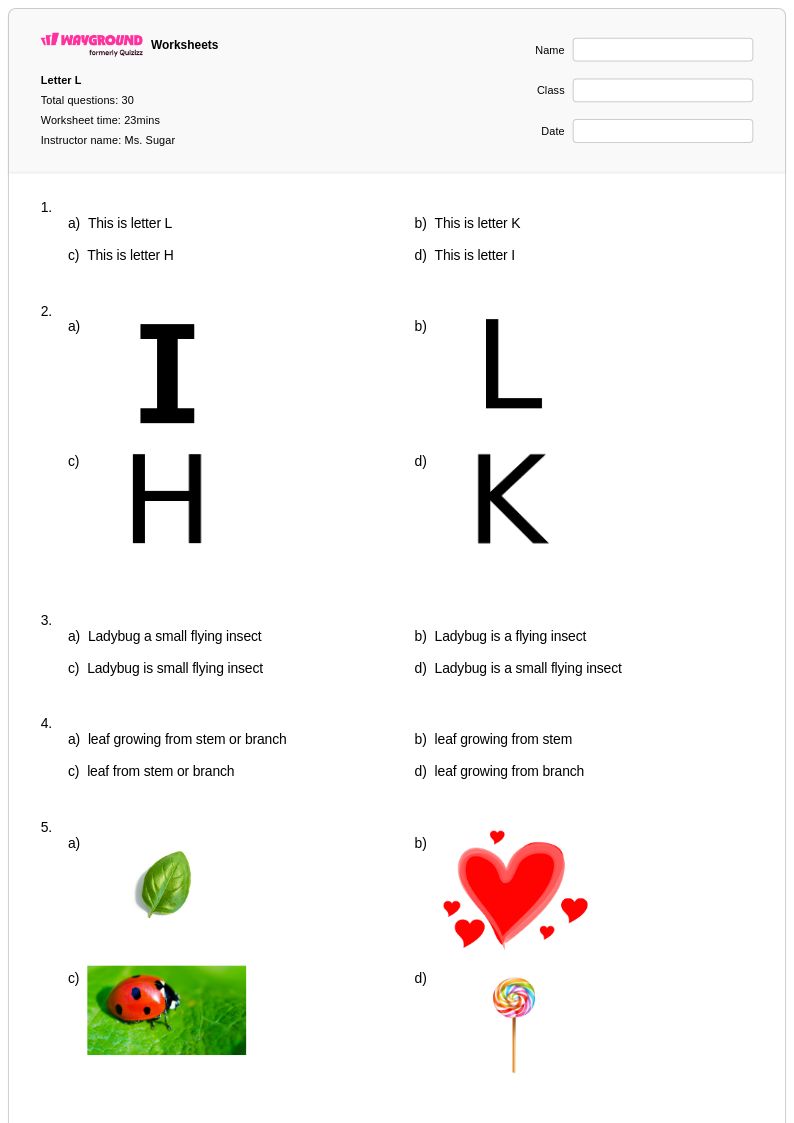
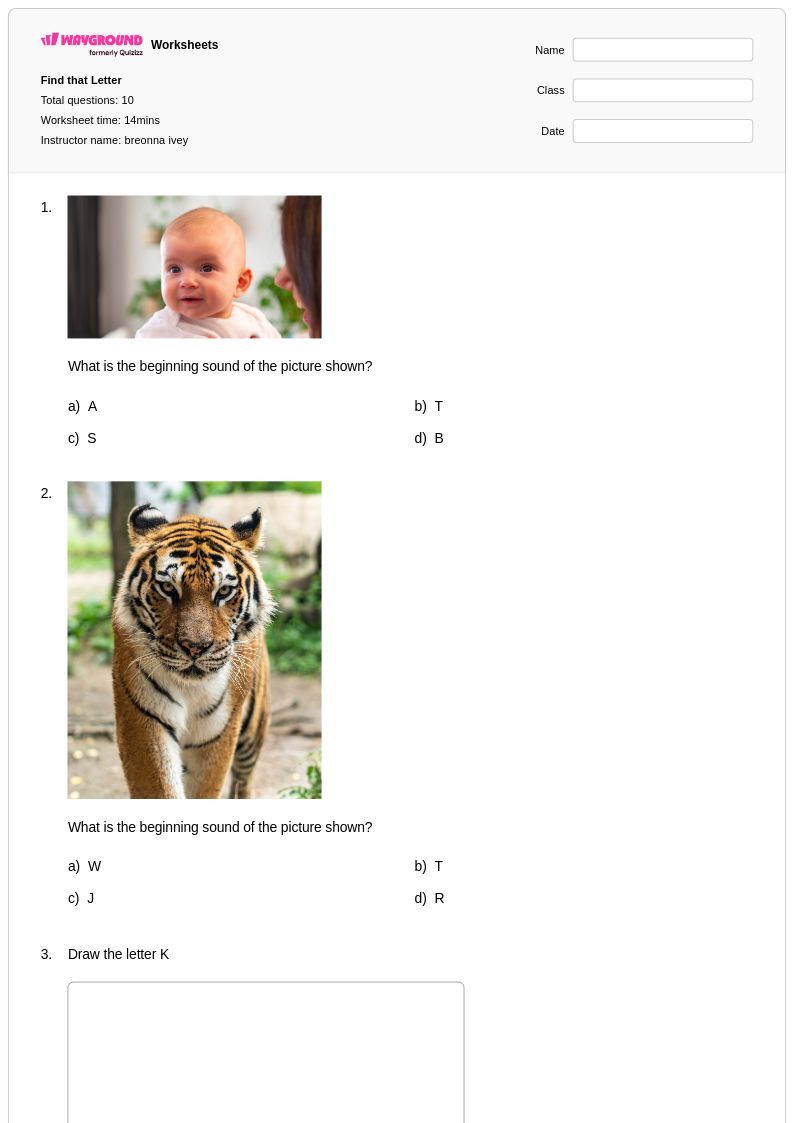
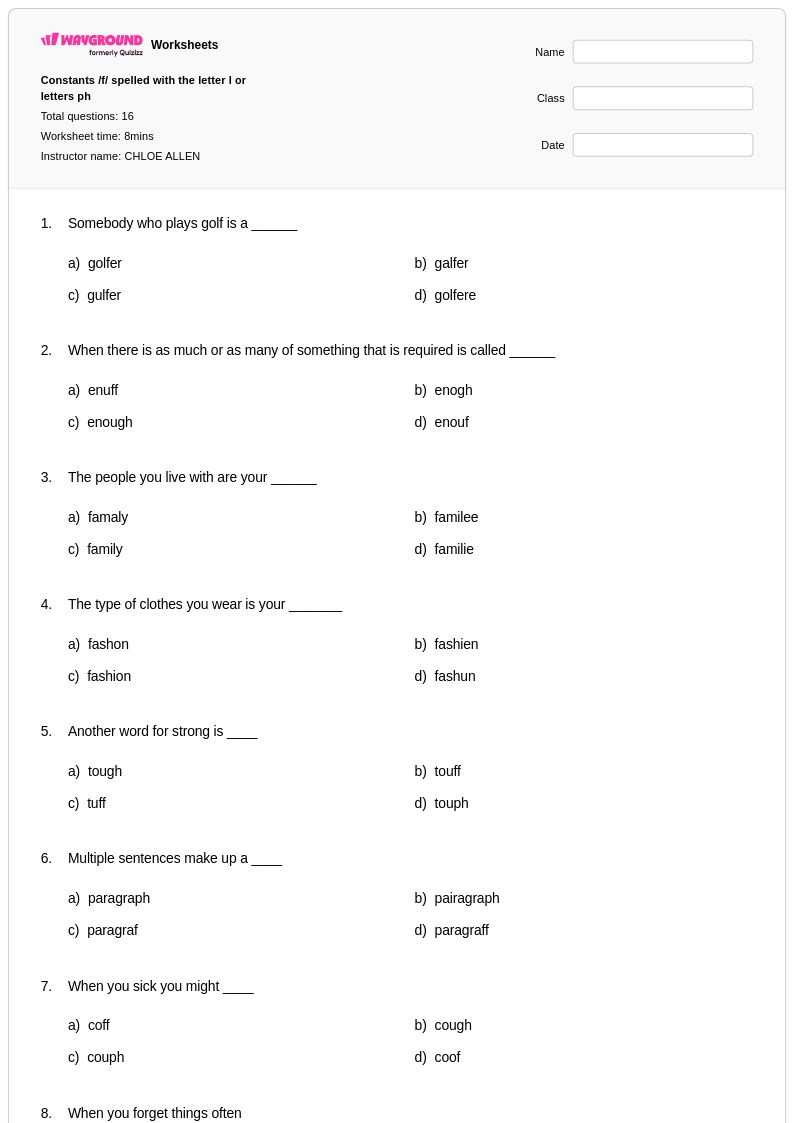
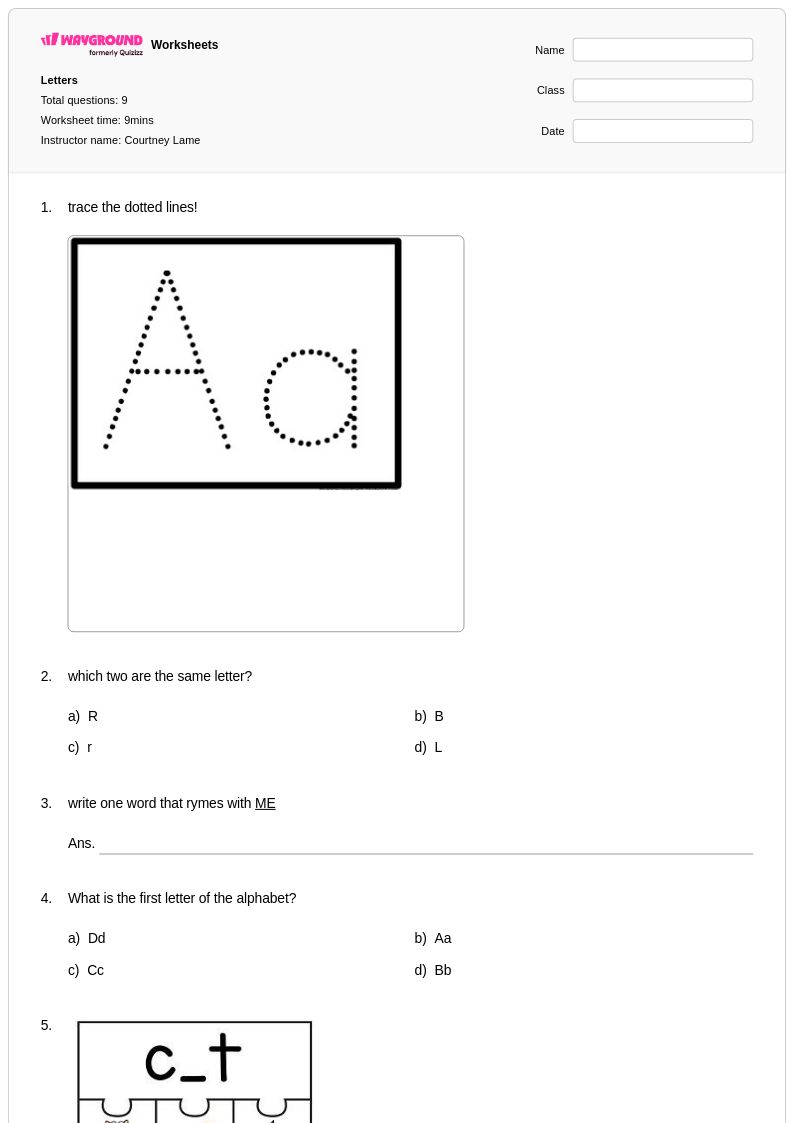
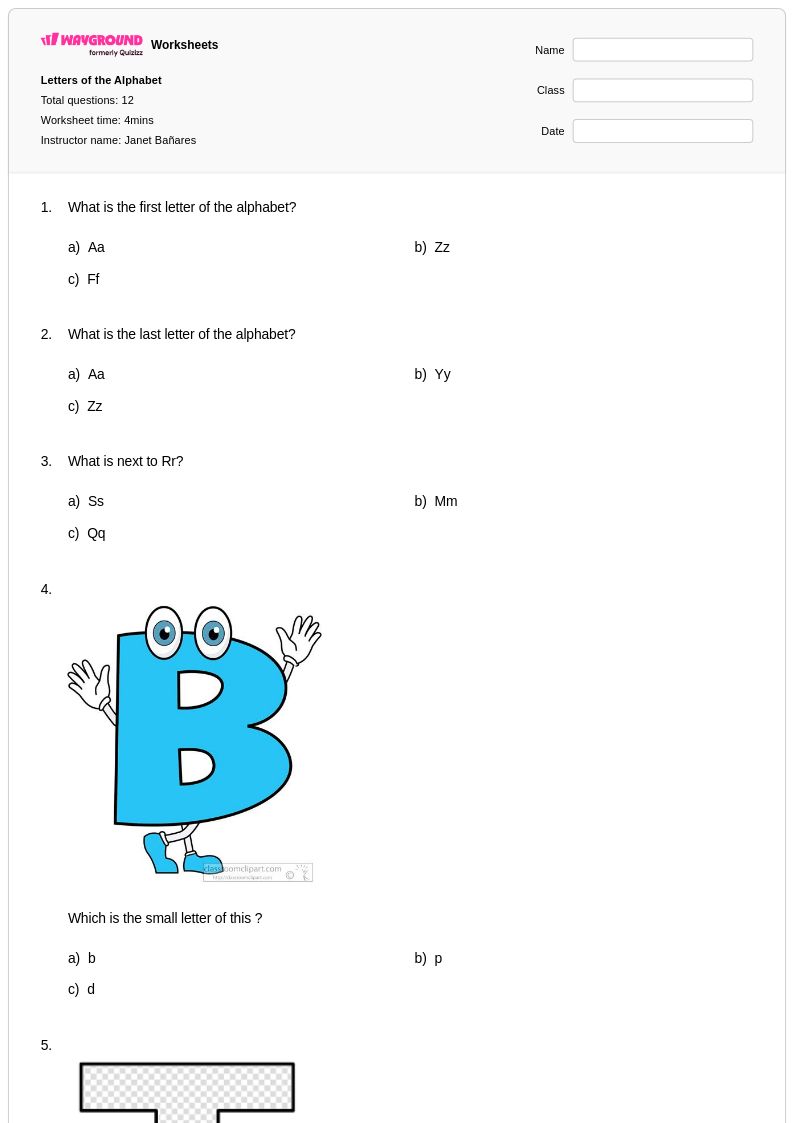
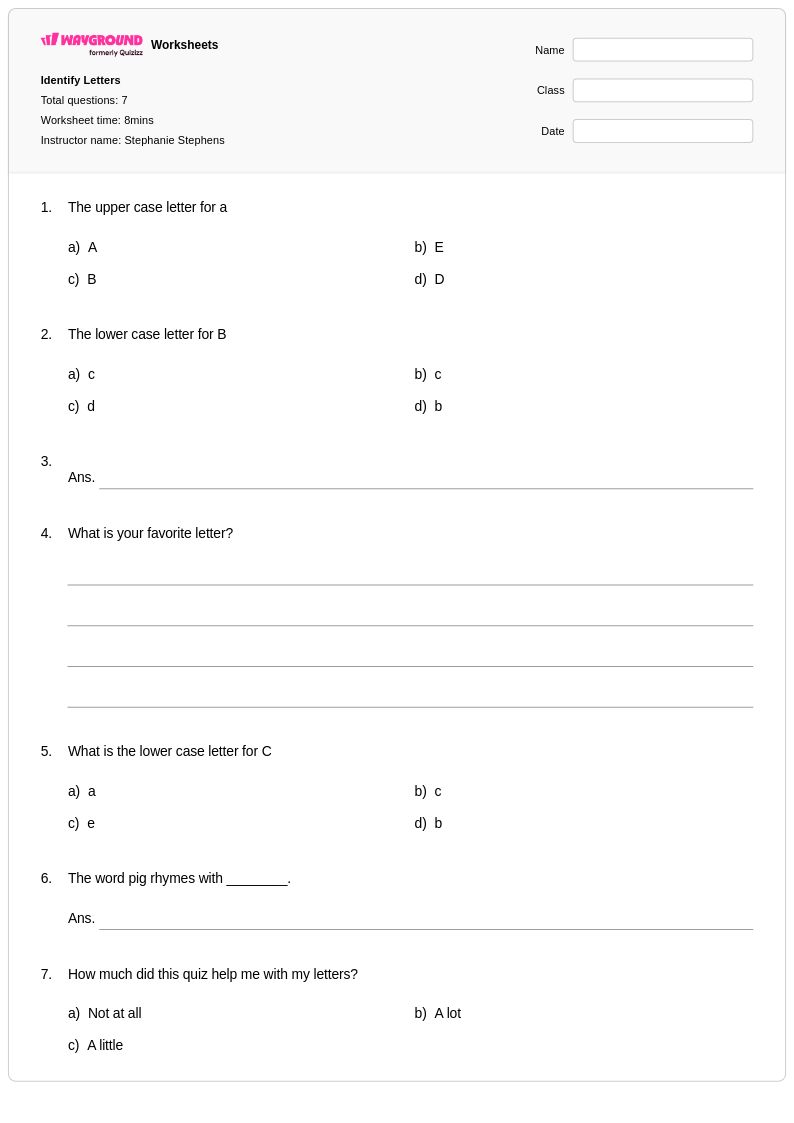
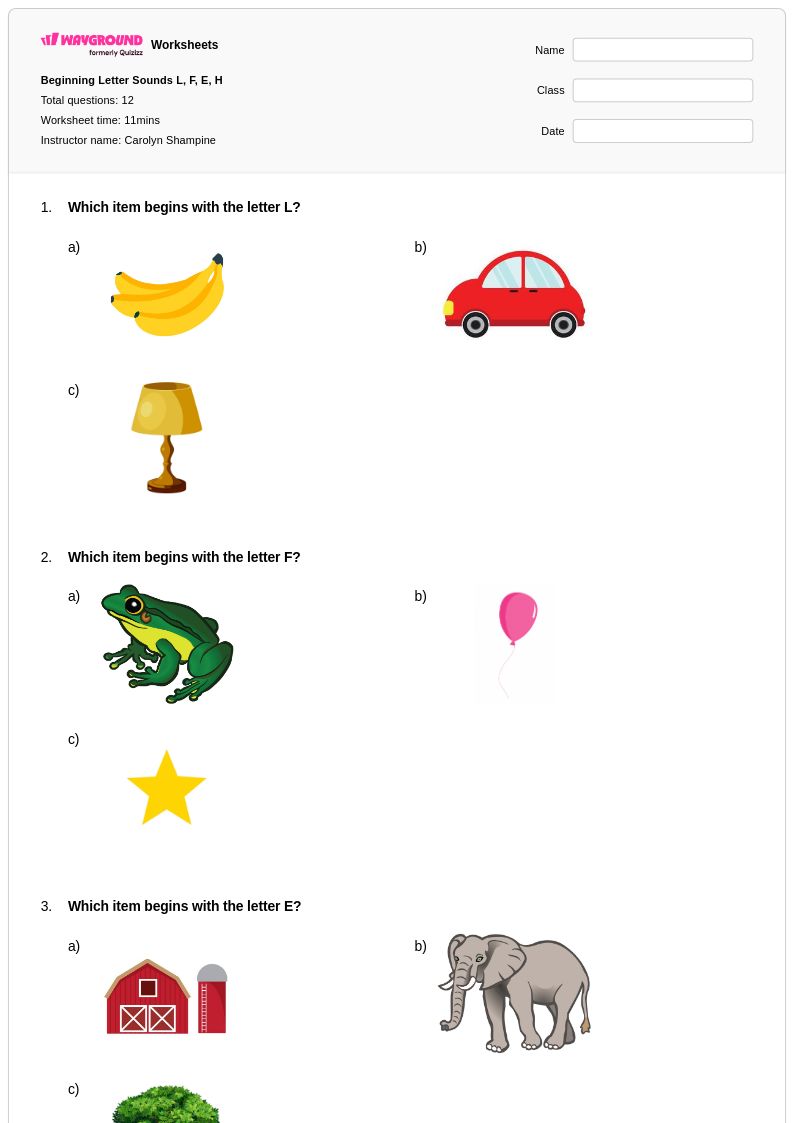
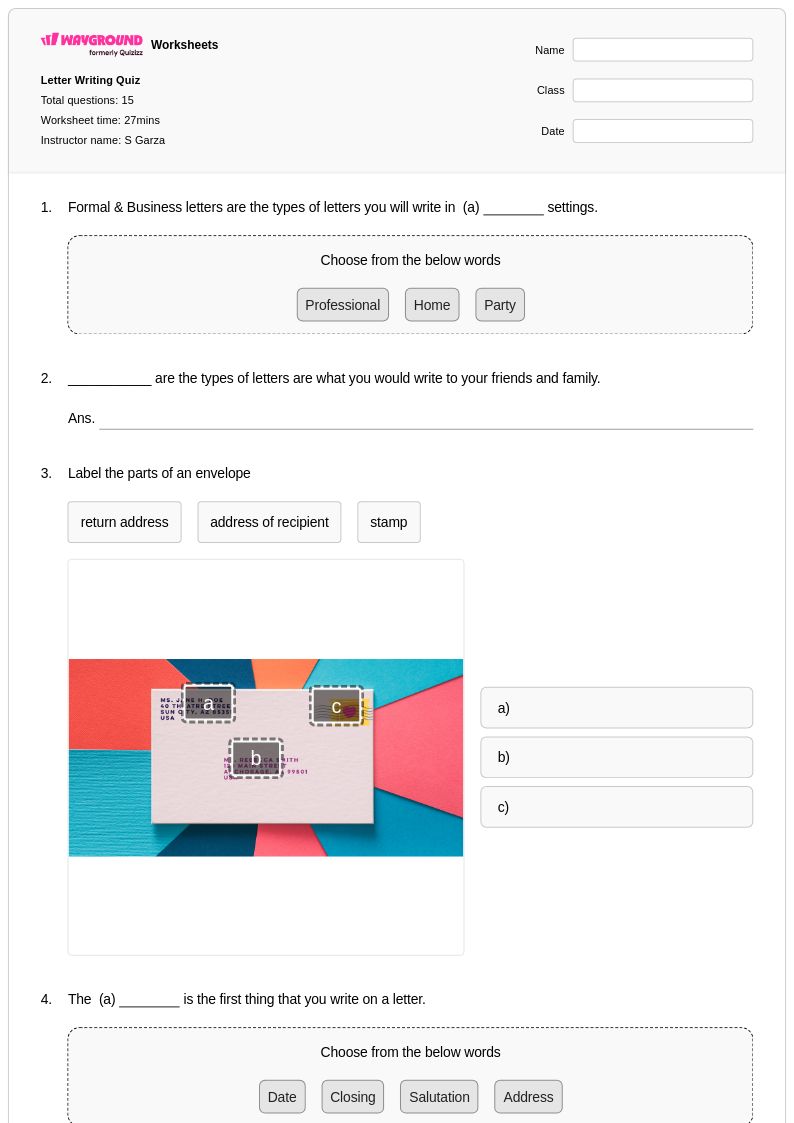
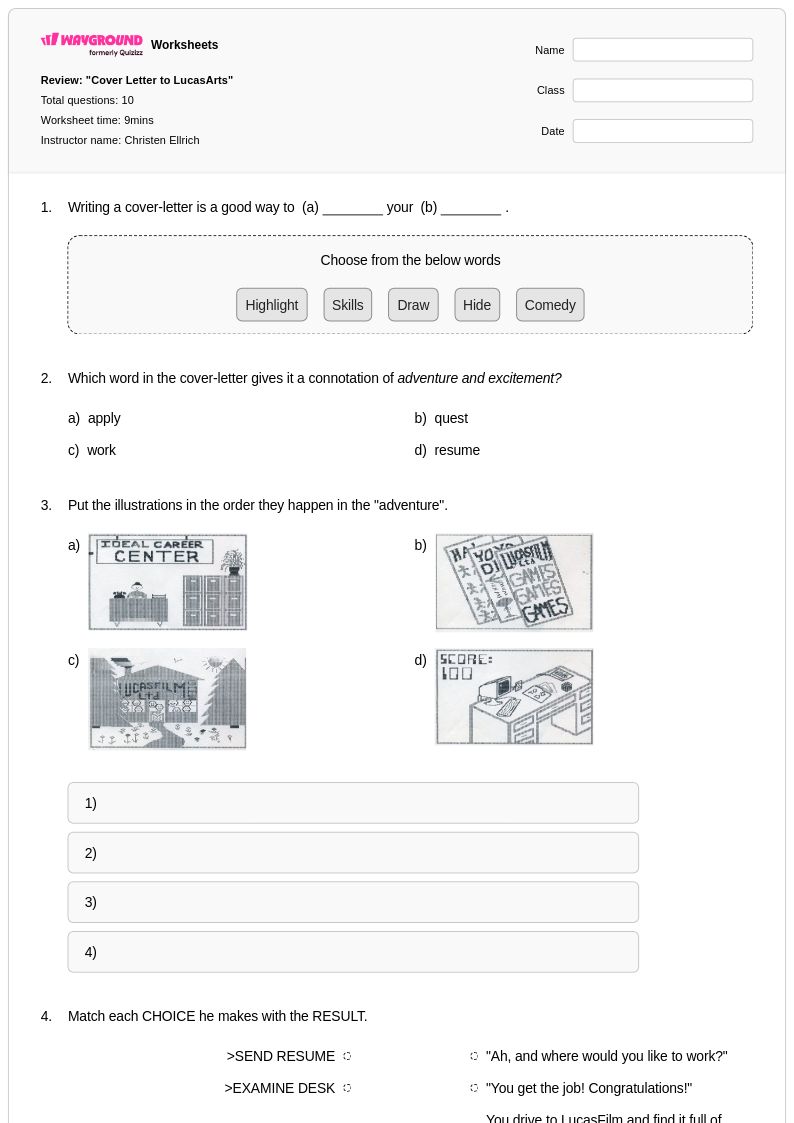
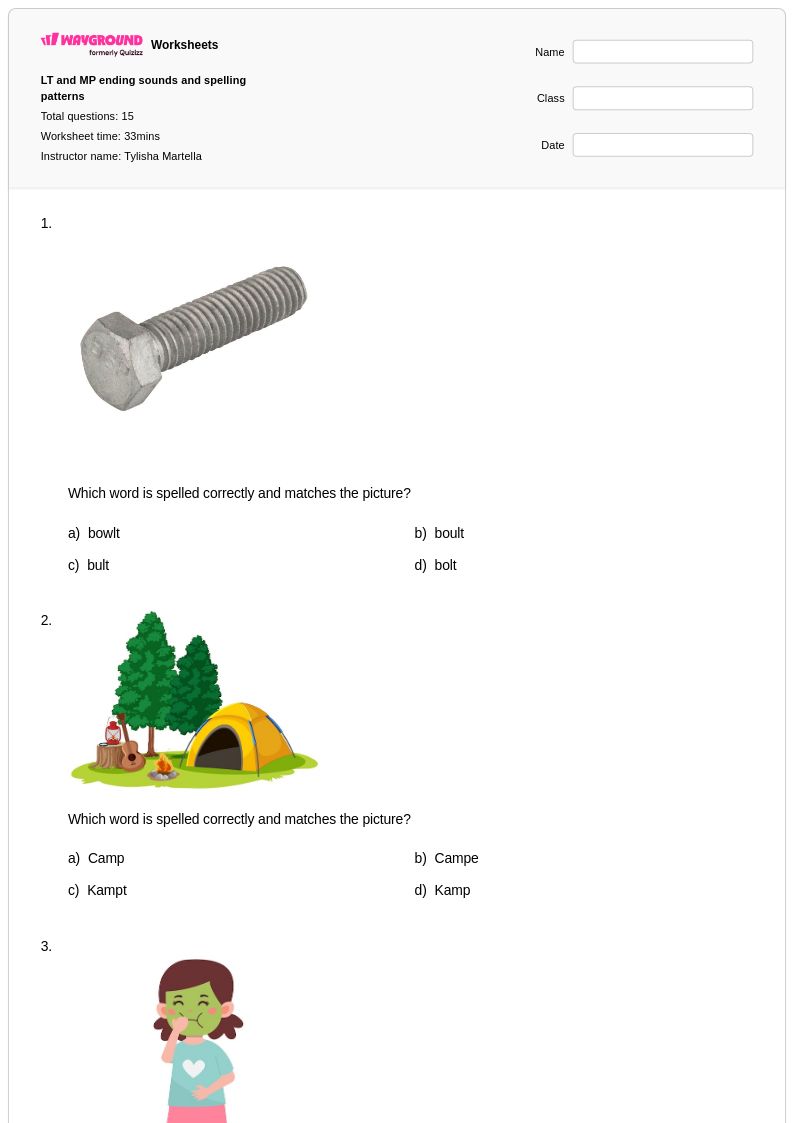
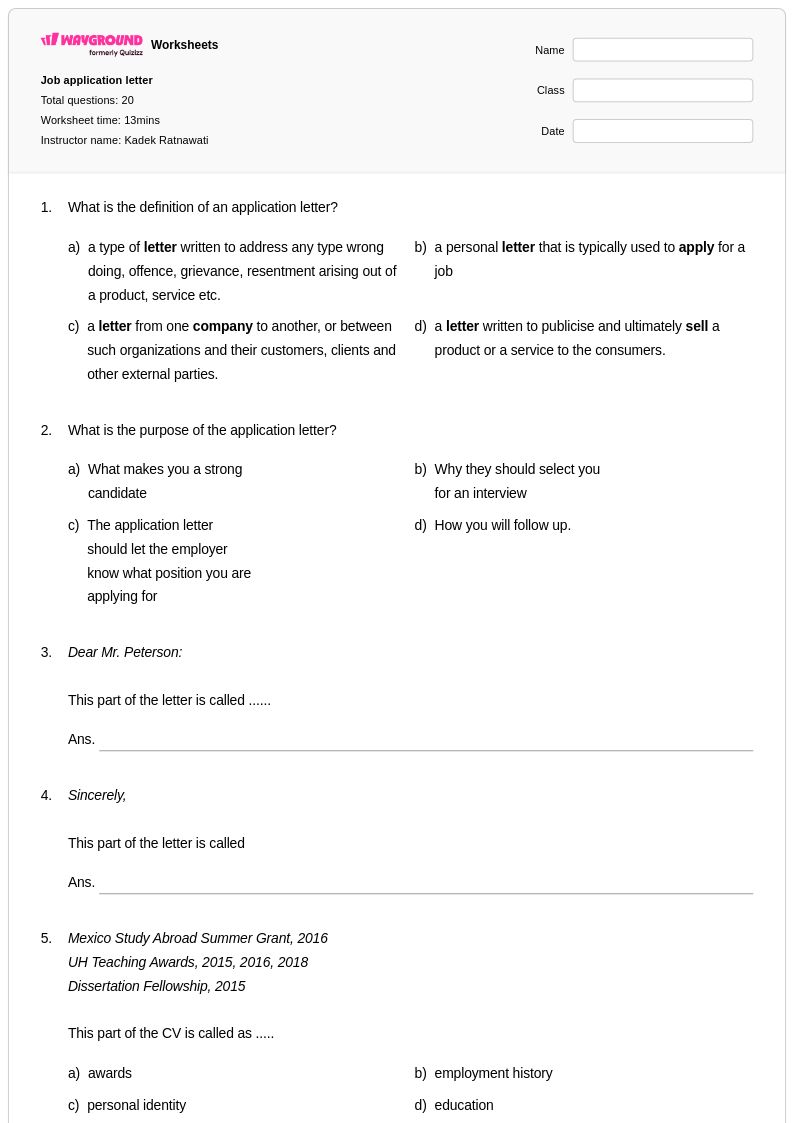
Explore Wayground's free Letter L worksheets and printables that help students master letter recognition, formation, and phonics through engaging practice problems with complete answer keys.
The Letter L worksheets available through Wayground (formerly Quizizz) provide comprehensive practice opportunities for students developing foundational literacy skills through focused alphabet instruction. These educational resources systematically introduce learners to the visual recognition, formation, and phonetic properties of the letter L, strengthening essential pre-reading and early reading capabilities through structured activities. Students engage with varied practice problems that reinforce letter-sound correspondence, visual discrimination between uppercase and lowercase forms, and proper letter formation techniques. Each worksheet collection includes detailed answer keys to support accurate assessment and immediate feedback, while the free printable format ensures accessibility for diverse learning environments and individual student needs.
Wayground (formerly Quizizz) empowers educators with an extensive library of millions of teacher-created Letter L resources that streamline instructional planning and enhance differentiated learning experiences. The platform's robust search and filtering capabilities enable teachers to quickly locate age-appropriate materials that align with literacy standards and accommodate varying skill levels within their classrooms. Advanced customization tools allow educators to modify existing worksheets or create personalized versions that address specific learning objectives, while the dual availability in both digital and printable PDF formats provides maximum flexibility for classroom implementation. These comprehensive features support effective remediation for struggling learners, enrichment opportunities for advanced students, and systematic skill practice that builds confidence and competency in alphabet recognition and phonemic awareness.
FAQs
How do I teach the letter L to early learners?
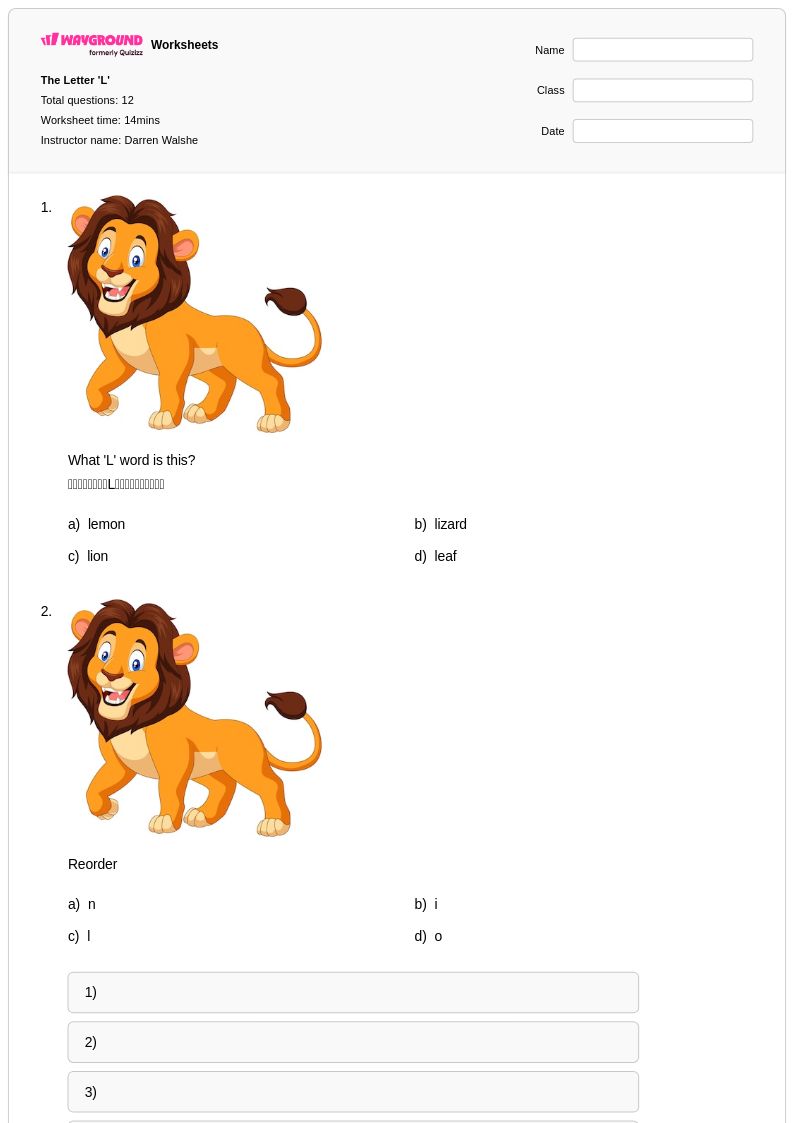
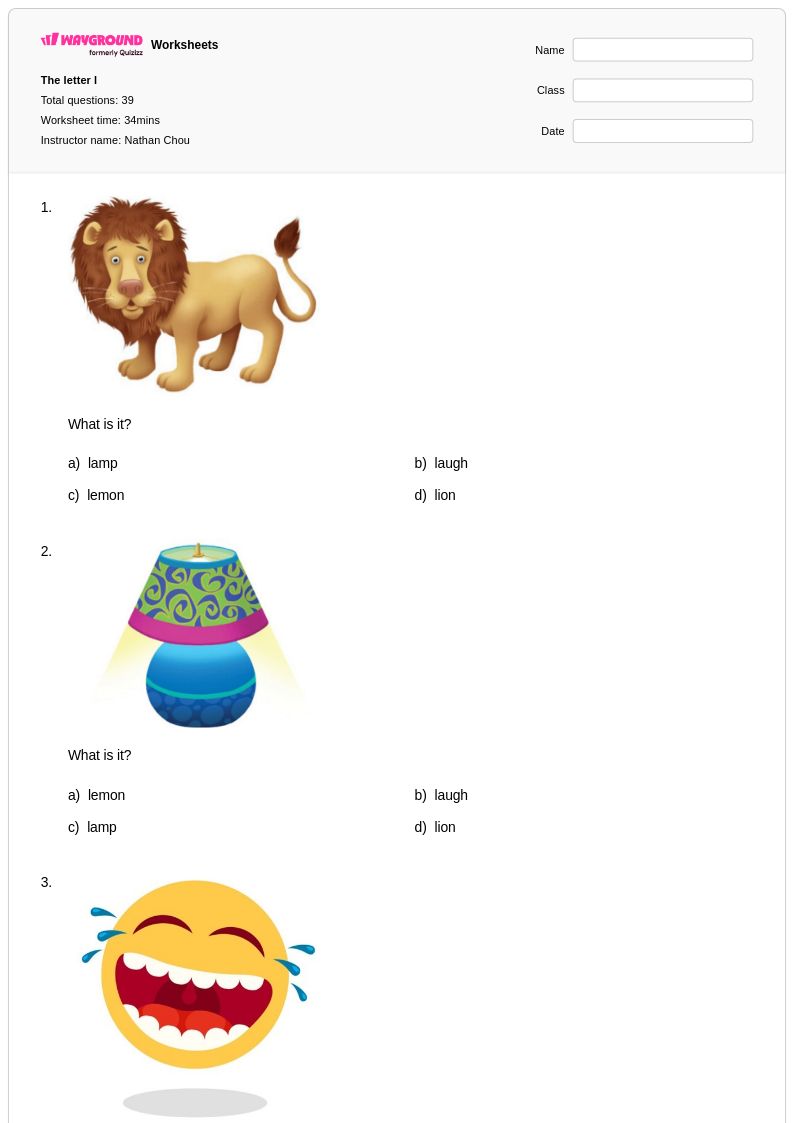
Teaching the letter L works best when instruction combines visual recognition, oral practice, and physical formation together. Start by introducing both uppercase and lowercase forms side by side so students can compare their shapes. Pair letter introduction with high-frequency /l/ words like 'leaf', 'lion', and 'lamp' to anchor the sound in familiar contexts. Multisensory activities such as tracing, sky-writing, and identifying the letter in environmental print reinforce recognition before students move to independent written practice.
What exercises help students practice the letter L?
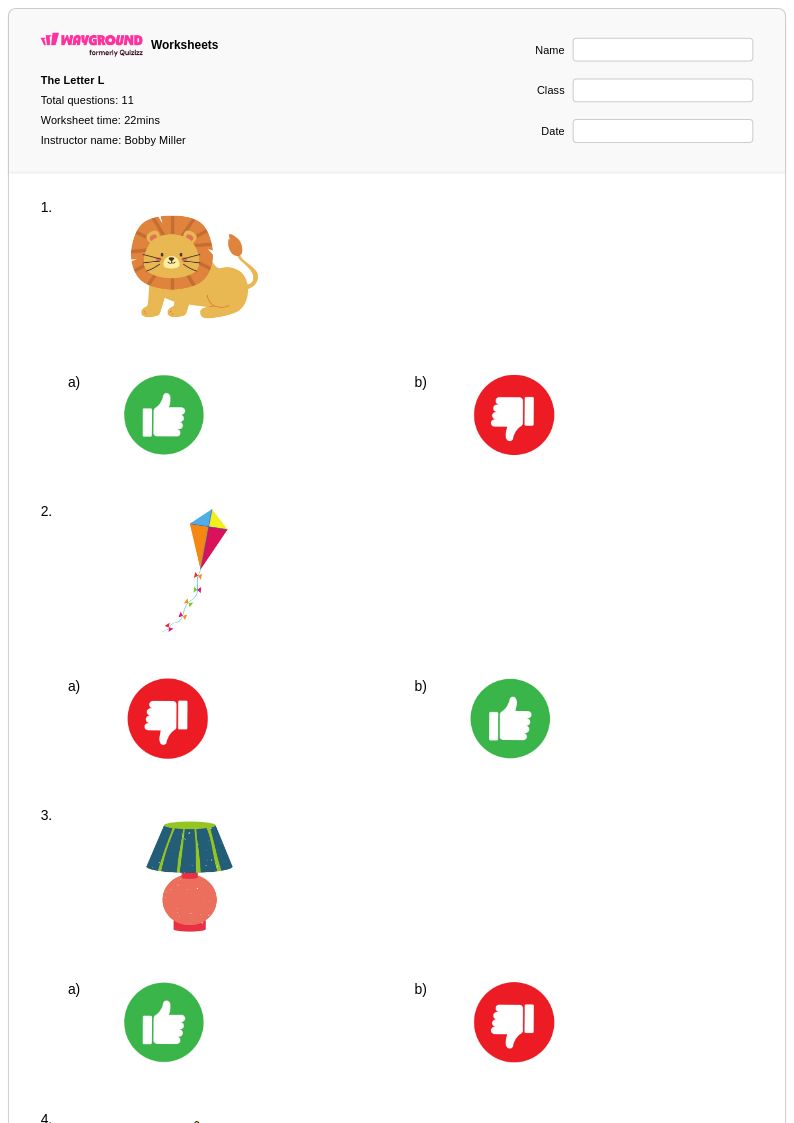
Effective letter L practice includes tracing uppercase and lowercase forms to build muscle memory, circling or identifying the letter L among distractors to develop visual discrimination, and matching pictures of /l/ words to the letter to reinforce phonics. Completing simple fill-in activities where students write the letter L to label images provides meaningful, applied practice. Combining these exercise types across multiple sessions helps students move from guided recognition to independent recall.
What mistakes do students commonly make when learning the letter L?
One of the most common errors is confusing lowercase 'l' with the number '1' or the uppercase letter 'I', since all three share a similar vertical stroke. Students also frequently struggle to distinguish the /l/ sound from /r/ or /w/, particularly at the beginning of words. In formation, beginners often reverse the direction of the horizontal baseline stroke or omit it entirely on the uppercase L. Targeted discrimination activities that place these similar forms side by side can help students isolate and internalize the correct visual and auditory features.
How can I use Letter L worksheets in my classroom?
Letter L worksheets on Wayground are available as printable PDFs for traditional classroom use and in digital formats for technology-integrated learning environments, including the option to host them as a quiz on Wayground. Printed versions work well for handwriting and tracing practice during literacy centers or morning work, while digital formats are suited for one-to-one device settings or remote learning. Teachers can also apply individual accommodations on Wayground such as read aloud support, extended time, and reduced answer choices to ensure every learner can access the material appropriately.
How do I differentiate Letter L instruction for students at different skill levels?
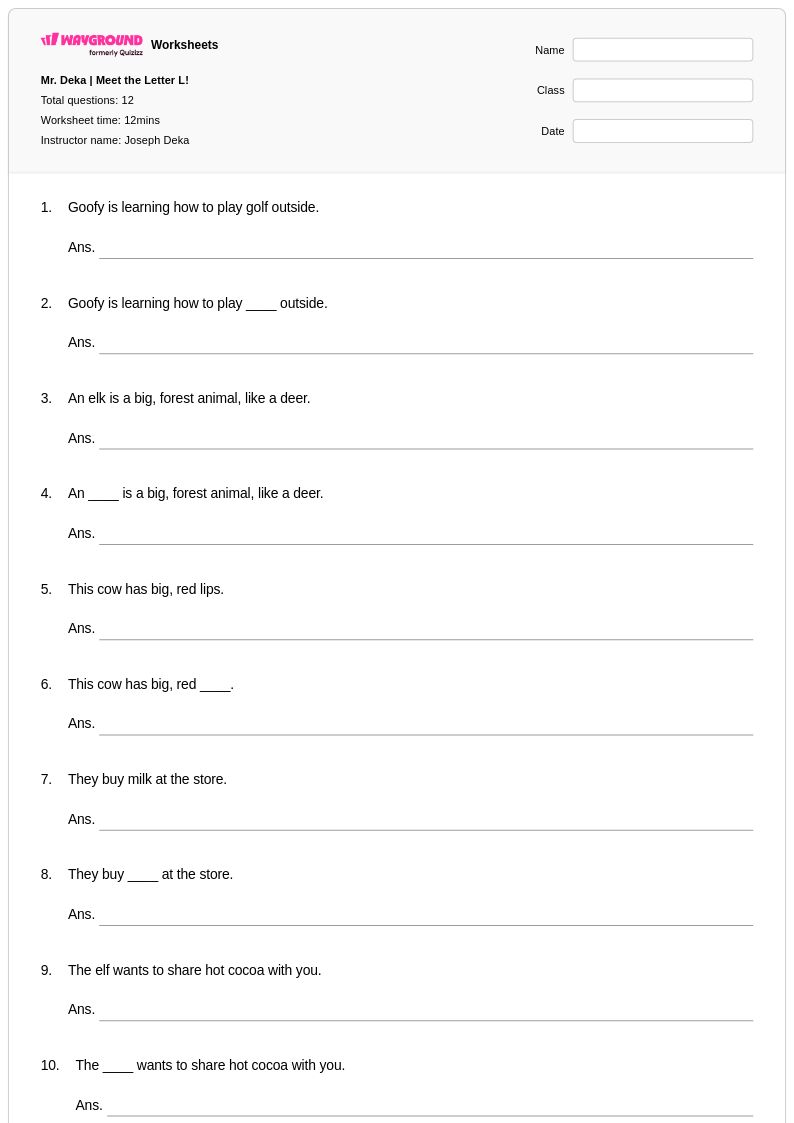
For students who are still developing letter awareness, focus on recognition tasks such as circling or coloring the letter L before introducing formation. Students who can identify the letter reliably are ready for tracing and independent writing practice, while more advanced learners benefit from phonics-level tasks like sorting pictures by initial sound or generating /l/ words independently. On Wayground, teachers can apply accommodations such as read aloud, reduced answer choices, and extended time to individual students, allowing the same worksheet to serve a range of learners without requiring separate materials.
At what stage should students be learning the letter L?
Letter L instruction is typically introduced during kindergarten as part of a systematic alphabet sequence, though pre-K programs often include early exposure to letter recognition as part of emergent literacy development. Students who have already been introduced to letters with simpler formations, such as straight-line letters like T, L, and I, may encounter the letter L early in their sequence since it requires only two strokes. Students who are still developing pencil grip or one-to-one correspondence may need additional scaffolding before independent formation practice.