
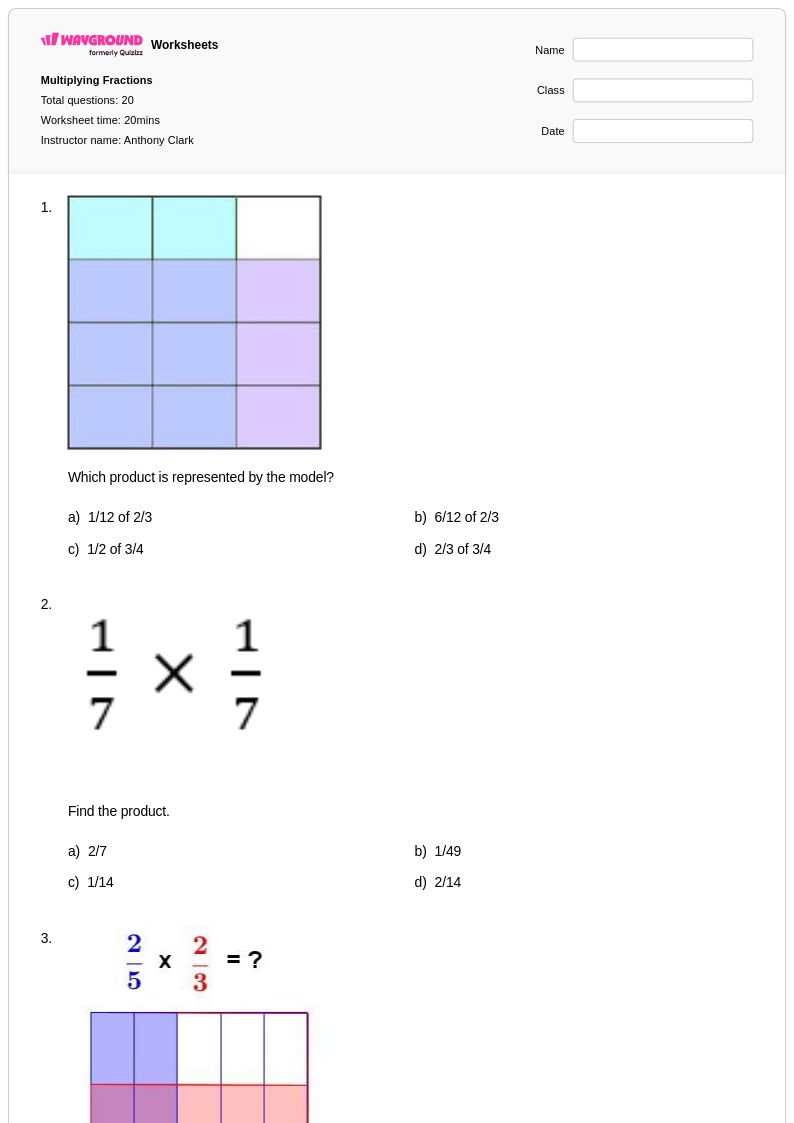
20 Q
5th - Uni
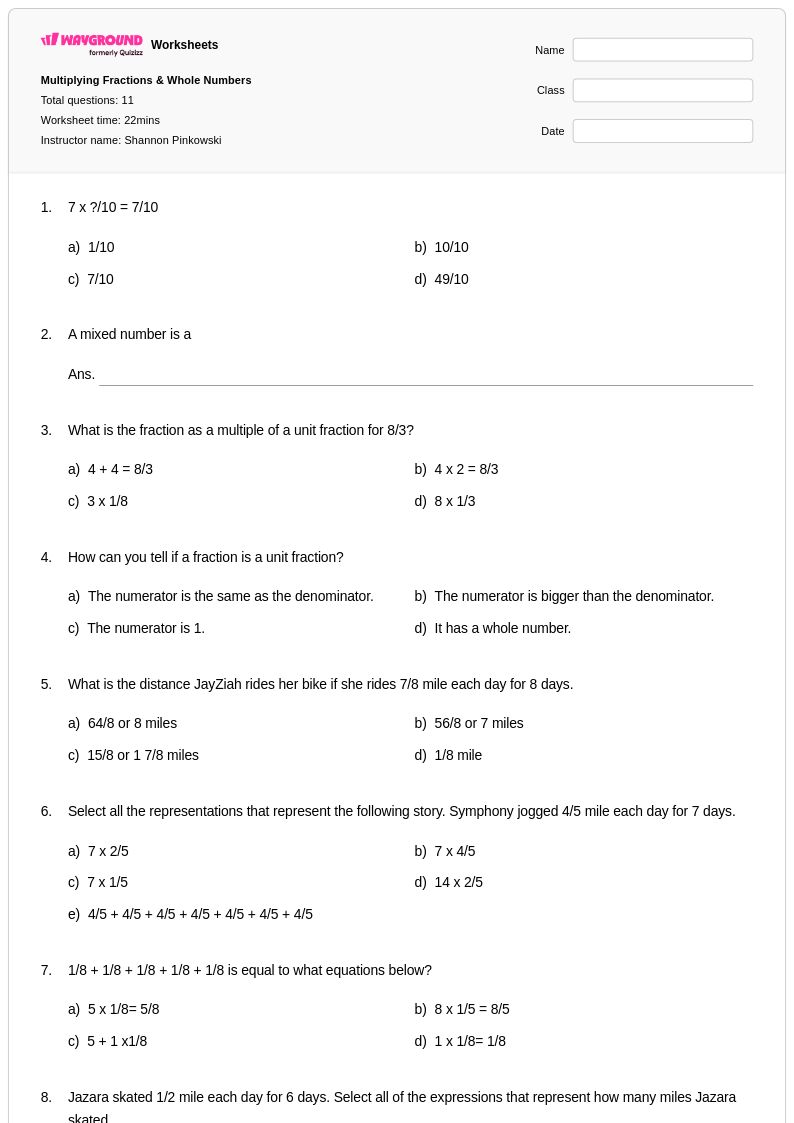
11 Q
4th
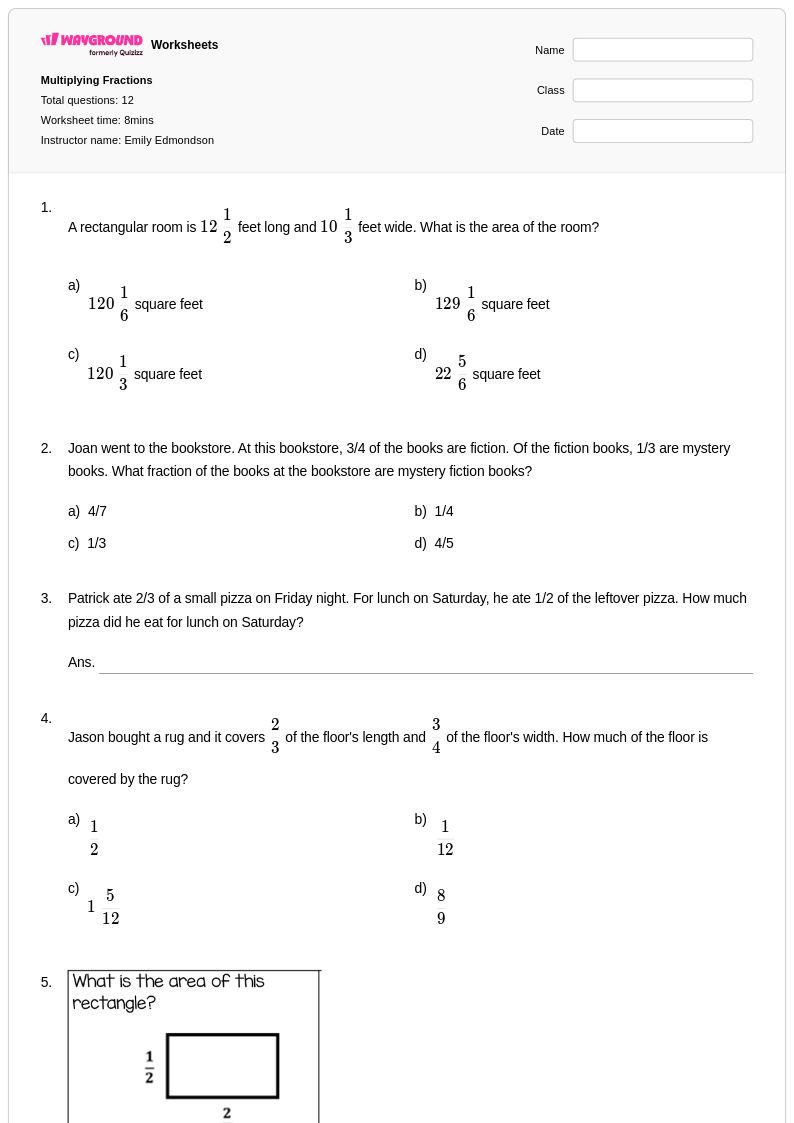
12 Q
1st
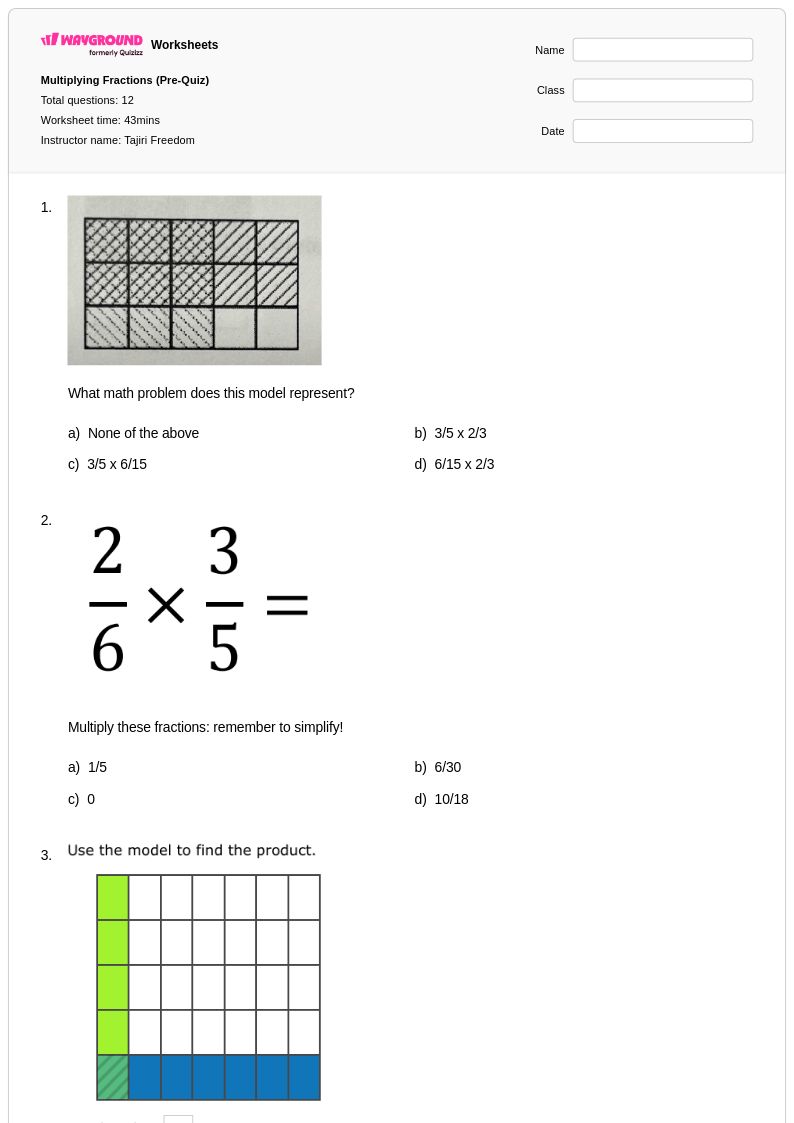
12 Q
5th
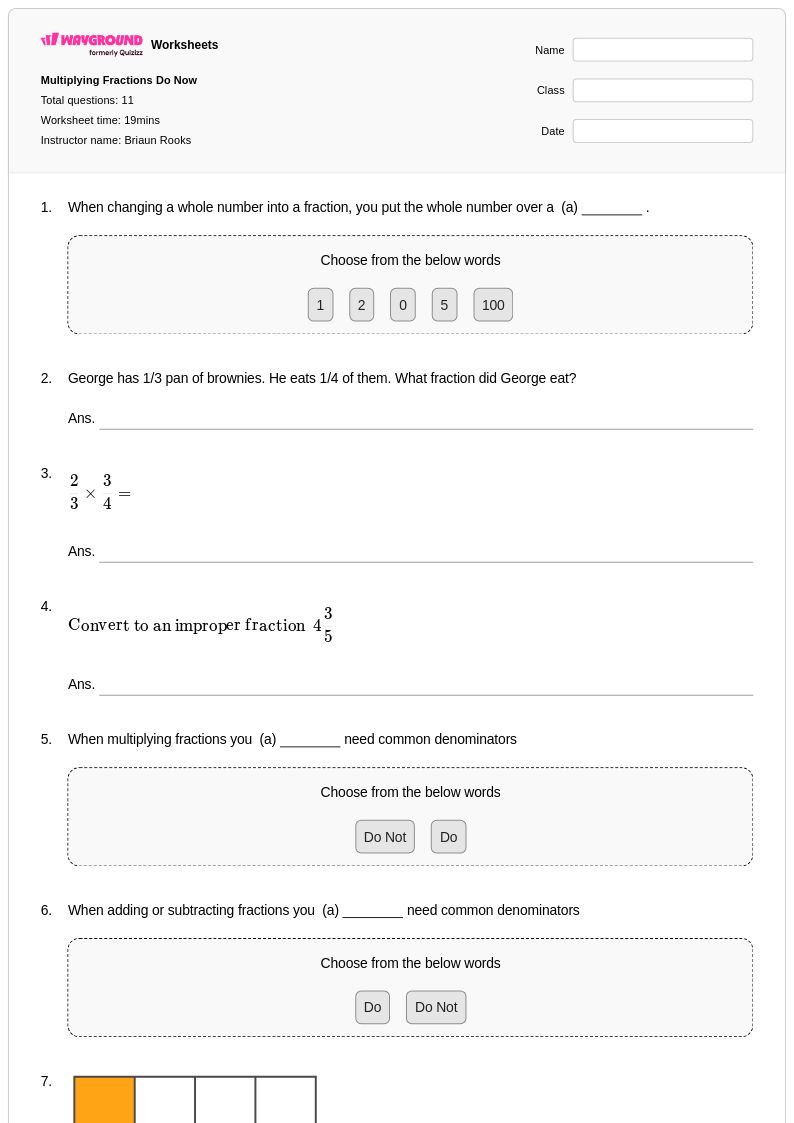
11 Q
6th
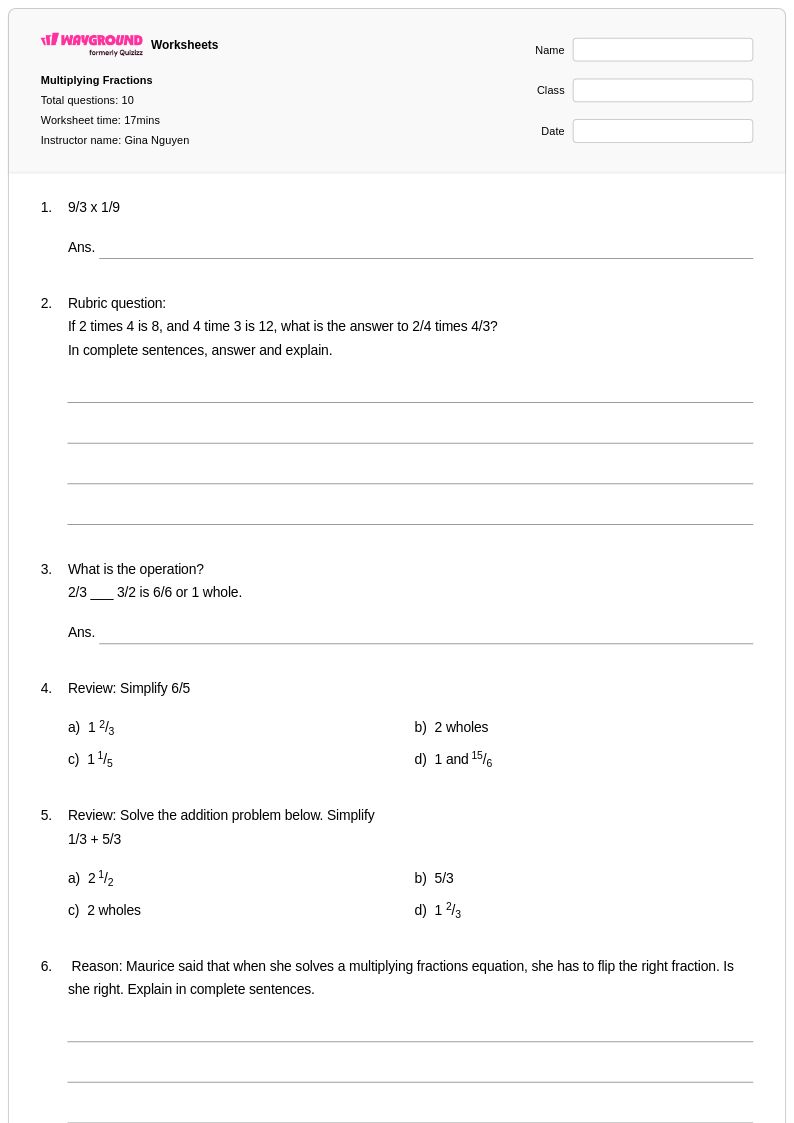
10 Q
5th - 6th
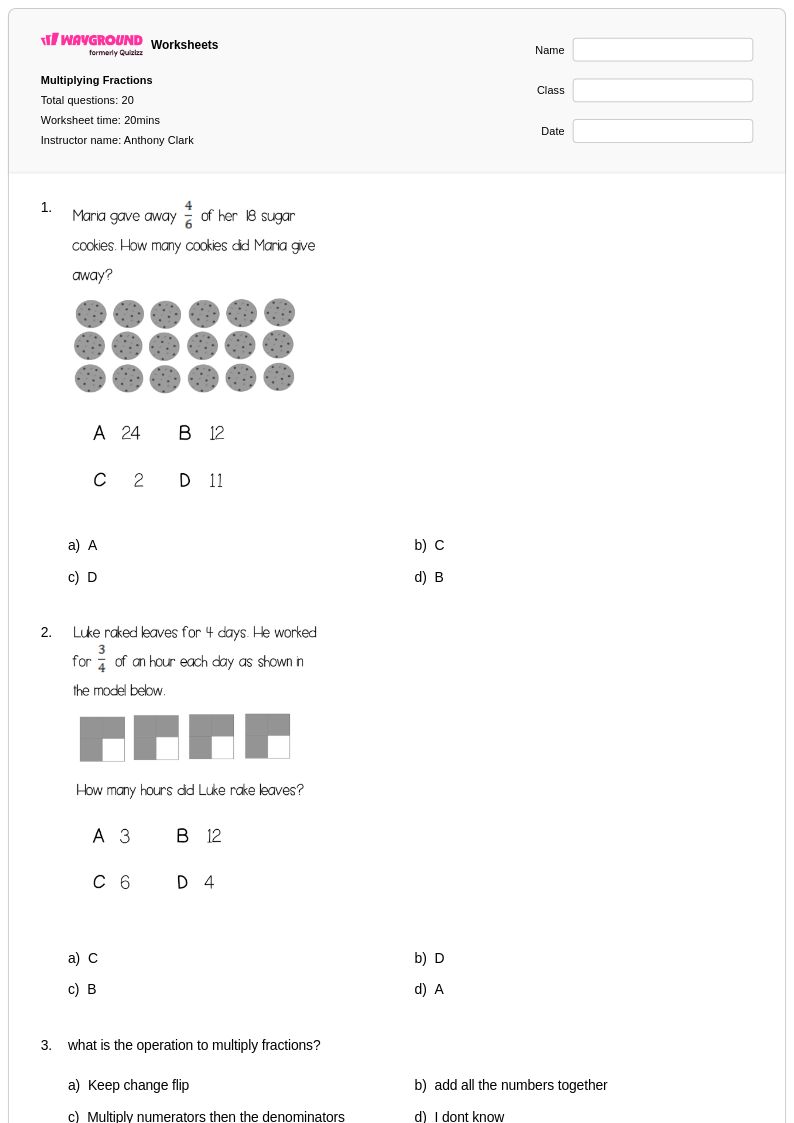
20 Q
5th - Uni
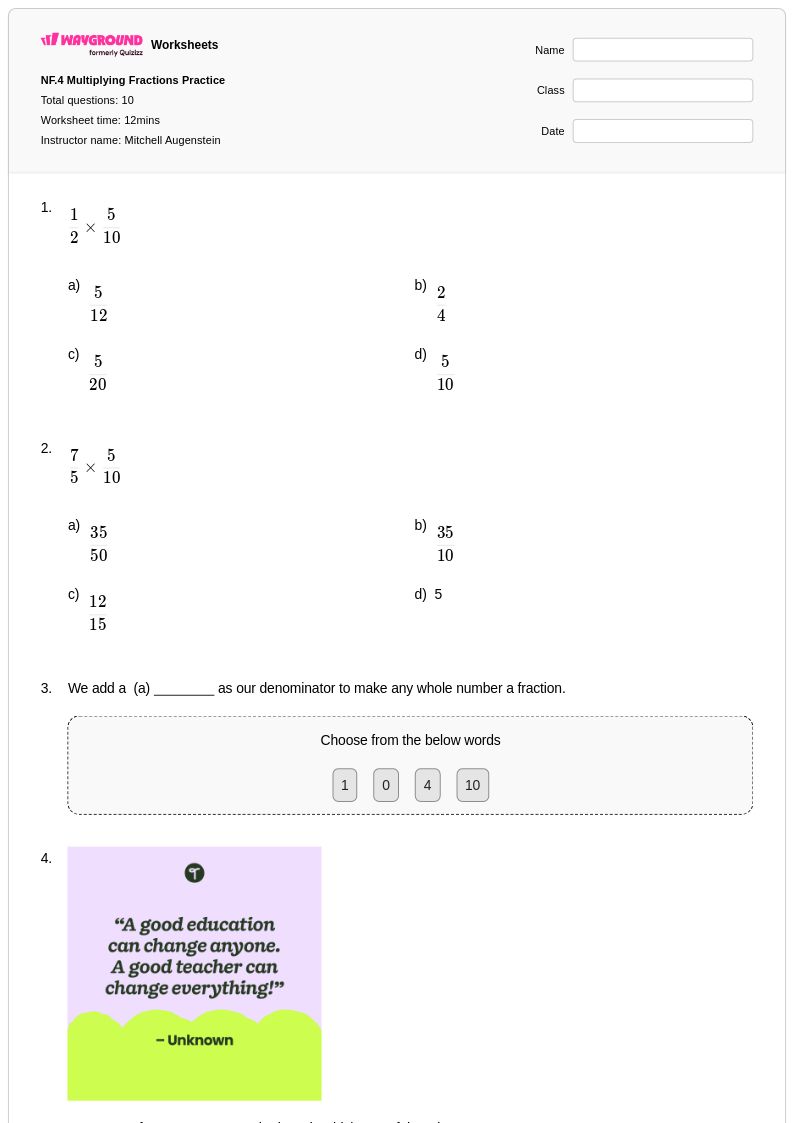
10 Q
5th
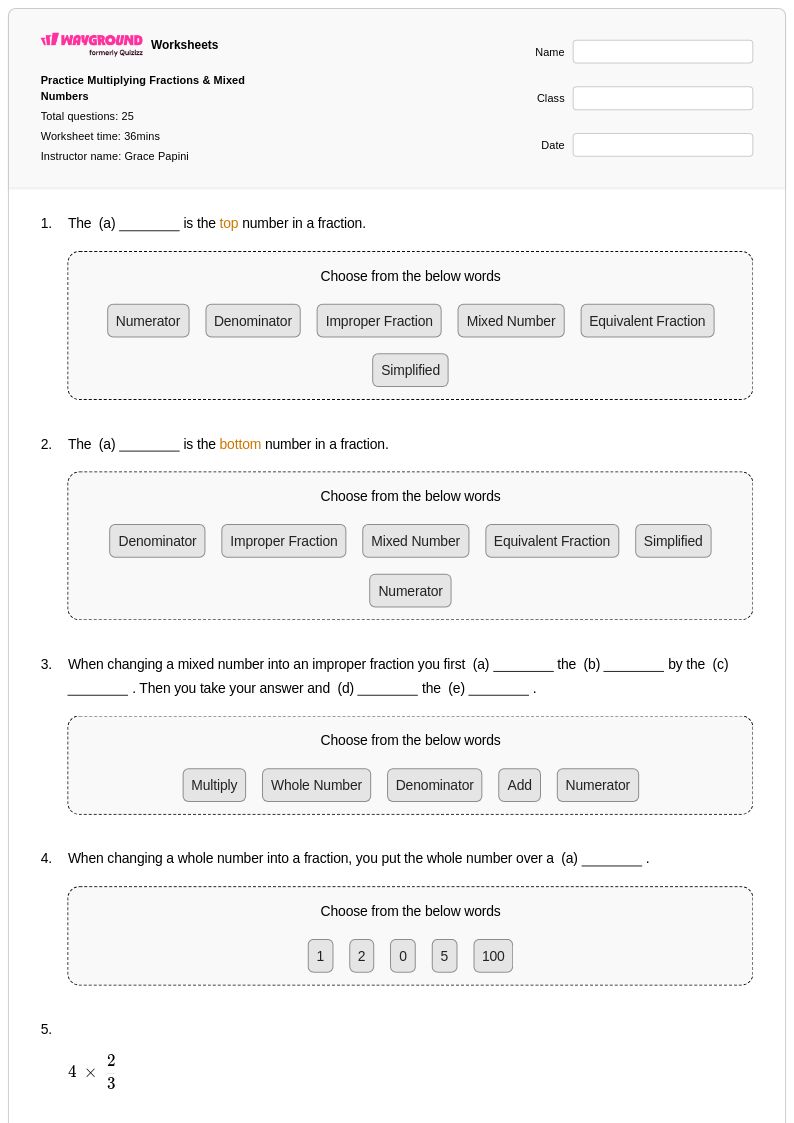
25 Q
6th
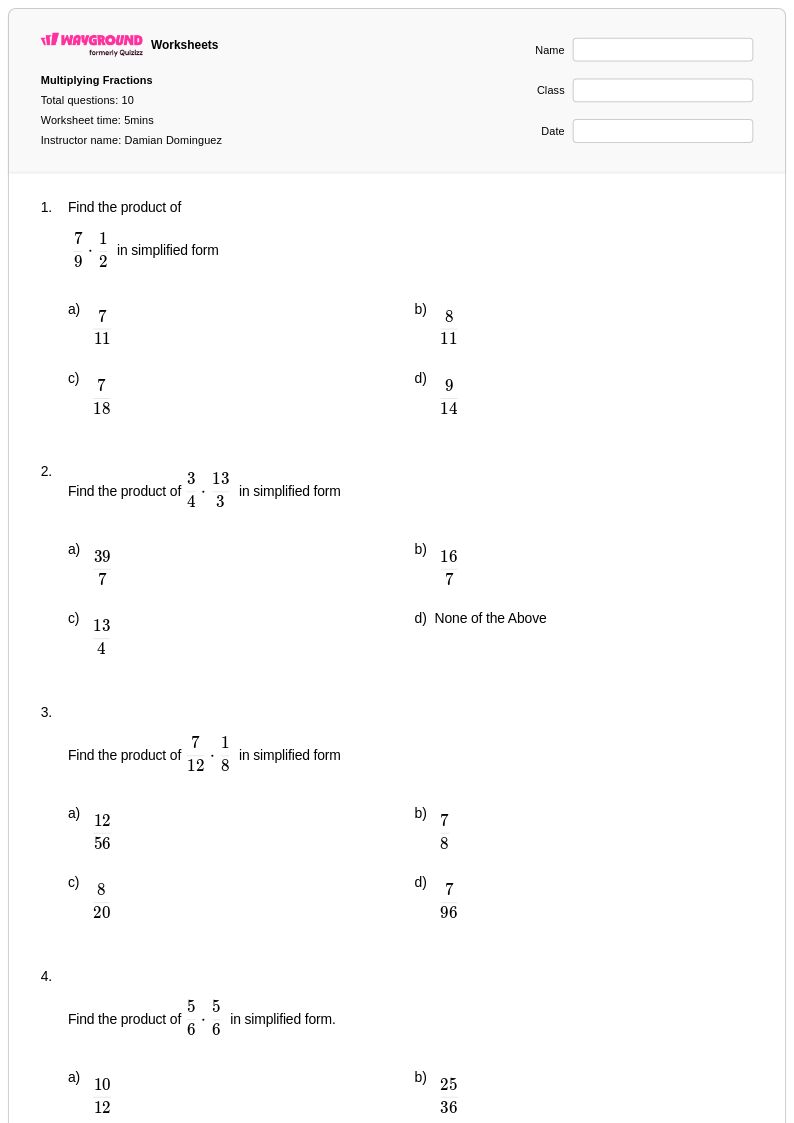
10 Q
7th
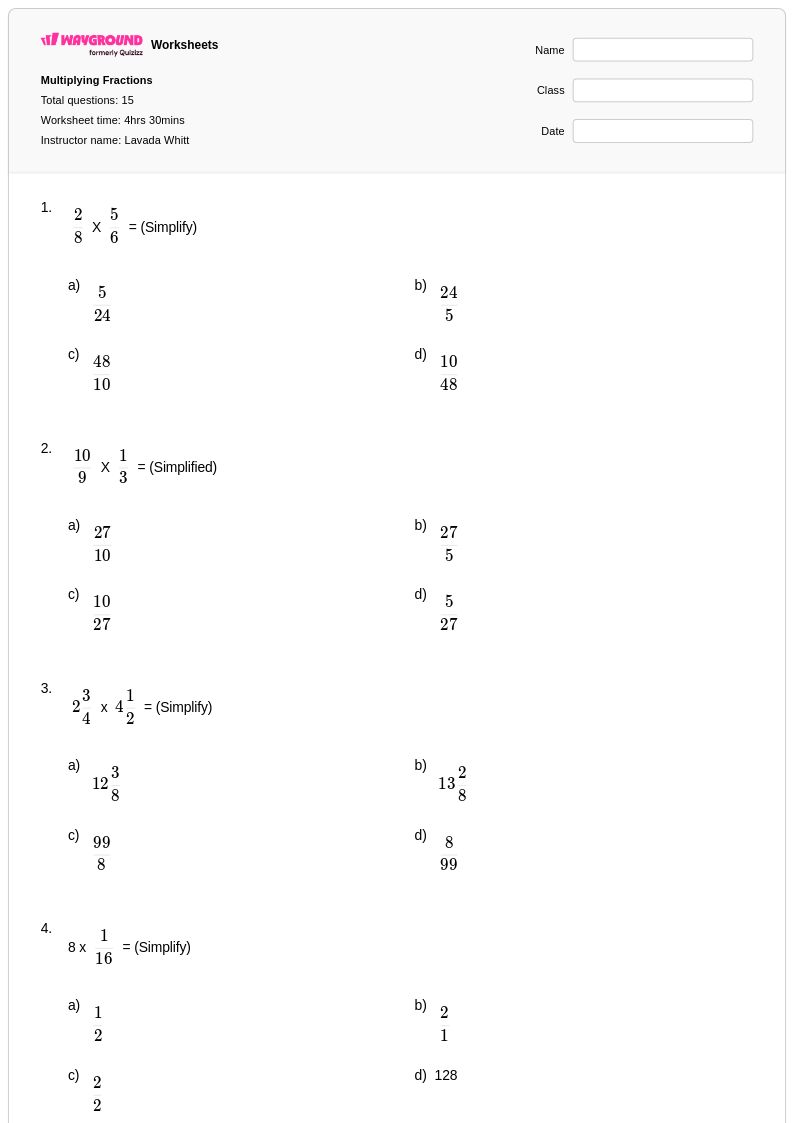
15 Q
5th - 6th
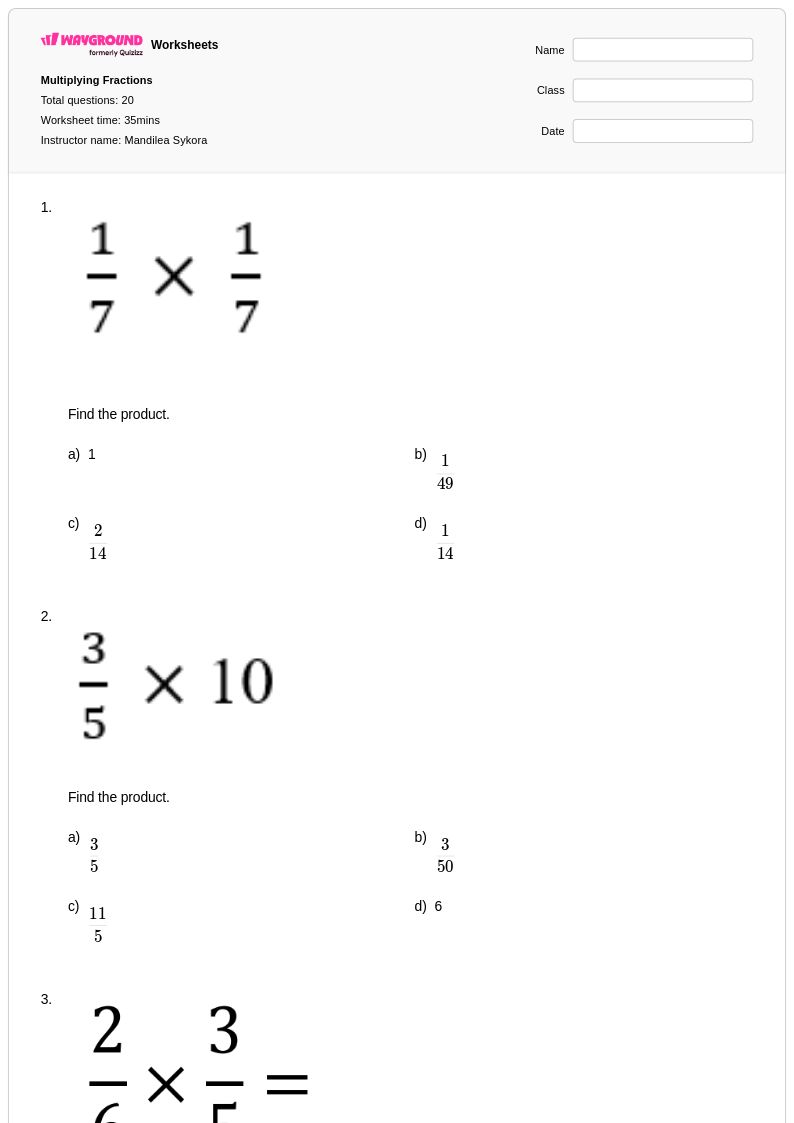
20 Q
6th
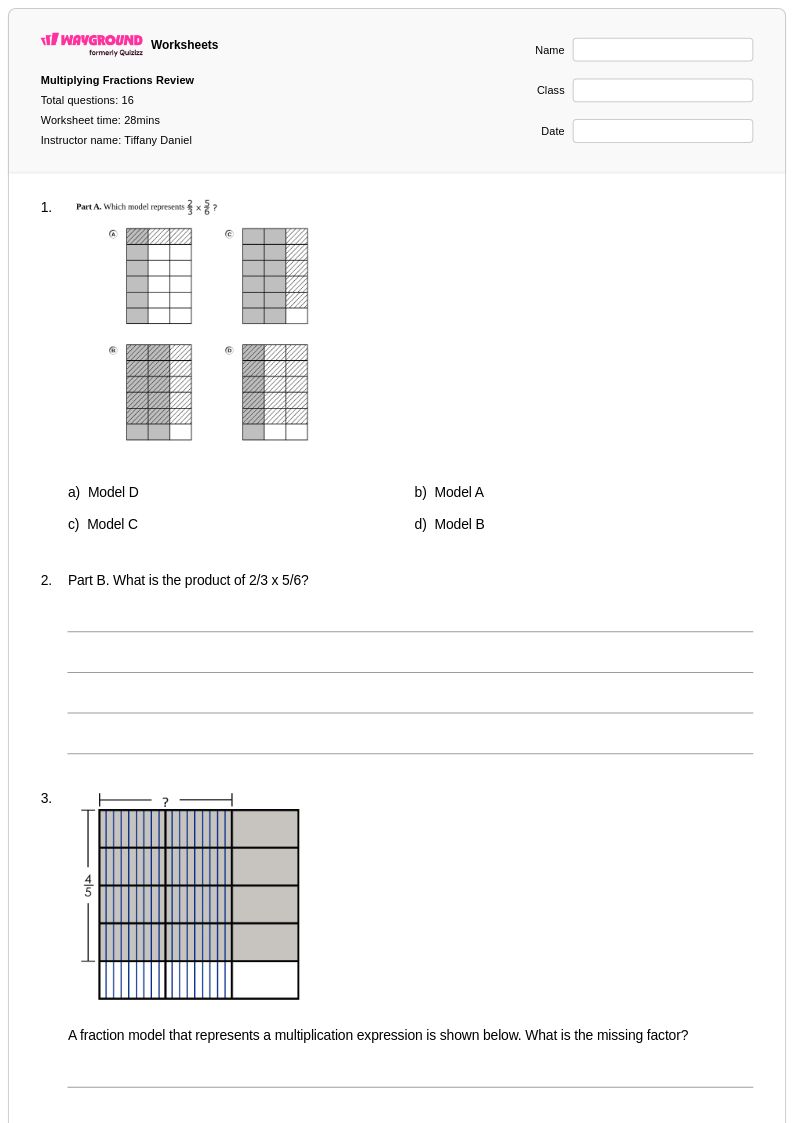
16 Q
5th
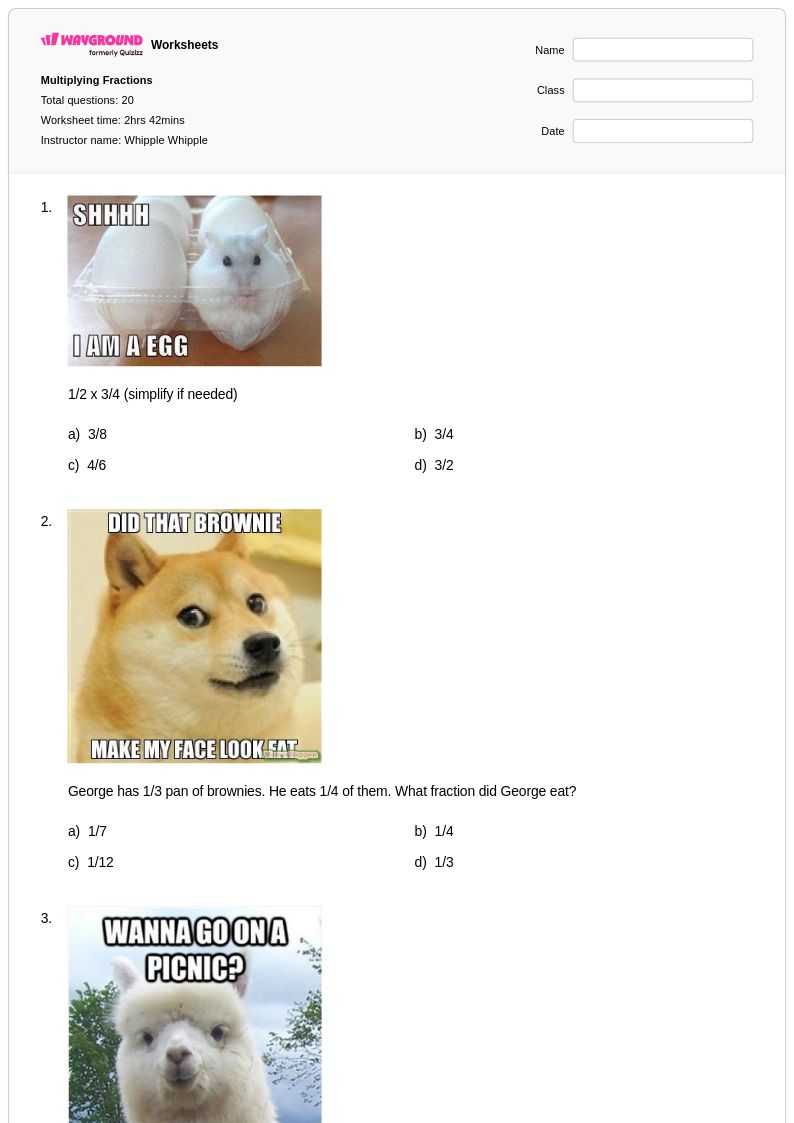
20 Q
5th
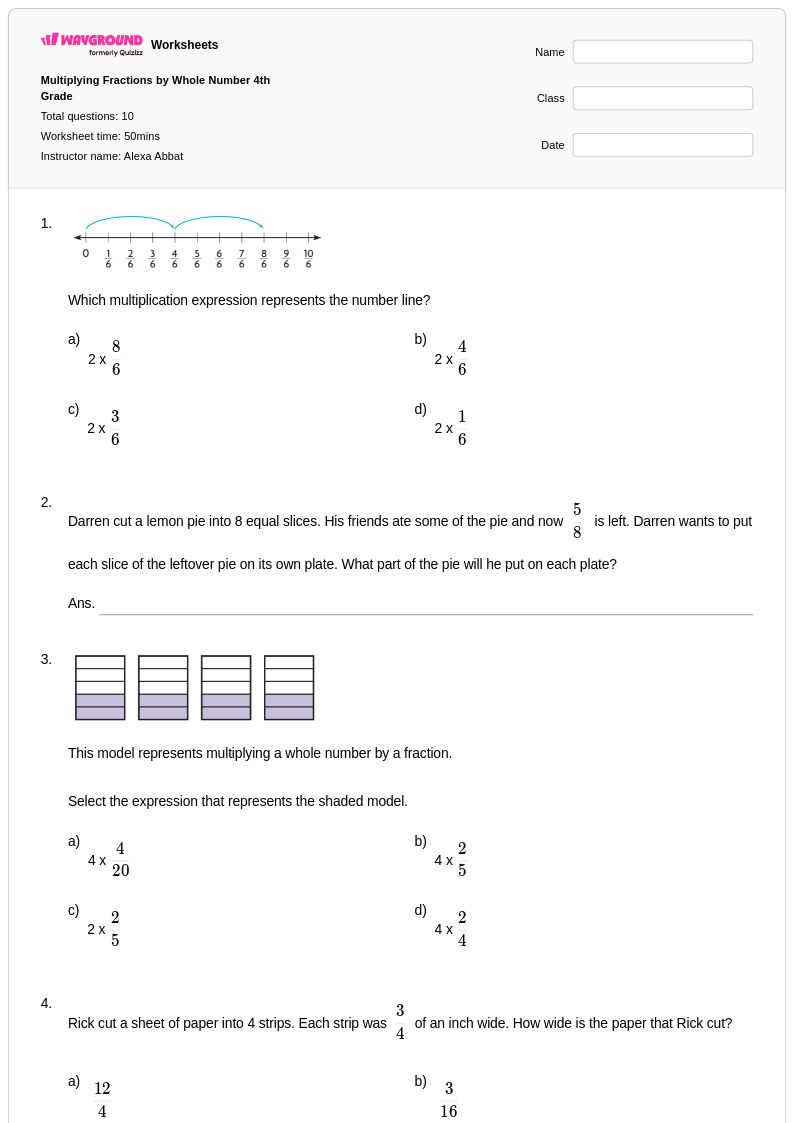
10 Q
4th
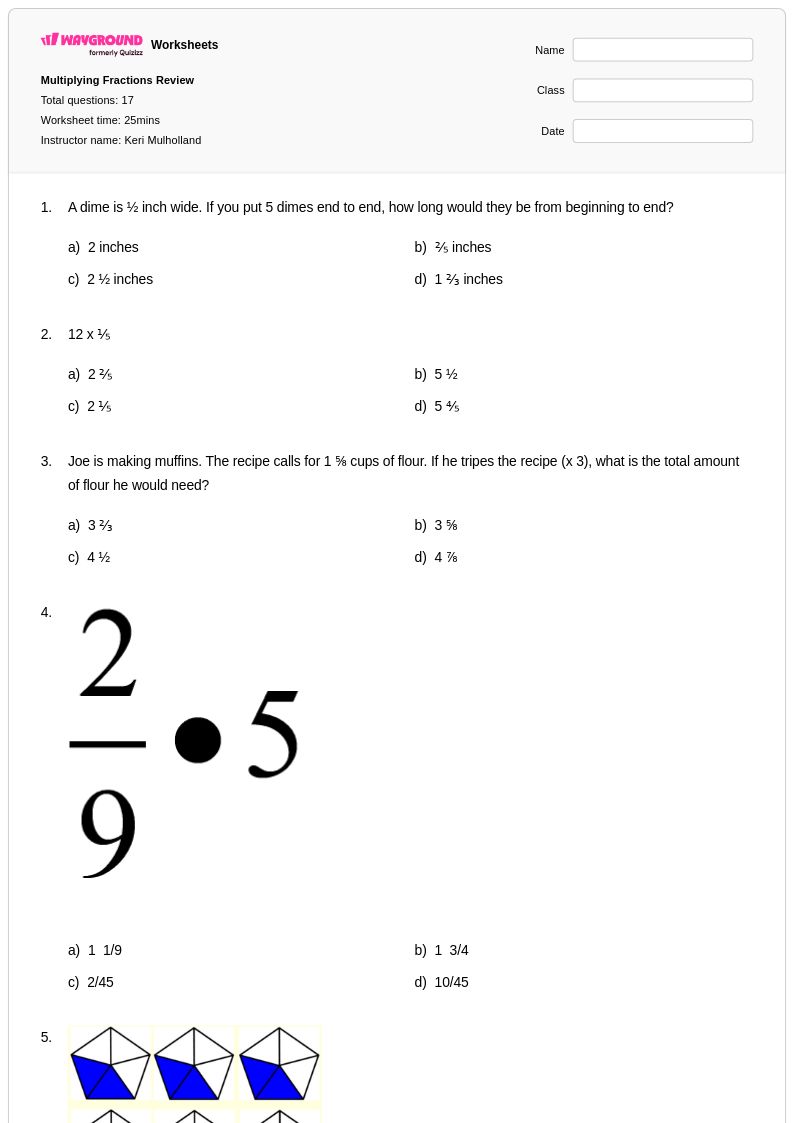
17 Q
4th
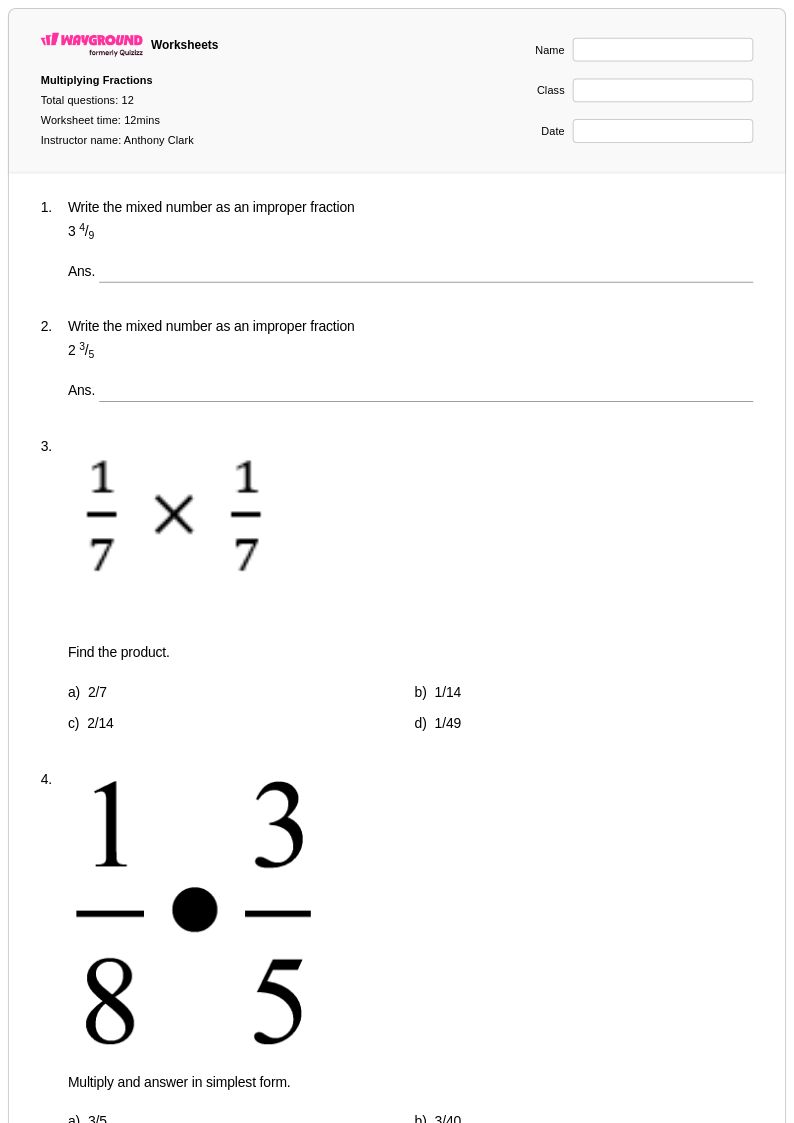
12 Q
4th - Uni
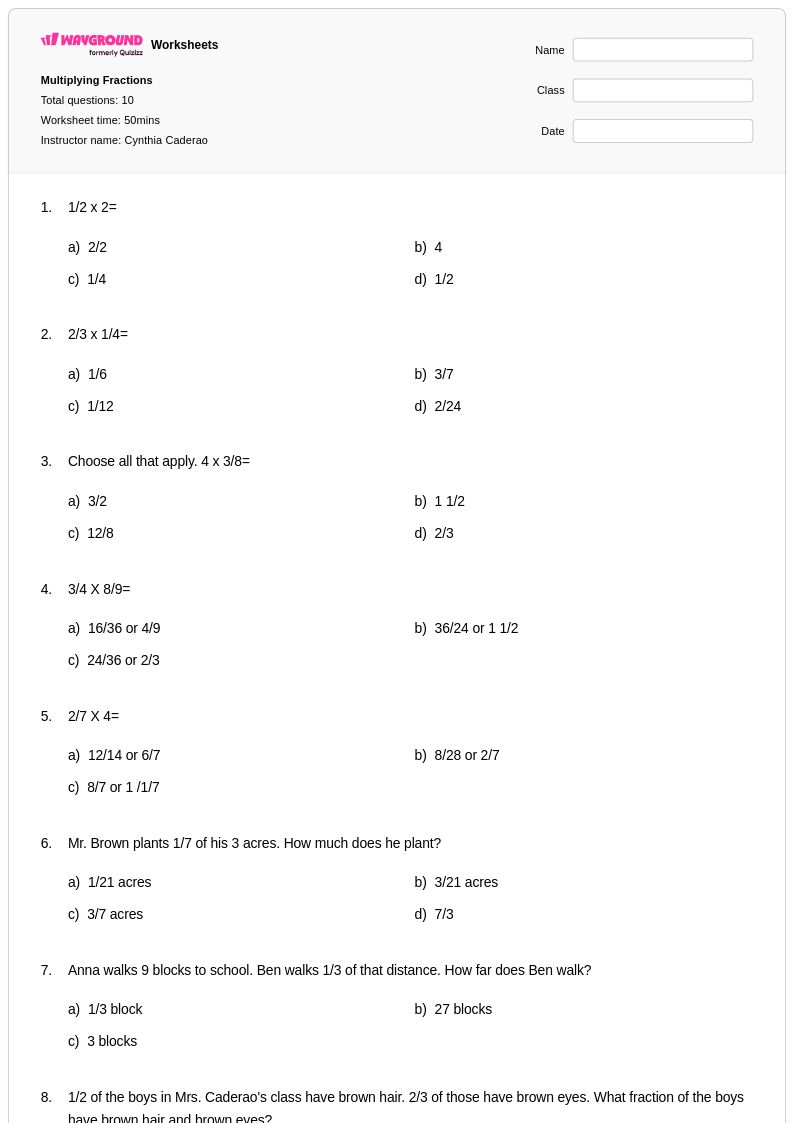
10 Q
5th
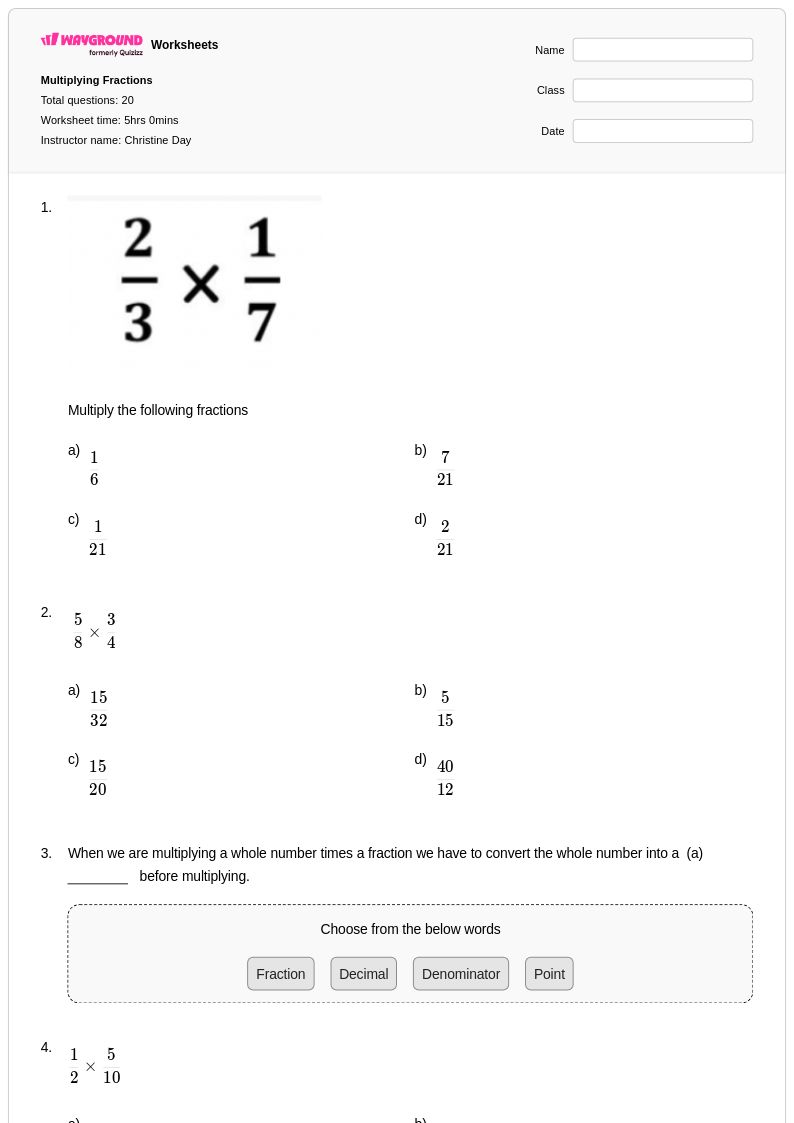
20 Q
5th
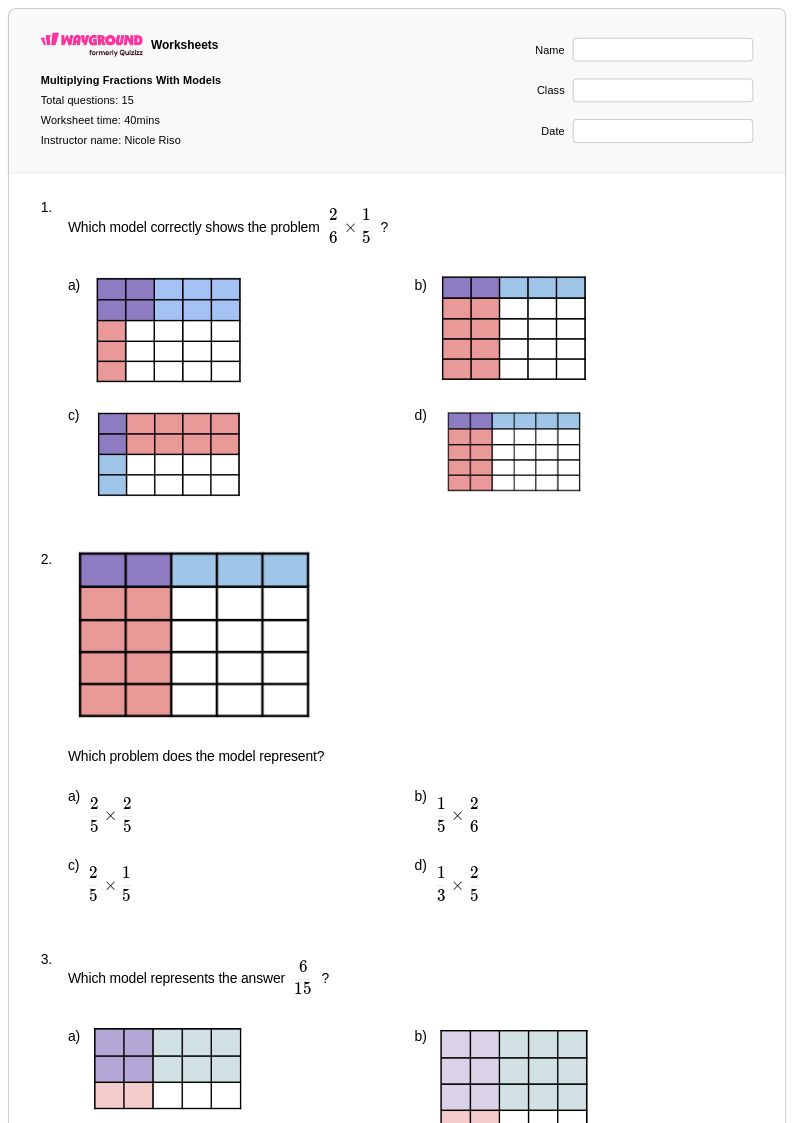
15 Q
KG - Uni
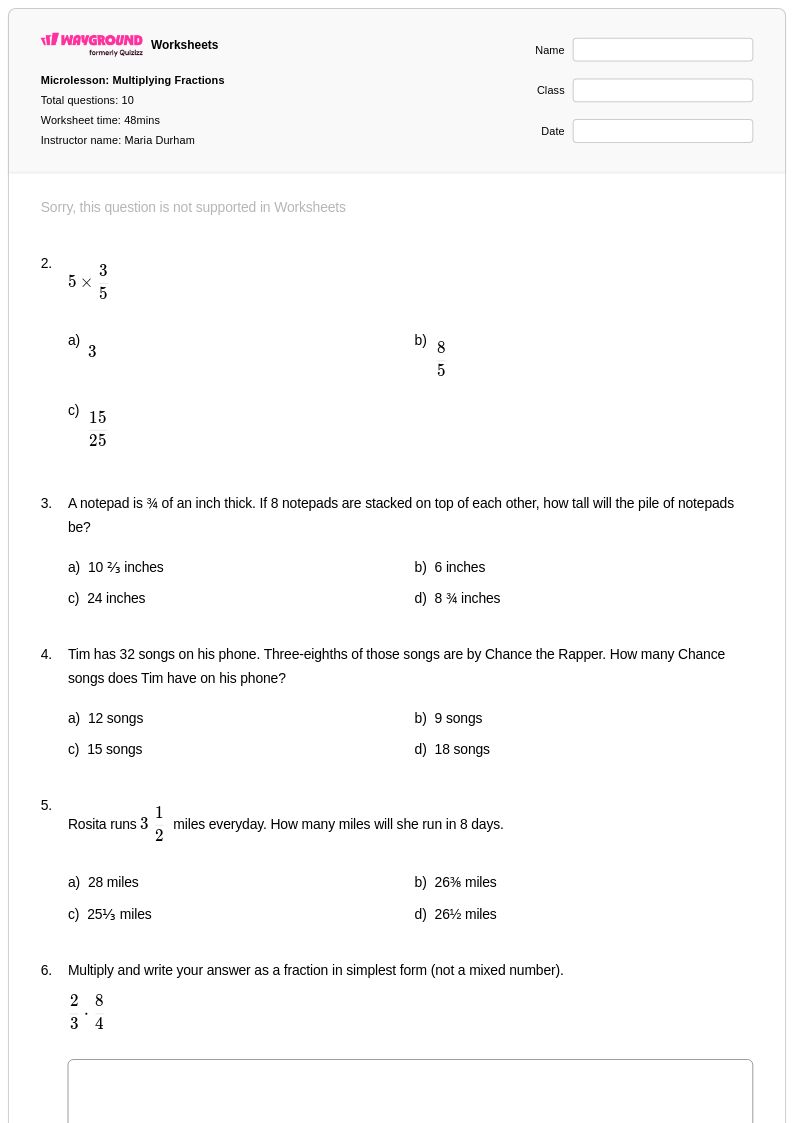
11 Q
1st - 5th
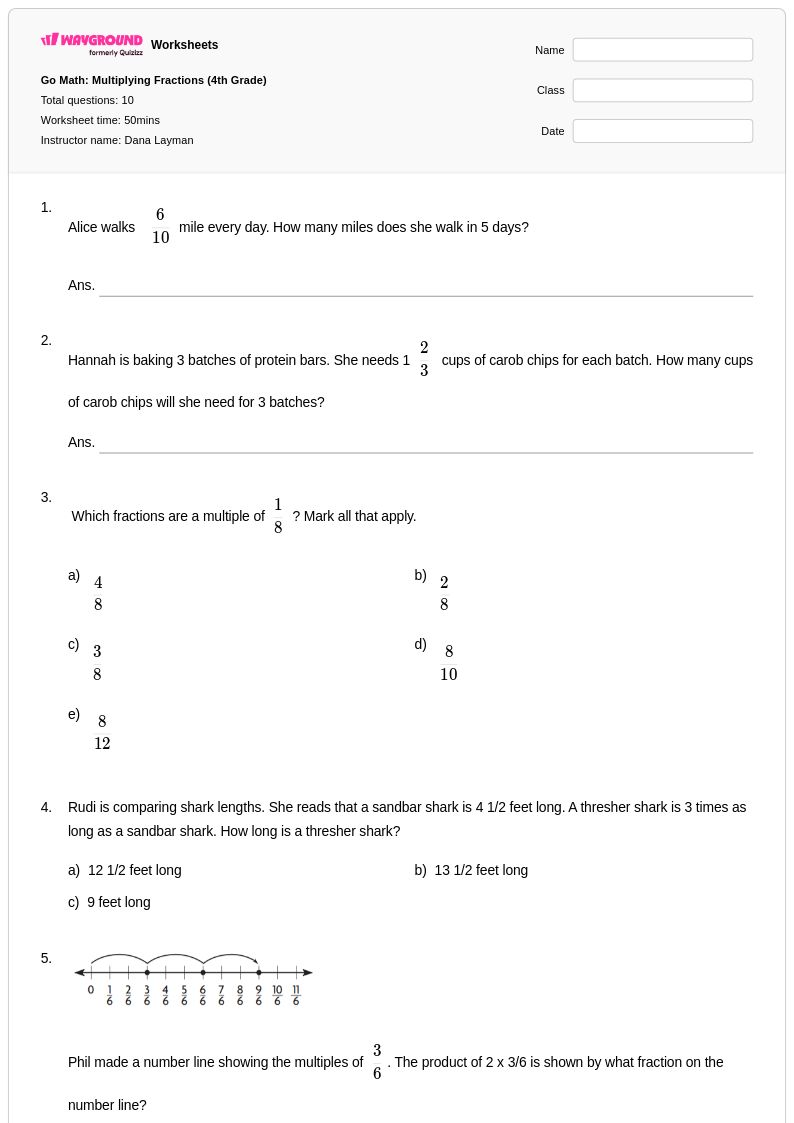
10 Q
4th
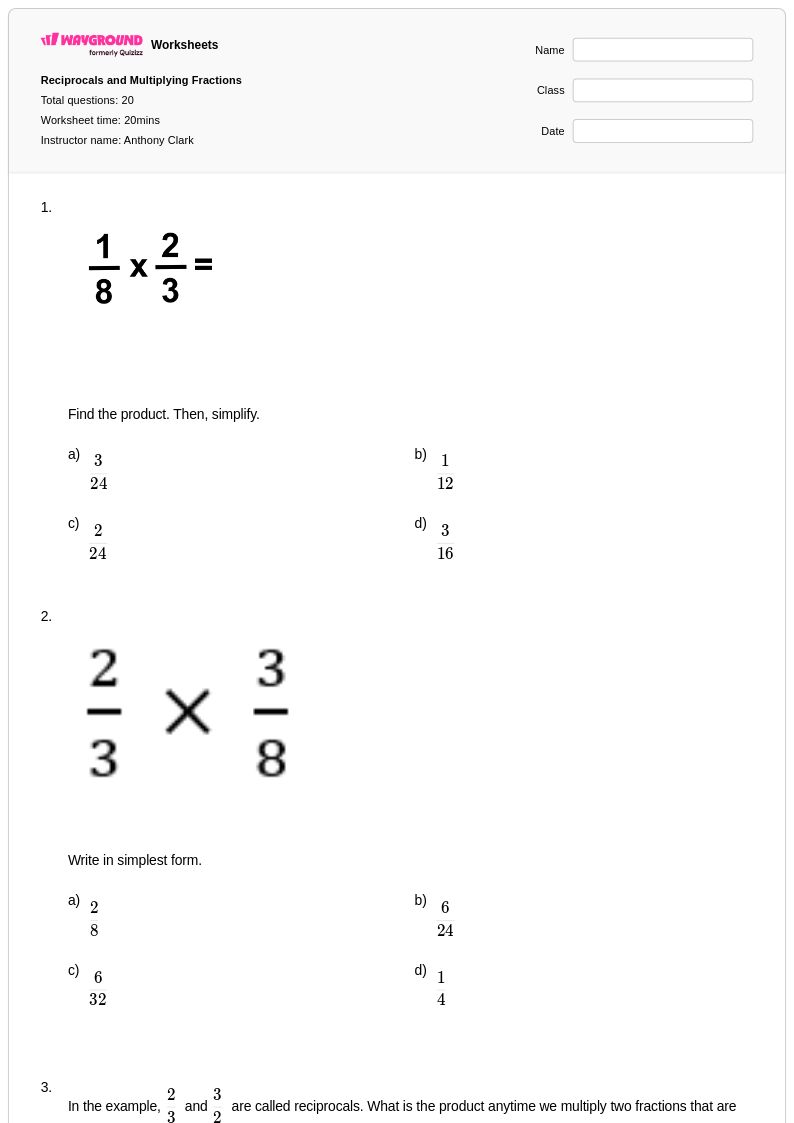
20 Q
6th - Uni
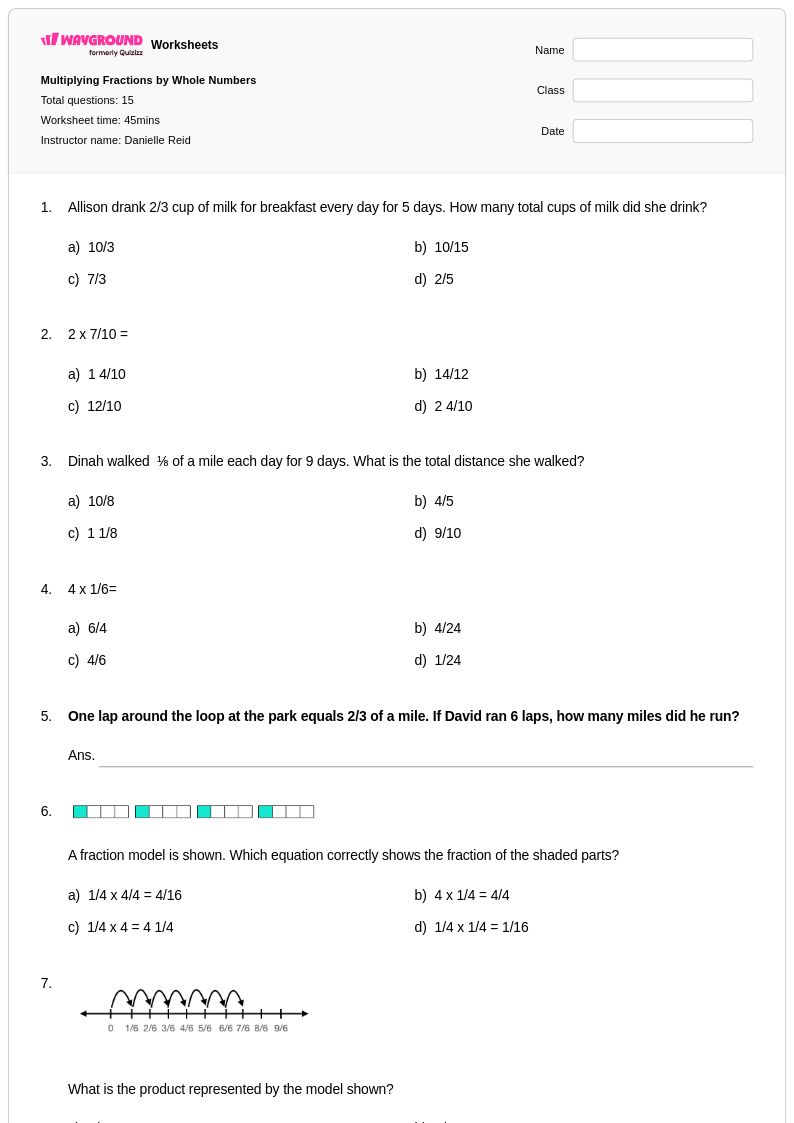
15 Q
4th
Explore Worksheets by Subjects
Explore printable Multiplying Fractions worksheets
Multiplying fractions worksheets available through Wayground (formerly Quizizz) provide comprehensive practice materials designed to help students master this fundamental mathematical operation. These carefully crafted resources focus on building proficiency in the step-by-step process of fraction multiplication, including simplifying fractions before and after multiplication, working with mixed numbers, and understanding the conceptual foundation behind why we multiply numerators together and denominators together. Each worksheet collection includes detailed answer keys and is available as free printable PDFs, making it easy for educators to incorporate targeted practice problems into their mathematics instruction while ensuring students receive immediate feedback on their computational accuracy and problem-solving strategies.
Wayground (formerly Quizizz) empowers teachers with access to millions of educator-created worksheet resources specifically focused on multiplying fractions, supported by robust search and filtering capabilities that allow instructors to locate materials perfectly suited to their classroom needs. The platform's standards alignment features ensure that worksheet collections meet curriculum requirements, while built-in differentiation tools enable teachers to customize problem complexity and provide appropriate challenge levels for diverse learners. These multiplying fractions worksheets are available in both printable and digital formats, including downloadable PDFs, giving educators the flexibility to seamlessly integrate practice materials into lesson planning, targeted remediation sessions, enrichment activities, and ongoing skill reinforcement across various instructional settings.
FAQs
How do I teach multiplying fractions conceptually?
What types of problems help students practice multiplying fractions?
What are the most common mistakes students make when multiplying fractions?
How can I use these multiplying fractions worksheets in my class?
How does multiplying fractions fit into the Common Core standards?
How can I support struggling students with multiplying fractions?