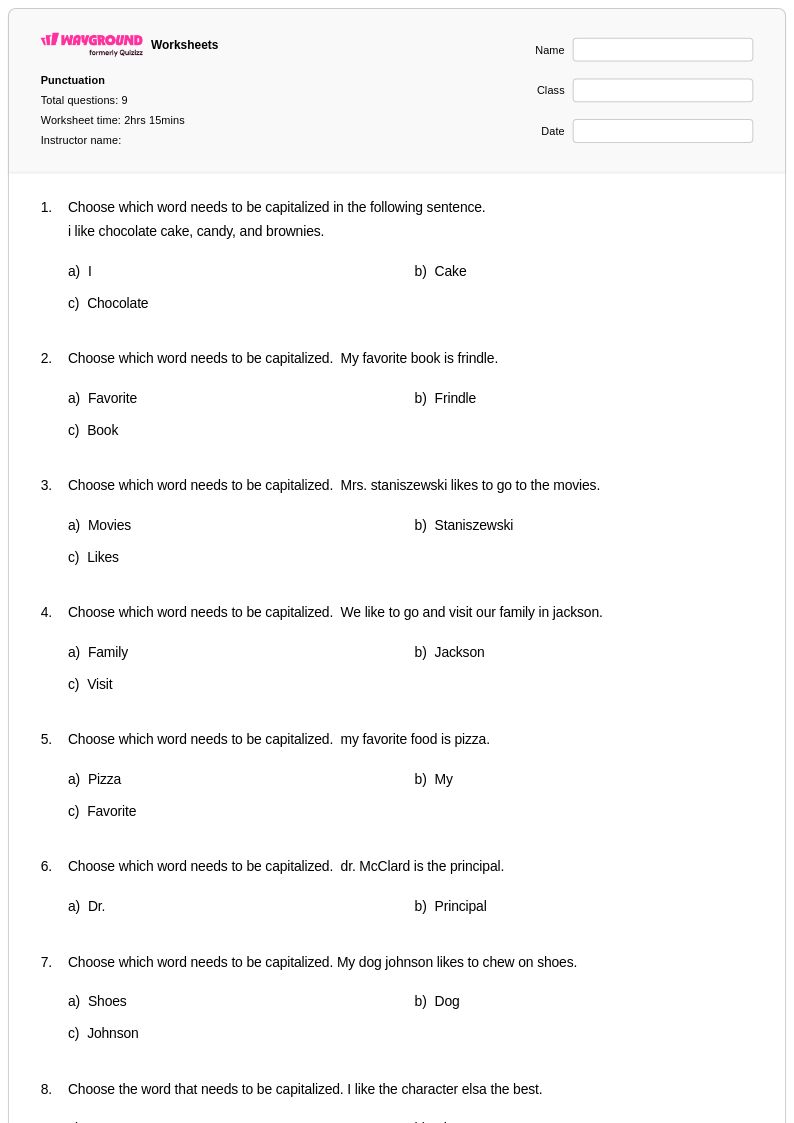
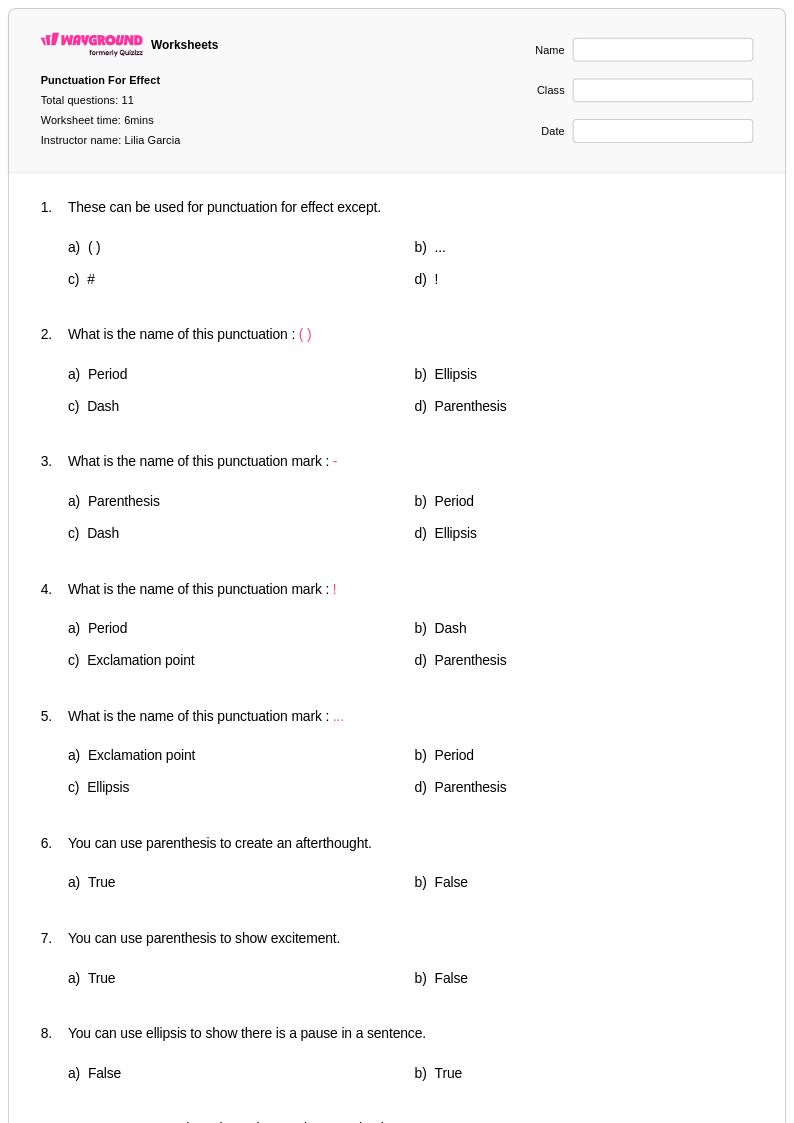
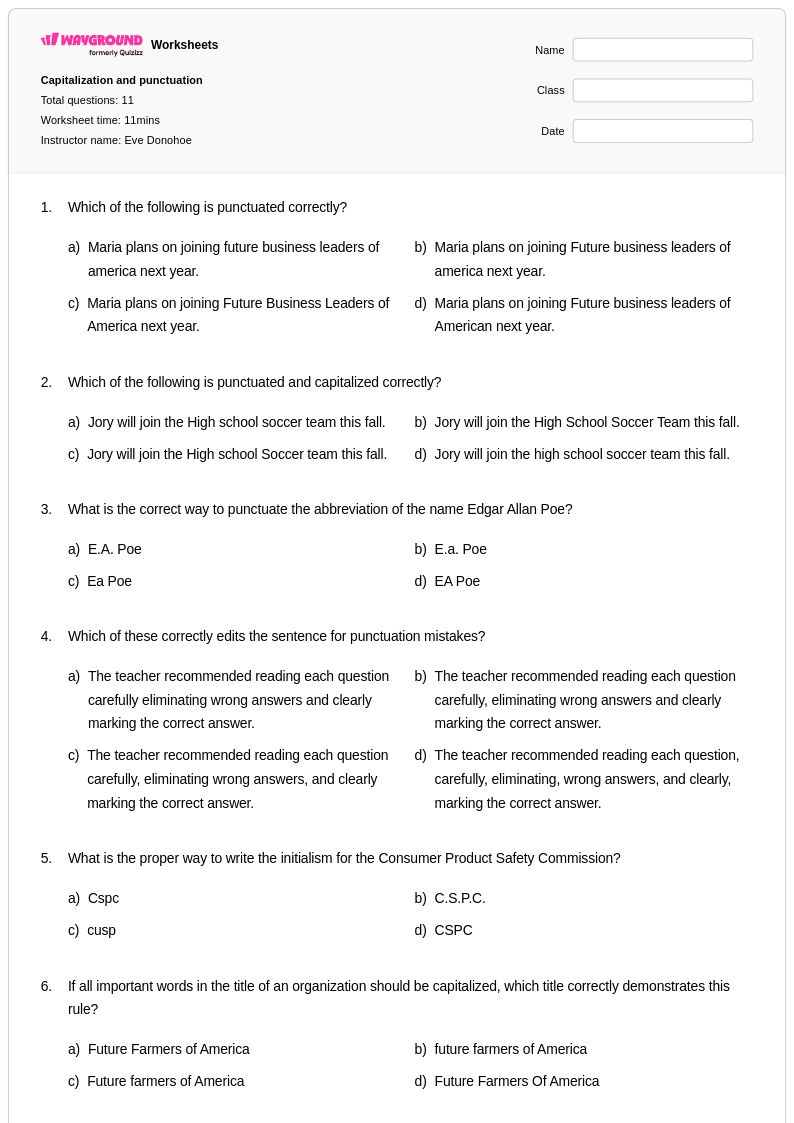
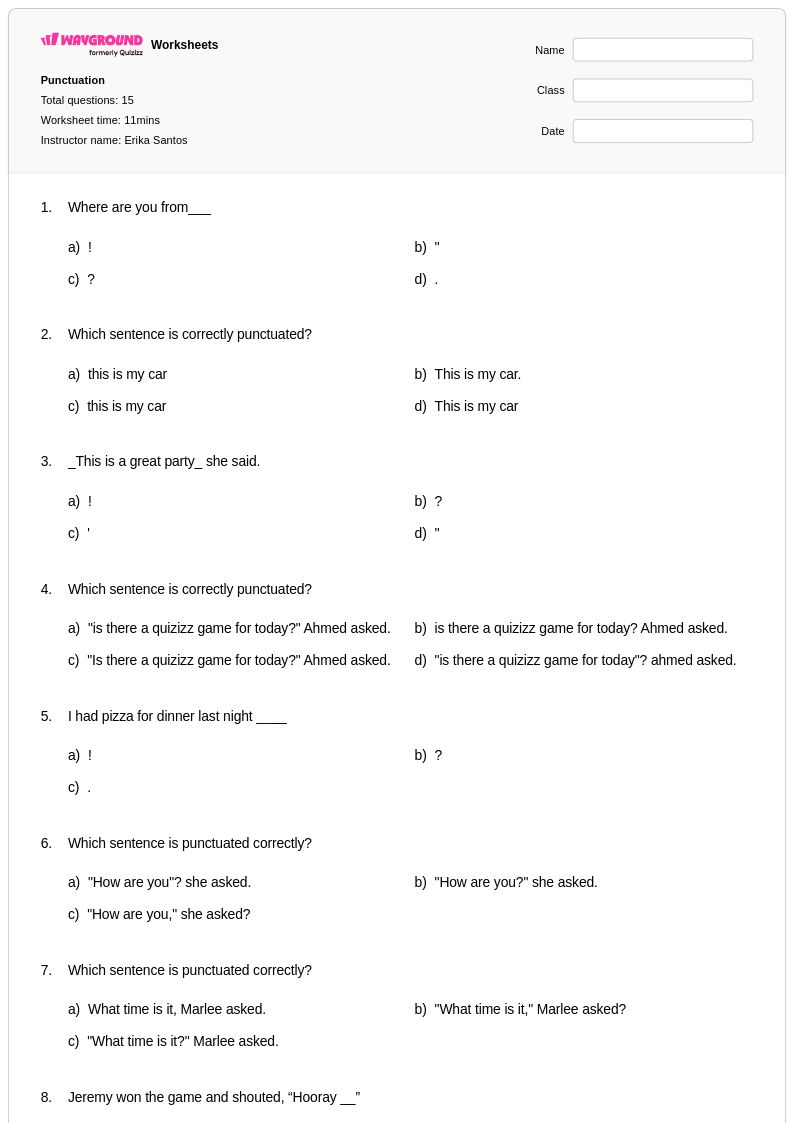
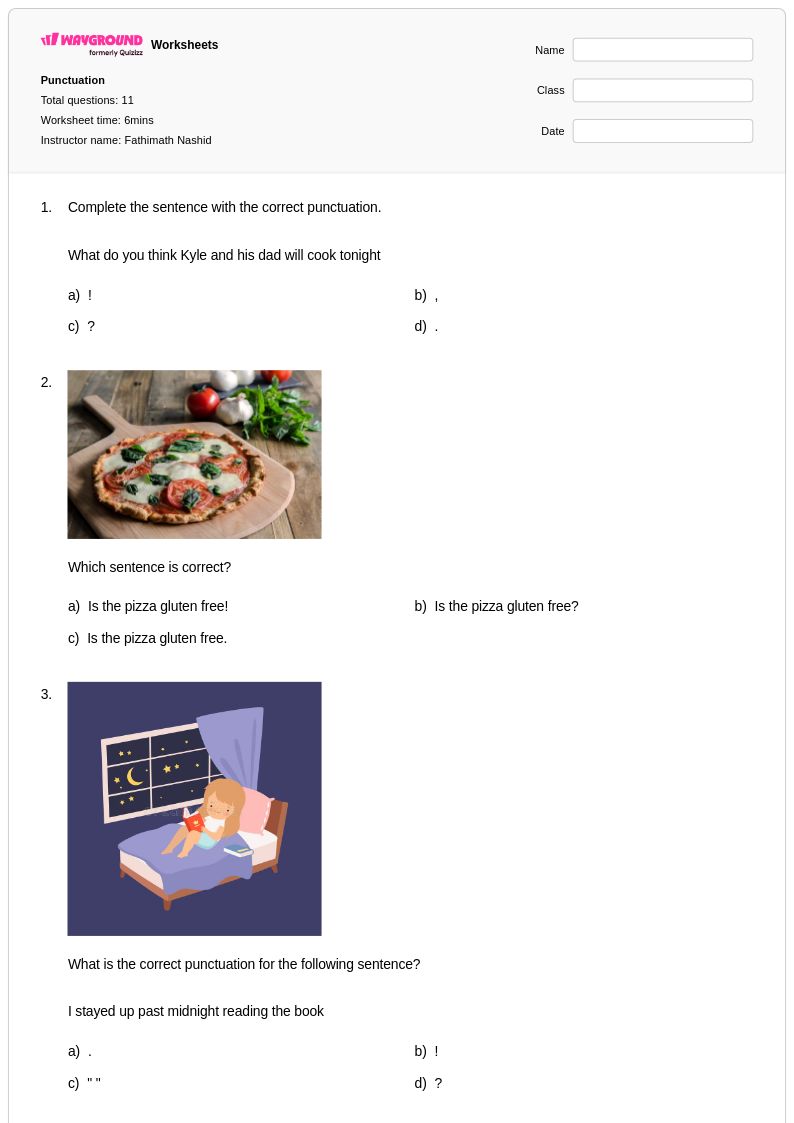
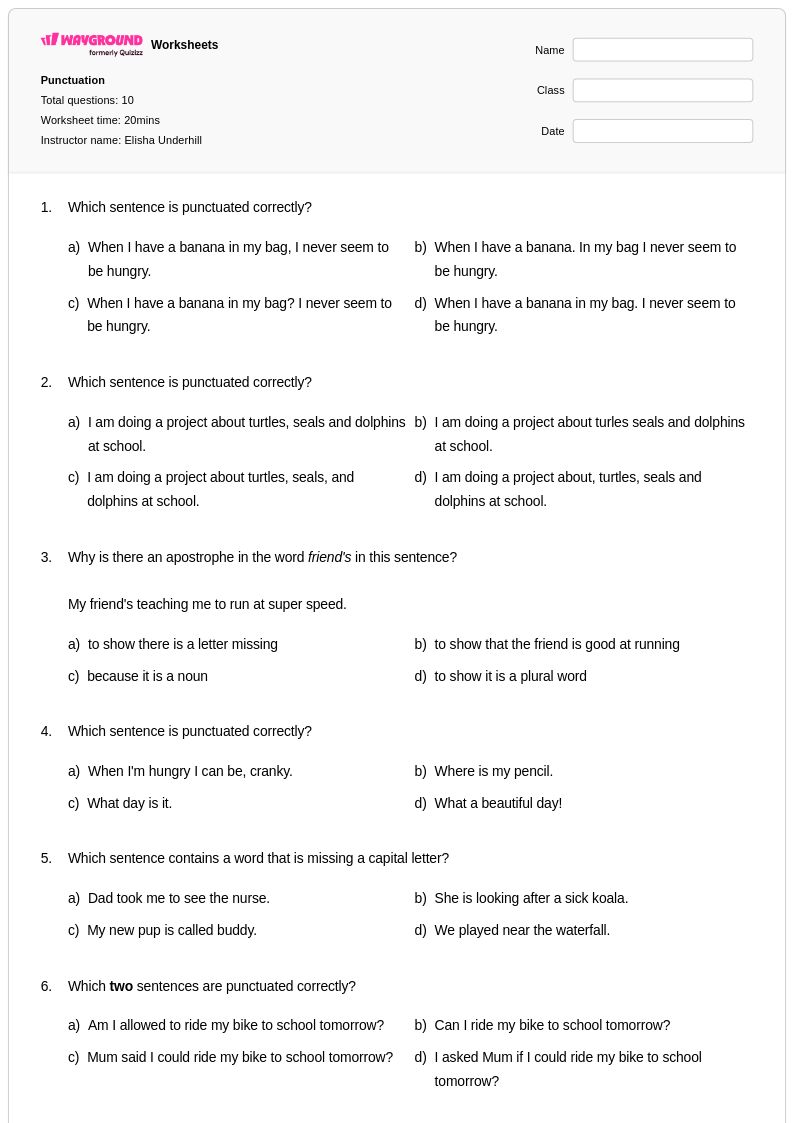
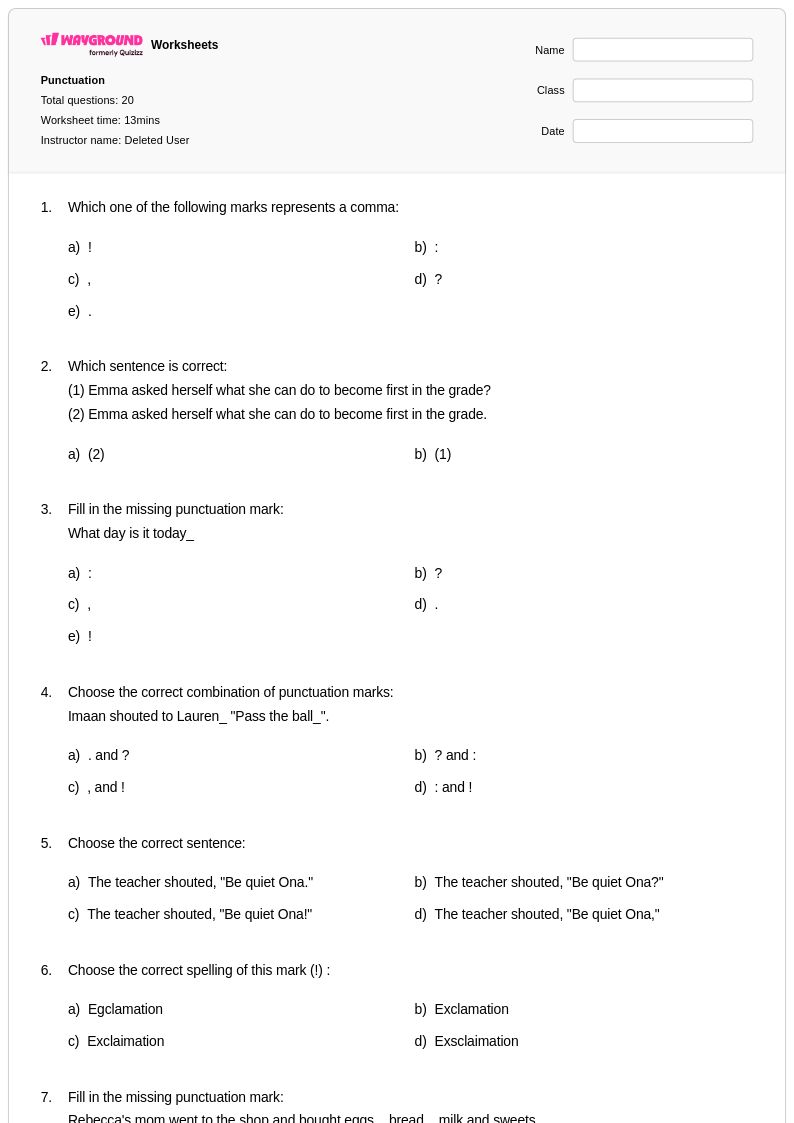
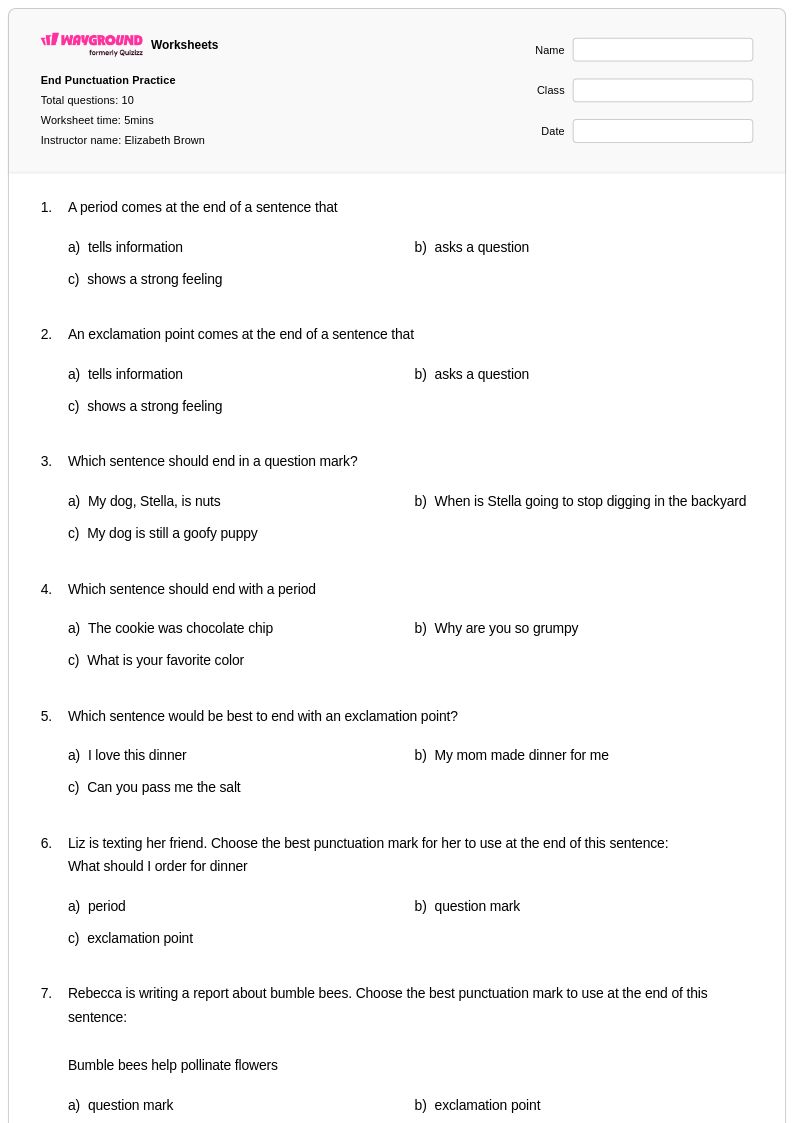
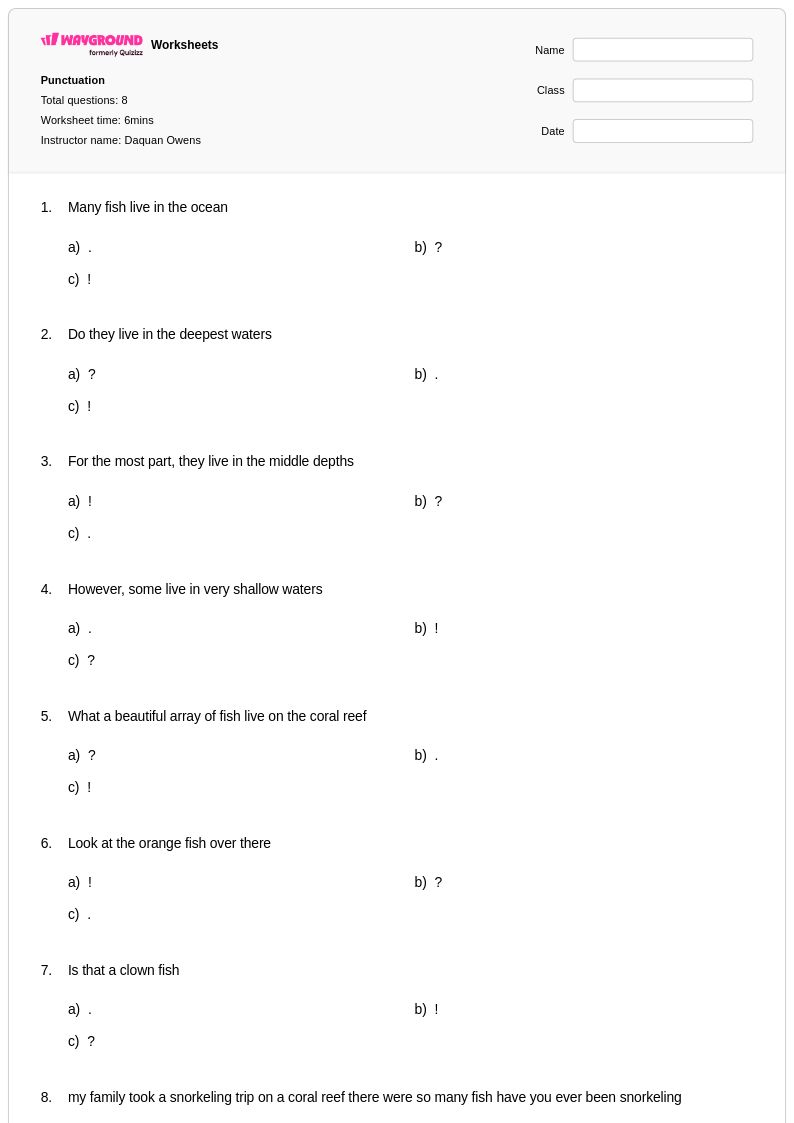
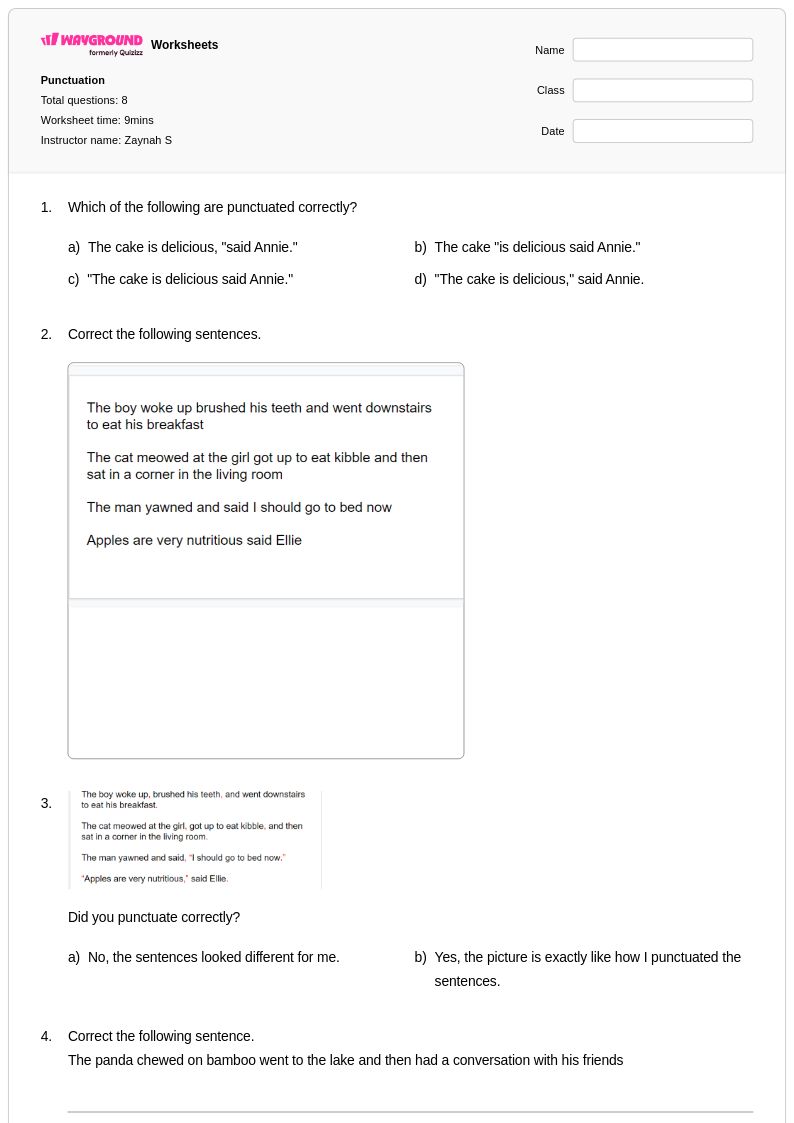
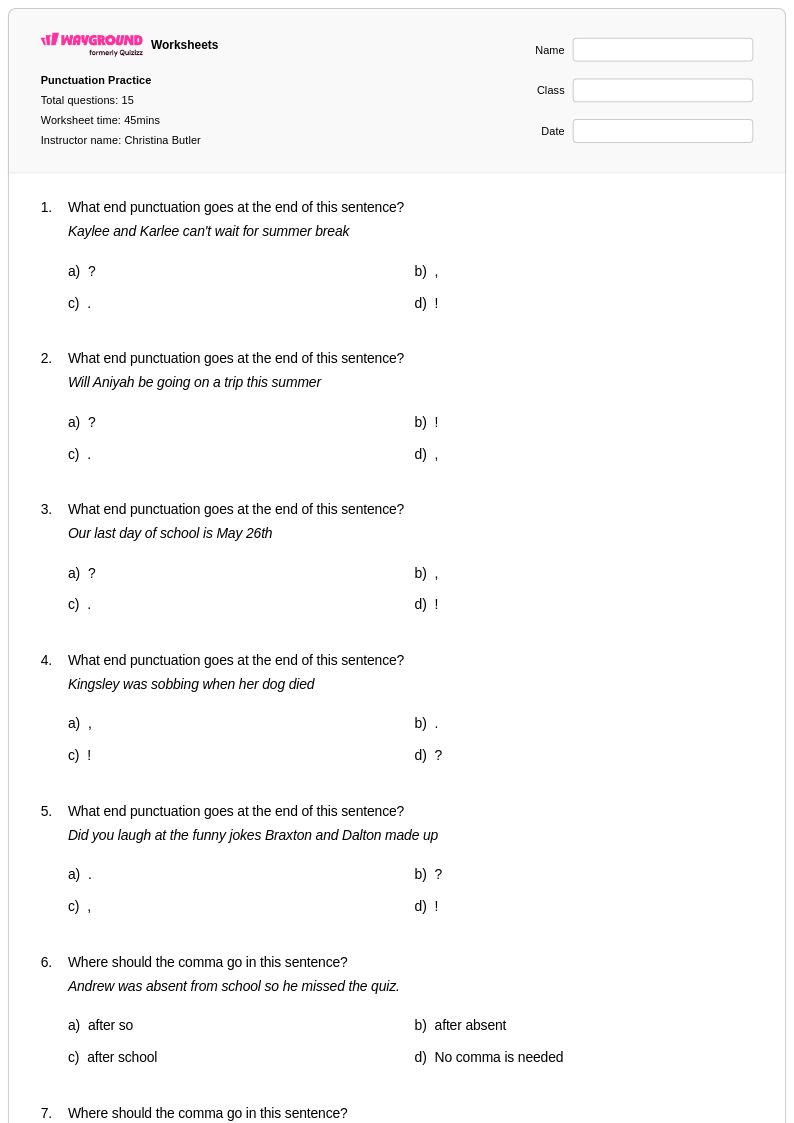
Wayground's Grade 4 punctuation worksheets provide free printables and practice problems to help students master essential punctuation rules, complete with answer keys and engaging exercises.
Explore printable Punctuation worksheets for Grade 4
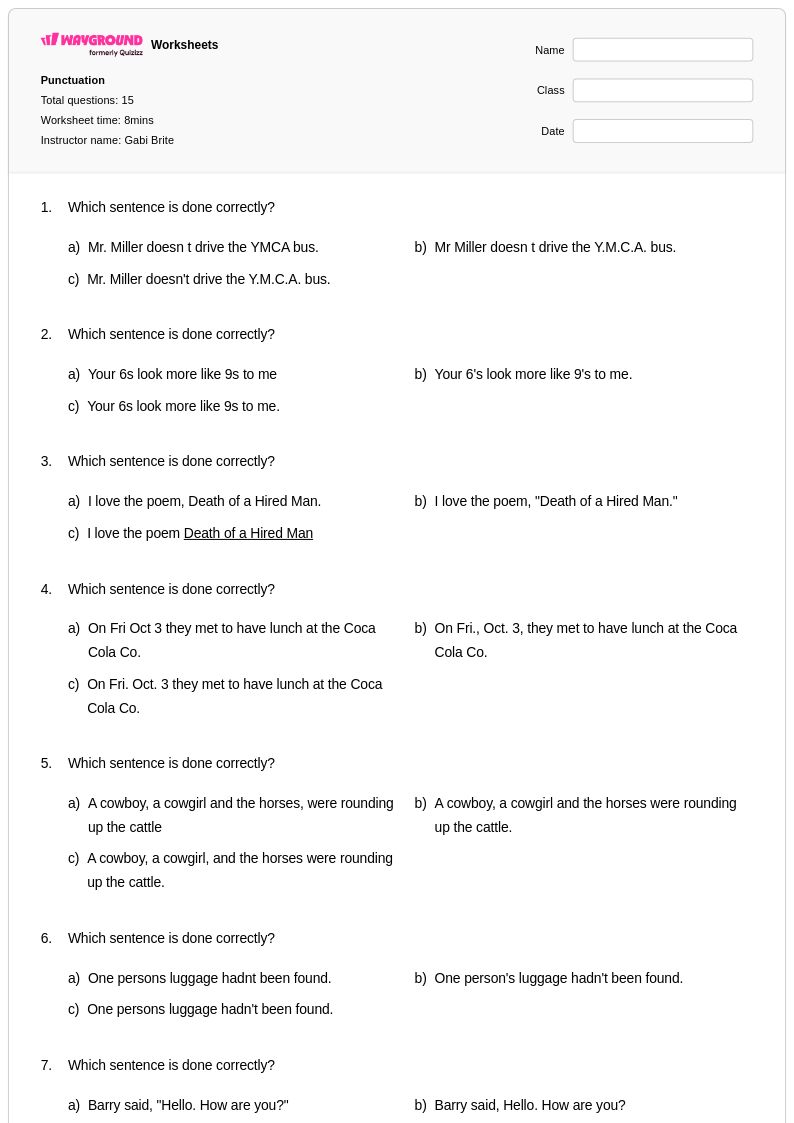
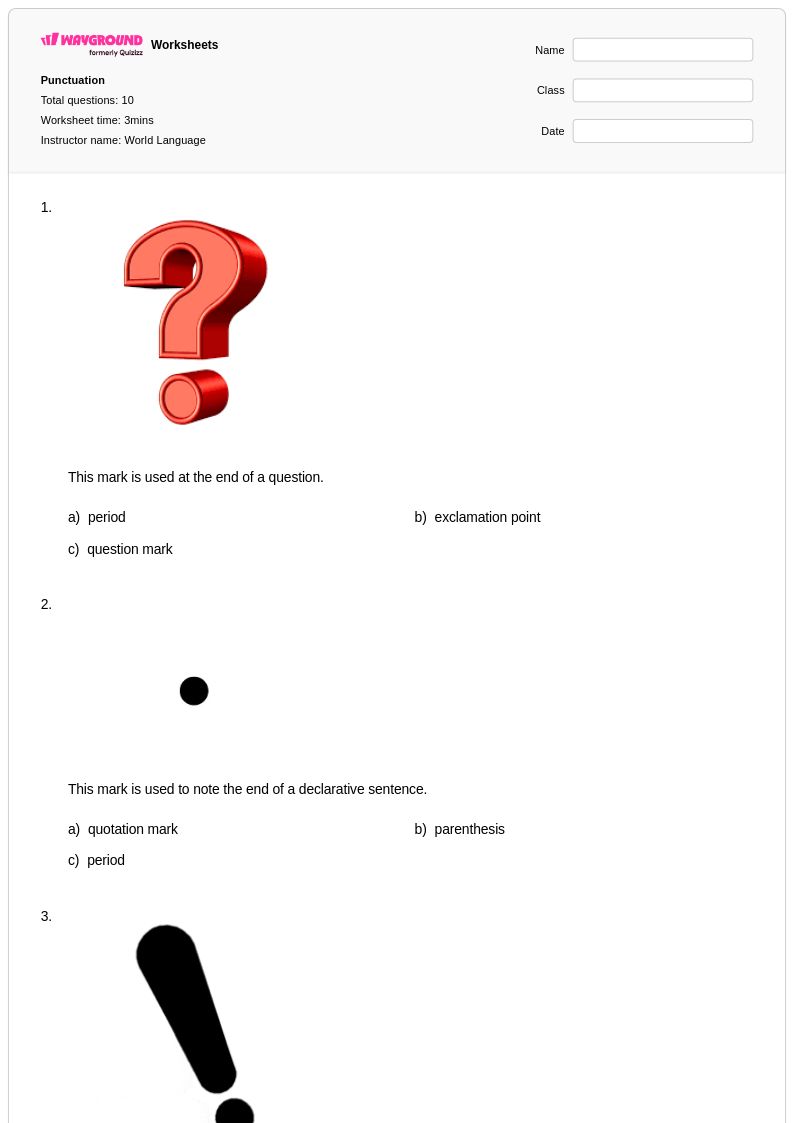
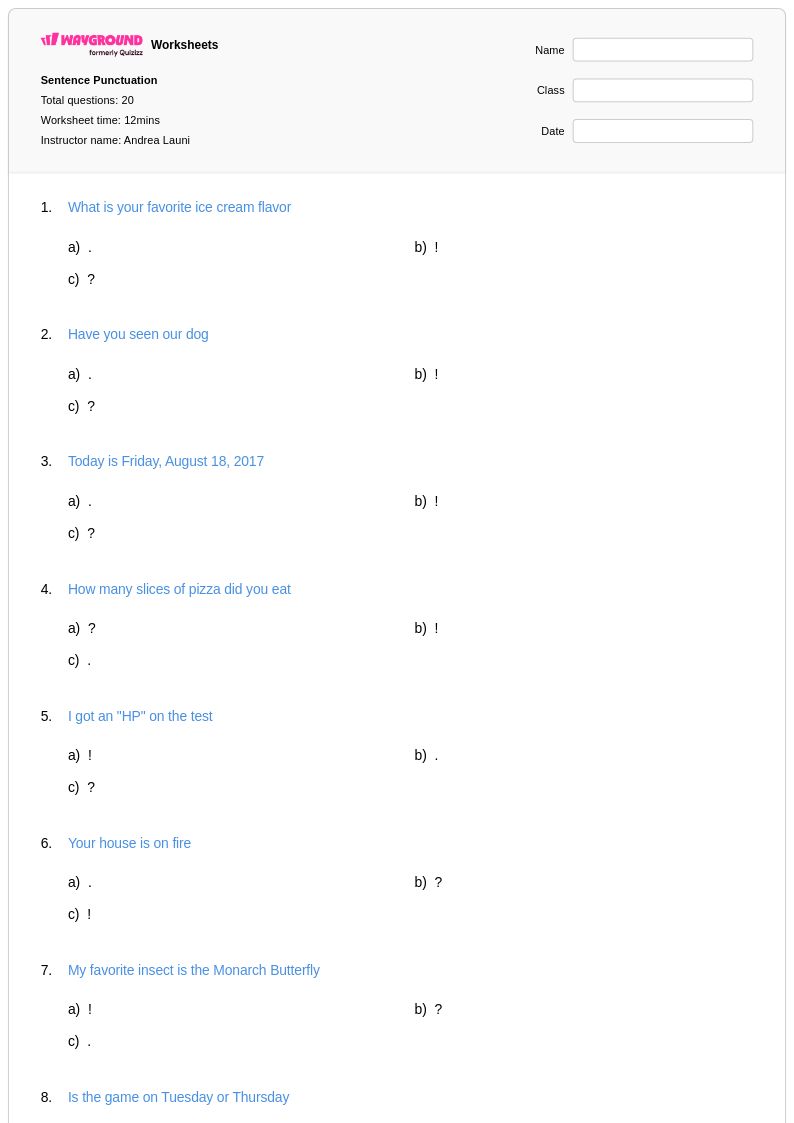
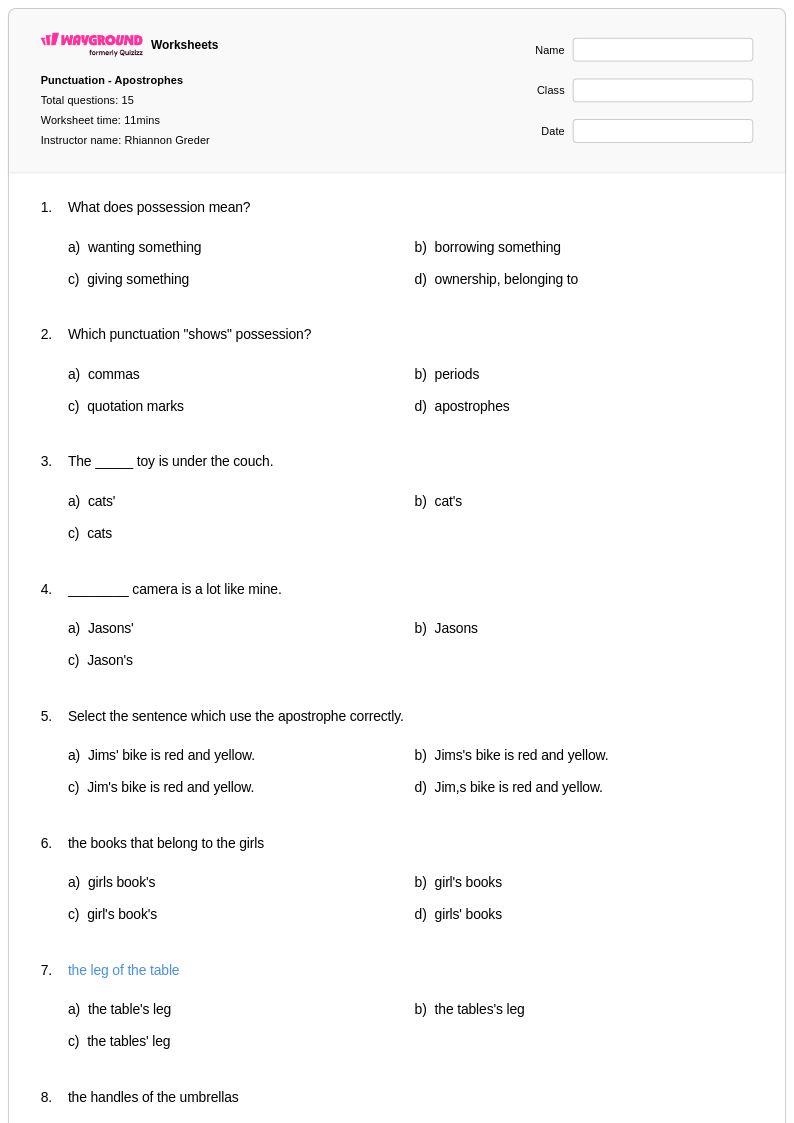
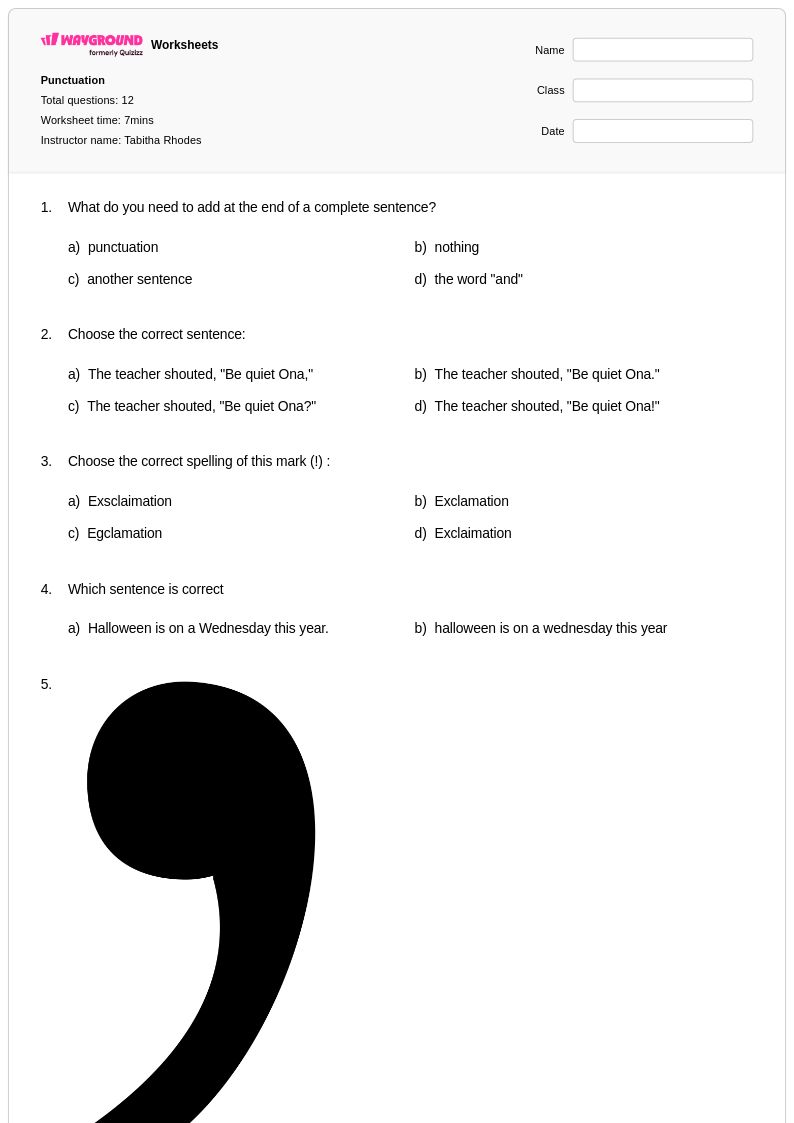
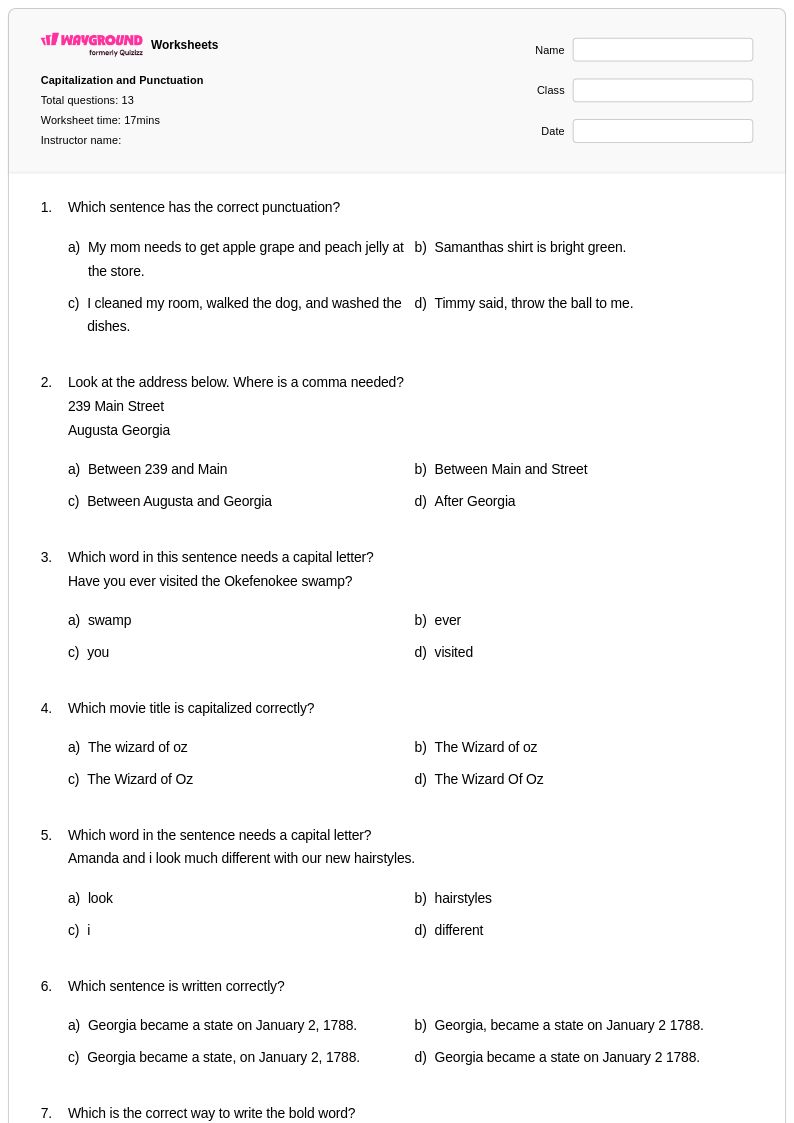
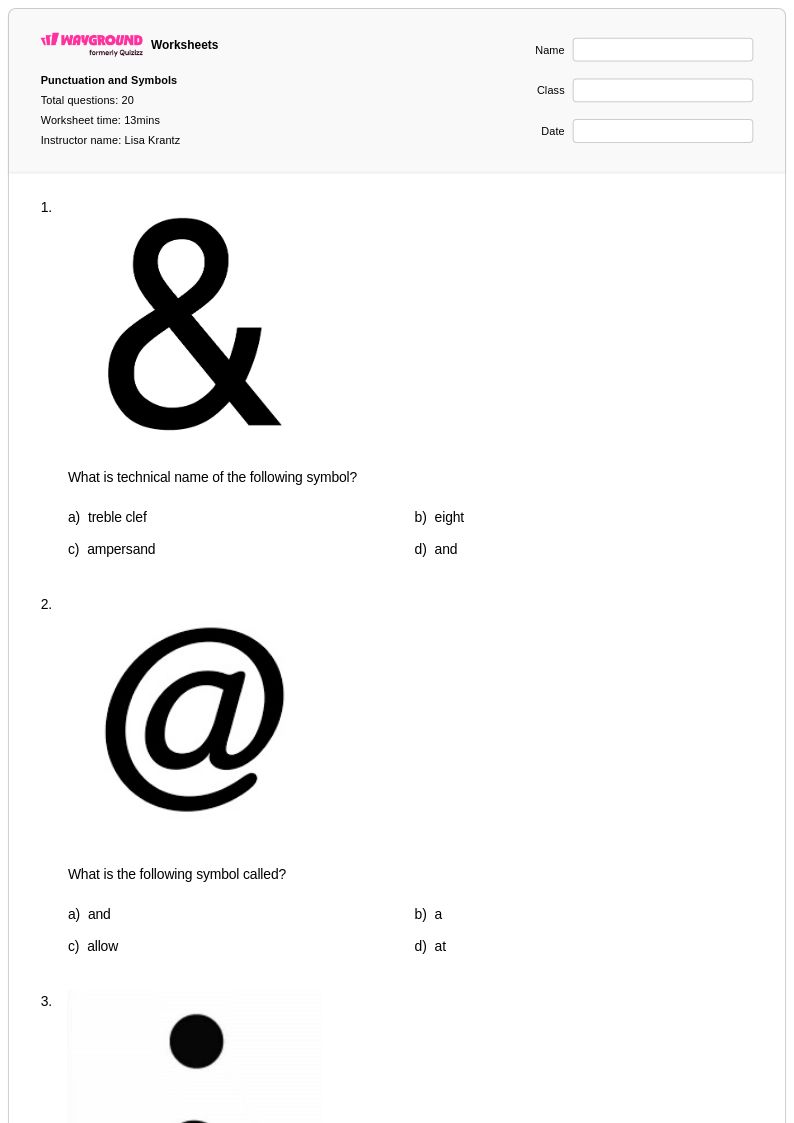
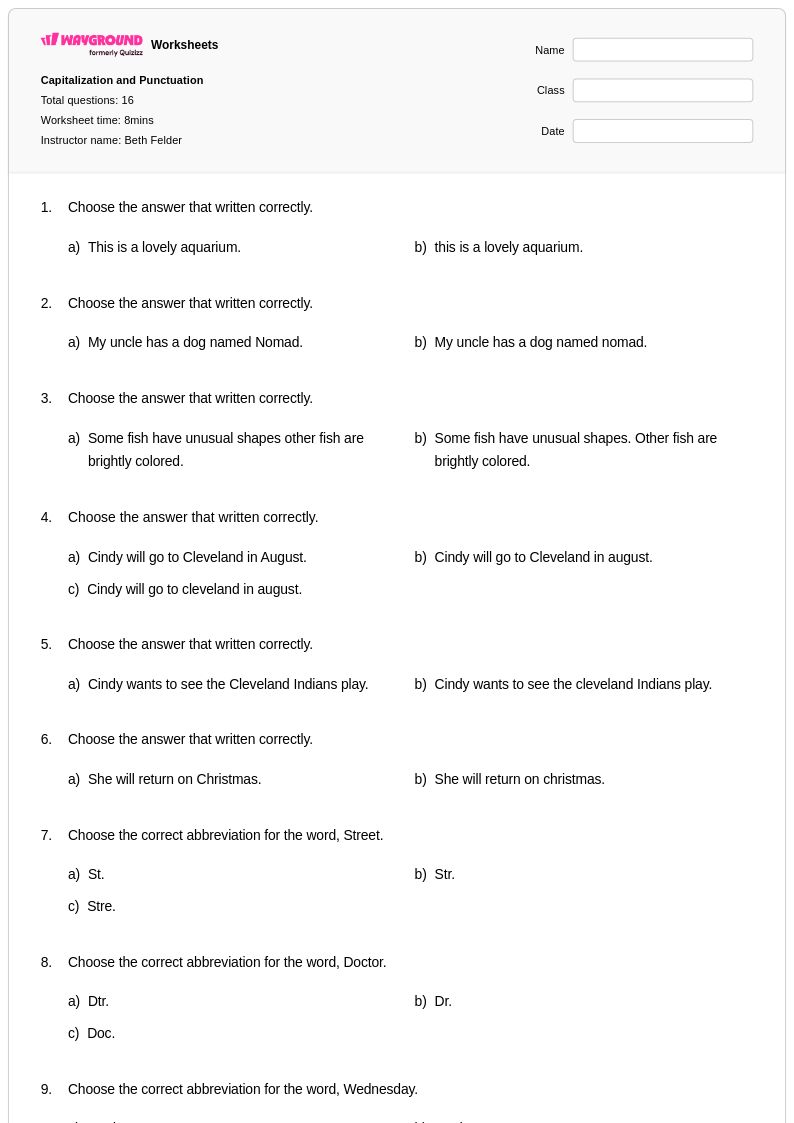
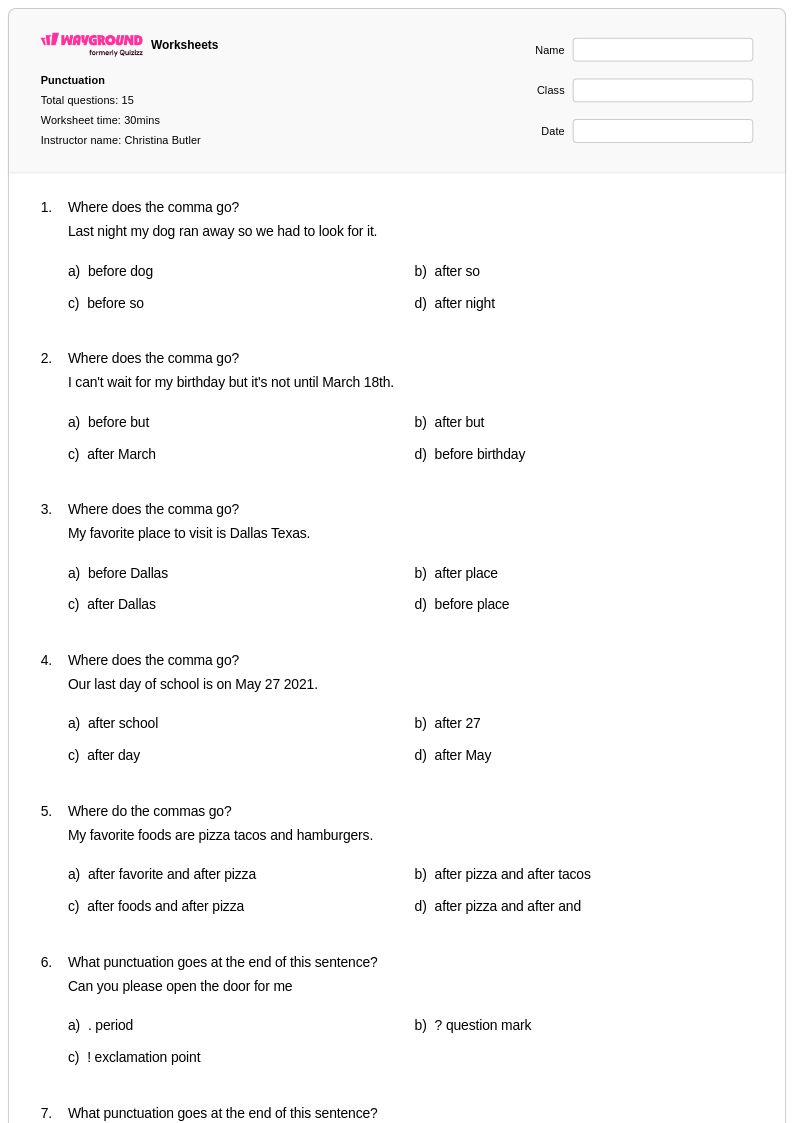
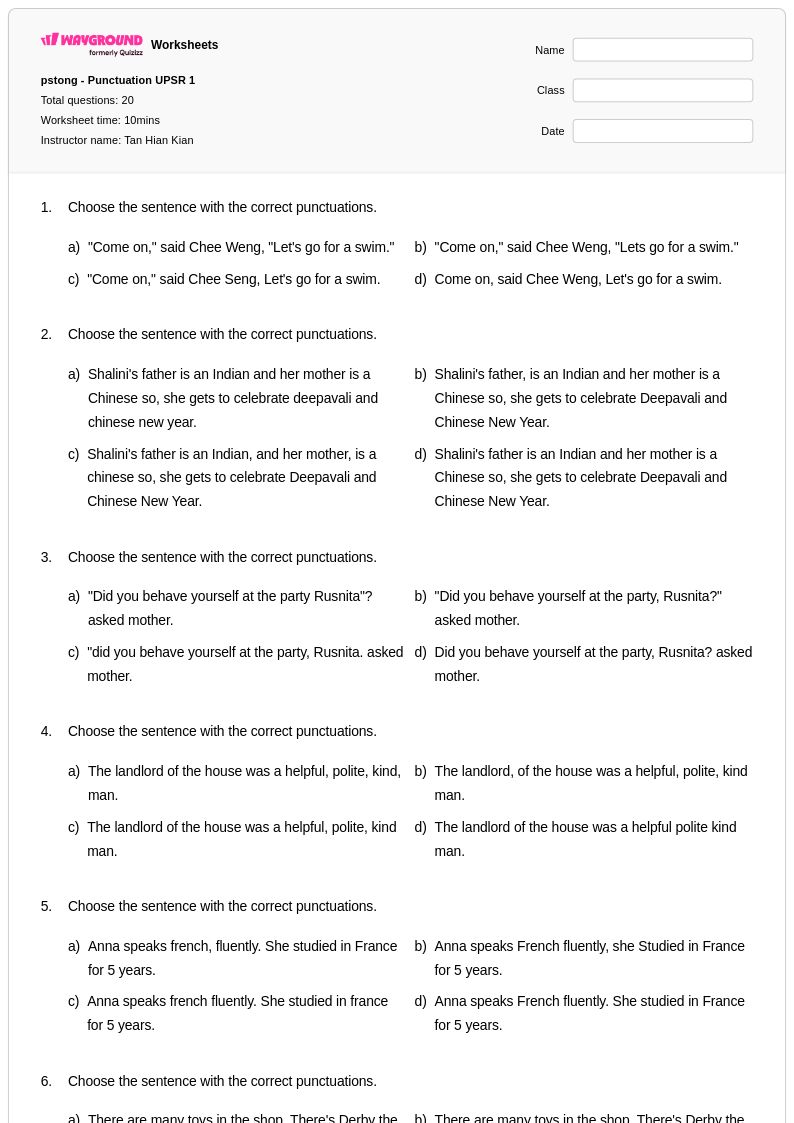
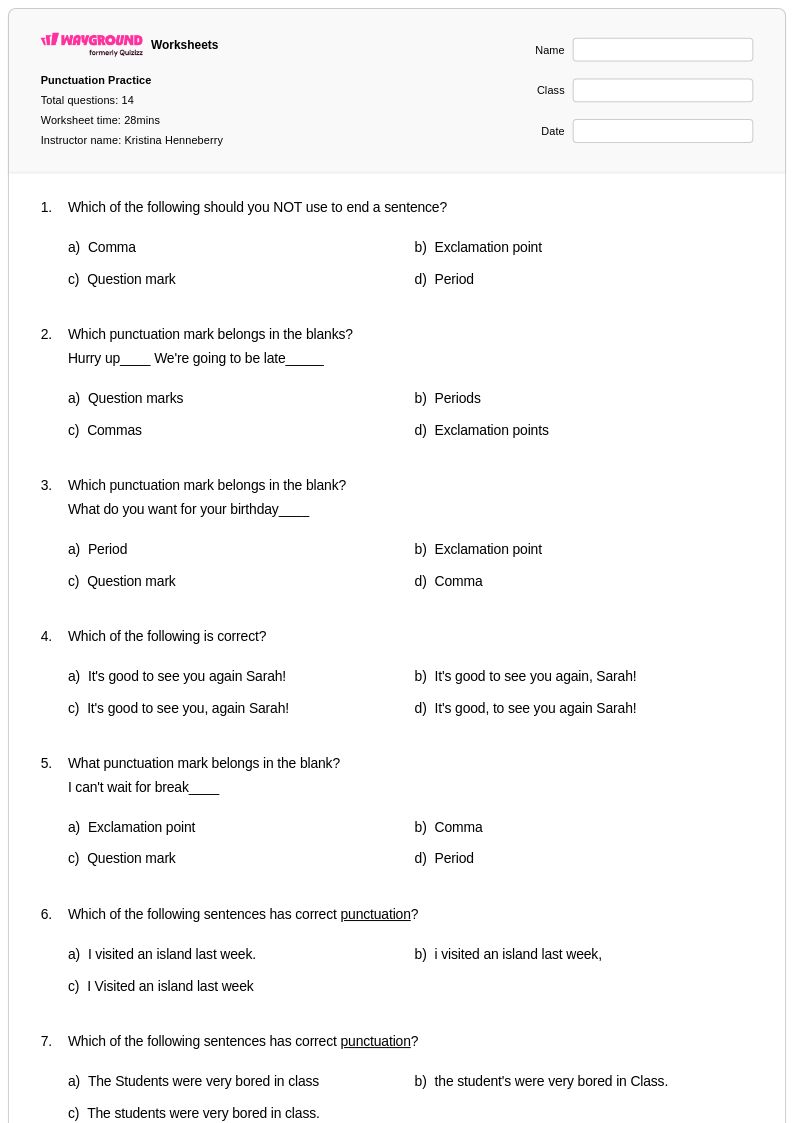
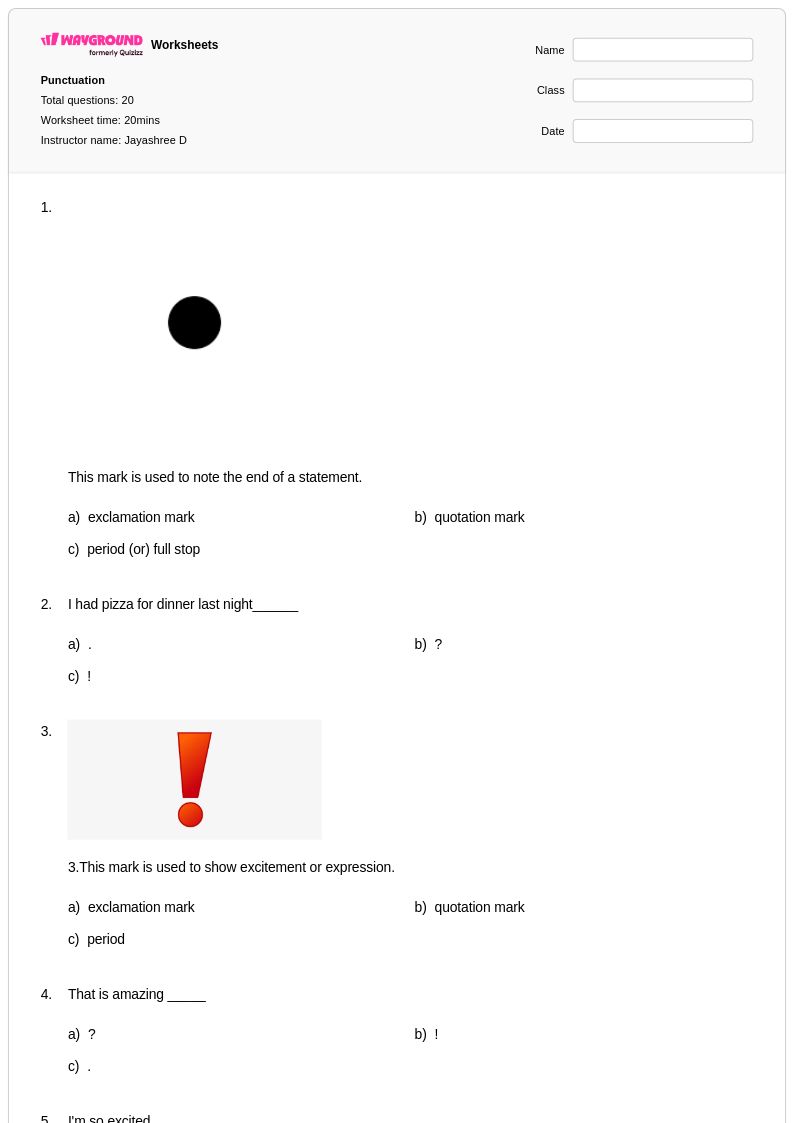
Punctuation worksheets for Grade 4 students available through Wayground (formerly Quizizz) provide comprehensive practice with essential writing mechanics that fourth graders must master to communicate effectively. These carefully crafted resources target critical punctuation skills including proper use of periods, question marks, exclamation points, commas in series and compound sentences, apostrophes for contractions and possessives, and quotation marks for dialogue. Each worksheet collection includes detailed answer keys and practice problems that progressively build students' understanding of how punctuation marks clarify meaning and enhance readability. The free printable pdf format ensures teachers can easily distribute materials while maintaining high-quality formatting that supports student learning and engagement with these fundamental grammar concepts.
Wayground (formerly Quizizz) empowers educators with millions of teacher-created punctuation resources specifically designed for Grade 4 instruction, featuring robust search and filtering capabilities that help teachers quickly locate materials aligned with state standards and curriculum requirements. The platform's differentiation tools allow instructors to customize worksheets based on individual student needs, whether for remediation of basic punctuation rules or enrichment activities involving complex sentence structures. Available in both printable and digital formats including downloadable pdf files, these worksheet collections support flexible lesson planning and enable teachers to provide targeted skill practice during whole-group instruction, small-group intervention, or independent work time. The comprehensive nature of these resources streamlines preparation while ensuring students receive consistent, high-quality practice with the punctuation mechanics essential for academic writing success.
FAQs
How do I teach punctuation marks to students who keep making the same mistakes?
The most effective approach is to teach each punctuation mark in isolation before asking students to apply multiple rules simultaneously. Start with the function of the mark — for example, a colon introduces what comes next, while a semicolon joins two independent clauses — then move to practice with authentic sentences. Repeated exposure to real writing contexts, rather than isolated drills alone, helps students internalize when and why each mark is used.
What exercises help students practice comma rules effectively?
Comma practice is most effective when organized by rule type: commas in a series, after introductory clauses, around nonessential phrases, and before coordinating conjunctions in compound sentences. Worksheets that present one rule per exercise set prevent students from guessing rather than applying logic. Editing tasks — where students identify missing or misplaced commas in a passage — are especially useful because they mirror real writing revision.
What are the most common punctuation mistakes students make?
The most frequent errors include comma splices (joining two independent clauses with only a comma), misuse of apostrophes in possessives versus plurals, and unnecessary commas before subordinating conjunctions. Students also commonly confuse the colon and semicolon, using one where the other is grammatically required. Targeting these specific error patterns with focused practice — rather than general punctuation review — leads to faster correction.
How do I differentiate punctuation instruction for students at different skill levels?
For struggling students, reduce the complexity of the sentence structures used in practice problems so the punctuation rule itself is the only challenge. Advanced students benefit from tasks that require them to combine sentences or revise paragraphs, applying multiple rules at once. On Wayground, teachers can apply accommodations such as reduced answer choices or read-aloud support to individual students, allowing the same worksheet to serve a range of learners without disrupting the rest of the class.
How do I use Wayground punctuation worksheets in my classroom?
Wayground punctuation worksheets are available as printable PDFs for traditional classroom use and in digital formats for technology-integrated environments, including the option to host them as an interactive quiz on Wayground. Teachers can assign specific subtopic worksheets — such as colons, dashes, ellipses, or possessive pronouns — to match the current unit of instruction. All worksheets include complete answer keys, making them practical for independent practice, homework, or formative assessment.
What is the difference between teaching possessive pronouns and possessive nouns when it comes to punctuation?
Possessive pronouns (his, her, its, their, whose) never take an apostrophe, while possessive nouns always do — this distinction is one of the most persistent sources of student confusion. The error most commonly appears with 'its' versus 'it's', where students apply the apostrophe rule for nouns to a pronoun. Direct comparison exercises that place both forms side by side are more effective than teaching each rule in isolation.
How do quotation mark rules differ between dialogue and citing sources?
In dialogue, quotation marks enclose the spoken words and punctuation is placed inside the closing mark in American English. When citing a title or short work, quotation marks indicate the title rather than spoken language, and the placement rules still apply. Students frequently place end punctuation outside the quotation marks or forget to start a new paragraph for each new speaker in dialogue — both errors are worth targeting explicitly in practice exercises.