
Recommended Topics for you
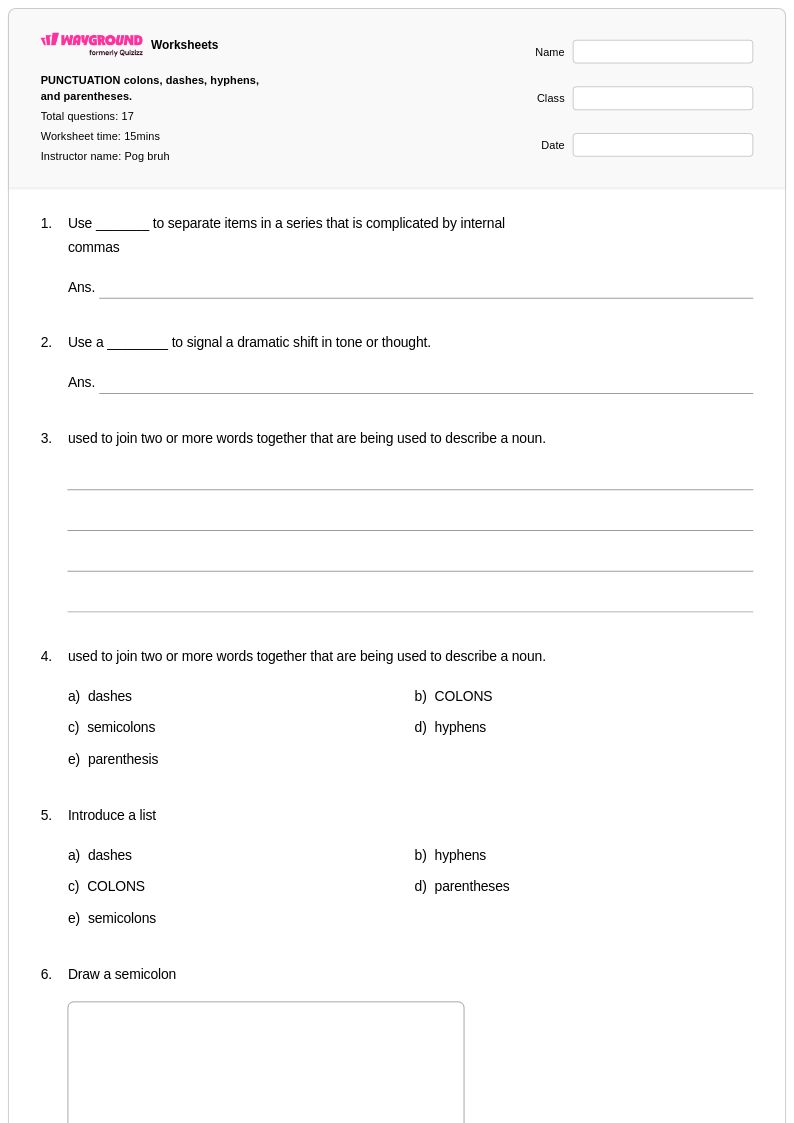
17 Q
9th - 12th
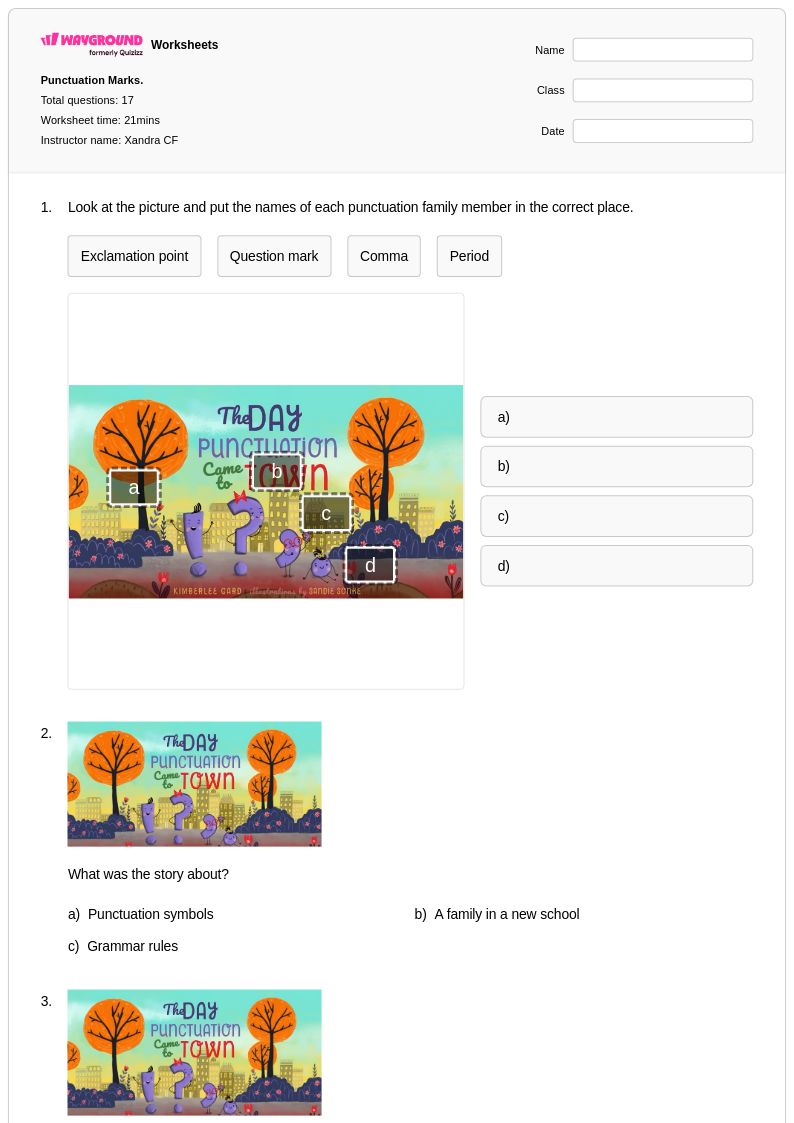
17 Q
6th
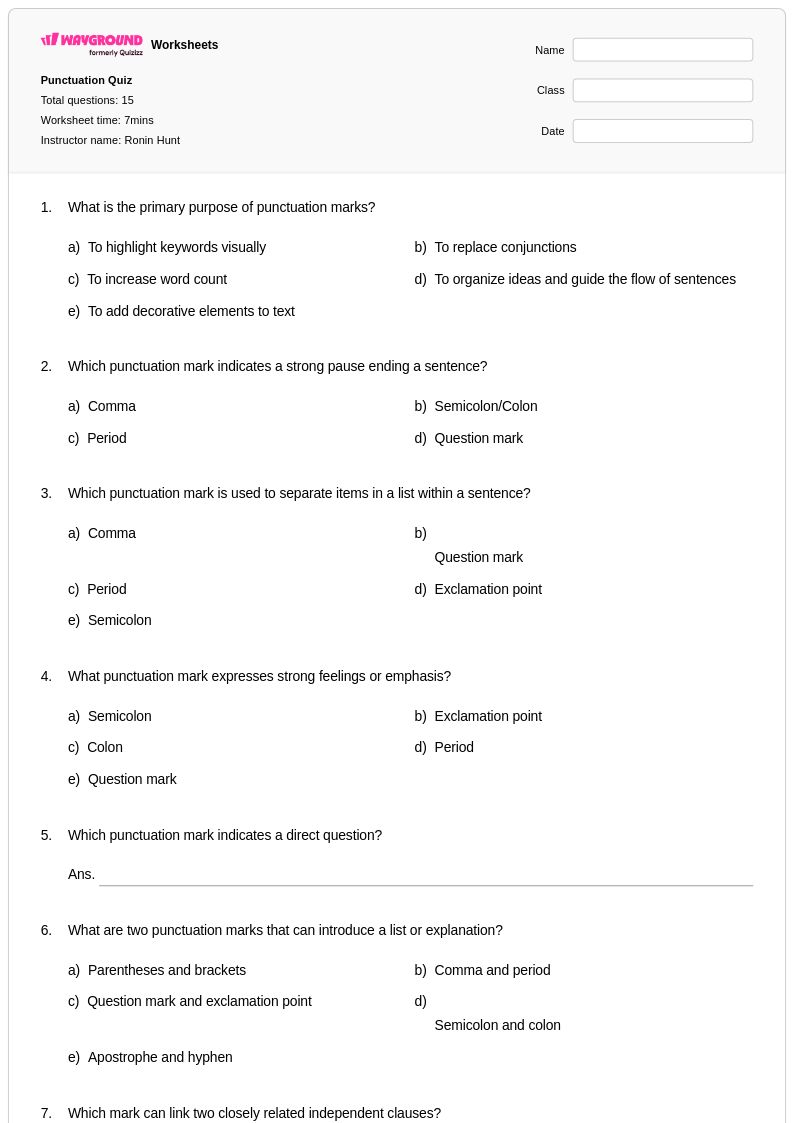
15 Q
9th - 12th
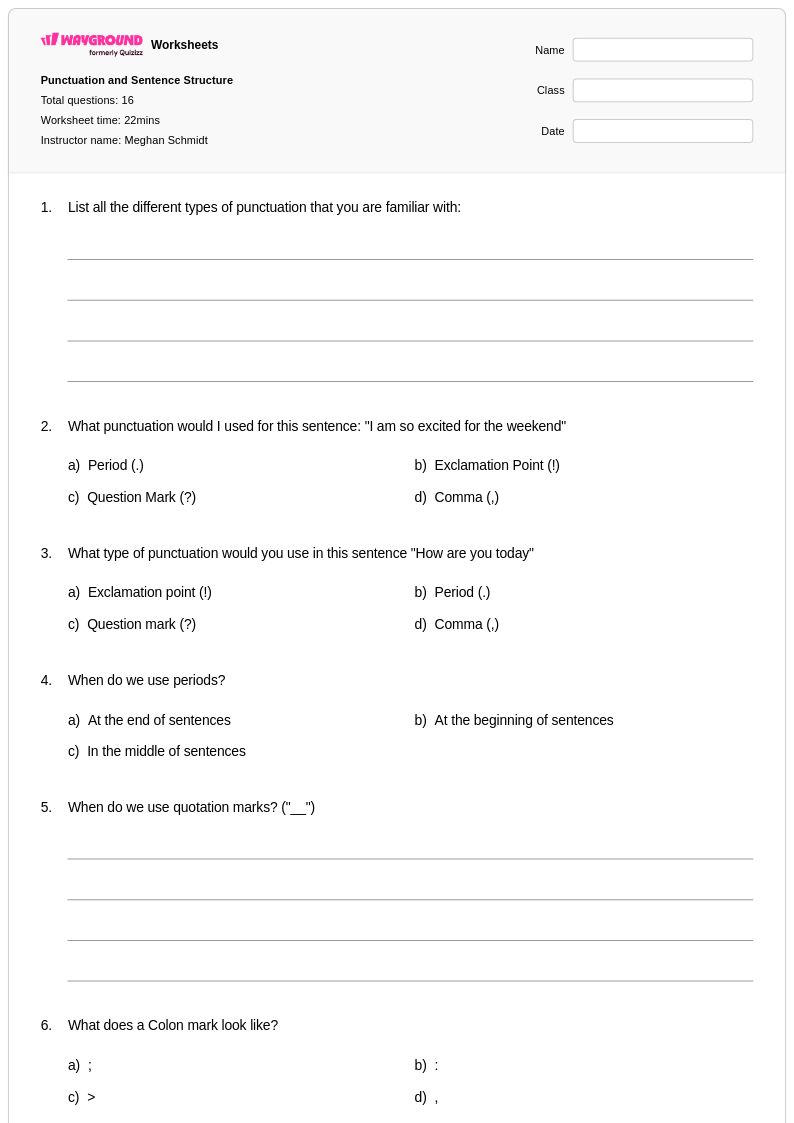
16 Q
6th
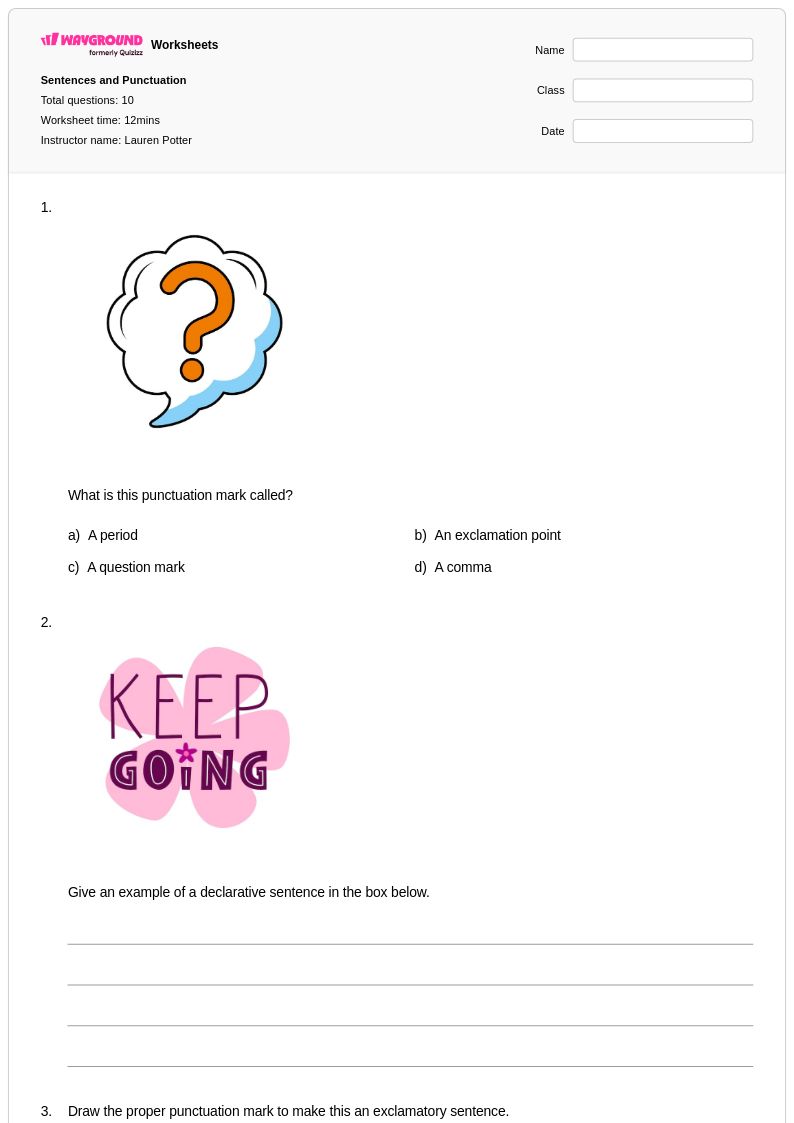
10 Q
1st - 5th
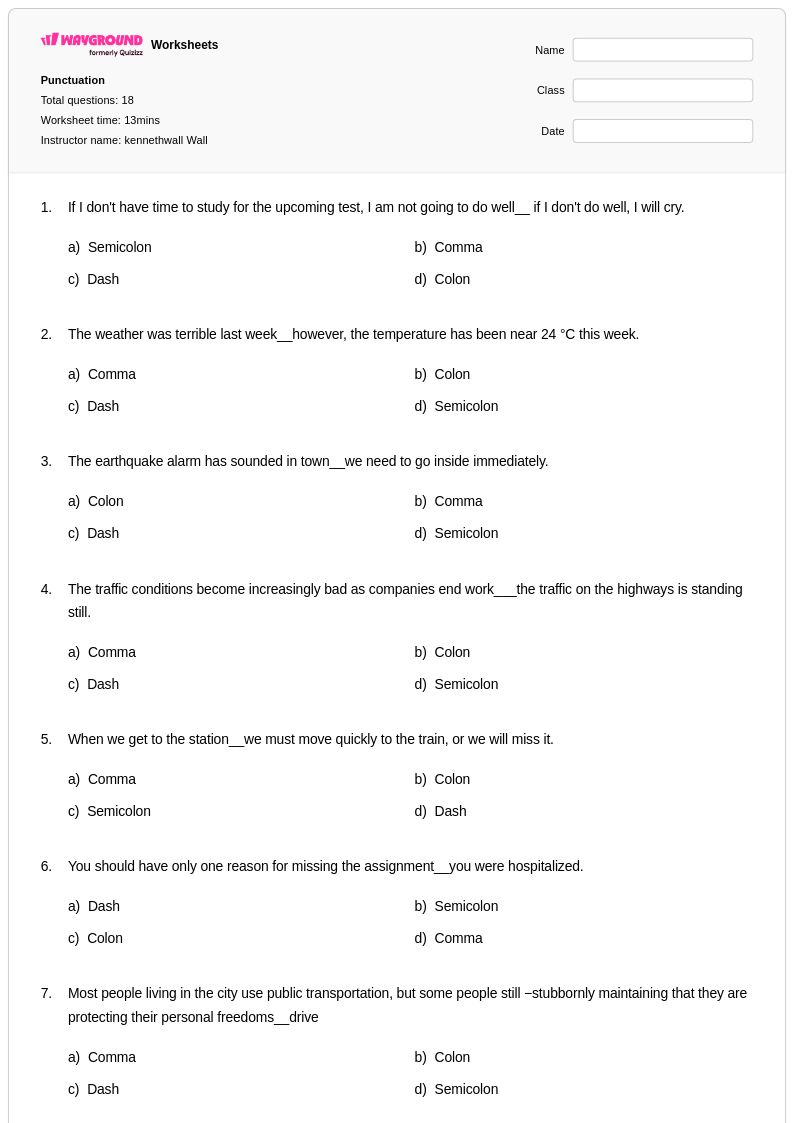
18 Q
10th - 12th
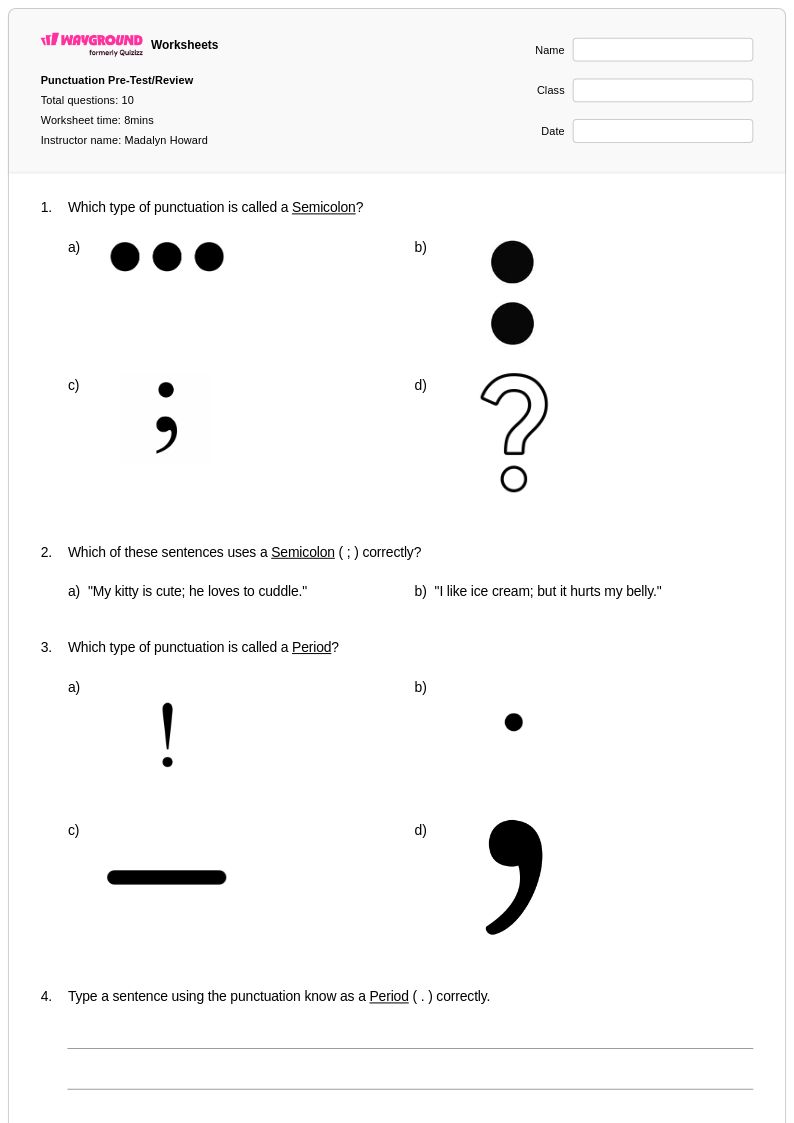
10 Q
Uni
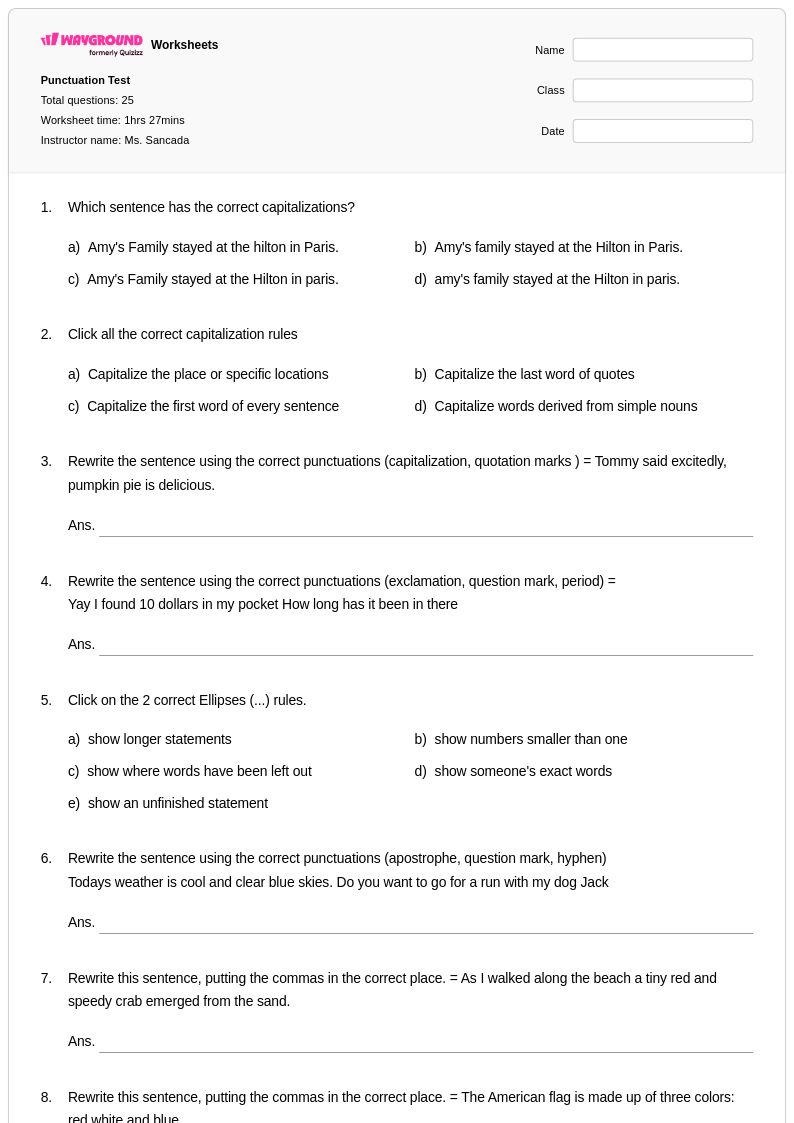
25 Q
6th
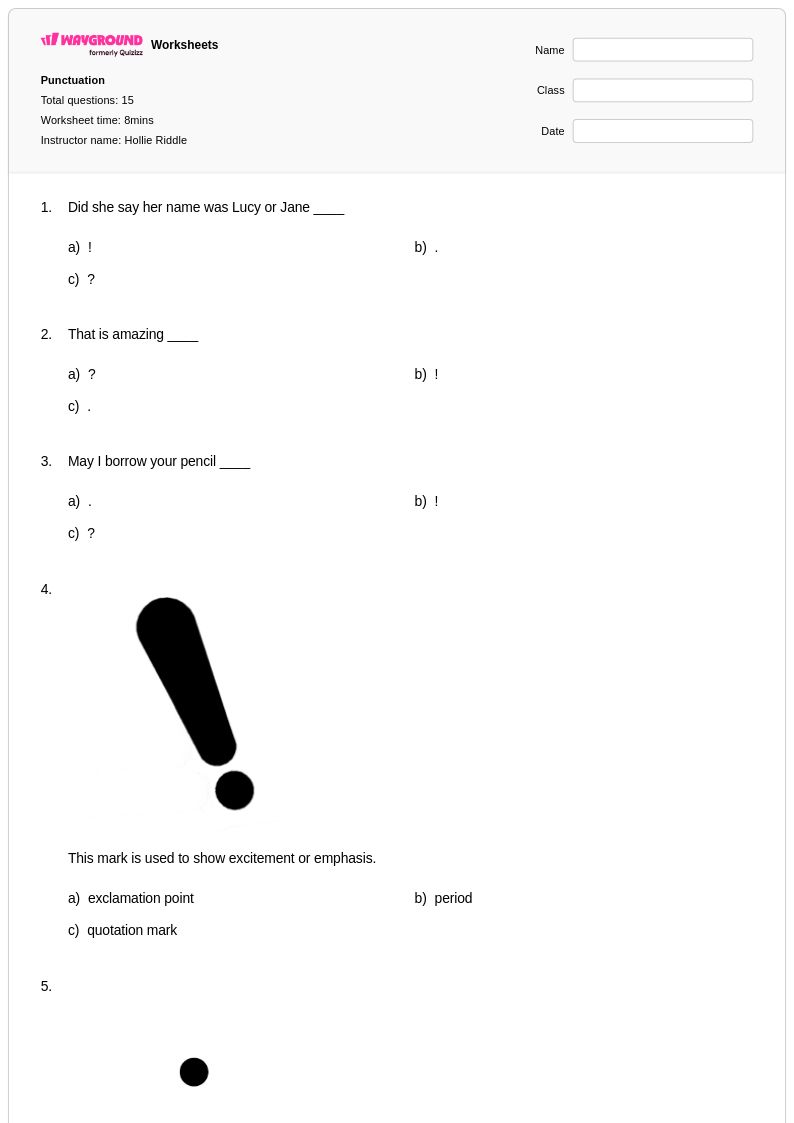
15 Q
3rd
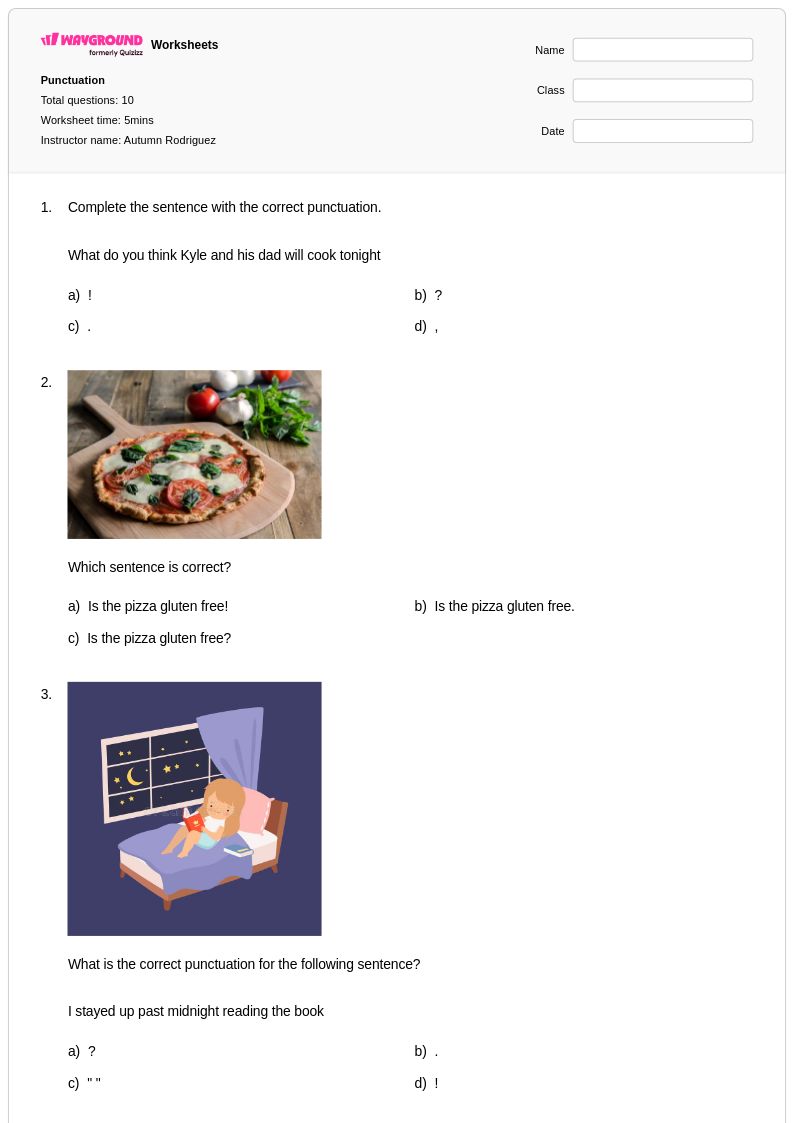
10 Q
5th
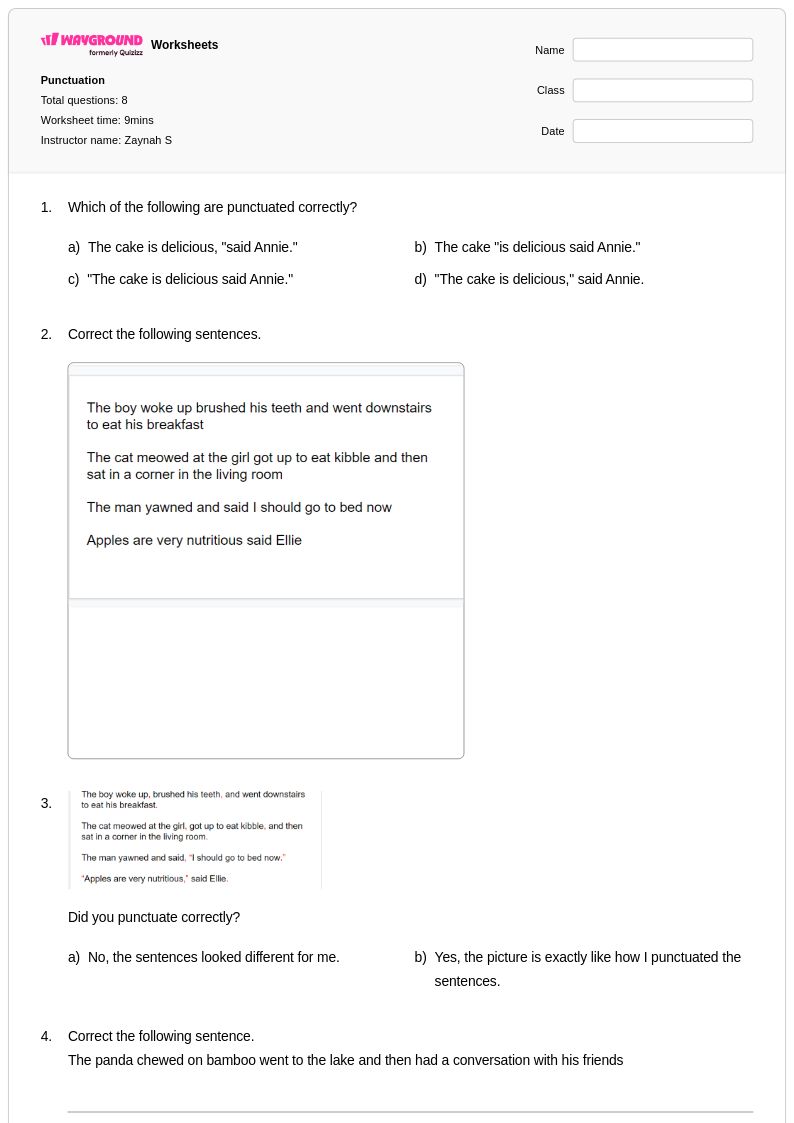
8 Q
4th
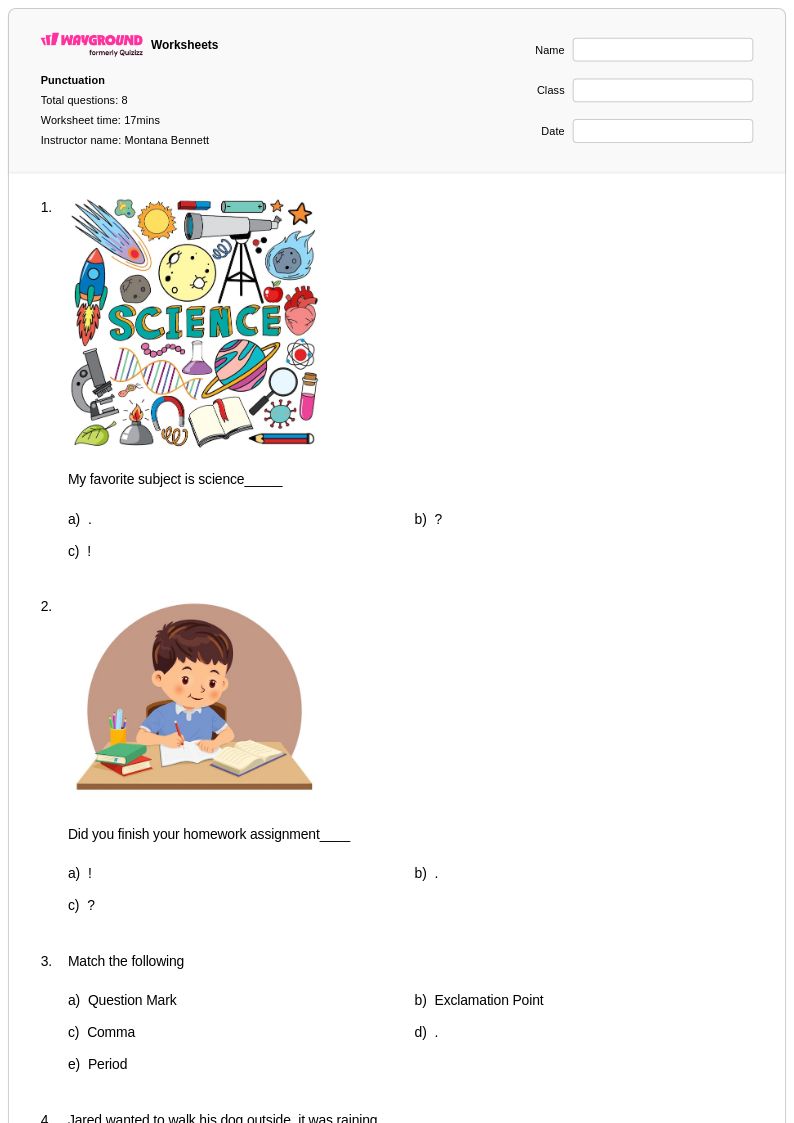
8 Q
2nd
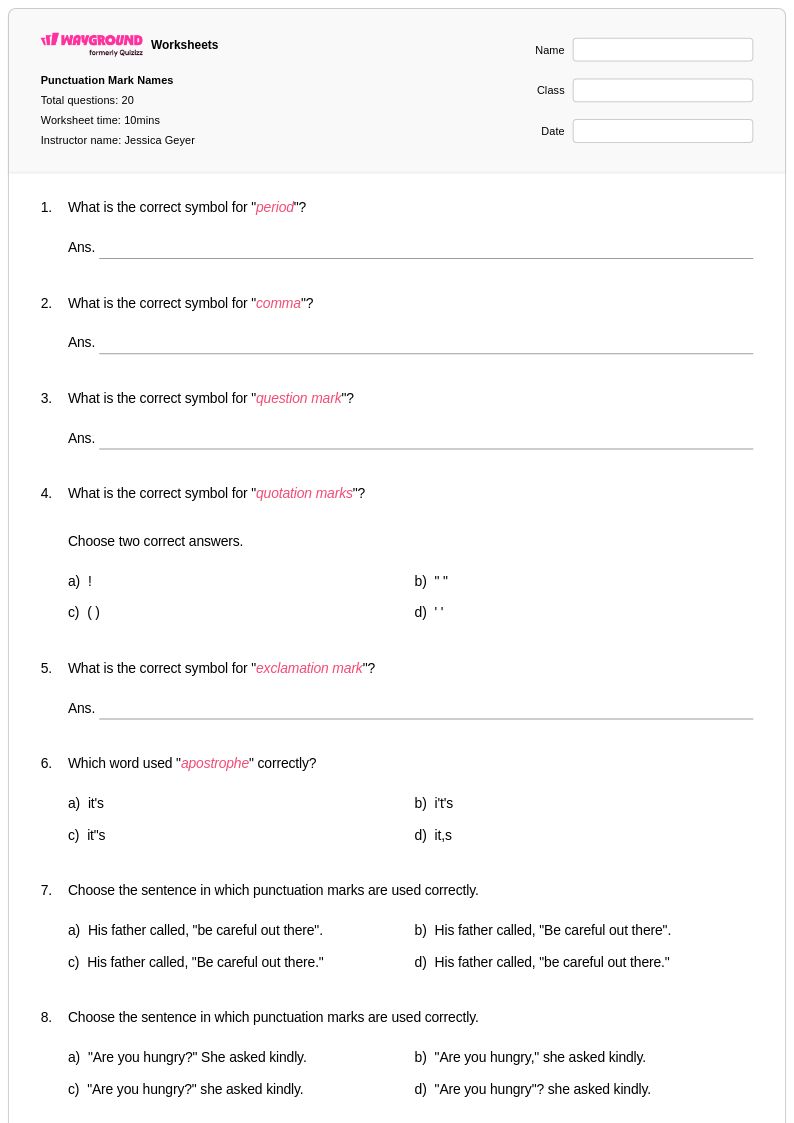
20 Q
10th
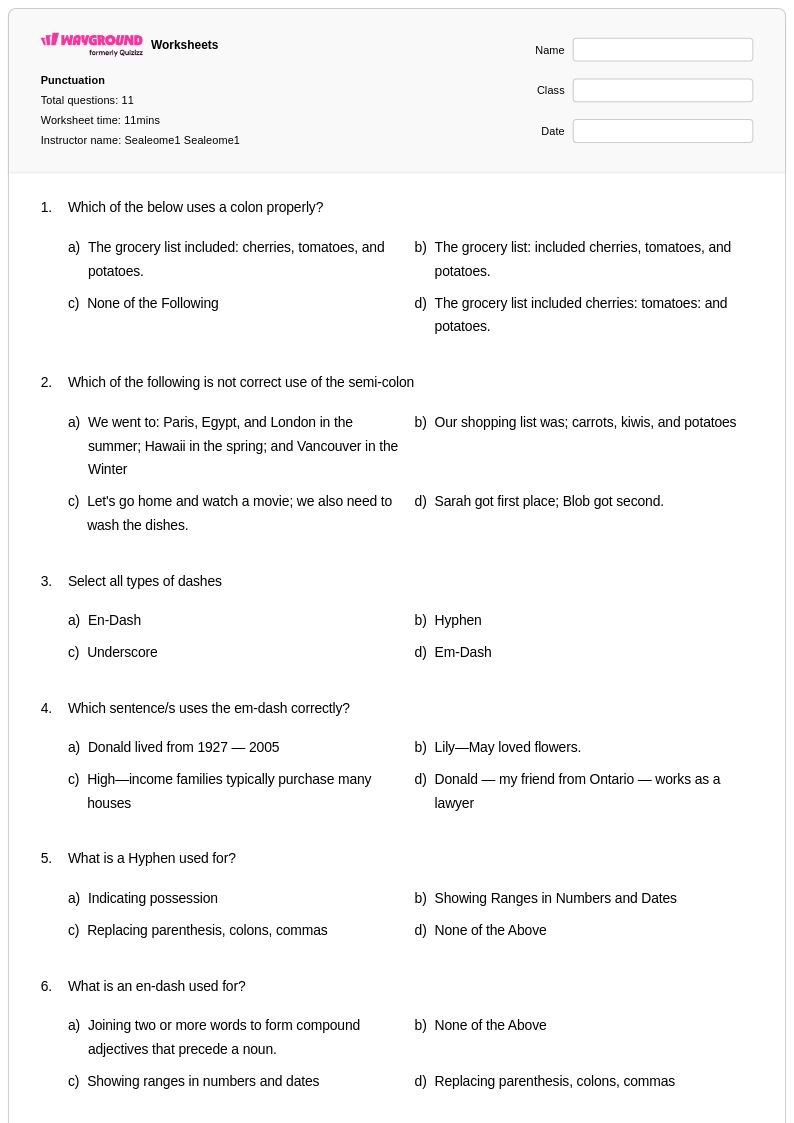
11 Q
KG
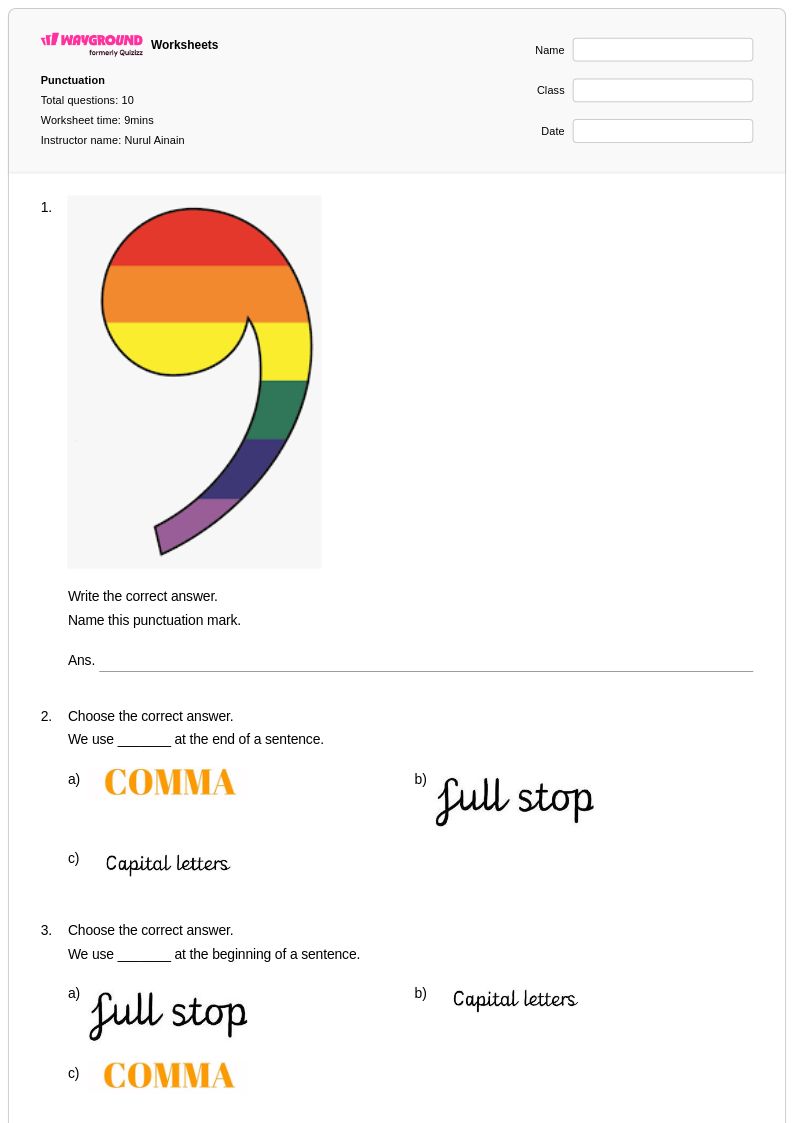
10 Q
KG
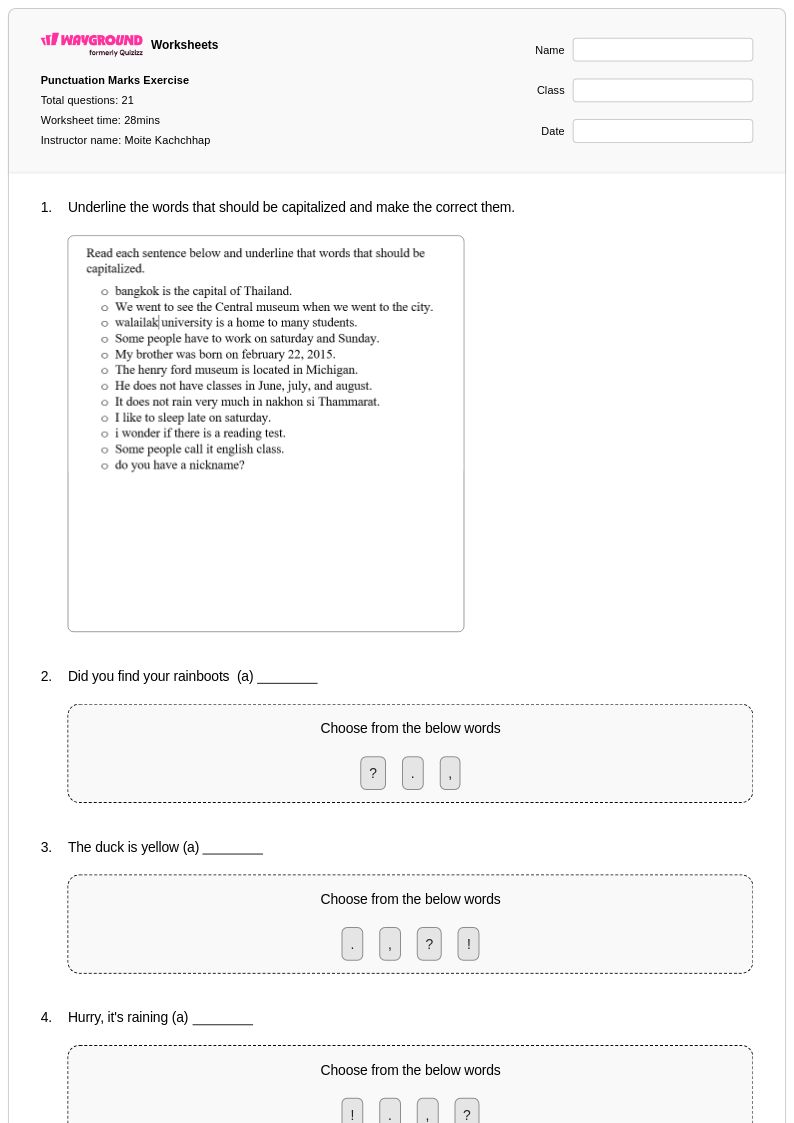
21 Q
Uni
20 Q
1st - 5th
20 Q
1st - 3rd
20 Q
10th
16 Q
1st - 2nd
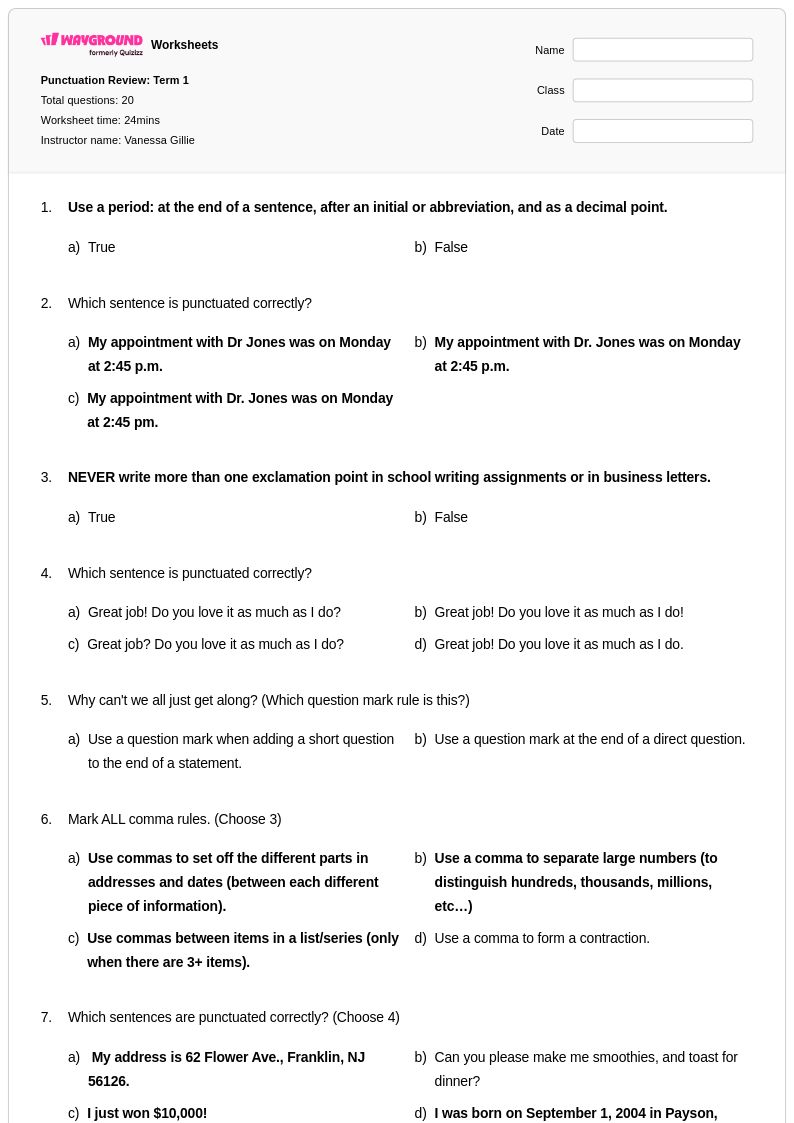
20 Q
8th
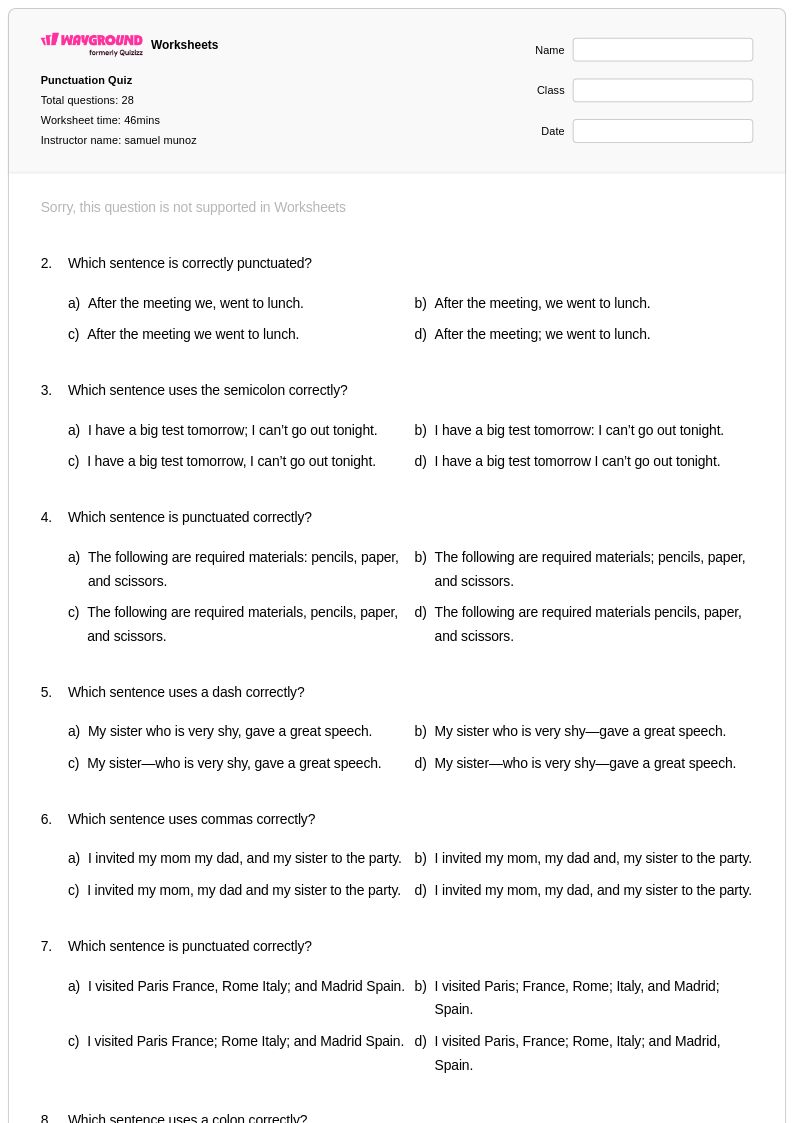
29 Q
9th
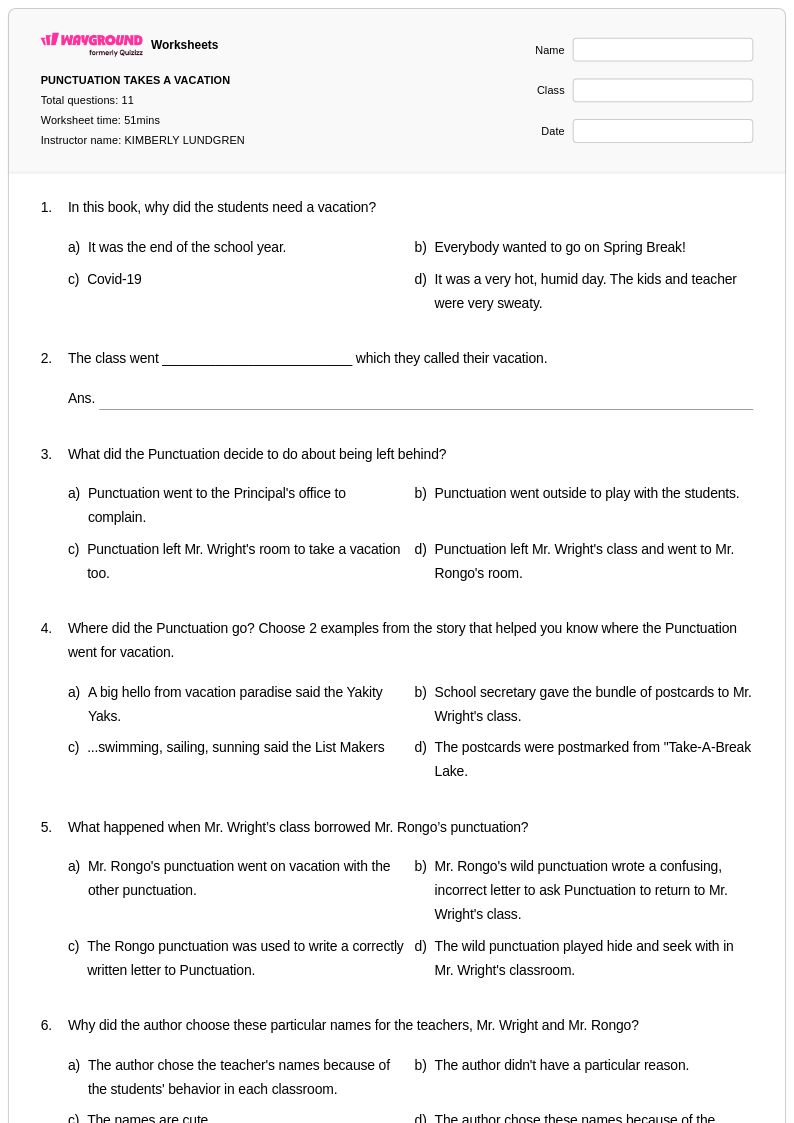
11 Q
4th
Explore Punctuation Worksheets by Grades
Explore Punctuation Worksheets for kindergarten by Topic
Explore Other Subject Worksheets for kindergarten
Explore printable Punctuation worksheets for Kindergarten
Punctuation worksheets for kindergarten students available through Wayground (formerly Quizizz) introduce young learners to the foundational elements of written communication through engaging, age-appropriate activities. These carefully designed educational resources help kindergarteners develop essential skills in recognizing and using basic punctuation marks, including periods, question marks, and exclamation points. The worksheets feature colorful illustrations, simple sentence structures, and interactive exercises that make learning punctuation concepts accessible and enjoyable for beginning readers and writers. Each printable worksheet comes with a comprehensive answer key, allowing teachers and parents to easily assess student progress and provide targeted feedback. These free practice problems incorporate familiar vocabulary and relatable scenarios that resonate with kindergarten students, helping them understand when and why different punctuation marks are used in everyday writing. The pdf format ensures consistent formatting across different devices and printing systems, making these valuable learning tools readily accessible for classroom instruction and home practice.
Wayground (formerly Quizizz) empowers educators with an extensive collection of teacher-created punctuation resources specifically designed for kindergarten instruction, drawing from millions of high-quality worksheets and activities developed by experienced classroom professionals. The platform's robust search and filtering capabilities enable teachers to quickly locate materials that align with specific learning objectives and curriculum standards, while differentiation tools allow for seamless adaptation of content to meet diverse student needs and abilities. Teachers can customize worksheets to match their classroom requirements, adjusting difficulty levels, adding visual supports, or incorporating school-specific vocabulary to enhance relevance and engagement. The flexible availability of resources in both printable and digital formats, including downloadable pdf versions, supports various instructional approaches and learning environments. These comprehensive features streamline lesson planning while providing teachers with reliable tools for skill practice, remediation sessions for students who need additional support, and enrichment activities for advanced learners, ultimately fostering a solid foundation in punctuation mechanics that will benefit students throughout their academic journey.
FAQs
How do I teach punctuation marks to students who keep making the same mistakes?
What exercises help students practice comma rules effectively?
What are the most common punctuation mistakes students make?
How do I differentiate punctuation instruction for students at different skill levels?
How do I use Wayground punctuation worksheets in my classroom?
What is the difference between teaching possessive pronouns and possessive nouns when it comes to punctuation?
How do quotation mark rules differ between dialogue and citing sources?