This Grade 6 mathematics worksheet gives students practice finding the area of compound and composite shapes. Across 18 multiple-choice questions, students calculate areas of shaded regions and figures, including problems that require combining smaller regions, subtracting an interior or unshaded part, finding a missing overall base, and reporting answers to one decimal place. Diagrams use square units such as meters, inches, centimeters, feet, and generic units.
The worksheet is designed for students who are building accuracy with area calculations across varied compound-shape diagrams. Its multiple-choice format helps teachers check whether students can select the correct operation, interpret dimensions, and distinguish area units from linear units. Use it for guided practice, independent work, review, or a quick assessment. This is a free printable worksheet with a complete answer key, and it is also available as a digital quiz on Wayground.
Worksheet settings
Font size
S
M
L
XL
Worksheets
area of compound shapes
Total questions: 18
Name
Class
Date
1.
What is the area of the shaded region?
a)
14 m2
b)
120 m2
c)
106 m2
d)
134 m2
2.
Find the area of the figure
a)
43 sq inches
b)
102 sq inches
c)
37 inches
d)
90 sq inches
3.
What is the area of the composite figure?
a)
144 m2
b)
111 m2
c)
45 m2
d)
70 m2
4.
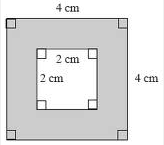
What is the area of the shaded region?
a)
4 cm2
b)
16 cm2
c)
8 cm2
d)
12 cm2
5.
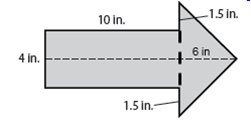
The arrow shown is on a sign. What is the area of the arrow?
a)
17 in2
b)
40 in2
c)
52 in2
d)
61 in2
6.
What is the area?
a)
108 cm sq
b)
60 cm
c)
432 cm sq
d)
216 cm sq
7.
Find the area of this shape
a)
60 units squared
b)
45 units squared
c)
65 units squared
d)
30 units squared
8.
Find the area
a)
150m2
b)
120m2
c)
126m2
d)
200m2
9.
What is the area of the shaded part of the triangle (hint: you will need to subtract)
a)
24 in2
b)
in2
c)
180 in2
d)
72 in2
10.
What is the area of the shaded part of this figure...you will need to subtract.
a)
96 cm2
b)
112 cm2
c)
80 cm2
d)
8 cm2
11.
What is the base of this entire figure?
a)
12 in
b)
11 in
c)
132 in
d)
23 in
12.
What is the area of the shaded part of this figure? (subtract)
a)
285 ft2
b)
63 ft2
c)
31.5 ft2
d)
253.5 ft2
13.
What is the area of this figure?
a)
84 in2
b)
108 in2
c)
78 in2
d)
24 in2
14.
Find the area of the shape. Give your answer to 1 decimal place...
a)
39.3cm2
b)
78.5cm2
c)
15.7cm2
d)
31.4cm2
15.
Find the area of the shape. Give your answer to 1 decimal place...
a)
56.5cm2
b)
226.2cm2
c)
113.1cm2
d)
37.7cm2
16.
Find the area of the compound shape. Give your answer to 1 decimal place...
a)
26.1cm2
b)
125.1cm2
c)
68.5cm2
d)
28.3cm2
17.
What is the approximate area of the shaded region?
a)
70 cm2
b)
12 cm2
c)
82 cm2
d)
58 cm2
18.
Find the area of this shape
a)
49 inches squared
b)
42 inches squared
c)
153 inches squared
d)
200 inches squared
Answer Key
area of compound shapes
Total questions: 18
1.
c) 106 m2
2.
b) 102 sq inches
3.
b) 111 m2
4.
d) 12 cm2
5.
d) 61 in2
6.
d) 216 cm sq
7.
d) 30 units squared
8.
c) 126m2
9.
c)
180 in2
10.
c)
80 cm2
11.
d)
23 in
12.
d)
253.5 ft2
13.
a)
84 in2
14.
a)
39.3cm2
15.
a)
56.5cm2
16.
a)
26.1cm2
17.
d) 58 cm2
18.
c) 153 inches squared
140 %
Browse by subjects
Browse by grades
Browse by format
FAQs
What does this area of compound shapes worksheet cover?
This Grade 6 worksheet uses 18 multiple-choice questions to practise finding the area of composite figures and shaded regions. Students solve problems by combining regions, subtracting unshaded or interior parts when prompted, determining an overall base in one item, and rounding selected answers to one decimal place.
How can I use this worksheet to teach finding the area of compound shapes?
Begin by modelling how to split a compound figure into familiar regions and label the dimensions needed for each area. Then work through one shaded-region item that requires subtraction, asking students to explain why the smaller area is removed, before assigning the remaining multiple-choice questions for guided or independent practice. Use the answer choices to discuss why an area result must be expressed in square units.
What mistakes should I watch for when students complete this compound-shapes worksheet?
Watch for students adding a region when the shaded area must be found by subtraction, or using a partial base instead of the entire base in the question that asks for it. Students may also confuse linear units with square units, select a distractor based on only one part of a figure, or round the decimal-area questions incorrectly instead of giving the answer to one decimal place.
How do I assign and grade this area of compound shapes worksheet?
The worksheet is available as a printable PDF and as a digital quiz on Wayground, and it includes a complete answer key for the 18 multiple-choice questions. For printable submissions, scan student work with the Wayground for Teachers app to help grade responses. The printable format can also support schools that are reducing screen time.
How can I differentiate this compound-shapes worksheet for my students?
Use the worksheet’s Advanced Settings to adjust font spacing and font size so the compound-shape diagrams, dimensions, and multiple-choice options are easier to read. You can also apply a dyslexia-friendly font or translate the worksheet into another language when those options better support access to the area problems.
Where can I find more worksheets like this on Wayground?
Wayground offers a comprehensive collection of free printable worksheets and practice problems across all subjects, with downloadable PDFs and answer keys to help students master essential skills and concepts. Browse more resources at https://wayground.com/en-us/worksheets.


 Worksheets