Area of Irregular Figures is a Grade 3 mathematics worksheet that develops students’ ability to find the area of irregular and composite figures from labeled diagrams. Students interpret side lengths, calculate areas of whole and composite shapes, determine the area of shaded regions, and identify a missing measurement. The worksheet also includes polygon and composite-figure perimeter questions, helping students apply measurement skills to related two-dimensional figures.
The 20-question set contains 18 multiple-choice items and 2 fill-in-the-blank items. Its varied prompts give students practice selecting appropriate measurements, using square units for area, and adding side lengths for perimeter. This free printable worksheet is useful for independent practice, review, homework, or a quick Grade 3 assessment. A complete answer key is included so teachers can check student work efficiently and address errors in calculating area, perimeter, or missing dimensions.
Worksheet settings
Font size
S
M
L
XL
Worksheets
Area of Irregular Figures
Total questions: 20
Name
Class
Date
1.
What is the length of the side being pointed at in the picture?
a)
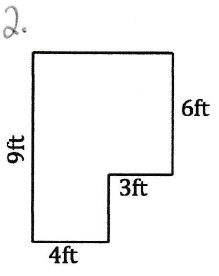
7 km
b)
1 km
c)
4 km
d)
6 km
2.
What is the area of the composite figure?
a)
80 cm2
b)
16 cm2
c)
96 cm2
d)
32 cm2
3.
Find the area.
a)
56 in sq
b)
41 in sq
c)
53 in sq
d)
75 in sq
4.
What is the area of the shape?
a)
20 square centimeters
b)
4 square centimeters
c)
30 square centimeters
d)
24 square centimeters
5.
Find the area of the irregular figure.
a)
200
b)
152
c)
48
d)
248
6.
What is the area of the shaded region?
a)
4 cm2
b)
16 cm2
c)
8 cm2
d)
12 cm2
7.
What is the area?
a)
54 square cm
b)
45 square cm
c)
63 square cm
d)
36 square cm
8.
What is the area of the composite figure?
a)
48 cm2
b)
90 cm2
c)
78 cm2
d)
12 cm2
9.
What is the area?
a)
16 cm squared
b)
36 cm squared
c)
144 cm squared
d)
72 cm squared
10.
What is the missing measurement of the Shape
(a) in
11.
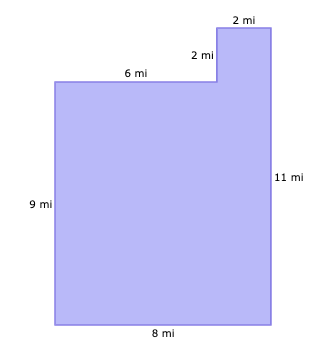
What is the area of this composite figure?
a)
104 mi
b)
70 mi
c)
38 mi
d)
76 mi
12.
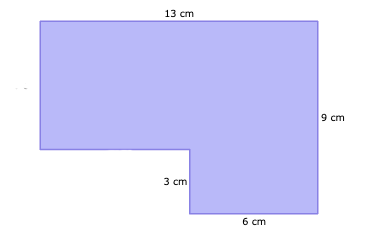
What is the Perimeter of this Composite Figure?
a)
44 cm
b)
42 cm
c)
35 cm
d)
41 cm
13.
What is the perimeter of this polygon?
a)
24 centimeters
b)
22 centimeters
c)
32 centimeters
d)
42 centimeters
14.
What is the perimeter of this polygon?
a)
16 centimeters
b)
18 centimeters
c)
17 centimeters
d)
20 centimeters
15.
What is the perimeter of this polygon?
a)
20 centimeters
b)
19 square centimeters
c)
18 centimeters
d)
21 centimeters
16.
A SQUARE has a perimeter of 12 centimeters. What is the length of each side?
a)
3 cm
b)
4 cm
c)
16 cm
d)
144 sq. cm
17.
What is the missing side length on the top of the figure?
a)
7 ft
b)
8 ft
c)
6 ft
d)
9 ft
18.
What is the perimeter of this polygon?
a)
16 centimeters
b)
18 centimeters
c)
17 centimeters
d)
20 centimeters
19.
Find the missing side length! What is the perimeter?
(a)
20.
What is the length of the missing side?
a)
1km
b)
2km
c)
3km
d)
5km
Answer Key
Area of Irregular Figures
Total questions: 20
1.
d)
6 km
2.
a)
80 cm2
3.
b)
41 in sq
4.
d)
24 square centimeters
5.
b)
152
6.
d) 12 cm2
7.
a)
54 square cm
8.
a) 48 cm2
9.
b)
36 cm squared
10.
4
11.
d)
76 mi
12.
a)
44 cm
13.
a) 24 centimeters
14.
b) 18 centimeters
15.
a) 20 centimeters
16.
a)
3 cm
17.
a)
7 ft
18.
b) 18 centimeters
19.
36 cm.
20.
d) 5km
140 %
Browse by subjects
Browse by grades
Browse by format
FAQs
What does the Area of Irregular Figures worksheet cover?
This Grade 3 worksheet practices finding the area of irregular, composite, and shaded figures from labeled diagrams, including items that require identifying a side length or missing measurement. It also includes polygon and composite-figure perimeter questions, using 18 multiple-choice items and 2 fill-in-the-blank items to build accuracy with area and perimeter calculations.
How can I use this worksheet to teach area of irregular and composite figures?
First model how to read the labeled side lengths and identify the measurements needed for each figure. Then have students solve the area and shaded-region items, explaining how they combined parts of a composite shape, before using the missing-measurement and perimeter items to connect dimensions with the final calculation.
What mistakes should I watch for when students complete this worksheet?
Watch for students confusing area with perimeter, adding outer side lengths when an area calculation is required, or using linear units instead of square units for area. Students may also overlook a labeled or missing side measurement, misread the shaded region, or select a perimeter option without adding every side of the polygon.
How do I assign and grade this Area of Irregular Figures worksheet?
You can assign the worksheet as a printable PDF or as a digital quiz on Wayground. It includes a complete answer key, and printable submissions can be graded by scanning student work with the Wayground for Teachers app. The printable format also offers an option for schools working to reduce screen time.
How does this worksheet help students distinguish area from perimeter?
The worksheet places area problems for irregular, composite, and shaded figures alongside perimeter questions for polygons and composite figures. This contrast gives students practice deciding whether to measure the space inside a figure or add the lengths around its boundary, while choosing square units for area and linear units for perimeter.
Where can I find more worksheets like this on Wayground?
Wayground offers a comprehensive collection of free printable worksheets and practice problems across all subjects, with downloadable PDFs and answer keys to support essential skills and concepts. Browse more resources at https://wayground.com/en-us/worksheets.

 Worksheets