

Wayground
Nuclear Reactions - Printable Chemistry Worksheets - Wayground

Nuclear Reactions

20 questions

10th - 12th Grade

Chemistry

Nuclear Reactions is a free printable Chemistry worksheet for Grades 10–12 that uses 20 multiple-choice questions to build foundational understanding of nuclear processes. Students identify alpha, beta, and gamma radiation from symbols and reaction representations, distinguish fission from fusion, and recognize the particles and conditions associated with radioactive decay. The worksheet also asks students to compare radiation by penetrating power, identify the strong nuclear force, interpret diagrams of fission and fusion, and explain how uranium-235 can initiate a chain reaction. It connects these concepts to real-world nuclear energy by identifying fusion as the reaction that produces energy in the Sun. A complete answer key is included for efficient review, independent practice, or classroom assessment.

Worksheet settings

Font size

S
M
L
XL
Worksheets

Nuclear Reactions

Total questions: 20

Name
Class
Date
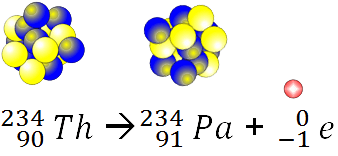
1.
Which type of nuclear radiation is being emitted here?
a)
Alpha
b)
beta
c)
gamma 
d)
none
2.
What makes something radioactive?
a)
elements with an atomic number above 81
b)
an unstable nucleus
c)
contaminated sewage
d)
It decays over time
3.
This is the symbol for a(n)
a)
alpha particle
b)
beta particle
c)
gamma particle
4.
Takes two small nuclei and combines them into a larger nucleus
a)
fission
b)
fusion
5.
The splitting of a nucleus into smaller nuclei is
a)
fusion
b)
fission
c)
half-life
d)
gamma radiation
6.
Which type of nuclear radiation is being emitted here?
a)
alpha
b)
beta
c)
gamma
d)
none
7.
What particle completes this reaction?
a)
alpha particle
b)
beta particle
c)
gamma particle
d)
neutron
8.

Why does beta decay occur?

a)

The nucleus is too large to be stable

b)

The proton to neutron ratio is unstable

c)

The nucleus is in an excited state. This usually follows other types of decay.

9.
The three types of nuclear radiation in increasing order of penetrating power are ____.  
a)
  alpha, beta, gamma 
b)
X ray, beta, gamma
c)
alpha, gamma, beta 
d)
X ray, gamma, beta 
10.

Which of the following types of radioactive decay emits 2 protons and 2 neutrons?

a)

Alpha

b)

Beta

c)

Gamma

11.

Which force holds protons and neutrons together in the atom nucleus?

a)

electric force

b)

gravity

c)

strong nuclear force

d)

weak nuclear force

12.

Which best represents nuclear fission?

a)

F

b)

G

c)

H

d)

J

13.

Which of these diagrams represents the type of nuclear reaction that produces energy in the Sun?

a)

A

b)

B

c)

C

d)

D

14.

What is the term for an ongoing series of nuclear reactions?

a)

fission

b)

chain reaction

c)

fusion

d)

nuclear

15.

Nuclear fission of uranium-235 can start a chain reaction by

a)

releasing enough thermal energy to start nuclear fission in neighboring atoms

b)

producing two smaller atoms that can then strike and split neighboring atoms

c)

producing neutrons that can then strike and split neighboring atoms

d)

combining two atoms with low mass to form one large atom

16.

In the Sun, hydrogen atoms fuse together to form _________.

a)

helium

b)

mercury

c)

oxygen

d)

nitrogen

17.

Plutonium (of mass number 240 and proton number 94) decays with the emission of alpha-particle. What is the new proton number and mass number of the new nucleus?

a)

proton number = 92, mass number = 236

b)

proton number = 92, mass number = 240

c)

proton number = 91, mass number = 240

d)

proton number = 91, mass number = 236

18.

The radioactive nucleus Rubidium (of mass number 87 and proton number 37) decays with the emission of a beta-particle. How many protons and neutrons are left in the nucleus?

a)

protons = 37, neutrons = 49

b)

protons = 37, neutrons = 50

c)

protons = 38, neutrons = 49

d)

protons = 38, neutrons = 87

19.

What type of nuclear reaction occurs in the Sun?

a)

nuclear fission

b)

alpha decay

c)

nuclear fusion

d)

beta decay

20.

Nuclear power plants work by

a)

fusion

b)

fission

c)

fusion and fission

d)

coal

Answer Key

Nuclear Reactions

Total questions: 20

1.
b) beta
2.
b) an unstable nucleus
3.
b) beta particle
4.
b) fusion
5.
b) fission
6.
a) alpha
7.
b) beta particle
8.
b)

The proton to neutron ratio is unstable

9.
a)   alpha, beta, gamma 
10.
a)

Alpha

11.
c)

strong nuclear force

12.
b)

G

13.
d)

D

14.
b)

chain reaction

15.
c)

producing neutrons that can then strike and split neighboring atoms

16.
a)

helium

17.
a)

proton number = 92, mass number = 236

18.
c)

protons = 38, neutrons = 49

19.
c)

nuclear fusion

20.
b)

fission

FAQs

What does the Nuclear Reactions worksheet cover?

This Grade 10–12 Chemistry worksheet uses 20 multiple-choice questions to assess nuclear radiation, radioactive decay, fission, fusion, and chain reactions. Students identify alpha, beta, and gamma emissions from symbols and reaction diagrams, compare their penetrating power, determine which particles complete reactions, and connect uranium-235 fission to an ongoing chain reaction.

How can I use this worksheet to teach nuclear reactions?

Introduce the three radiation types and have students use the worksheet’s symbols and emission examples to identify alpha, beta, and gamma radiation. Then sequence the questions from decay and nuclear forces to fission, fusion, and chain reactions, asking students to explain why beta decay relates to an unstable proton-to-neutron ratio and how emitted neutrons can split neighboring nuclei.

What mistakes should I watch for when students complete this nuclear reactions worksheet?

Watch for students confusing fission, the splitting of a nucleus, with fusion, the combining of smaller nuclei. They may also mix up the radiation symbols or assume that gamma radiation emits the two protons and two neutrons associated with alpha decay. When interpreting the chain-reaction items, check that students identify released neutrons—not thermal energy—as the particles that can split neighboring nuclei.

How do I assign and grade the Nuclear Reactions worksheet?

The Nuclear Reactions worksheet is available as a printable PDF and as a digital quiz on Wayground, and it includes a complete answer key. You can review the 20 multiple-choice responses directly in the digital version or grade printable submissions by scanning student work with the Wayground for Teachers app. The printable format can also support classes that are reducing screen time.

How can I differentiate this nuclear reactions worksheet for my students?

Use the worksheet’s Advanced Settings to adjust font spacing or increase the font size so the radiation symbols, reaction diagrams, and multiple-choice options are easier to read. You can also enable a dyslexia-friendly font or translate the worksheet into another language when that better supports access to the nuclear reactions content.

Where can I find more worksheets like this on Wayground?

Wayground offers a broad collection of free printable worksheets and practice problems across subjects, with downloadable PDFs and answer keys to help students master essential skills and concepts. Browse more resources at https://wayground.com/en-us/worksheets.
