

Wayground
Biomolecule Quiz - Printable Math Worksheets 9th Grade - Wayground

Biomolecule Quiz

Jamie Parker

Created by Jamie Parker

20 questions

9th Grade

Math

Updated Oct 2026

Biomolecule Quiz is a Grade 9 biology worksheet that checks students’ understanding of the four major biomolecules: carbohydrates, lipids, proteins, and nucleic acids. Students identify the elements common to biomolecules, define macromolecules, connect each biomolecule to its monomers and functions, and recognize roles in cells such as membrane structure, transport, genetic information, and cell recognition. The worksheet includes 20 questions: 18 multiple-choice items, one classification activity, and one matching item. This free printable worksheet with an answer key helps teachers assess whether students can distinguish biomolecules by their building blocks, energy-storage roles, biological functions, and real examples such as glucose, cholesterol, enzymes, collagen, DNA, and RNA. The classification and matching tasks require students to apply these relationships rather than recall isolated definitions, making the quiz useful for review, independent practice, or a formative assessment in a Grade 9 biology unit.

Worksheet settings

Font size

S
M
L
XL
WaygroundWorksheets

Biomolecule Quiz

Total questions: 20

Name
Class
Date
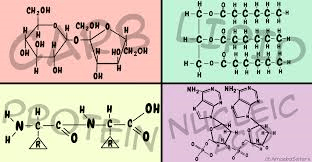
1.
What elements are common to all 4 biomolecules?
a)
Carbon, hydrogen, nitrogen
b)
Carbon, Nitrogen, Phosphorus
c)
Carbon, Hydrogen, Oxygen
d)
Carbon, Hydrogen, Phosphorus
2.

What is a macromolecule?

a)

The dissolved particle in a solution.

b)

One of the by-products of respiration.

c)

Large molecule that is present in living organisms.

d)

Small molecule that is present in living organisms.

3.
What percentage of these macromolecules will NOT contribute to energy levels?

What percentage of these macromolecules will NOT contribute to energy levels?

a)

30%

b)

50%

c)

80%

d)

20%

4.
Who would benefit the LEAST from consuming this food source?

Who would benefit the LEAST from consuming this food source?

a)

a sprinter about to enter an Olympic event

b)

a football player building muscle for this season

c)

a bear stealing food before hibernation begins

d)

an ice skater who needs to lift his partner

5.
What is the function of nucleic acids?
a)
store genetic information
b)
store energy (long-term)
c)
store energy (short-term)
d)
build skin, hair, nails, muscles
6.
Proteins are made of monomers called ___________
a)
Nucleotides
b)
Monosaccharides
c)
Amino Acids
d)
Glycerol and fatty acids
7.

What is the monomer used to build carbohydrates?

a)
monosaccharides
b)
disaccharides
c)
polysaccharides
d)
amino acid
8.

Match the following function with the correct biomolecules.

1 - long term energy

2 - short term energy

3 - stores genetic info

4 - builds/repairs cells

a)

Carbs - 1

Lipids - 2

Protein - 3

Nucleic Acids - 4

b)

Carbs - 1

Lipids -2

Protein - 4

Nucleic Acids -3

c)

Carbs - 3

Lipids -1

Protein - 2

Nucleic Acids - 4

d)

Carbs - 2

Lipids - 1

Protein - 4

Nucleic Acids -3

9.
Nucleotides are monomers of
a)
Carbohydrates
b)
Lipids
c)
Proteins
d)
Nucleic Acids
10.

Glycerols and fatty acids join together to create....

a)

Carbohydrates

b)

Lipids

c)

Proteins

d)

Nucleic Acids

11.

Match each example with the correct biomolecule.

Categorize the following

starch

glucose

monosaccharide

monosaccharide

cholesterol

phospholipids

glycerol & fatty acids

glycerol & fatty acids

enzymes

collagen

amino acid

amino acid

DNA

RNA

nucleotide

nucleotide

Carbohydrates
Lipids
Proteins
Nucleic Acids
12.
Which biomolecule is the main component of the cell membrane?

Which biomolecule is the main component of the cell membrane?

a)

carbohydrate

b)

lipid

c)

protein

d)

nucleic acid

13.
Which biomolecule aids in transport through the cell memebrane?

Which biomolecule aids in transport through the cell memebrane?

a)

carbohydrate

b)

lipid

c)

protein

d)

nucleic acid

14.
Which biomolecule carries information to build proteins?

Which biomolecule carries information to build proteins?

a)

carbohydrate

b)

lipid

c)

protein

d)

nucleic acid

15.
Which biomolecule controls cell to cell recognition (ID)?

Which biomolecule controls cell to cell recognition (ID)?

a)

carbohydrate

b)

lipid

c)

protein

d)

nucleic acid

16.

Match the following functions to the biomolecule

Insulation, long term energy, cell membrane

Lipid

Catalyzes reactions, builds muscles

Protein

Carry genetic information

Nucleic acid

Quick energy, structural support

Carbohydrate

17.

Energy is stored in the bonds of molecules and those bonds are represented as straight lines connecting atoms. Considering the statement above, which molecule contains the MOST energy?

a)
Carbohydrates

Carbohydrates

b)
Lipids

Lipids

18.

A large molecule made of smaller molecules joined together.....

a)

monomer

b)

polymer

c)

micromolecule

d)

atom

19.

The builiding block of a polymer......

a)

bond

b)

atom

c)

monomer

d)

piece

20.

Biomolecules are considered "ORGANIC" because they contain.....

a)

boron

b)

nitrogen

c)

phosphorus

d)

carbon

WaygroundAnswer Key

Biomolecule Quiz

Total questions: 20

1.
c) Carbon, Hydrogen, Oxygen
2.
c)

Large molecule that is present in living organisms.

3.
d)

20%

4.
a)

a sprinter about to enter an Olympic event

5.
a) store genetic information
6.
c) Amino Acids
7.
a) monosaccharides
8.
d)

Carbs - 2

Lipids - 1

Protein - 4

Nucleic Acids -3

9.
d) Nucleic Acids
10.
b)

Lipids

11.
Carbohydrates

starch

glucose

monosaccharide

monosaccharide

Lipids

cholesterol

phospholipids

glycerol & fatty acids

glycerol & fatty acids

Proteins

enzymes

collagen

amino acid

amino acid

Nucleic Acids

DNA

RNA

nucleotide

nucleotide

12.
b)

lipid

13.
c)

protein

14.
d)

nucleic acid

15.
a)

carbohydrate

16.

Insulation, long term energy, cell membrane

 - 

Lipid

, 

Catalyzes reactions, builds muscles

 - 

Protein

, 

Carry genetic information

 - 

Nucleic acid

, 

Quick energy, structural support

 - 

Carbohydrate

17.
b)

18.
b)

polymer

19.
c)

monomer

20.
d)

carbon

FAQs

What does the Biomolecule Quiz worksheet cover?

This Grade 9 biology worksheet covers how carbohydrates, lipids, proteins, and nucleic acids differ in their elements, monomers, functions, and examples. Its 18 multiple-choice questions, classification activity, and matching item ask students to connect monosaccharides, amino acids, nucleotides, glycerol, and fatty acids to the biomolecules they build and to roles such as energy storage, cell repair, membrane structure, and genetic information.

How can I use this biomolecule worksheet to teach the four major biomolecules?

Introduce the four biomolecules with a chart showing each molecule’s monomer, major function, and representative examples, then have students complete the multiple-choice items with that chart covered. Use the matching question to discuss why carbohydrates provide short-term energy, lipids store long-term energy, proteins build and repair cells, and nucleic acids store genetic information. Finish with the classification activity to have students apply those relationships to examples such as glucose, cholesterol, enzymes, DNA, and RNA.

What mistakes should I watch for when students complete this biomolecule quiz?

Students may confuse a biomolecule’s monomer with its function—for example, selecting amino acids for carbohydrates or nucleotides for proteins. They may also reverse the energy-storage roles of carbohydrates and lipids, or misclassify examples such as enzymes, collagen, phospholipids, DNA, and RNA. Review the cell-role questions carefully because the worksheet distinguishes lipid-based membrane structure, protein-assisted membrane transport, nucleic-acid information, and carbohydrate-based cell recognition.

How do I assign and grade the Biomolecule Quiz worksheet?

The Biomolecule Quiz is available as a printable PDF and as a digital quiz on Wayground, and it includes a complete answer key for the 18 multiple-choice, classification, and matching items. For printable submissions, you can grade student work by scanning it with the Wayground for Teachers app. The PDF option also supports schools that want to reduce screen time while assessing biomolecule knowledge.

How can I differentiate this biomolecule worksheet for my students?

In the worksheet’s Advanced Settings, adjust font spacing or font size to make the biomolecule terms, answer choices, and classification examples easier to read. You can also enable a dyslexia-friendly font or translate the worksheet into another language, depending on student needs. These options apply to the worksheet file itself, including its multiple-choice, matching, and classification items.

Where can I find more worksheets like this on Wayground?

Wayground provides a comprehensive collection of free printable worksheets and practice problems across all subjects, with downloadable PDFs and answer keys to help students master essential skills and concepts. Browse more resources at https://wayground.com/en-us/worksheets.