Designed for Grade 9–12 science students, Monohybrids and the Punnett Square builds foundational genetics knowledge through 10 questions: 9 multiple-choice items and 1 multiple-select item. Students identify homozygous and heterozygous genotypes, distinguish genotype from phenotype, recognize dominant and recessive alleles, and interpret the structure and purpose of a Punnett square.
The worksheet also asks students to determine the 1HH:2Hh:1hh genotype ratio and calculate the 25% probability of hairless offspring from a cross between two heterozygous guinea pigs. These questions connect genetics vocabulary to a specific monohybrid cross and reinforce that Punnett squares provide predictions rather than guaranteed outcomes. This free printable worksheet includes a complete answer key for efficient review, independent practice, homework, or formative assessment.
Worksheet settings
Font size
S
M
L
XL
Worksheets
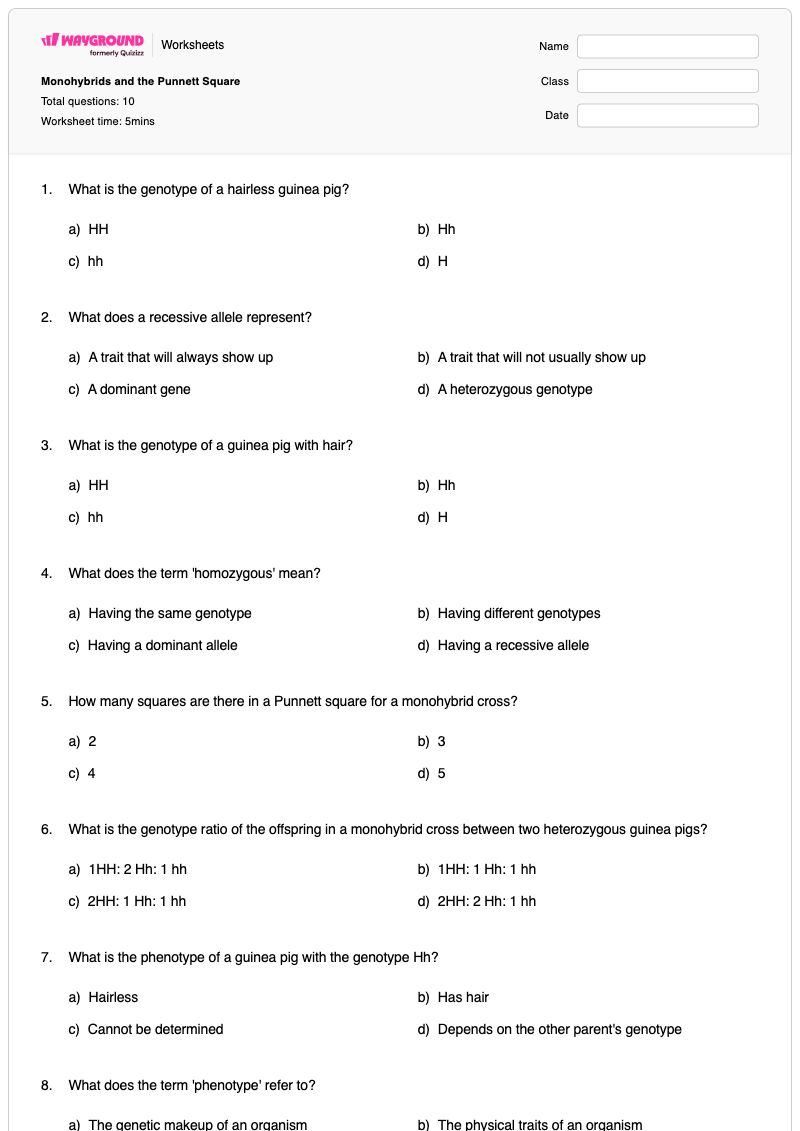
Monohybrids and the Punnett Square
Total questions: 10
Name
Class
Date
1.
What is the genotype of a hairless guinea pig?
a)
HH
b)
Hh
c)
hh
d)
H
2.
What does a recessive allele represent?
a)
A trait that will always show up
b)
A trait that will not usually show up
c)
A dominant gene
d)
A heterozygous genotype
3.
What is the genotype of a guinea pig with hair?
a)
HH
b)
Hh
c)
hh
d)
H
4.
What does the term 'homozygous' mean?
a)
Having the same genotype
b)
Having different genotypes
c)
Having a dominant allele
d)
Having a recessive allele
5.
How many squares are there in a Punnett square for a monohybrid cross?
a)
2
b)
3
c)
4
d)
5
6.
What is the genotype ratio of the offspring in a monohybrid cross between two heterozygous guinea pigs?
a)
1HH: 2 Hh: 1 hh
b)
1HH: 1 Hh: 1 hh
c)
2HH: 1 Hh: 1 hh
d)
2HH: 2 Hh: 1 hh
7.
What is the phenotype of a guinea pig with the genotype Hh?
a)
Hairless
b)
Has hair
c)
Cannot be determined
d)
Depends on the other parent's genotype
8.
What does the term 'phenotype' refer to?
a)
The genetic makeup of an organism
b)
The physical traits of an organism
c)
The probability of a trait showing up
d)
The dominance of an allele
9.
What is the probability of a hairless guinea pig in a monohybrid cross between two heterozygous guinea pigs?
a)
0%
b)
25%
c)
50%
d)
75%
10.
What is a characteristic of Punnett squares?
a)
They are predictions
b)
They always give accurate results
c)
They determine the genotype of an organism
d)
They are used for monohybrid crosses only
Answer Key
Monohybrids and the Punnett Square
Total questions: 10
1.
c)
hh
2.
b)
A trait that will not usually show up
3.
a)
HH
, b)
Hh
4.
a)
Having the same genotype
5.
c)
4
6.
a)
1HH: 2 Hh: 1 hh
7.
b)
Has hair
8.
b)
The physical traits of an organism
9.
b)
25%
10.
a)
They are predictions
140 %
Browse by subjects
Browse by grades
Browse by format
FAQs
What does the Monohybrids and the Punnett Square worksheet cover?
This Grade 9–12 science worksheet uses 9 multiple-choice questions and 1 multiple-select question to assess monohybrid genetics. Students classify homozygous and heterozygous genotypes, connect Hh with the hair phenotype and hh with hairlessness, interpret the 1HH:2Hh:1hh offspring ratio, and calculate a 25% probability using a Punnett square.
How can I use this worksheet to teach monohybrid crosses?
Introduce genotype, phenotype, homozygous, heterozygous, dominant, and recessive allele vocabulary before students complete the questions. Then model a cross between two Hh guinea pigs, have students explain how the four Punnett-square outcomes produce the 1HH:2Hh:1hh ratio and 25% hairless probability, and use the worksheet to check whether they can distinguish predictions from guaranteed results.
What mistakes should I watch for when students complete this Punnett square worksheet?
Students may confuse genotype with phenotype, select only HH for a guinea pig with hair, or treat Hh as hairless instead of recognizing the dominant hair phenotype. Watch also for errors in reading the 1HH:2Hh:1hh ratio, such as reporting 50% rather than 25% for hh offspring, and for treating Punnett-square predictions as certain outcomes.
How do I assign and grade this monohybrid genetics worksheet?
You can assign Monohybrids and the Punnett Square as a printable PDF or as a digital quiz on Wayground, and it includes a complete answer key for all 10 items. For printable submissions, scan student work with the Wayground for Teachers app to streamline grading and review of their genotype, phenotype, ratio, and probability answers.
How can I differentiate this Punnett square worksheet for my students?
Use the worksheet’s Advanced Settings to adjust font spacing and font size so the genotype, phenotype, and ratio questions are easier to navigate. You can also enable a dyslexia-friendly font or translate the worksheet into another language when those file-level options support access to the genetics vocabulary and answer choices.
Where can I find more free worksheets like this on Wayground?
Wayground offers a broad collection of free printable worksheets and practice problems across subjects, with downloadable PDFs and answer keys to support mastery of essential skills and concepts. Browse more resources at https://wayground.com/en-us/worksheets.


 Worksheets