Wave Superposition is a free printable science worksheet for Grades 9–12 that builds understanding of how waves interact when they overlap. Through 20 multiple-choice questions, students identify superposition, constructive and destructive interference, and the crest and trough of a transverse wave. They also interpret wave diagrams to determine amplitude and wavelength, distinguish frequency from other wave properties, and apply relationships between amplitude, frequency, and wavelength.
The worksheet gives students focused practice recognizing how in-phase waves produce greater amplitude and how destructive interference supports technologies such as noise-canceling headphones. It is useful for introducing or reviewing wave behavior, checking conceptual understanding, or preparing students for assessment. The worksheet includes a complete answer key for efficient checking and feedback, making it a practical resource for independent practice, homework, or science-class review.
Worksheet settings
Font size
S
M
L
XL
Worksheets
wave superposition
Total questions: 20
Name
Class
Date
1.
What is the superposition of waves?
a)
when a single wave splits into two different waves at a point
b)
when two waves combine at the same place at the same time
2.
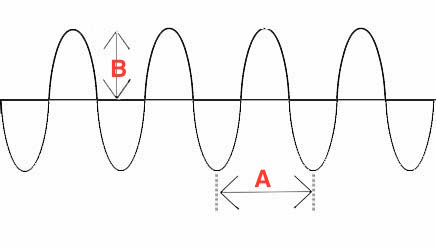
What property of this wave is represented by the letter "A"
a)
amplitude
b)
crest
c)
trough
d)
wavelength
3.
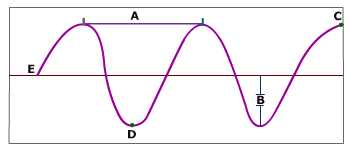
According to superposition, which choice best describes what occurs when the waves pictured pass over one another?
a)
A
b)
B
c)
C
d)
D
4.
According to superposition, which choice best describes what occurs when the waves pictured pass over one another?
a)
A
b)
B
c)
C
d)
D
5.
According to superposition, which choice best describes what occurs when the waves pictured pass over one another?
a)
A
b)
B
c)
C
d)
D
6.
If two overlapping waves are in-phase, the resultant wave will have ______ compared to the two waves.
a)
Greater amplitude
b)
Greater frequency
c)
Greater wavelength
d)
Greater wave speed
7.
The highest part of a transverse wave is
a)
the crest
b)
the trough
c)
the wave point
d)
the hotel transylvania
8.
The lowest part of a transverse wave are the
a)
crests
b)
troughs
c)
wave points
d)
low nodules
9.
How often a wave occurs is the wave's
a)
frequency
b)
amplitude
c)
wavelength
d)
velocity
10.
What is the amplitude of this wave?
a)
3
b)
-3
c)
6
d)
4
11.
What is the wavelength of this wave?
a)
3
b)
10
c)
4
d)
8
12.
What happens to the frequency of a wave when the amplitude is tripled?
a)
the frequency is tripled
b)
the frequency is a third of what it was
c)
amplitude does not affect frequency
13.
What would happen to the wavelength if the frequency was doubled?
a)
the wavelength would be halved
b)
the wavelength would be doubled
c)
the wavelength would stay the same
d)
frequency does not affect wavelength
14.
The following is an example of which type of interference?
a)
constructive
b)
destructive
15.
Which wave behavior do noise cancelling headphones use?
a)
diffraction
b)
refraction
c)
constructive interference
d)
destructive interference
16.
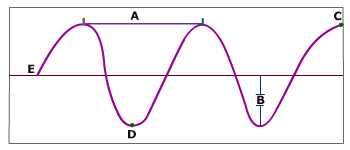
Which letter represents wavelength?
a)
A
b)
B
c)
C
d)
D
17.
Which letter represents amplitude?
a)
A
b)
B
c)
C
d)
D
18.
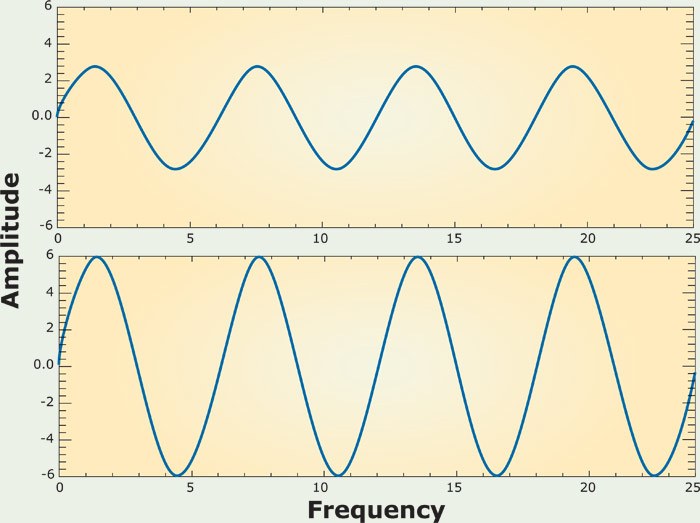
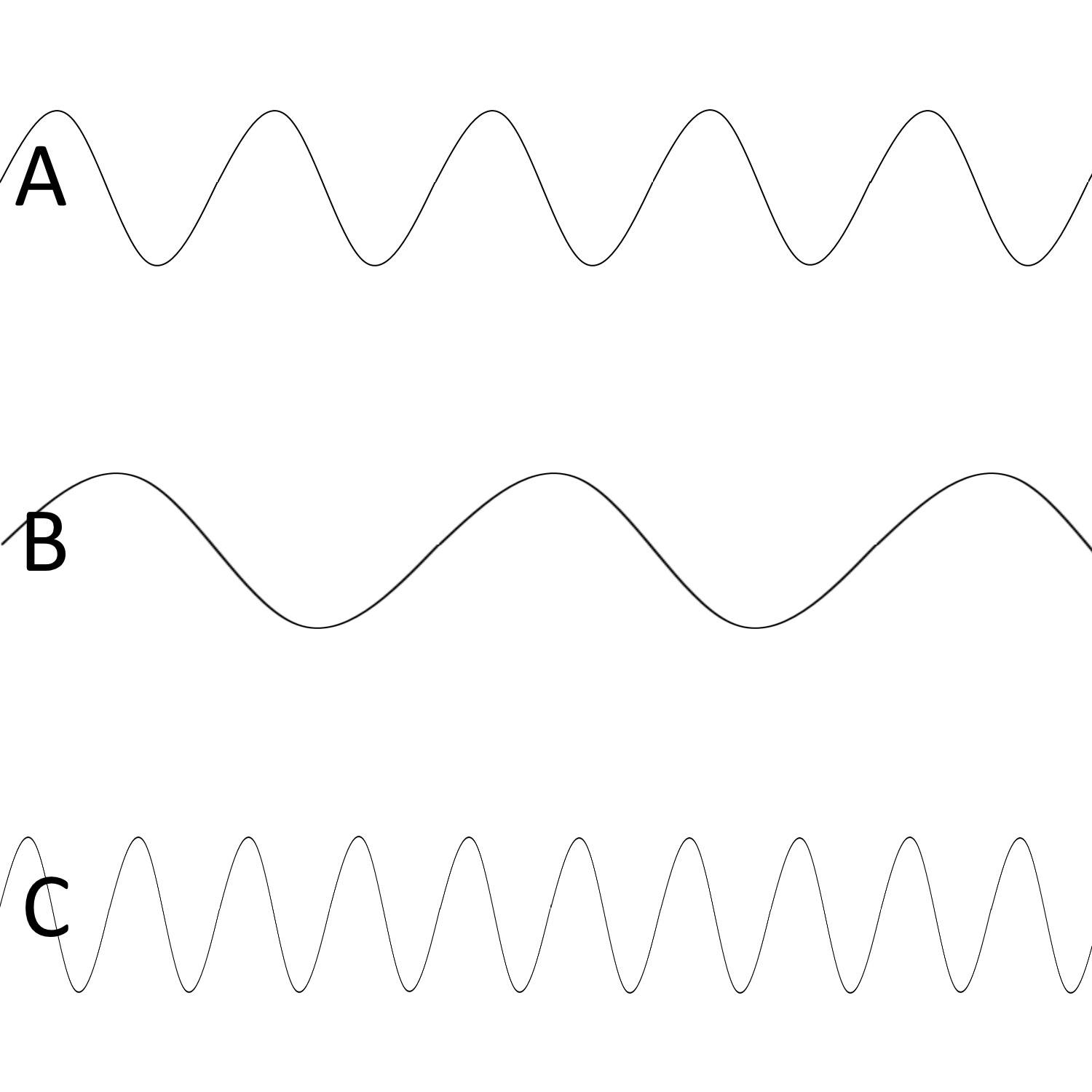
Which property of these waves differs?
a)
Frequency
b)
Wavelength
c)
Amplitude
d)
Pitch
19.
What is the material waves travel through called?
a)
Period
b)
Frequency
c)
Medium
d)
Hertz
20.
Which wave has the largest wavelength?
a)
A
b)
B
c)
C
d)
None (same wavelength)
Answer Key
wave superposition
Total questions: 20
1.
b) when two waves combine at the same place at the same time
2.
d)
wavelength
3.
c)
C
4.
a)
A
5.
b)
B
6.
a) Greater amplitude
7.
a)
the crest
8.
b)
troughs
9.
a)
frequency
10.
a)
3
11.
d)
8
12.
c)
amplitude does not affect frequency
13.
a)
the wavelength would be halved
14.
a) constructive
15.
d) destructive interference
16.
a) A
17.
b) B
18.
c) Amplitude
19.
c) Medium
20.
b) B
140 %
Browse by subjects
Browse by grades
Browse by format
FAQs
What does this wave superposition worksheet cover?
This Grade 9–12 science worksheet uses 20 multiple-choice questions to assess wave superposition, constructive and destructive interference, and transverse-wave features such as crests and troughs. Students interpret wave diagrams, identify amplitude and wavelength, and reason about how changing amplitude or frequency affects other wave properties.
How can I use this worksheet to teach wave superposition?
Introduce superposition by having students predict what happens when two waves occupy the same place at the same time, then connect their predictions to the diagram-based multiple-choice items. Use the questions about in-phase waves and interference to discuss why amplitudes can combine constructively, how destructive interference works, and why noise-canceling headphones use it.
What mistakes should I watch for when students complete this wave worksheet?
Students may confuse amplitude with wavelength, frequency, or wave speed when reading the diagrams, or label the highest and lowest points of a transverse wave incorrectly. Watch for students who think tripling amplitude changes frequency, or who choose greater wavelength or frequency instead of greater amplitude for in-phase waves; the worksheet also tests whether they can distinguish constructive from destructive interference.
How do I assign and grade this wave superposition worksheet?
You can assign it as a printable PDF or use it as a digital quiz on Wayground, and it includes a complete answer key for checking all 20 multiple-choice questions. For printable submissions, scan student work with the Wayground for Teachers app to streamline grading and review.
How can I differentiate this wave superposition worksheet for my students?
In the worksheet’s Advanced Settings, adjust font spacing and font size to make the wave-property questions and diagram labels easier to read. You can also apply a dyslexia-friendly font or translate the worksheet into another language while keeping the multiple-choice format intact.
Where can I find more worksheets like this on Wayground?
Wayground offers a broad collection of free printable worksheets and practice problems across subjects, with downloadable PDFs and answer keys to support essential skills and concepts. Browse more resources at https://wayground.com/en-us/worksheets.


 Worksheets