Help Class 1 students learn essential body safety concepts with Wayground's free printable worksheets, featuring engaging practice problems and complete answer keys to build foundational health awareness skills.
Explore printable Body Safety worksheets for Class 1
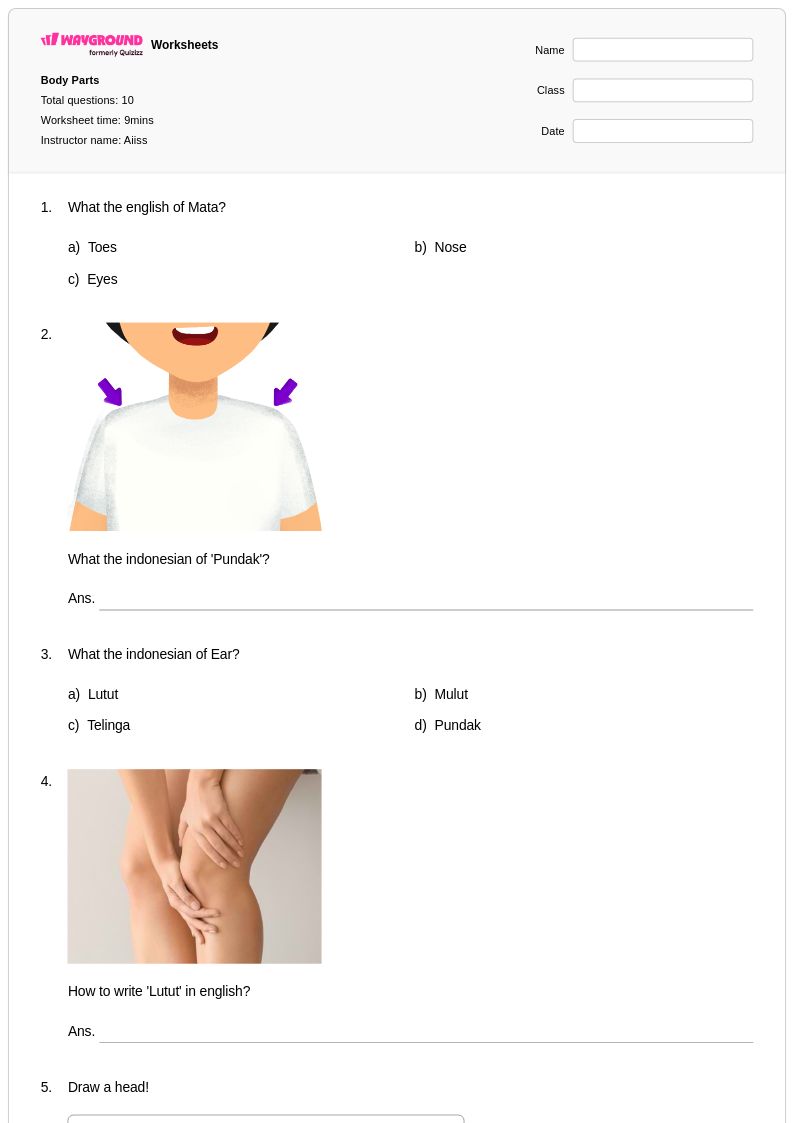
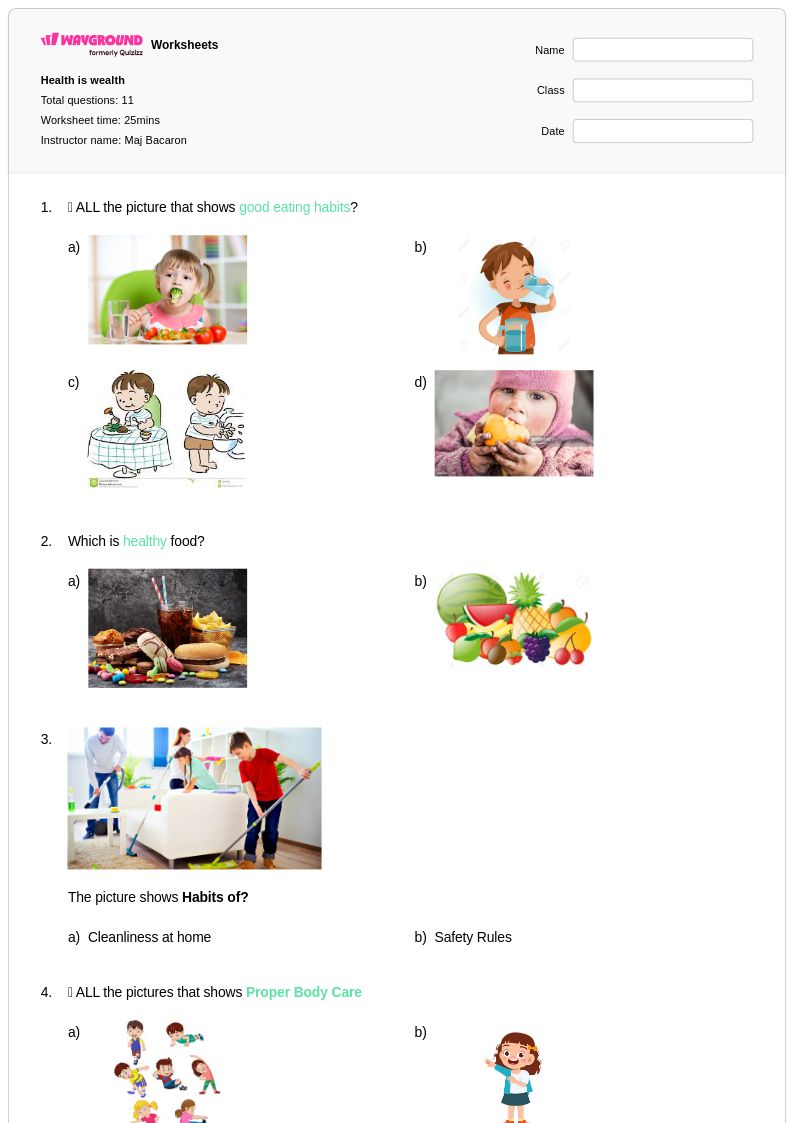
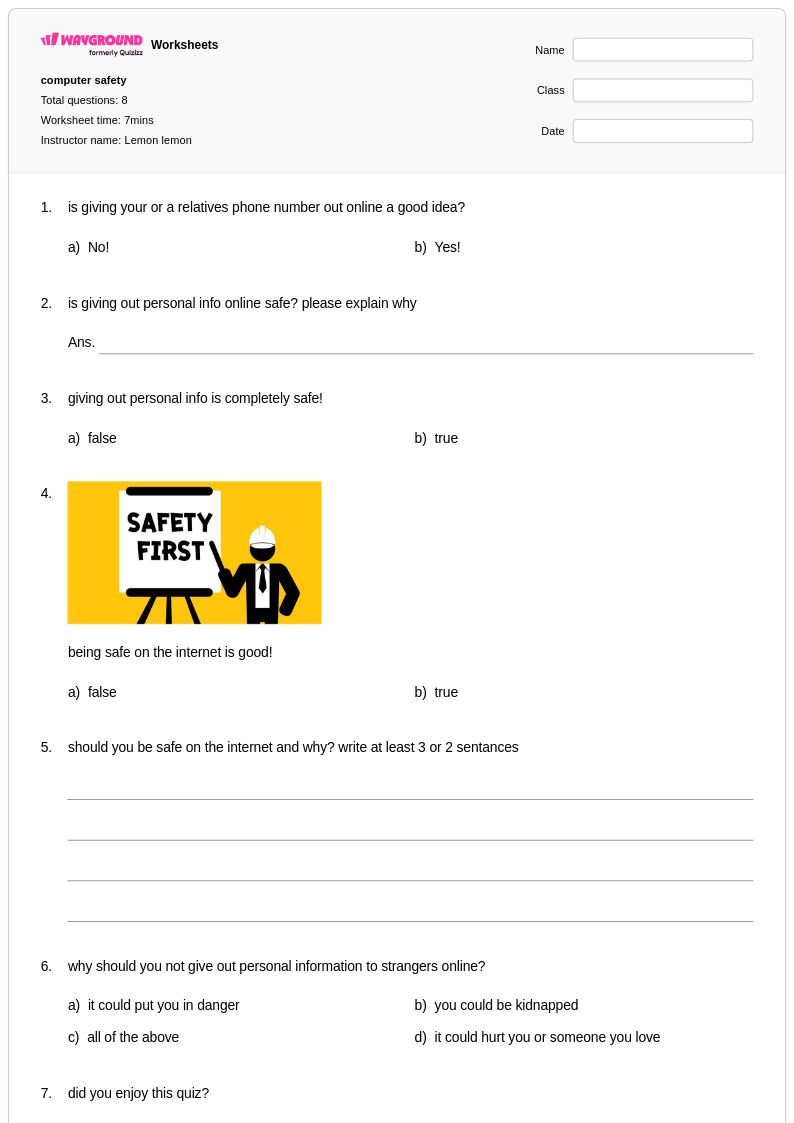
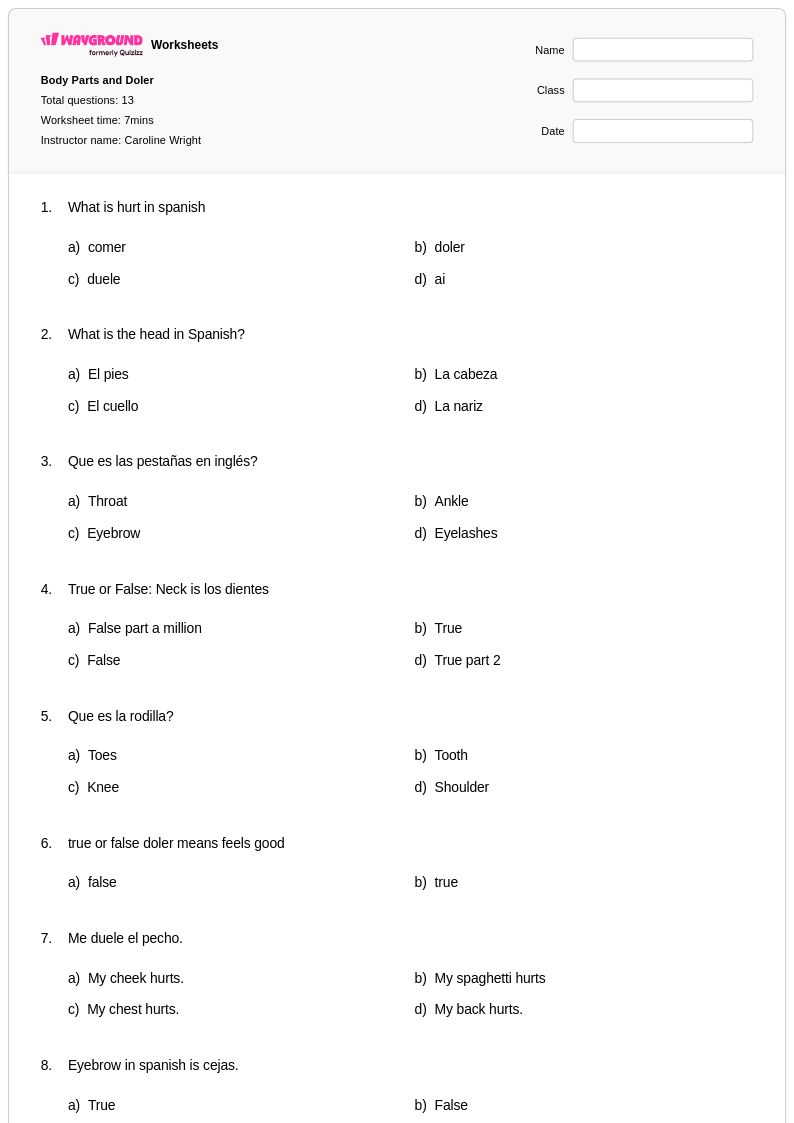
Body safety worksheets for Class 1 students available through Wayground (formerly Quizizz) provide essential foundational learning about personal boundaries, appropriate touch, and recognizing safe versus unsafe situations. These educational resources strengthen young learners' ability to identify trusted adults, understand the difference between safe and unsafe secrets, and develop confidence in communicating about uncomfortable situations. The comprehensive collection includes age-appropriate practice problems that help students recognize warning signs, understand body autonomy, and learn appropriate responses to various scenarios. Teachers can access complete answer keys and printable pdf formats that support structured learning while maintaining sensitivity to this crucial topic that builds essential life skills for first-grade students.
Wayground (formerly Quizizz) supports educators with millions of teacher-created resources specifically designed for body safety instruction, featuring robust search and filtering capabilities that help locate developmentally appropriate materials for Class 1 learners. The platform's standards alignment ensures that worksheets meet educational requirements while addressing this sensitive health and safety topic with age-appropriate language and scenarios. Teachers benefit from differentiation tools that accommodate varying reading levels and comprehension abilities, along with flexible customization options that allow adaptation for individual classroom needs. Available in both printable and digital pdf formats, these resources facilitate effective lesson planning, targeted skill practice, and meaningful discussions about personal safety, empowering educators to create supportive learning environments where young students can develop critical protective knowledge and communication skills.
FAQs
How do I teach body safety to elementary students?
Effective body safety instruction begins with age-appropriate language around body autonomy, the concept of private parts, and the difference between safe and unsafe touch. Teachers should introduce the idea of a personal 'safety network' by helping students identify trusted adults they can turn to if they feel unsafe. Role-playing scenarios and discussion-based activities help students internalize these concepts in a low-pressure way, making abstract safety rules feel concrete and actionable.
What topics should a body safety lesson cover?
A comprehensive body safety lesson should address personal boundaries, appropriate versus inappropriate touch, recognition of warning signs in unsafe situations, and strategies for reporting concerns to a trusted adult. Students should also practice the language they would use to say 'no,' leave an uncomfortable situation, and seek help. Covering all of these areas together ensures students develop both the awareness and the communication skills needed to protect themselves.
What exercises help students practice body safety skills?
Scenario-based practice problems are among the most effective exercises for body safety, as they require students to apply safety concepts to realistic situations rather than simply recall definitions. Worksheets that ask students to identify trusted adults in their lives, categorize types of touch, or determine the appropriate response to a given situation build critical decision-making skills. These exercises work best when followed by guided discussion that reinforces correct thinking and addresses any misconceptions.
What mistakes do students commonly make when learning about body safety?
One common misconception is that unsafe situations only involve strangers, when in reality students need to recognize that unsafe behavior can come from people they know. Students also sometimes struggle to distinguish between surprises (which are eventually shared) and secrets that make them feel uncomfortable or scared, which should always be told to a trusted adult. Addressing these specific error patterns directly in instruction helps students build more accurate and protective mental models.
How can I support students with different needs during body safety lessons?
Body safety is a sensitive topic, and students may come to these lessons with varying levels of prior exposure, language ability, or emotional readiness. On Wayground, teachers can enable Read Aloud so questions and content are read to students who need auditory support, and reduced answer choices can lower cognitive load for students who need it. Extended time can also be applied per student for those who process more slowly, and all accommodations are saved for future sessions without notifying other students.
How do I use Wayground's body safety worksheets in my classroom?
Wayground's body safety worksheets are available as printable PDFs for traditional classroom use and in digital formats for technology-integrated environments, giving teachers flexibility depending on their setup. Teachers can also host worksheets directly as a quiz on Wayground, which allows for real-time monitoring of student responses and progress. Each worksheet includes a complete answer key, supporting both independent student work and teacher-led guided instruction.