
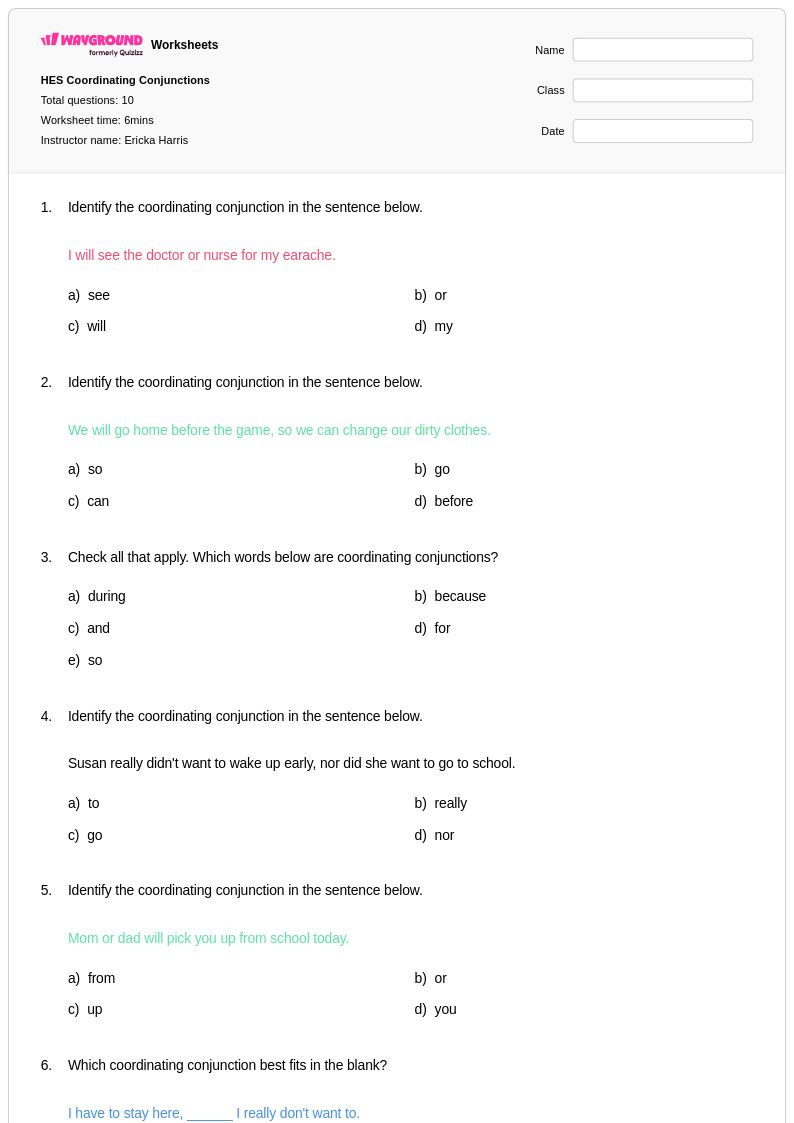
10 Q
5th
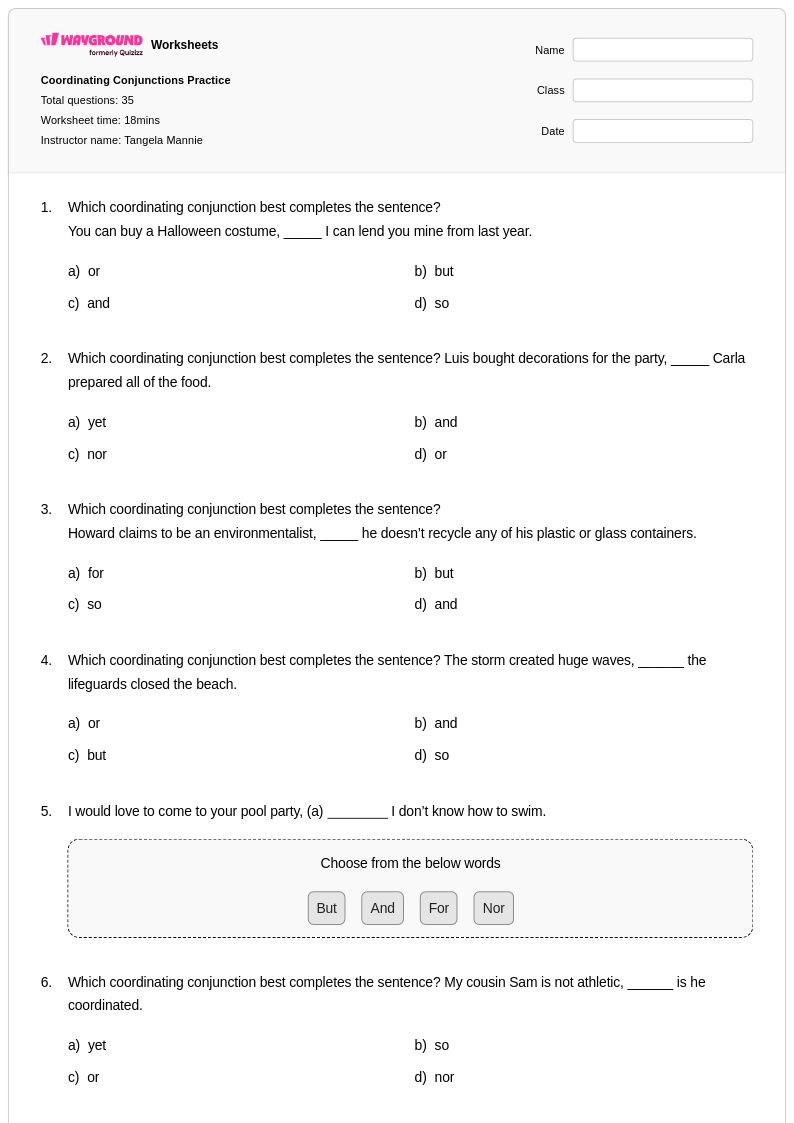
35 Q
5th
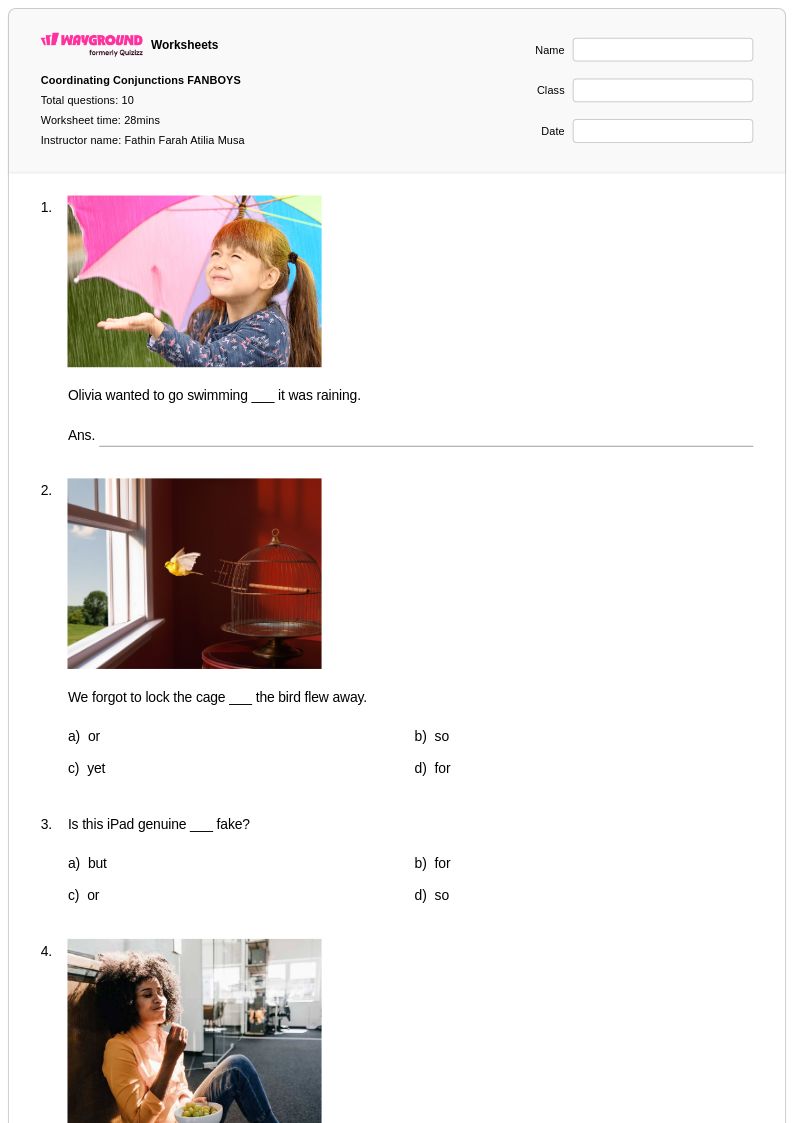
10 Q
5th - 6th
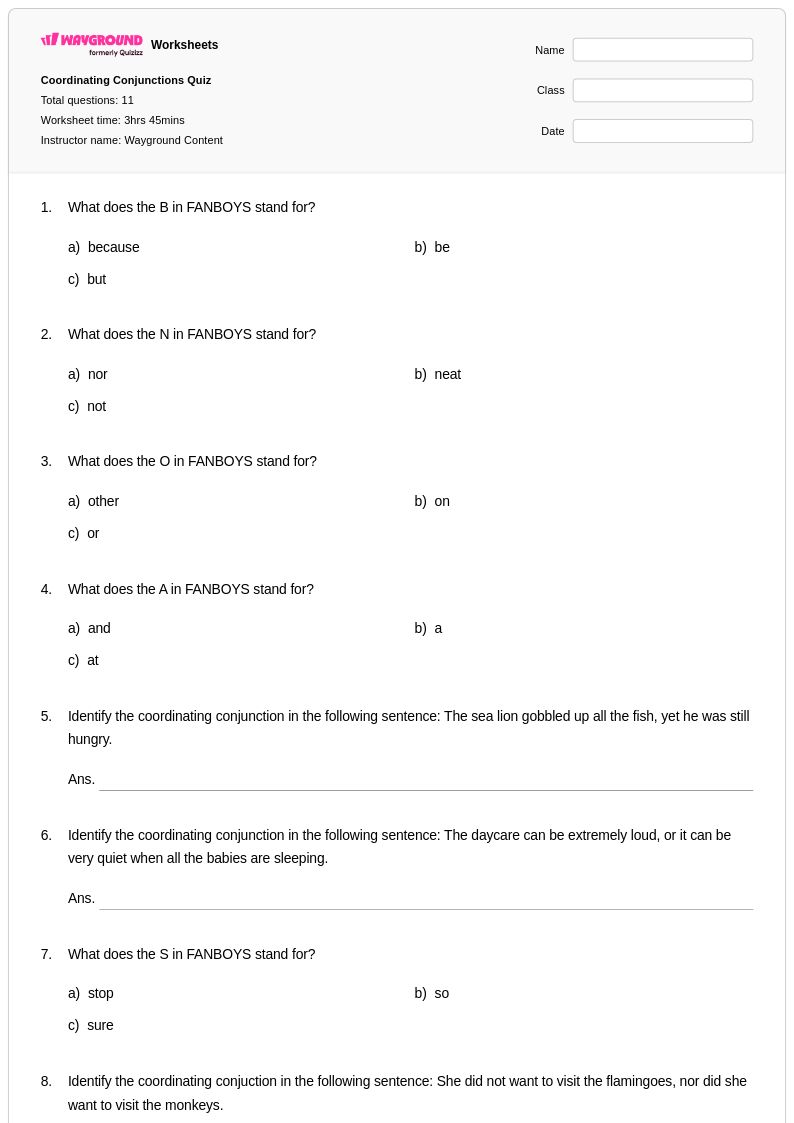
11 Q
5th - 6th
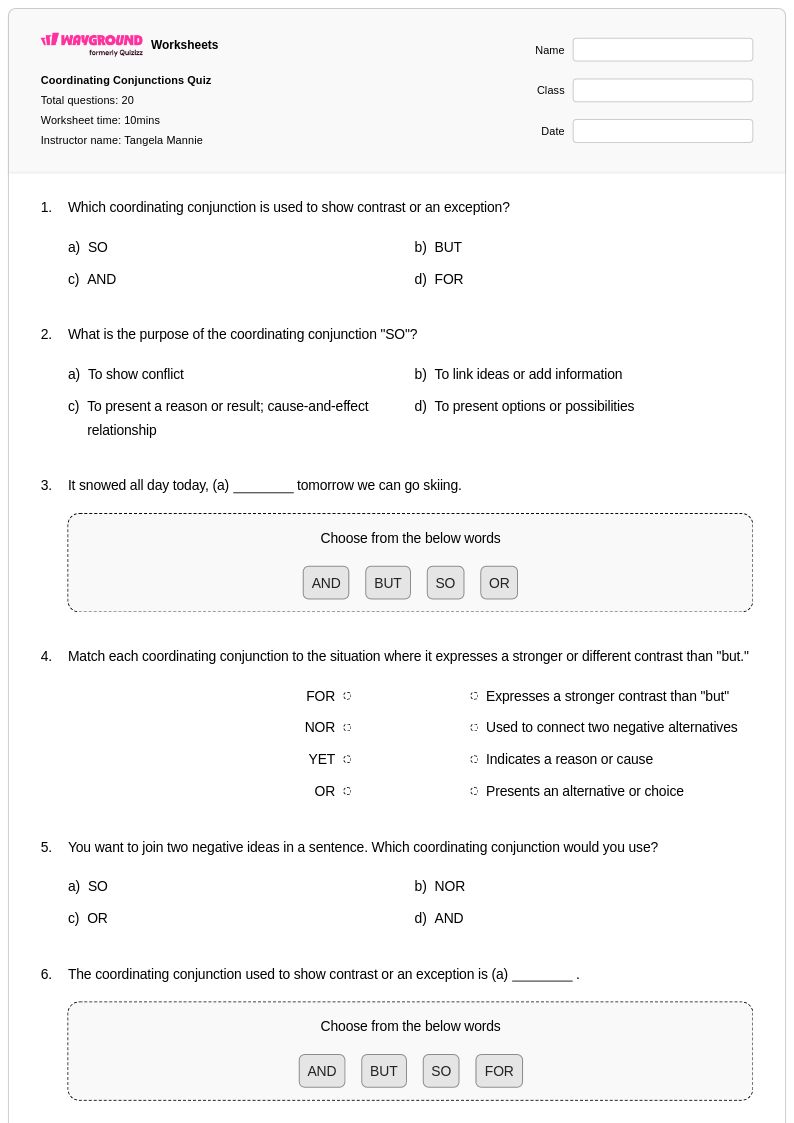
20 Q
5th
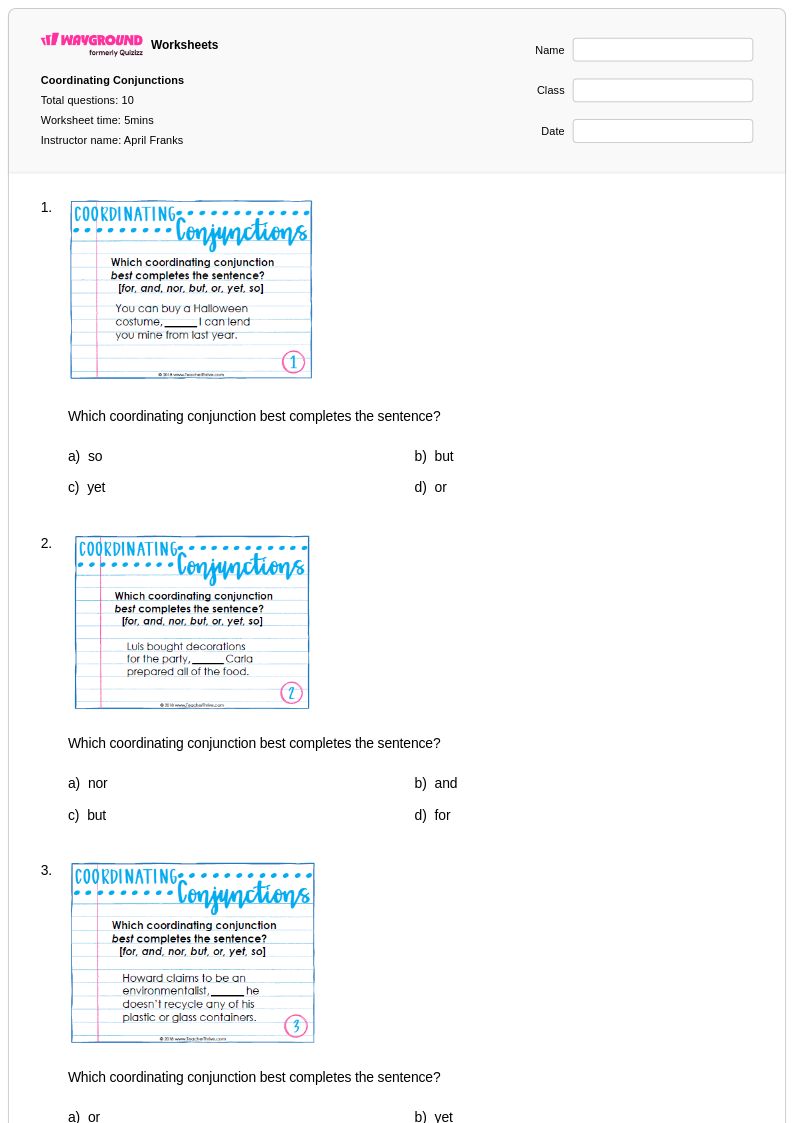
10 Q
4th - 6th
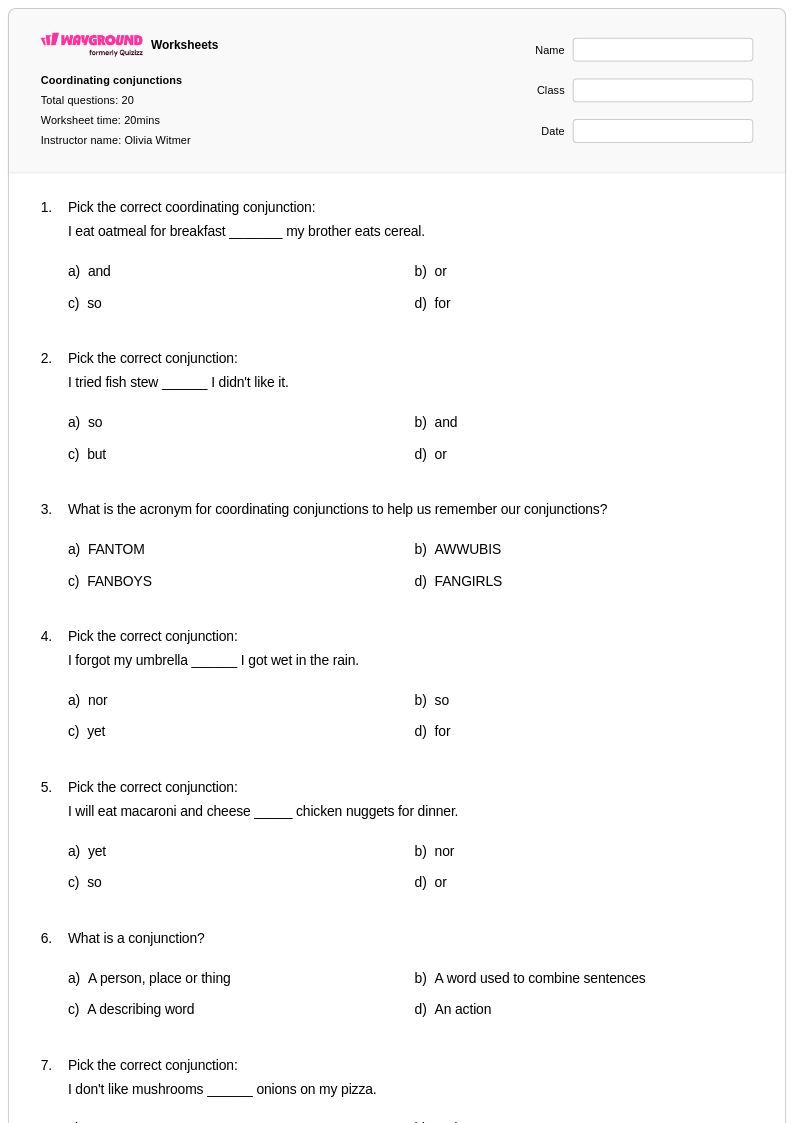
20 Q
3rd - 6th
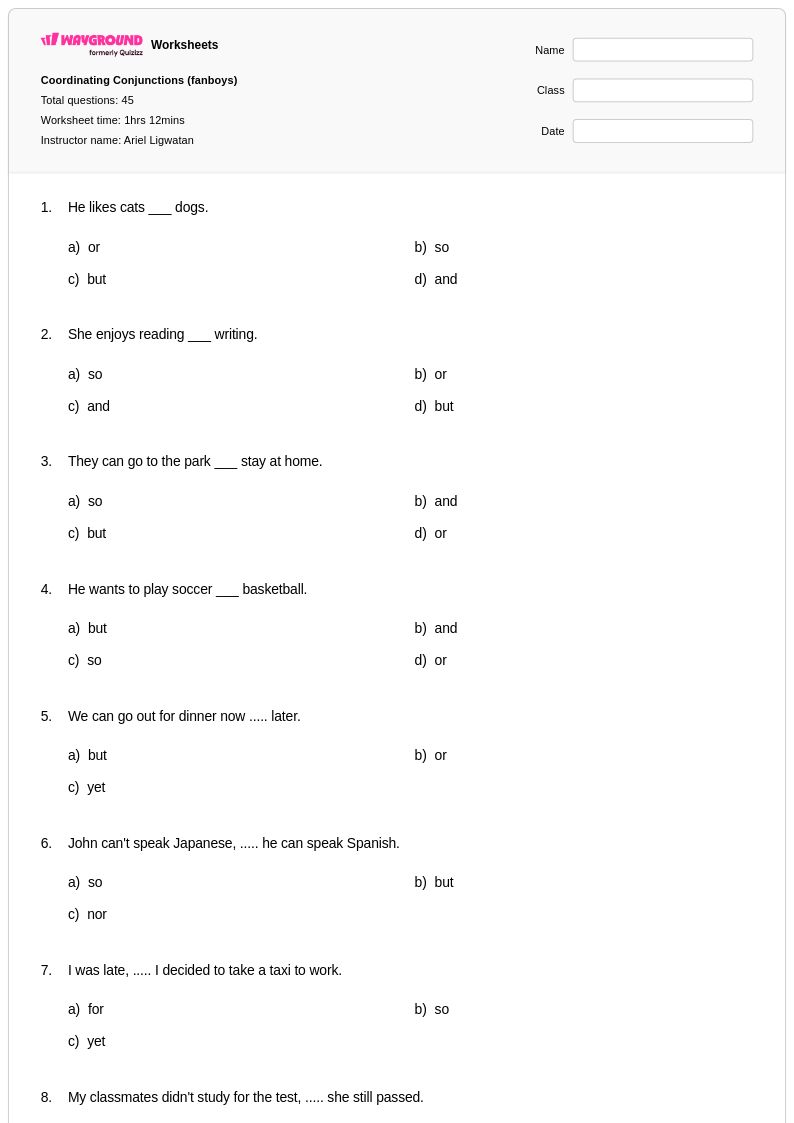
45 Q
5th
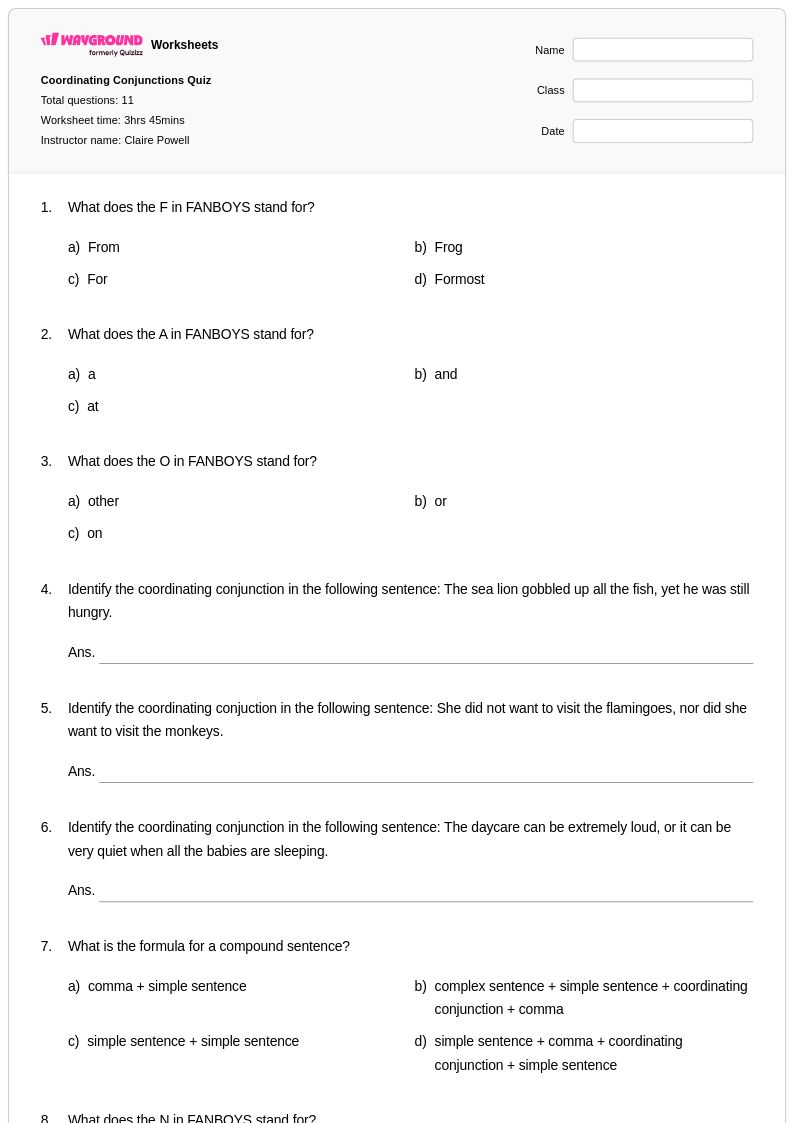
11 Q
5th - 6th
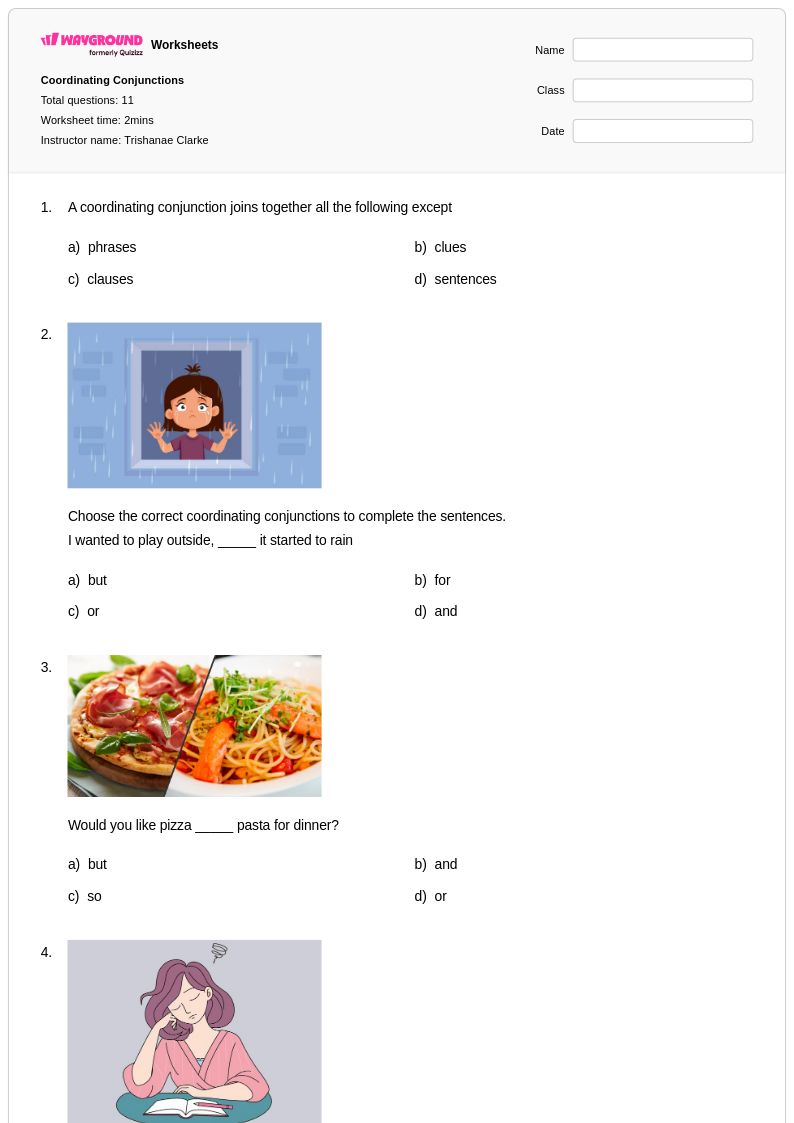
11 Q
4th - Uni
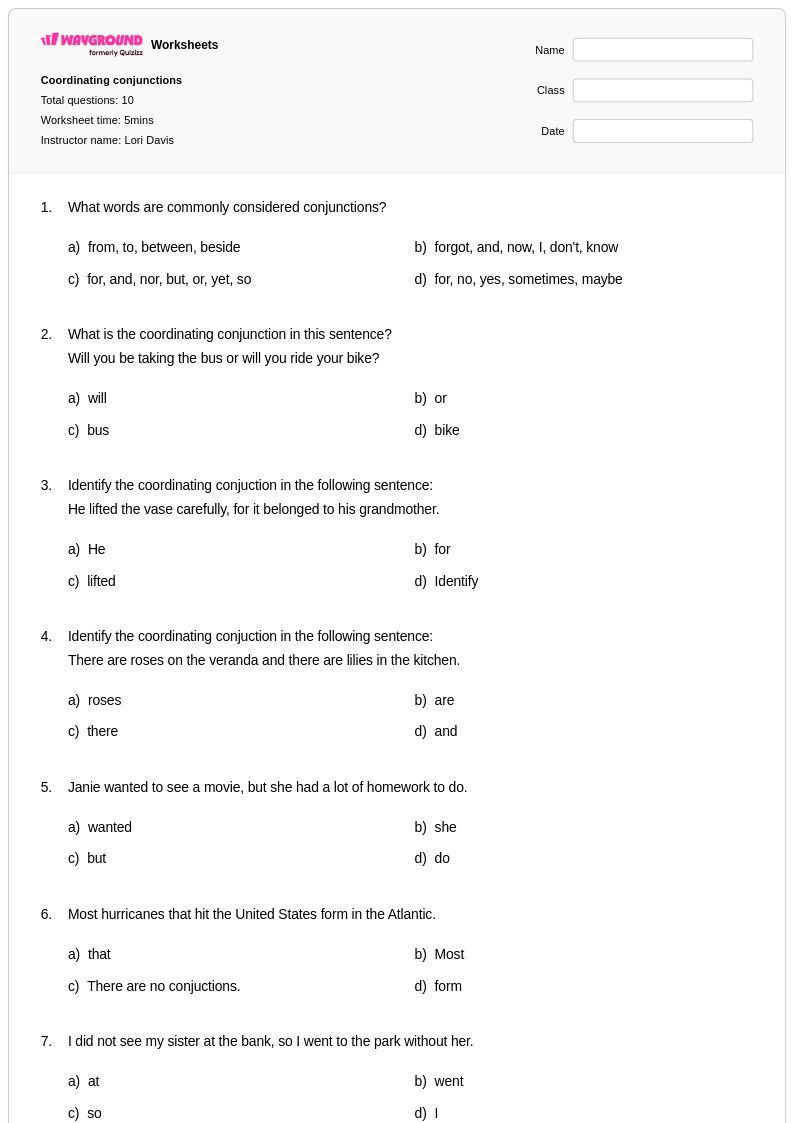
10 Q
5th
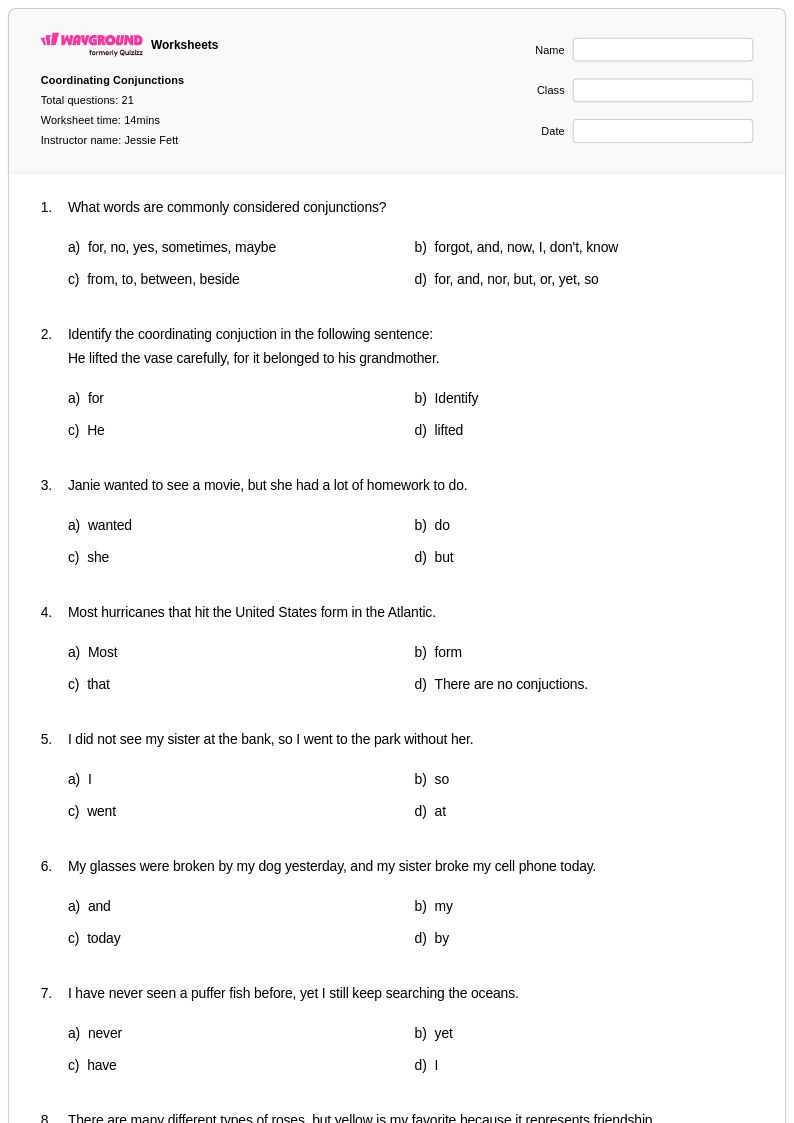
21 Q
5th
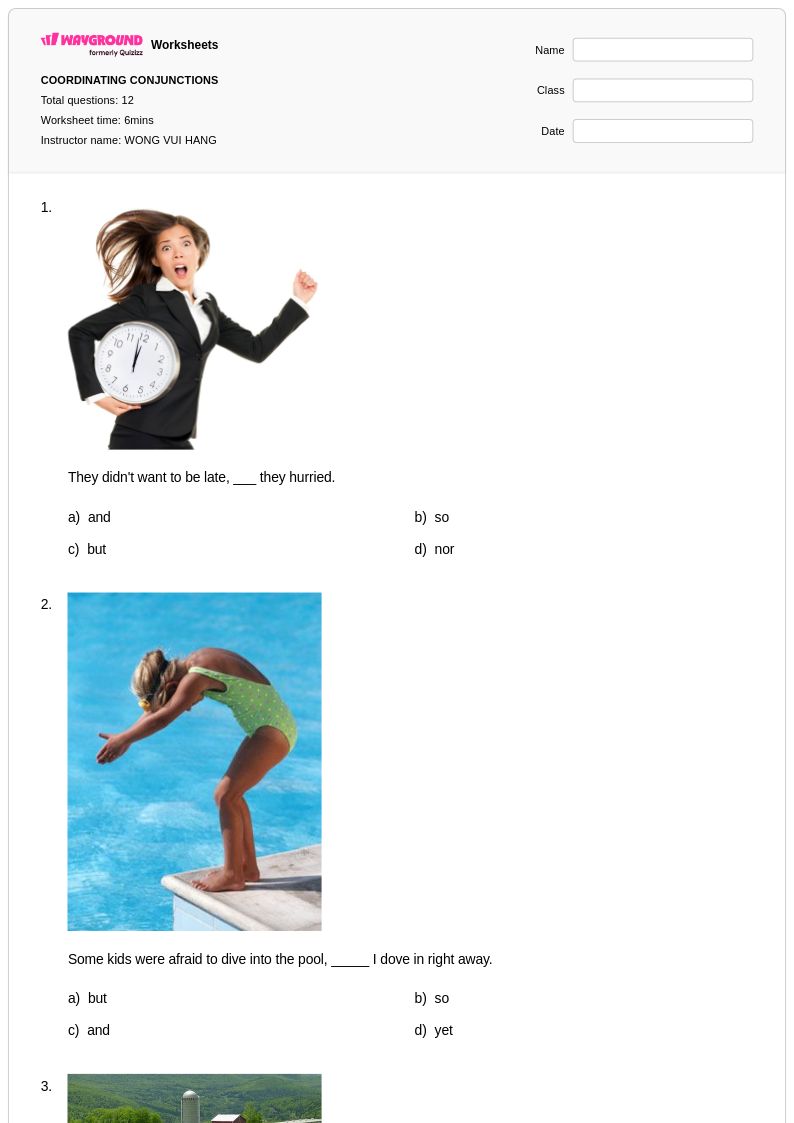
12 Q
1st - 12th
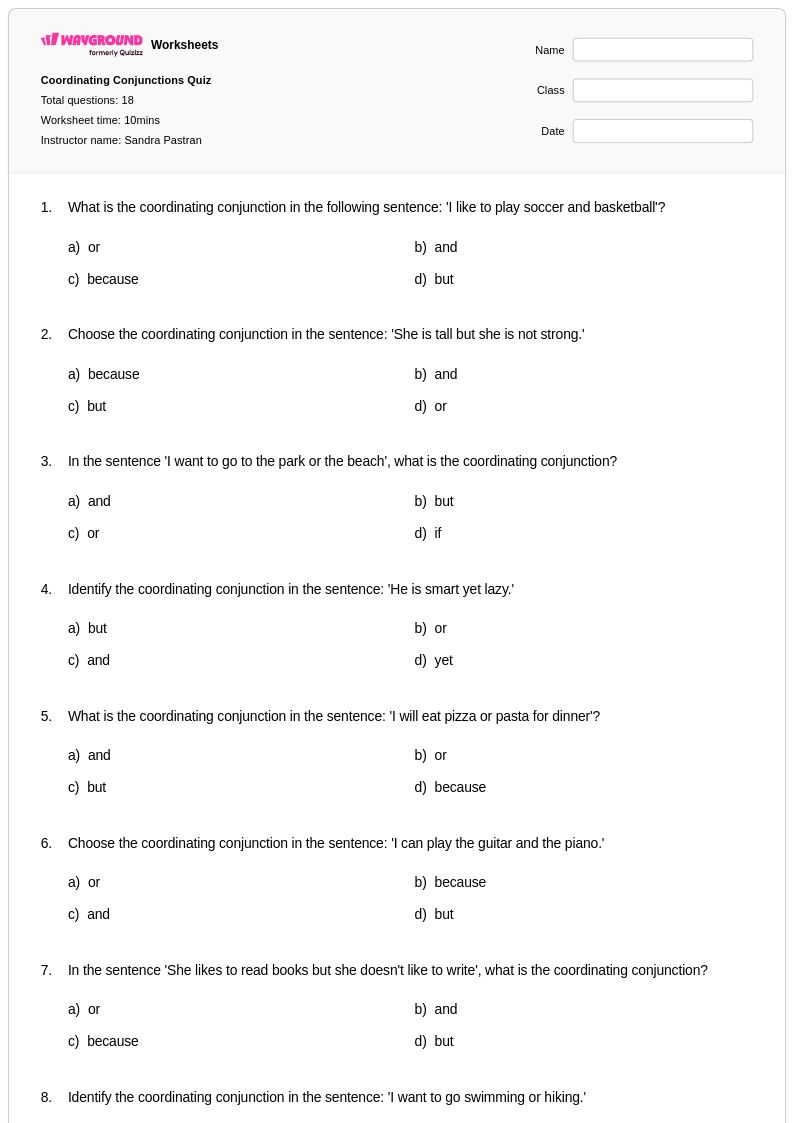
18 Q
5th
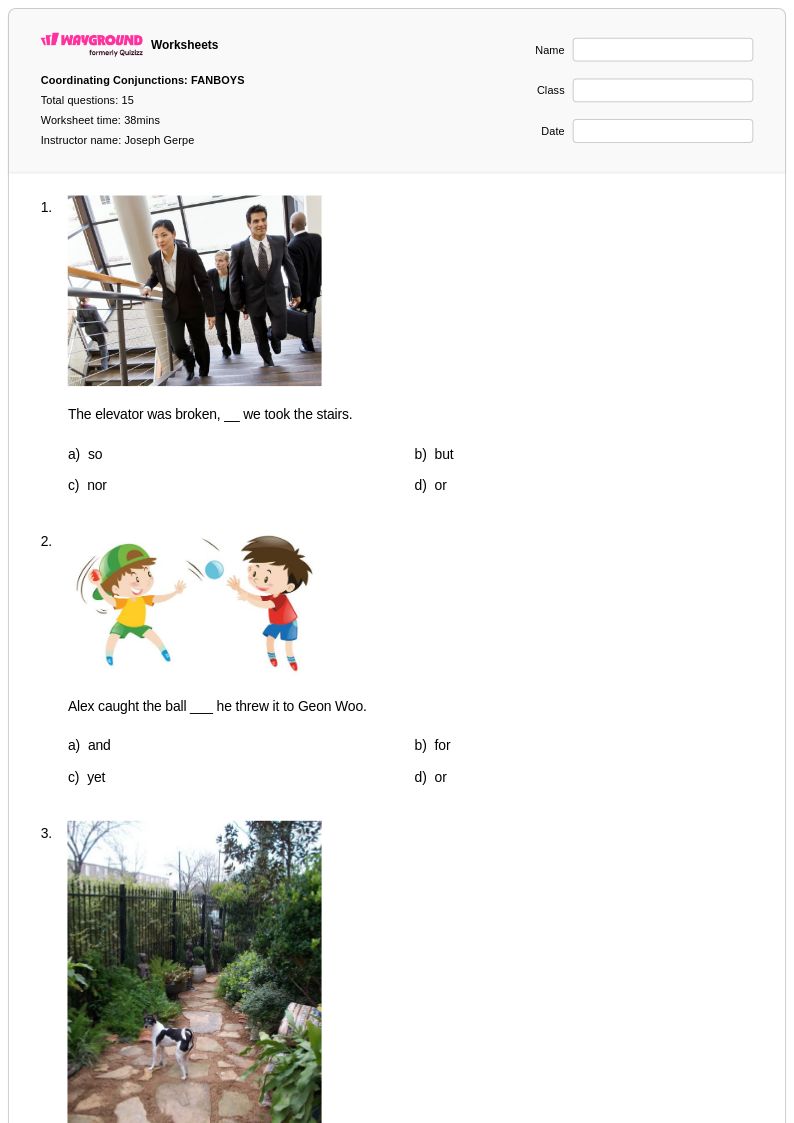
15 Q
5th
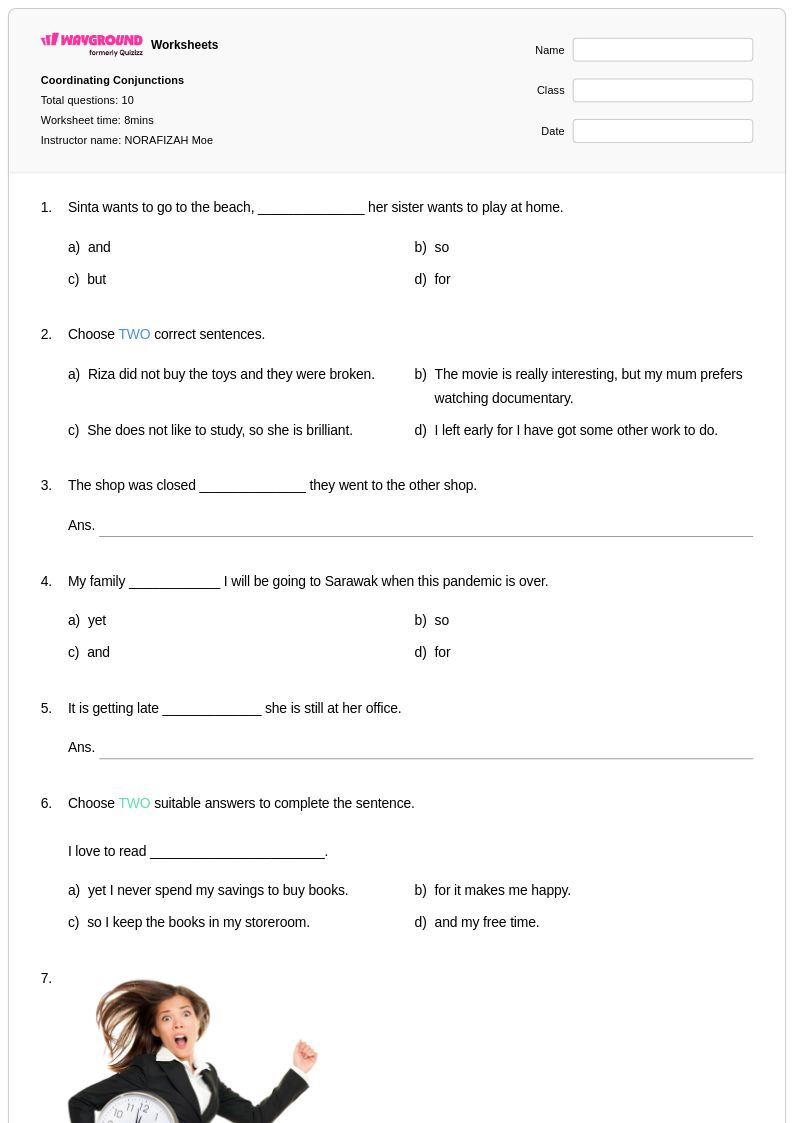
10 Q
4th - 6th
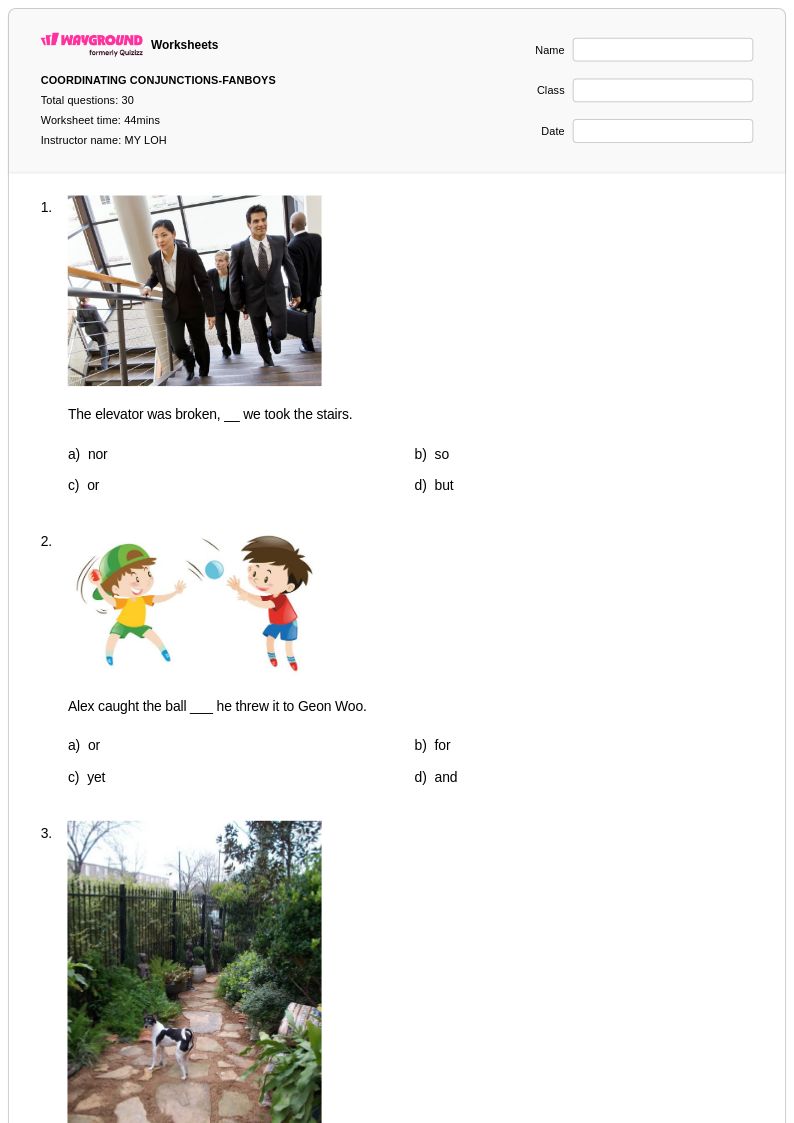
30 Q
4th - 7th
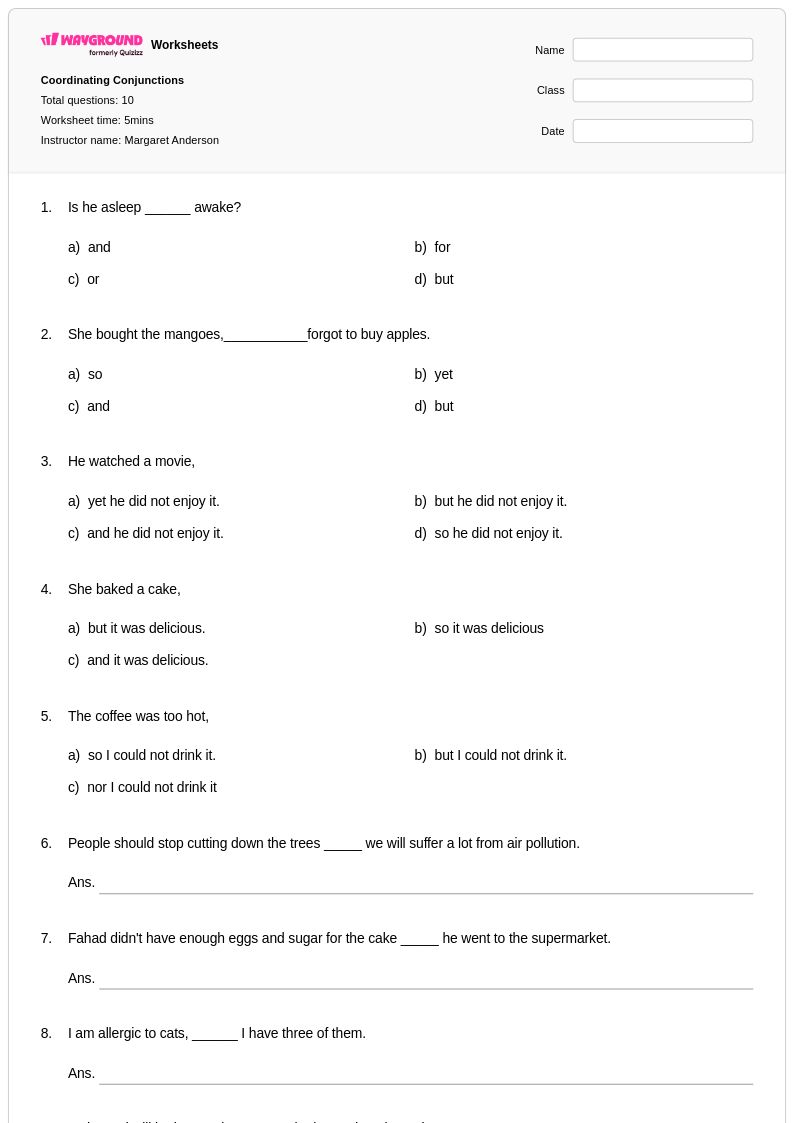
10 Q
4th - 5th
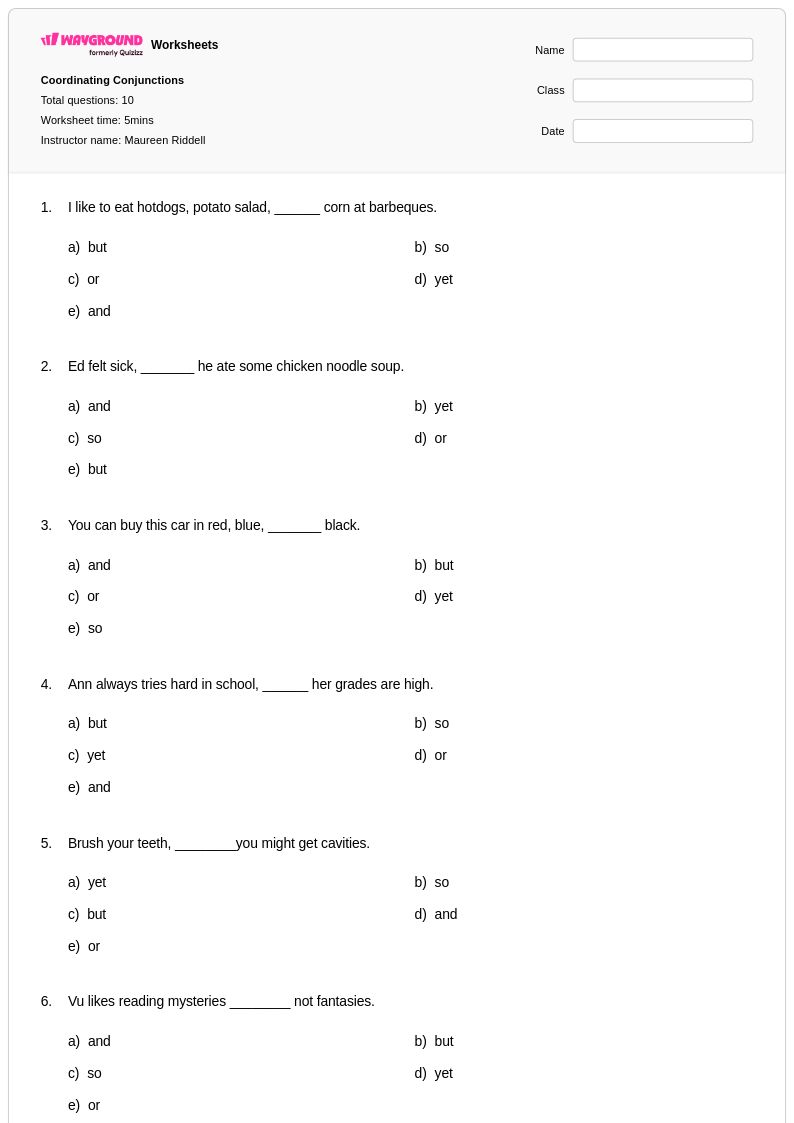
10 Q
5th
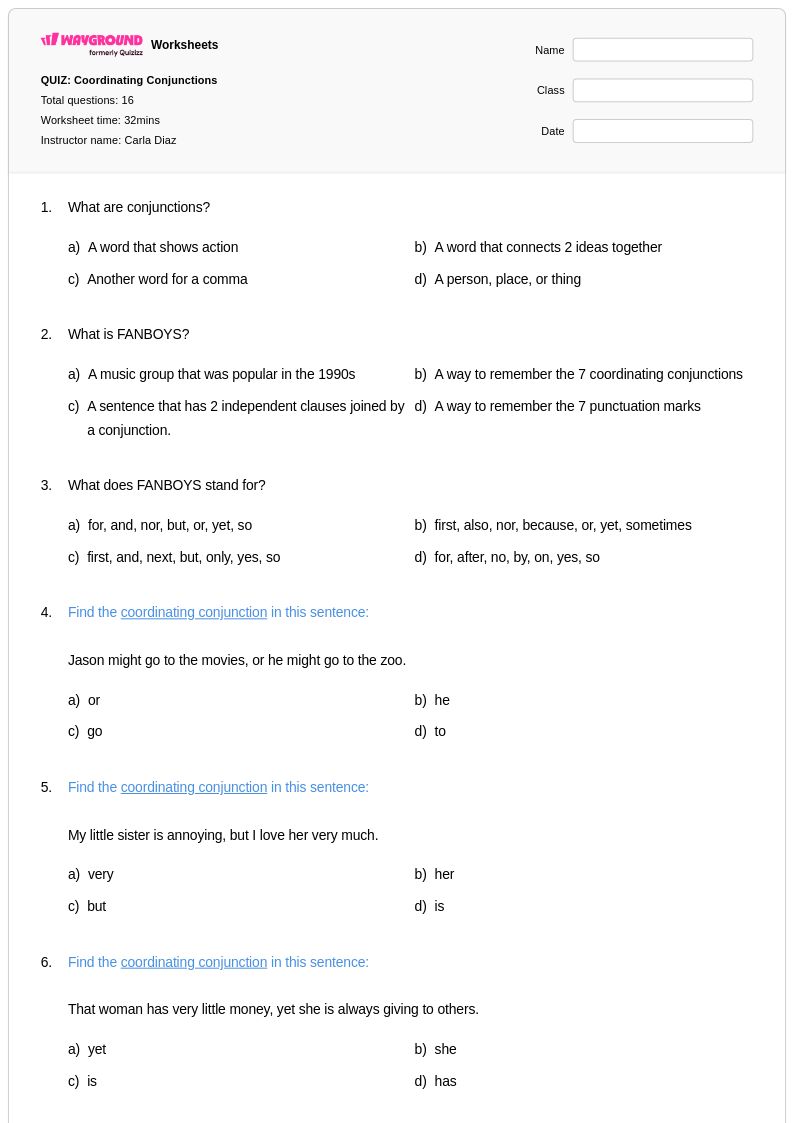
16 Q
5th - 8th
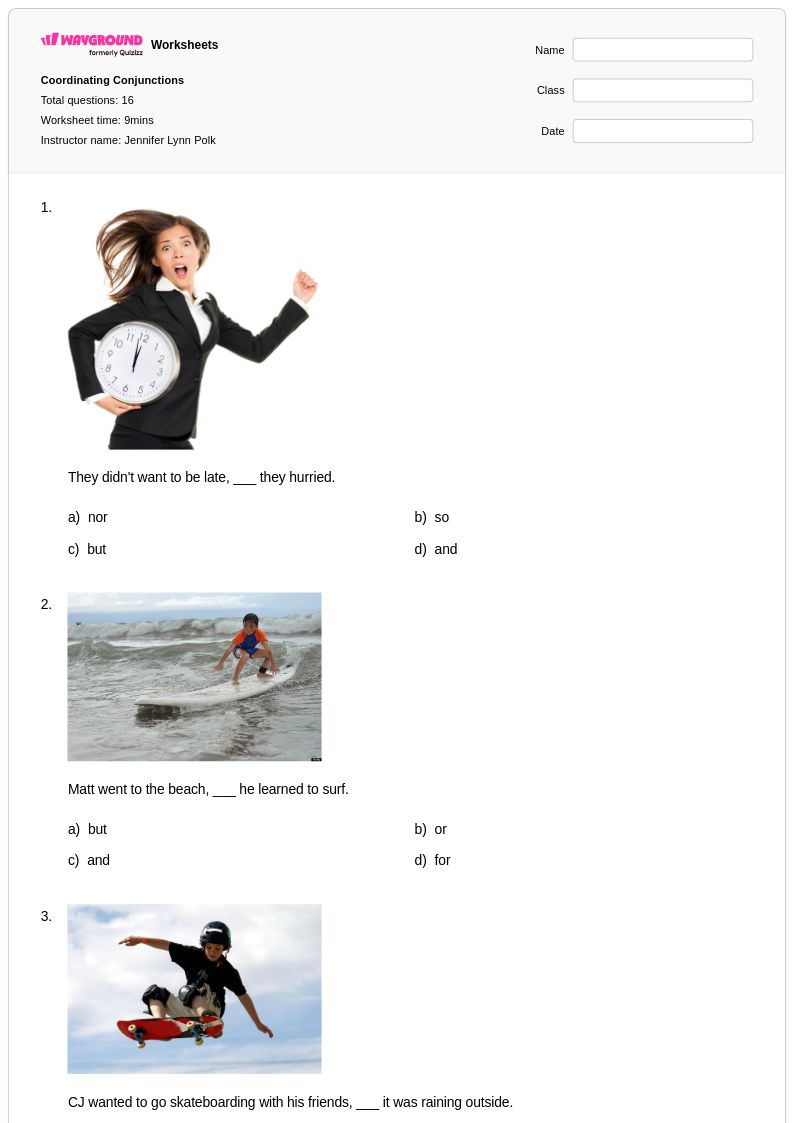
16 Q
4th - 5th
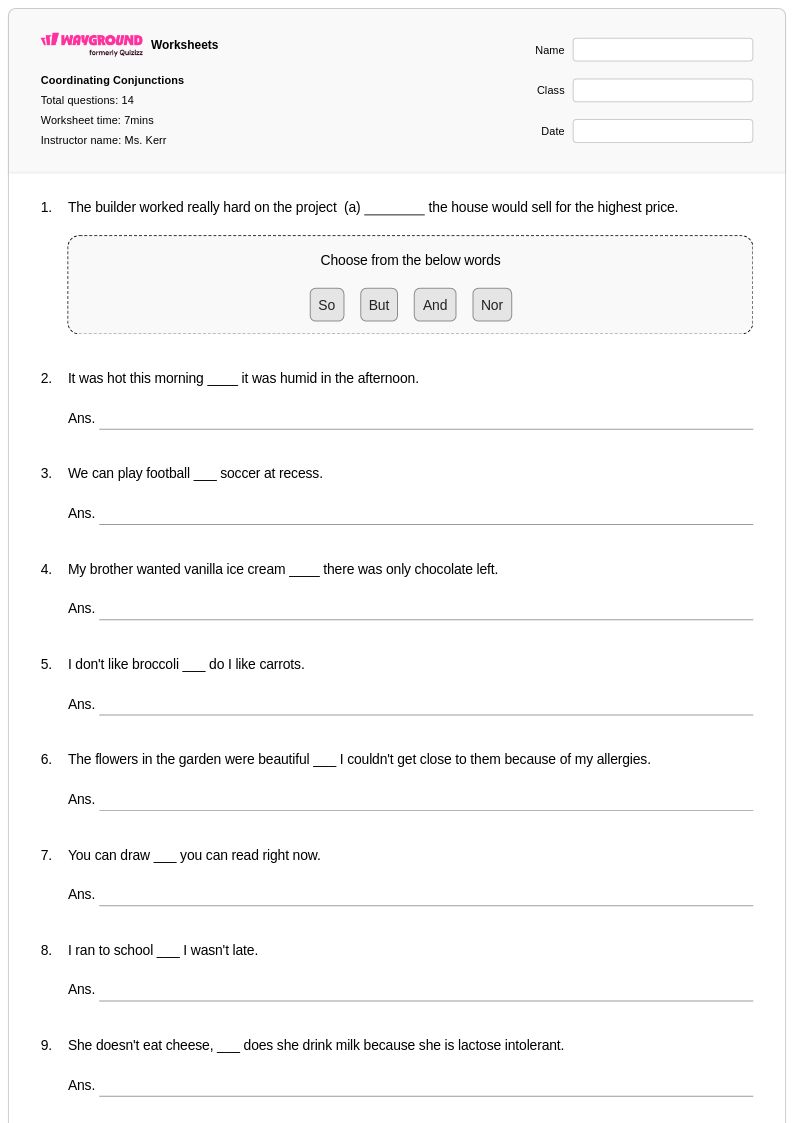
14 Q
5th
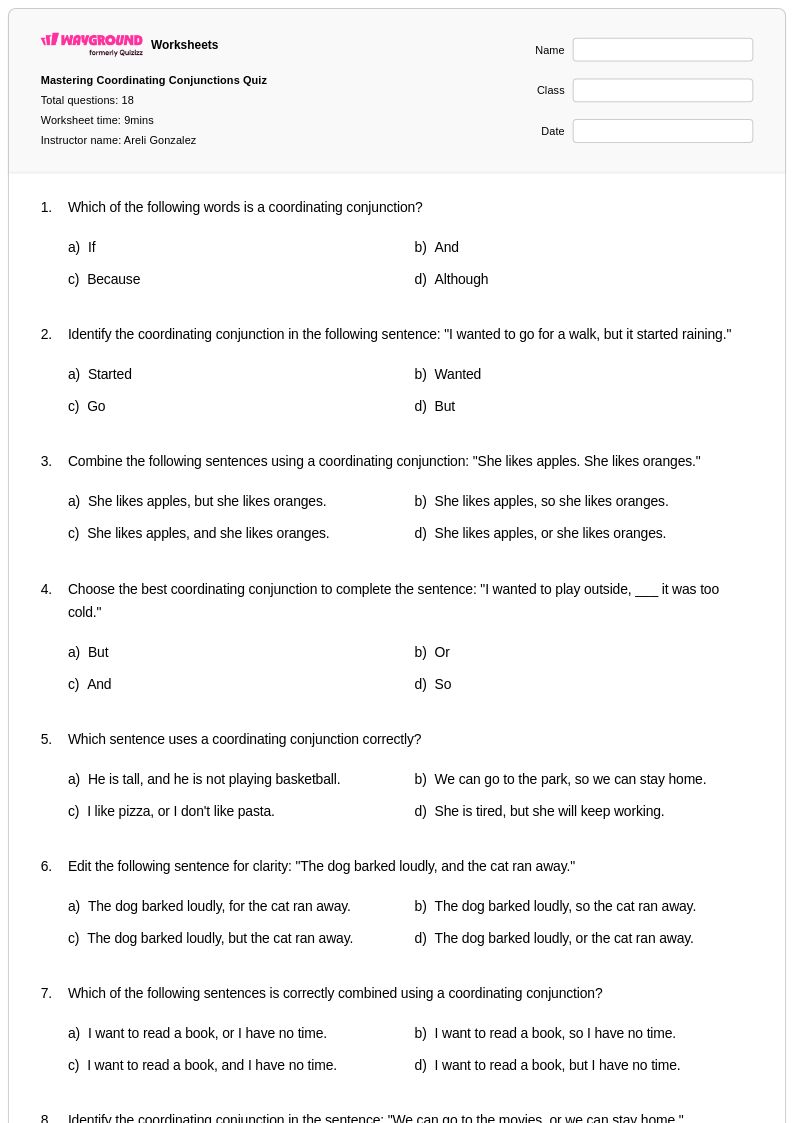
18 Q
4th - Uni
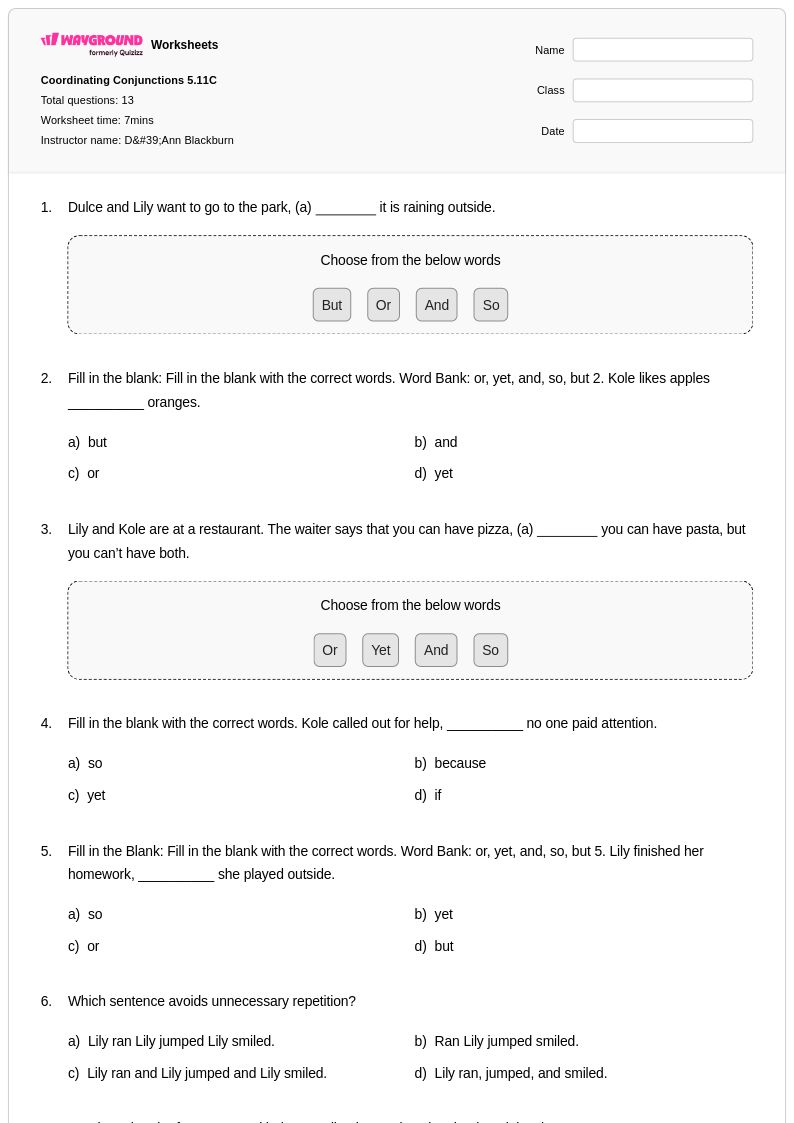
13 Q
5th
Explore Coordinating Conjunctions Worksheets by Grades
Explore Other Subject Worksheets for class 5
Explore printable Coordinating Conjunctions worksheets for Class 5
Coordinating conjunctions form a crucial foundation in Class 5 English language arts, connecting words, phrases, and clauses to create more sophisticated and flowing sentences. Wayground's coordinating conjunction worksheets help fifth-grade students master the seven primary coordinating conjunctions—for, and, nor, but, or, yet, and so—through targeted practice problems that reinforce proper usage and punctuation rules. These comprehensive printables strengthen students' understanding of how conjunctions join equal grammatical elements, whether connecting two independent clauses with appropriate comma placement or linking words and phrases within sentences. Each worksheet includes detailed answer keys that support both independent practice and guided instruction, with free pdf formats that make distribution and classroom implementation seamless for educators seeking to build their students' sentence construction skills.
Wayground supports teachers with an extensive collection of coordinating conjunction resources drawn from millions of teacher-created materials, offering robust search and filtering capabilities that align with common core and state English language arts standards. The platform's differentiation tools enable educators to customize worksheets based on individual student needs, providing multiple difficulty levels and varied question types that accommodate diverse learning styles within the Class 5 classroom. Teachers can access both printable pdf versions for traditional paper-and-pencil practice and digital formats for technology-integrated lessons, facilitating flexible lesson planning that supports remediation for struggling learners and enrichment opportunities for advanced students. This comprehensive approach to coordinating conjunction instruction helps educators systematically build their students' grammatical competency while providing consistent skill practice that reinforces proper sentence structure and writing mechanics.
FAQs
How do I teach coordinating conjunctions to students?
What exercises help students practice coordinating conjunctions?
What mistakes do students commonly make with coordinating conjunctions?
How can I differentiate coordinating conjunction practice for students at different skill levels?
How do I use coordinating conjunction worksheets from Wayground in my classroom?
How do coordinating conjunctions differ from subordinating conjunctions?