Free Printable Early Literacy Worksheets for Class 4
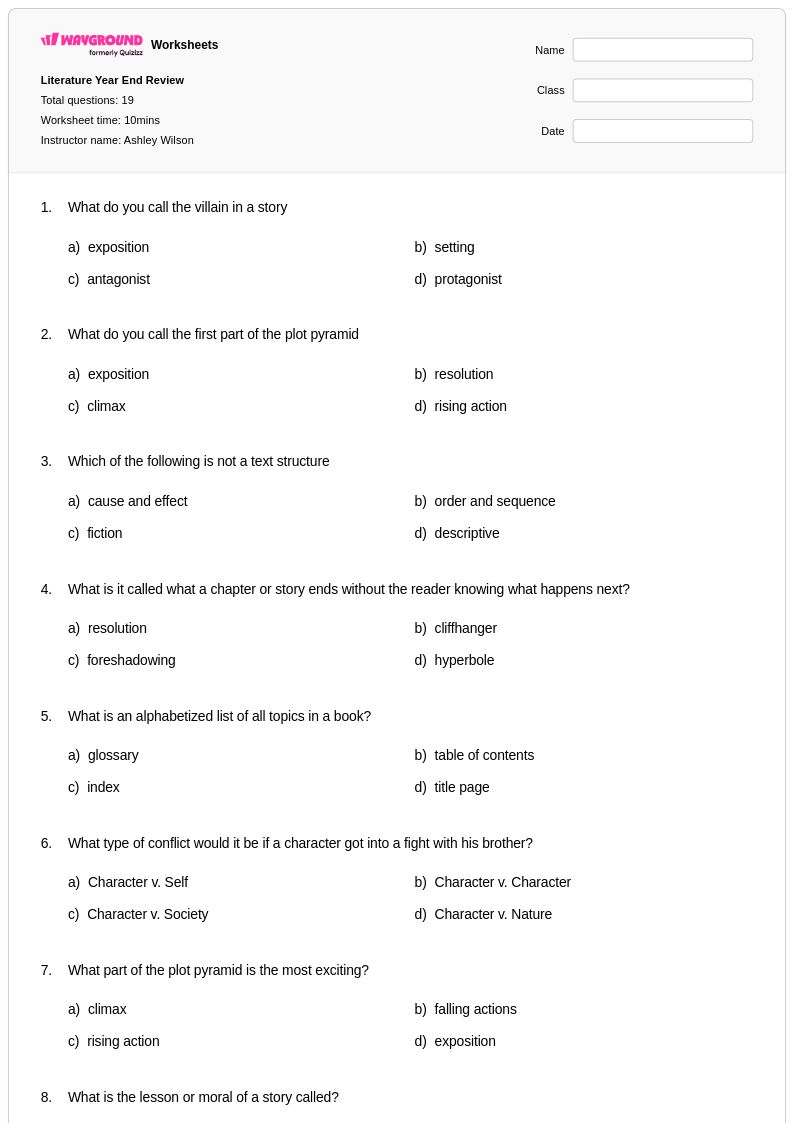
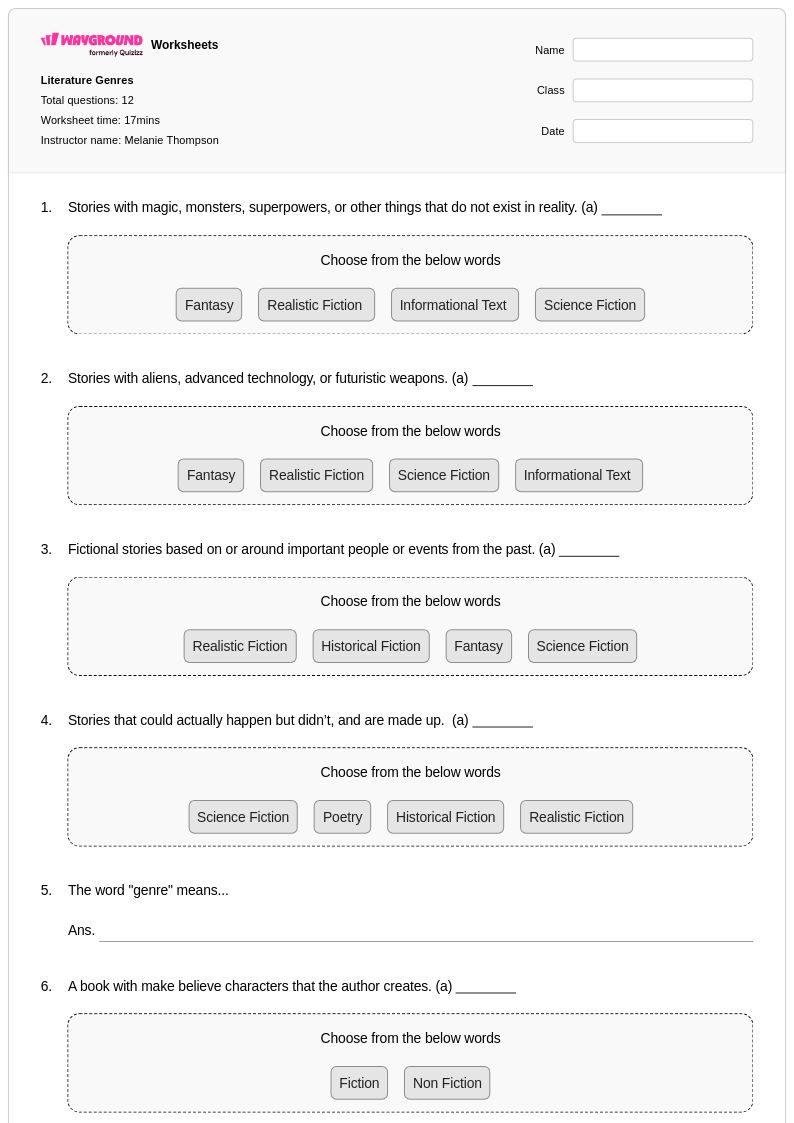
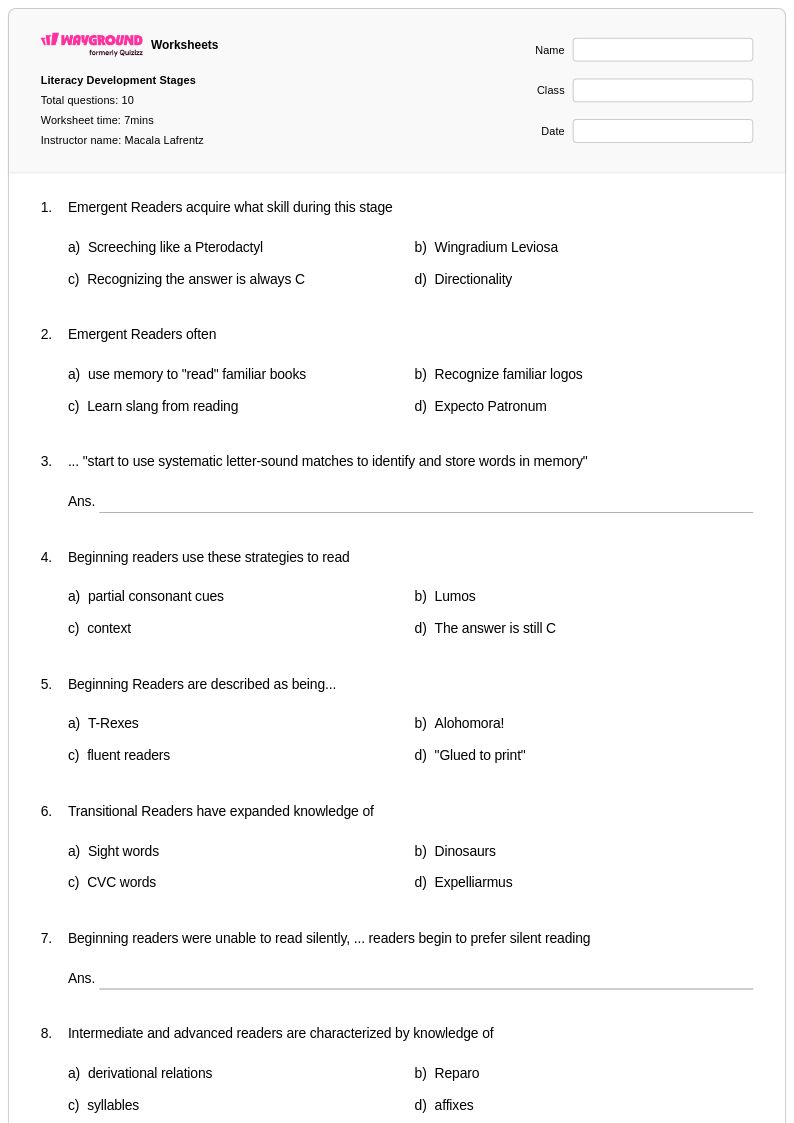
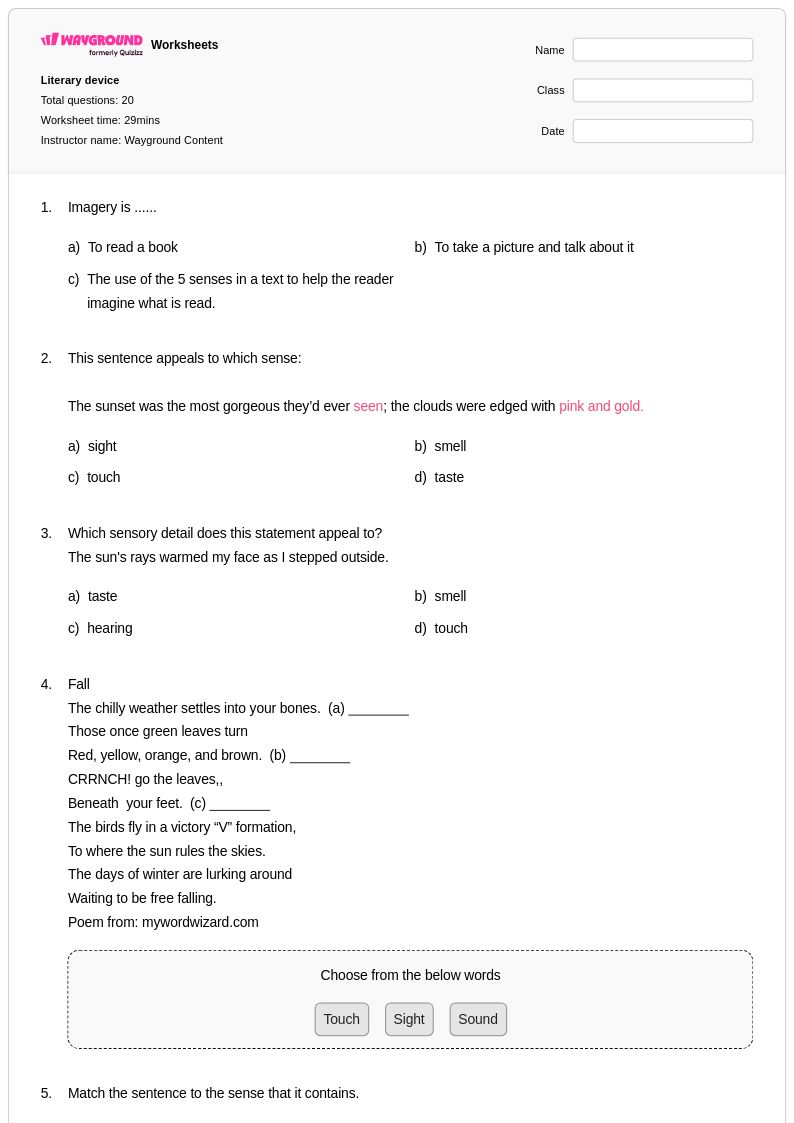
Class 4 early literacy worksheets from Wayground help students build foundational reading skills through engaging printables and practice problems, complete with answer keys for effective learning support.
Explore printable Early Literacy worksheets for Class 4
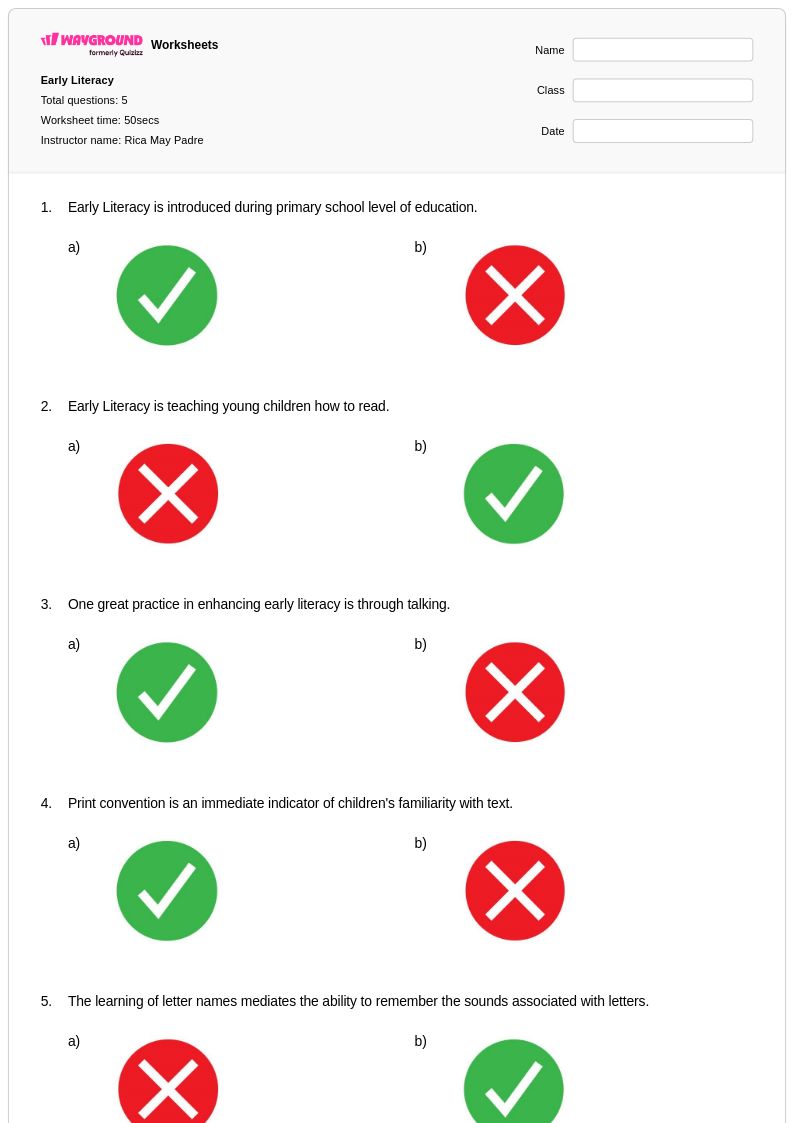
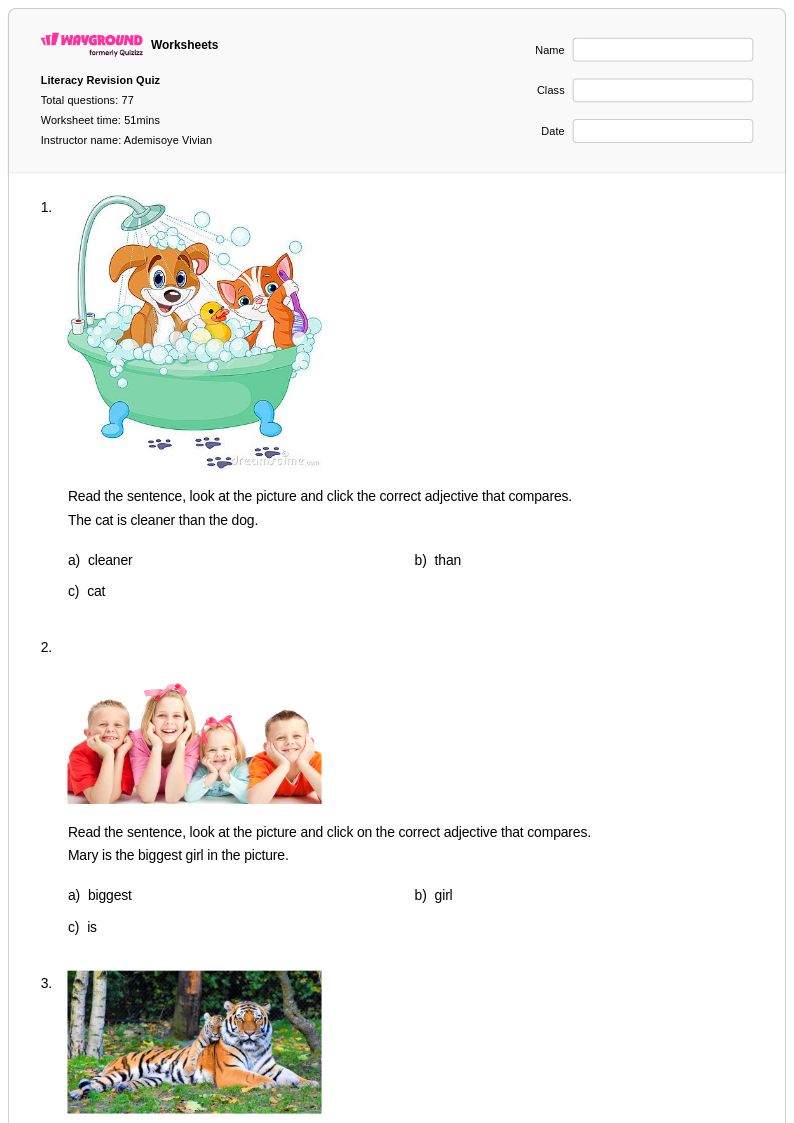
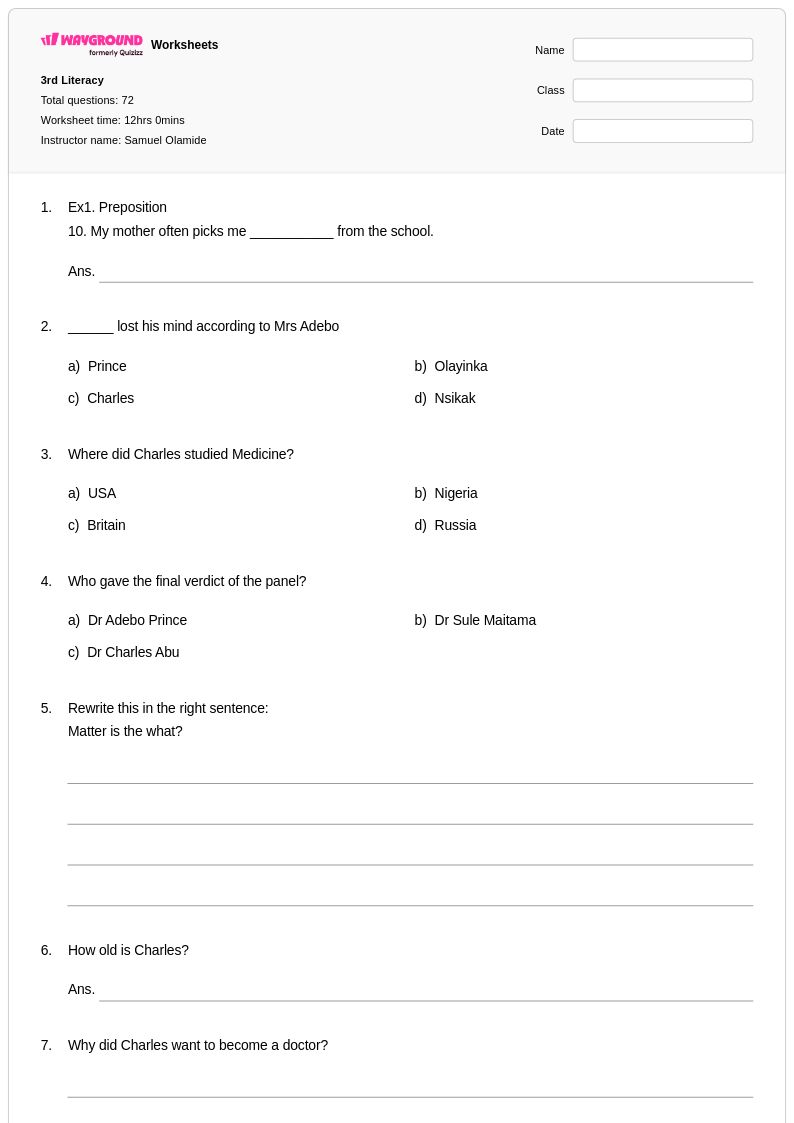
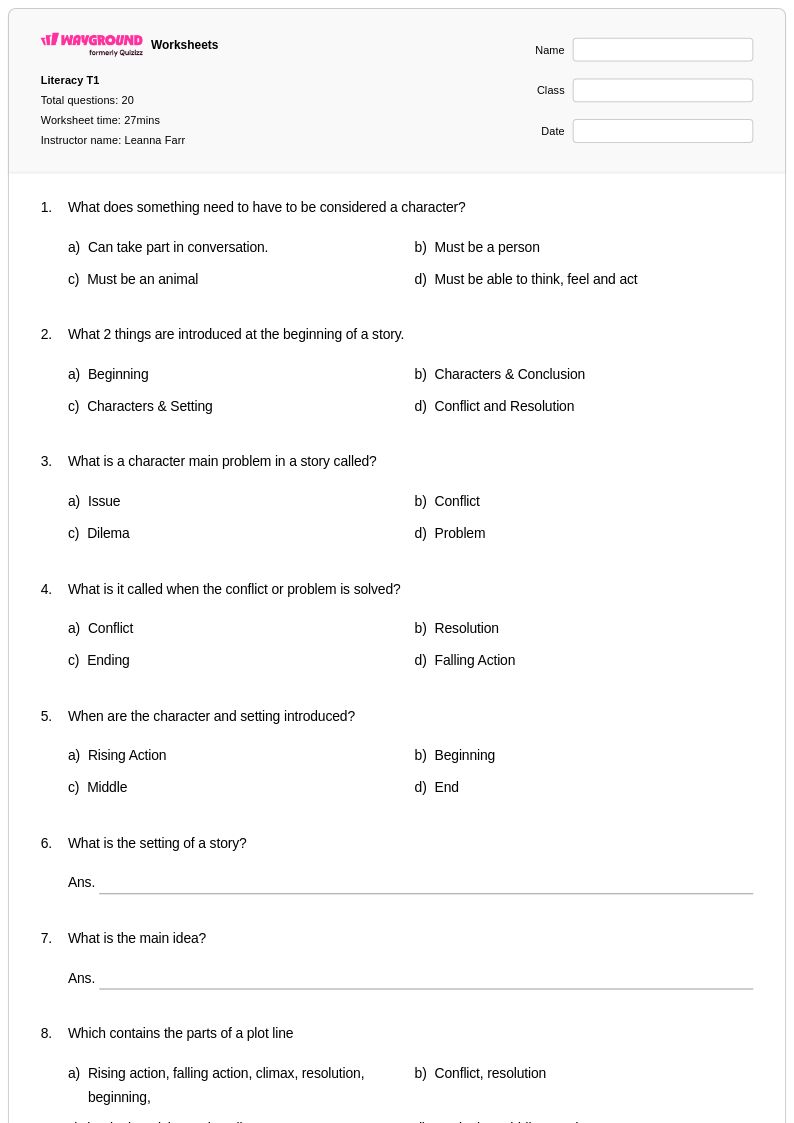
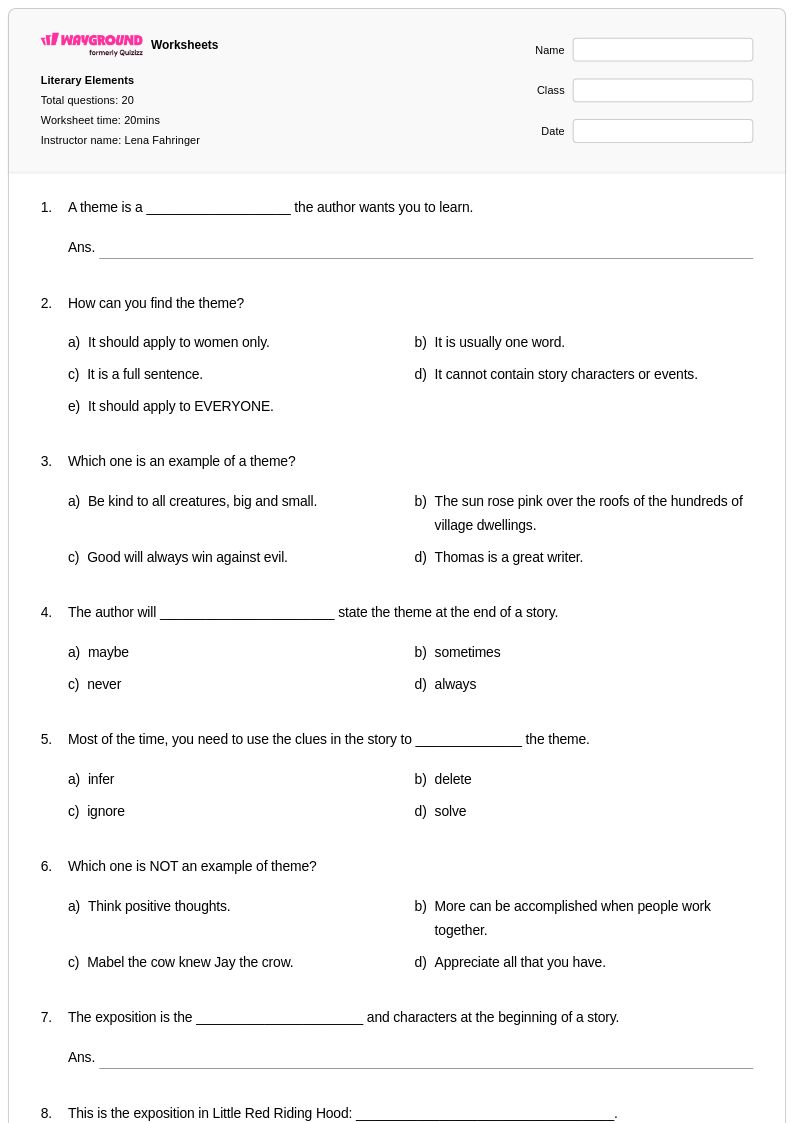
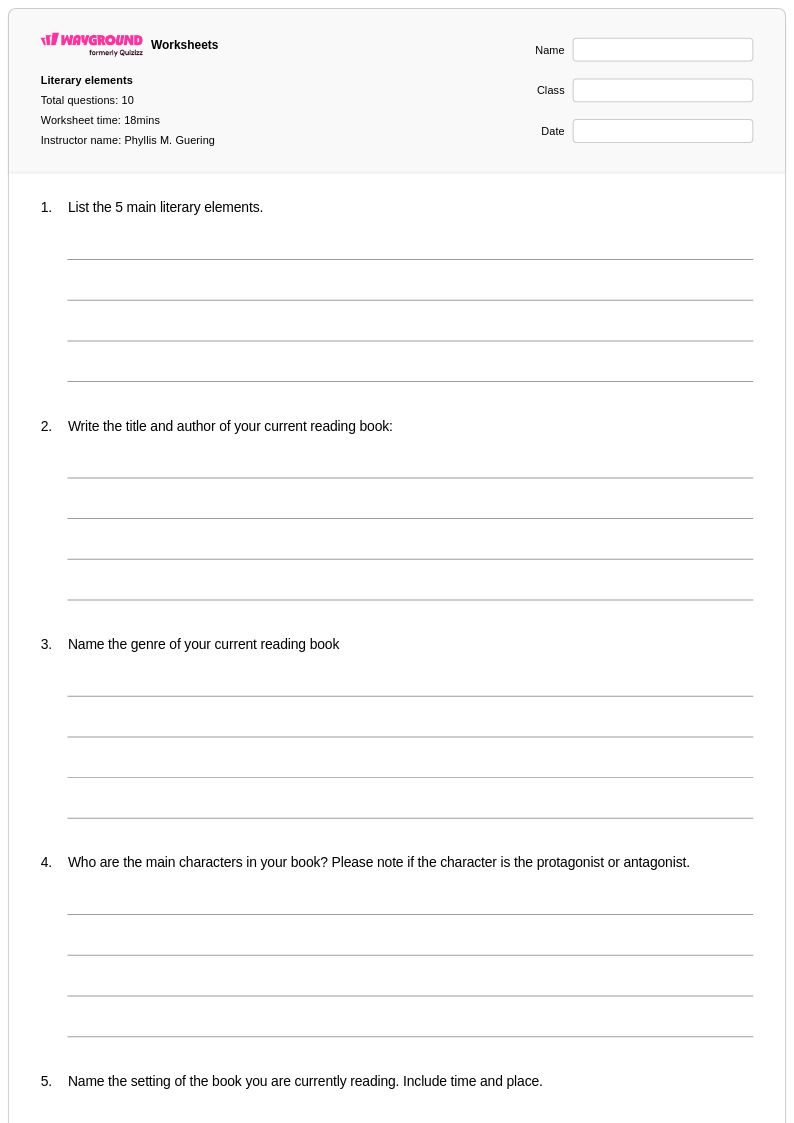
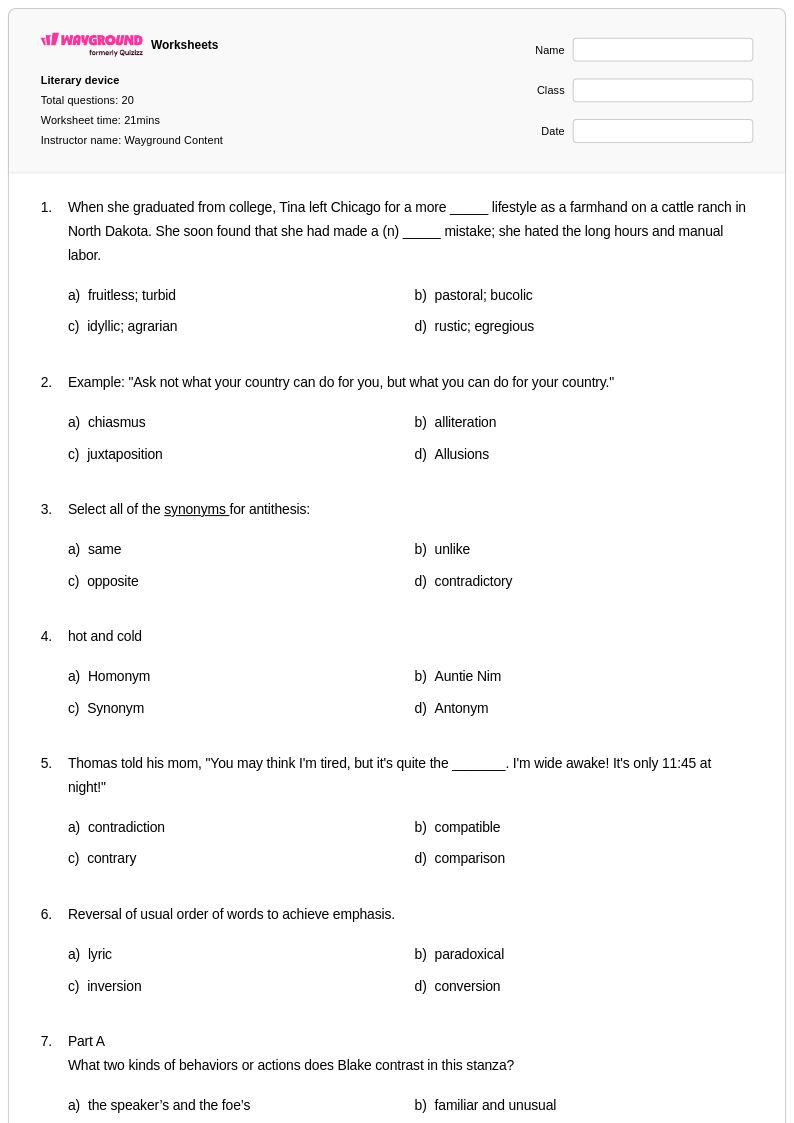
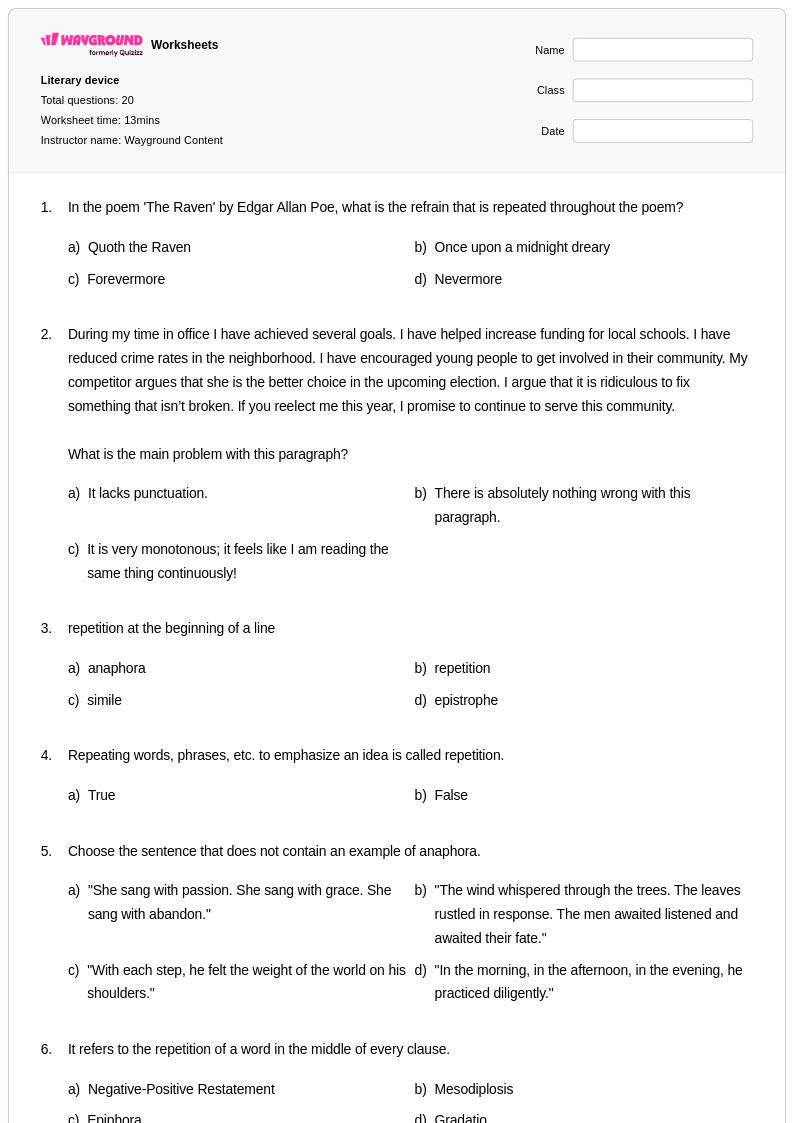
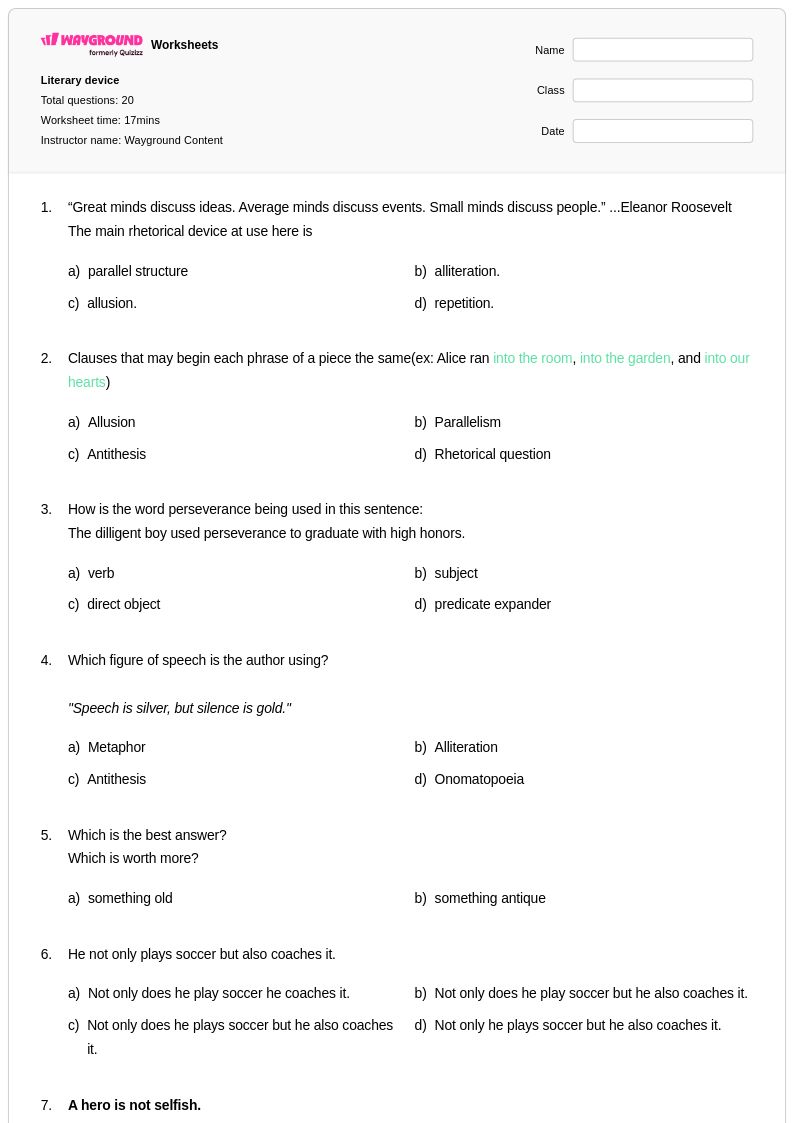
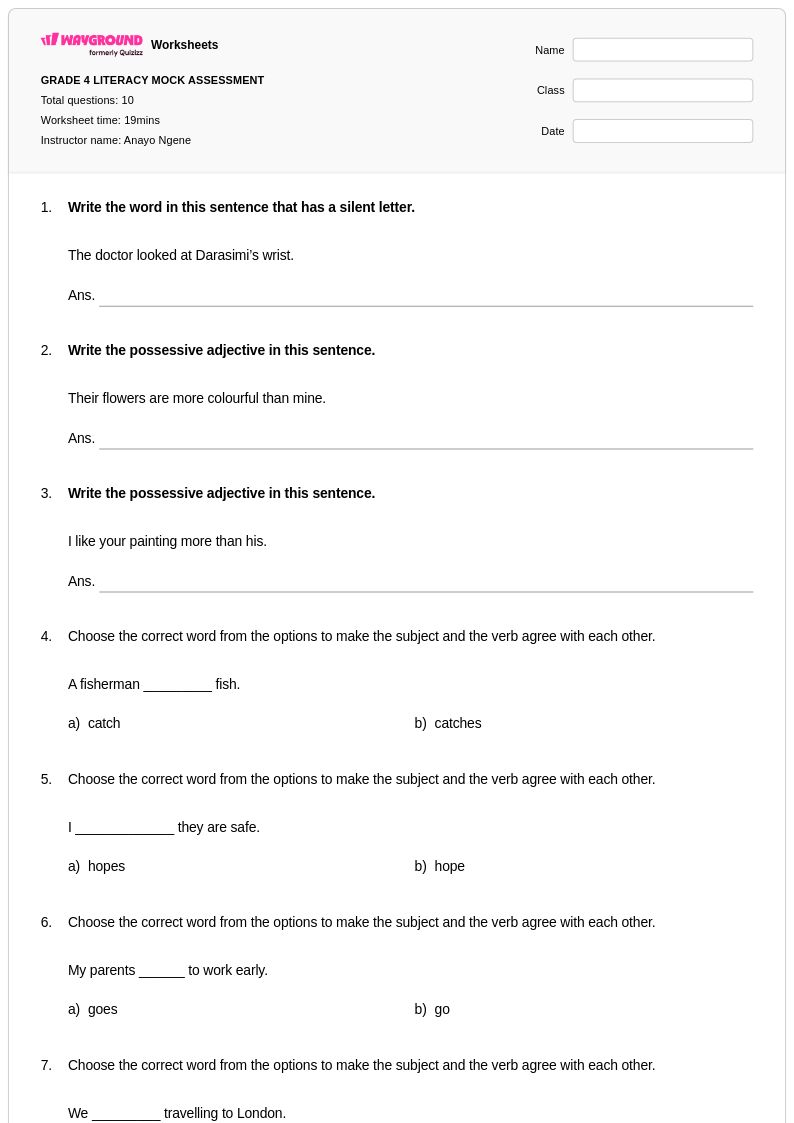
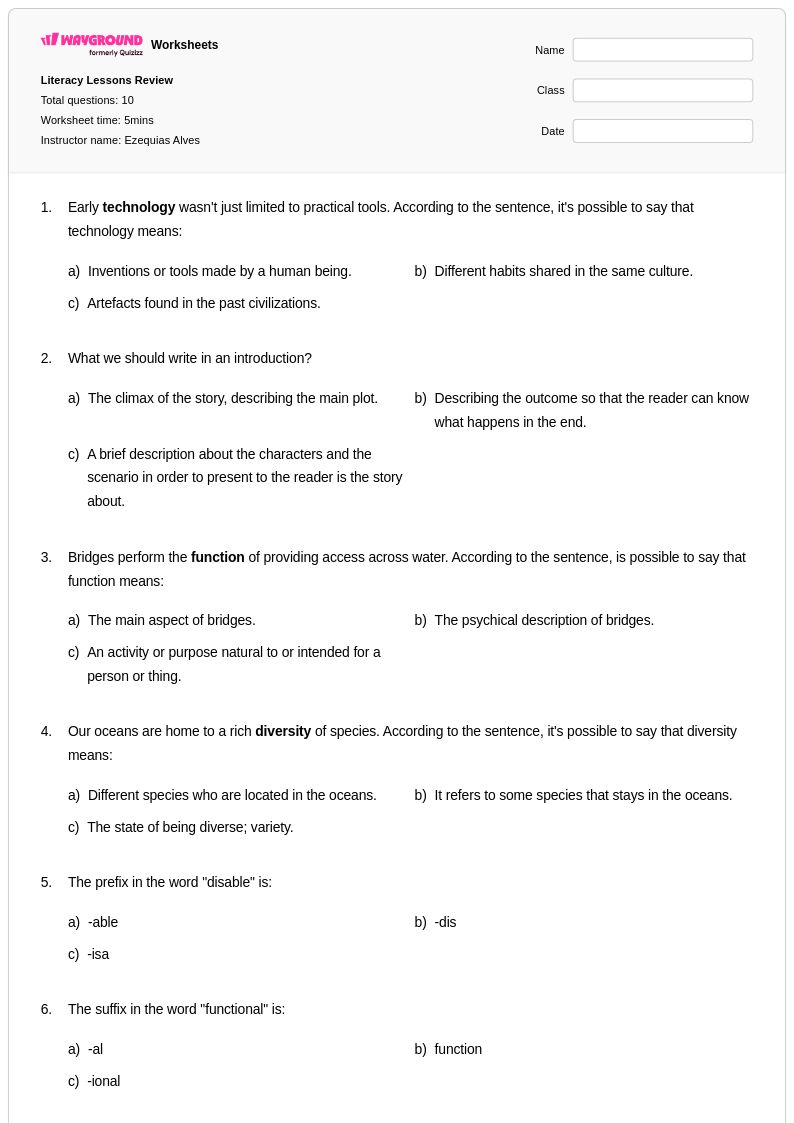
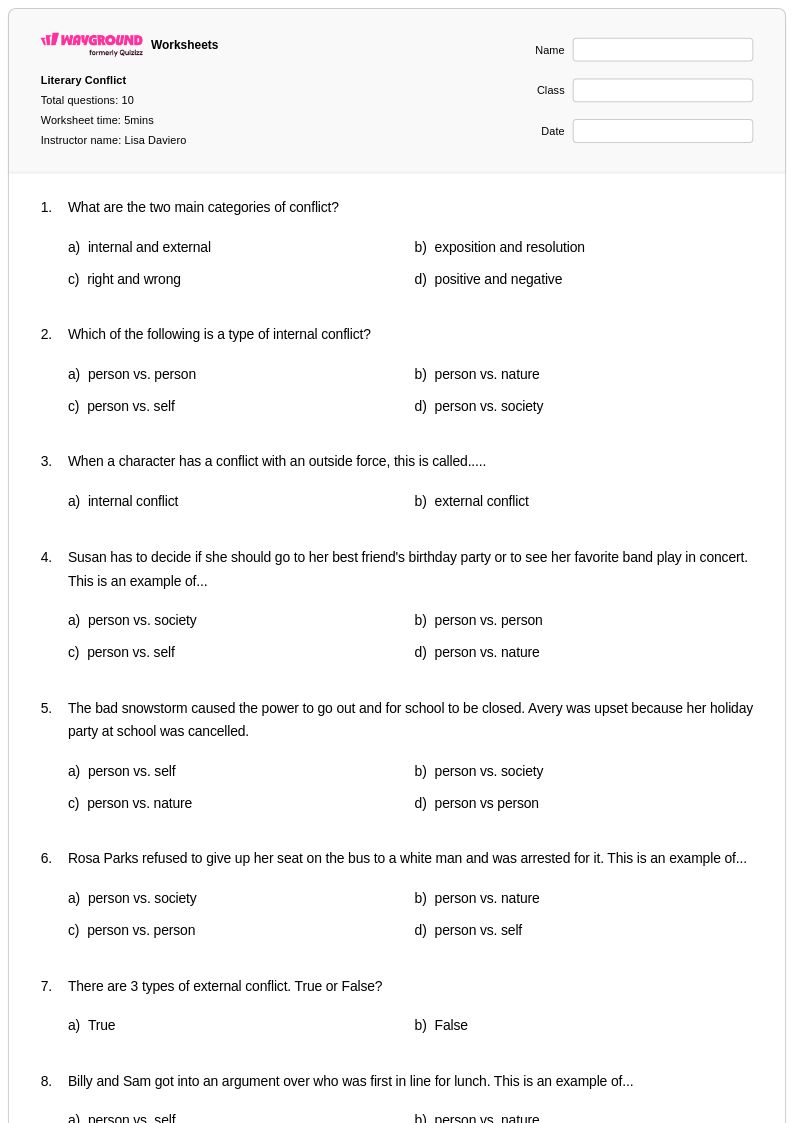
Early literacy worksheets for Class 4 students available through Wayground (formerly Quizizz) provide essential foundational support for developing readers who need continued reinforcement of core reading skills. These comprehensive printables focus on critical early literacy components including phonemic awareness, sight word recognition, basic phonics patterns, and simple reading comprehension strategies that fourth-grade students may still be mastering. Each worksheet targets specific skill areas such as identifying beginning and ending sounds, blending consonant clusters, recognizing high-frequency words, and understanding basic story elements through age-appropriate texts and engaging activities. Teachers can access complete practice problems with corresponding answer keys in convenient PDF format, making it simple to provide targeted instruction for students who require additional early literacy support alongside their grade-level curriculum.
Wayground (formerly Quizizz) empowers educators with millions of teacher-created early literacy resources specifically designed to meet diverse Class 4 classroom needs through powerful search and filtering capabilities that streamline lesson planning. The platform's robust collection allows teachers to quickly locate worksheets aligned with specific early literacy standards while utilizing differentiation tools to customize content for varying skill levels within the same classroom. These flexible resources are available in both printable and digital PDF formats, enabling seamless integration into remediation programs, small group instruction, or enrichment activities for students requiring foundational skill practice. Teachers can efficiently modify worksheets to match individual student needs, track progress through structured practice sessions, and build comprehensive early literacy intervention programs that support struggling readers in developing the essential skills necessary for continued academic growth.
FAQs
How do I teach early literacy skills to kindergarten and pre-K students?
Effective early literacy instruction builds sequentially from print awareness and letter recognition through phonological awareness and sound-letter correspondence. Teachers should use explicit, systematic instruction that introduces one concept at a time, provides repeated exposure through varied activities, and connects letters to meaningful words students already know. Incorporating multisensory practice, such as tracing letters while saying their sounds, strengthens retention for emergent readers.
What exercises help students practice letter recognition and letter reversal?
Letter recognition practice works best when students encounter letters across multiple formats, including matching uppercase to lowercase, identifying letters within words, and sorting letter shapes. For letter reversal issues, particularly b and d confusion, targeted exercises that anchor one letter at a time using visual cues or tactile tracing are more effective than simply drilling both together. Consistent, focused repetition with immediate corrective feedback helps students build accurate letter-form memory.
What are the most common mistakes students make when developing early literacy skills?
The most frequent early literacy errors include reversing visually similar letters such as b and d, skipping spaces between words, confusing letter names with letter sounds, and treating print as decorative rather than meaningful. Students also commonly struggle with directionality, reading right to left or bottom to top before print concepts are fully established. Identifying these patterns early allows teachers to provide targeted intervention before they become habitual.
How can I support struggling emergent readers who are behind in phonological awareness?
Students who lag in phonological awareness benefit from structured practice that starts at the word and syllable level before moving to individual phonemes, since segmenting whole words is easier than isolating sounds. Activities such as clapping syllables, rhyme recognition, and oral blending build the auditory foundation needed before phonics instruction can take hold. On Wayground, teachers can enable Read Aloud support so students hear questions read to them, and Reduced Answer Choices to lower cognitive load for students who need additional scaffolding.
How do I use Wayground's early literacy worksheets in my classroom?
Wayground's early literacy worksheets are available as printable PDFs for traditional classroom use and in digital formats for technology-integrated learning environments, giving teachers flexibility regardless of their setting. Teachers can also host worksheets as a live quiz on Wayground, making them suitable for whole-class instruction, small group rotations, or independent center work. The included answer keys support quick formative assessment without additional prep time.
How do I differentiate early literacy instruction for students at different skill levels?
Differentiation in early literacy requires matching task complexity to each student's current developmental stage, whether that means working on basic print concepts with some students while others practice blending CVC words. Wayground supports student-level accommodations including extended time, Read Aloud, and reduced answer choices, which can be assigned individually so that each student's experience is tailored without disrupting the rest of the class. These settings are saved and reusable across future sessions, reducing setup time for teachers.