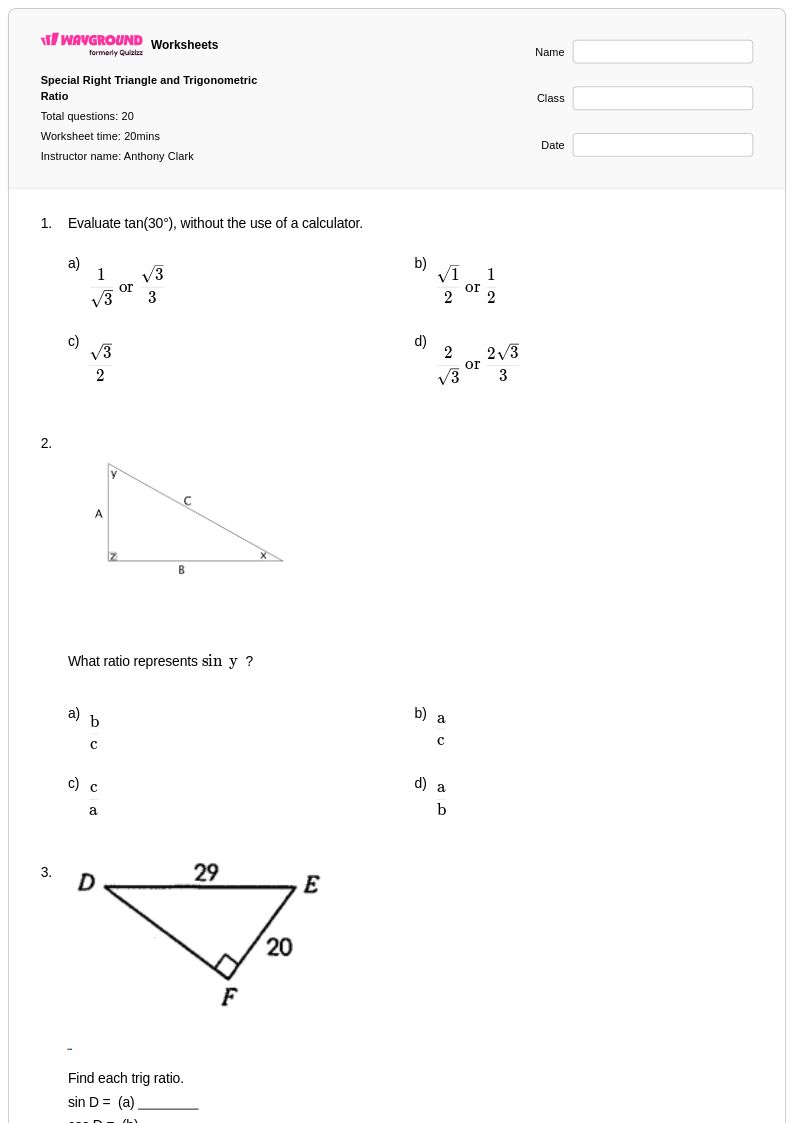
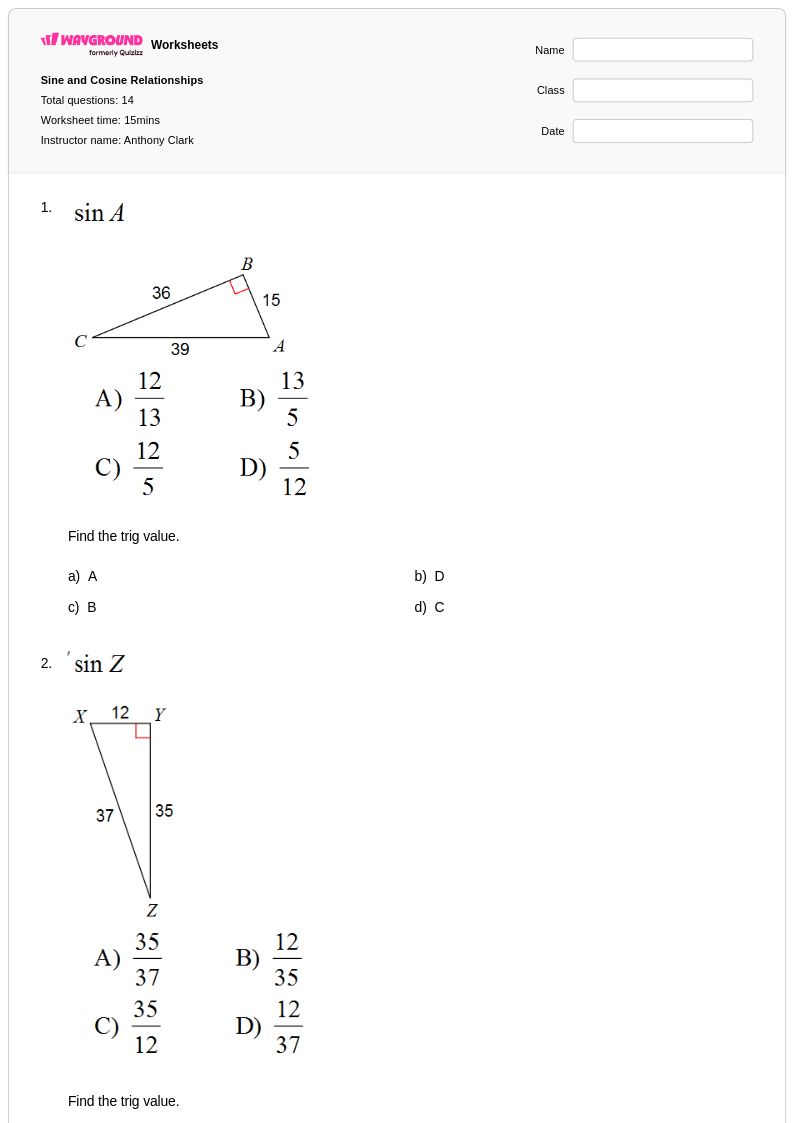
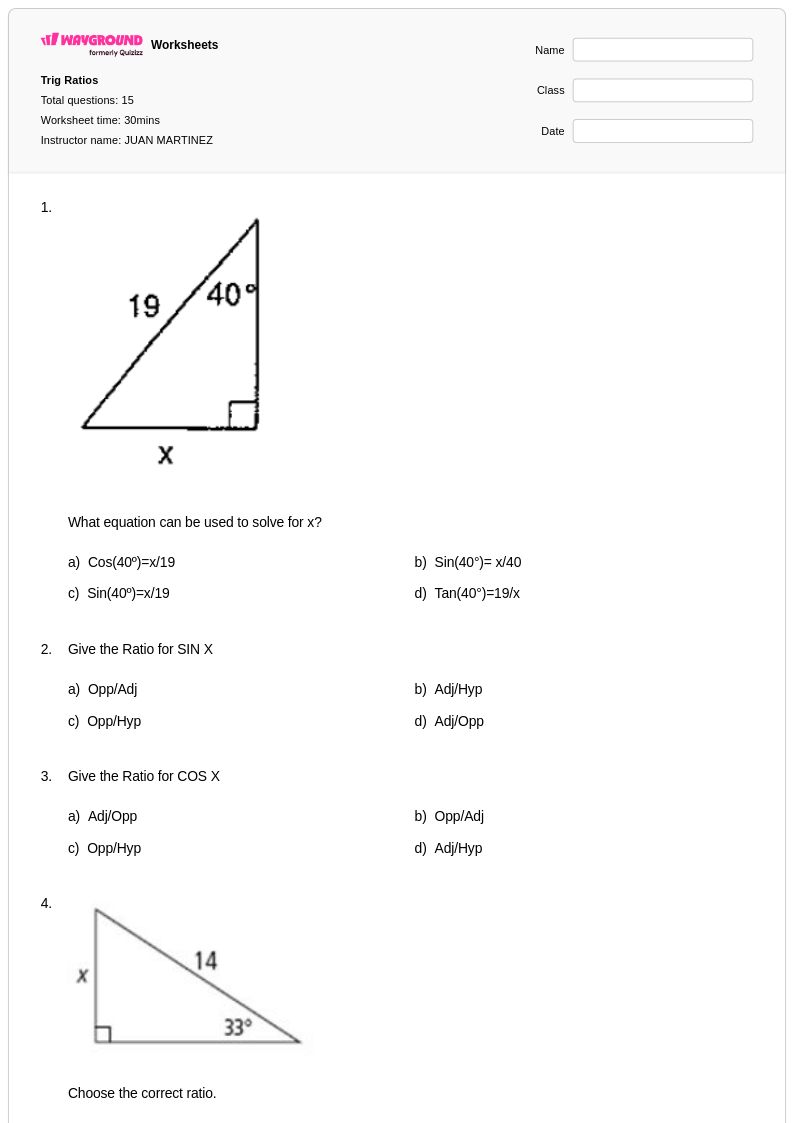
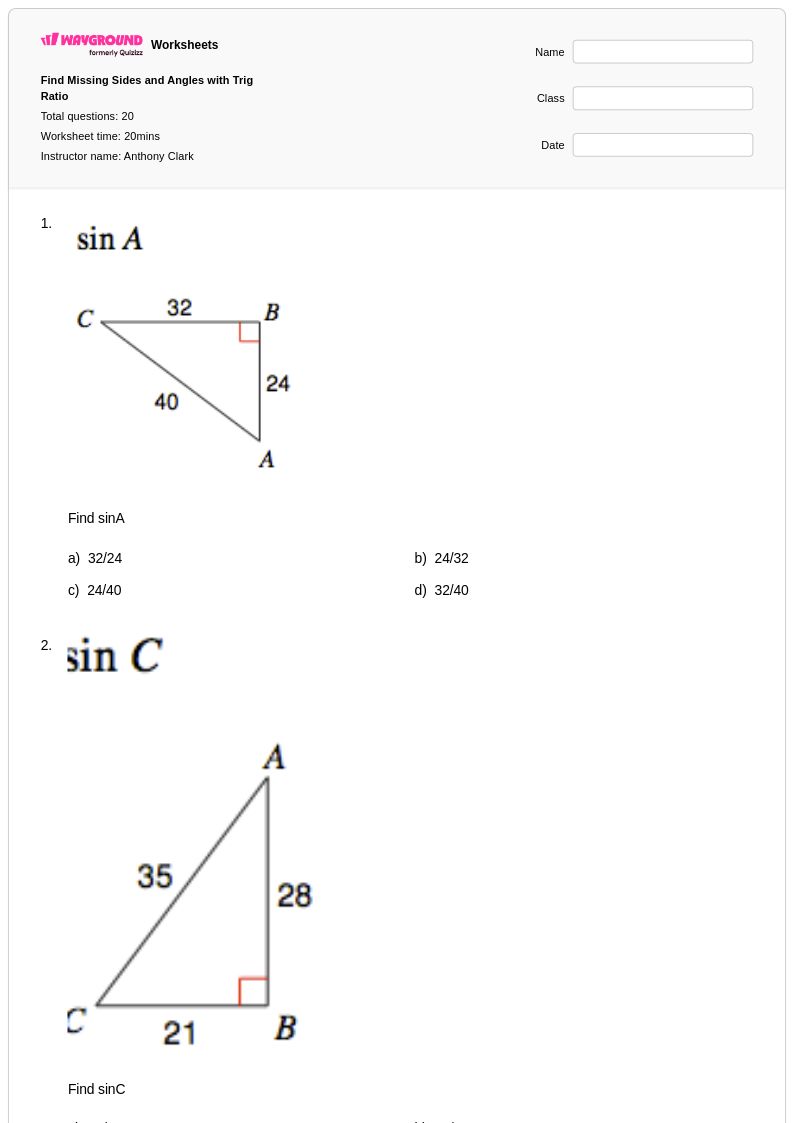
Master the sine ratio with Class 11 trigonometry worksheets from Wayground, featuring comprehensive practice problems, printable PDFs, and detailed answer keys to help students confidently solve right triangle problems.
Explore printable Sine Ratio worksheets for Class 11
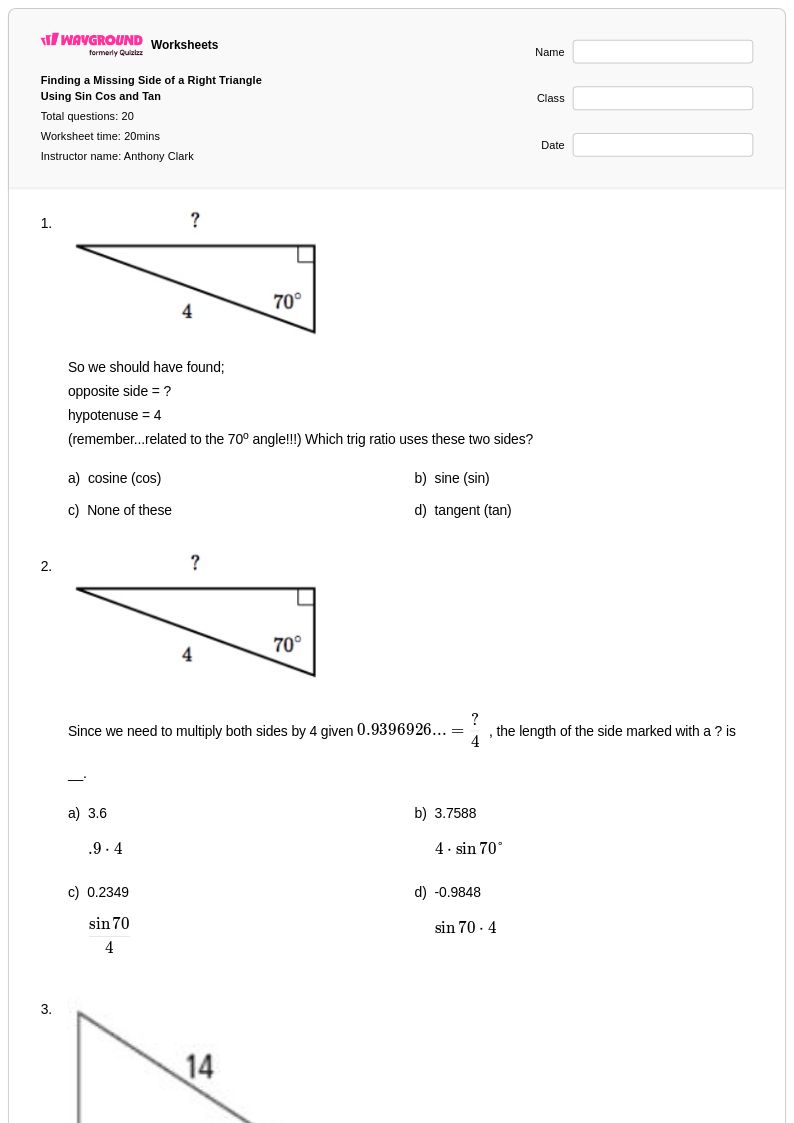
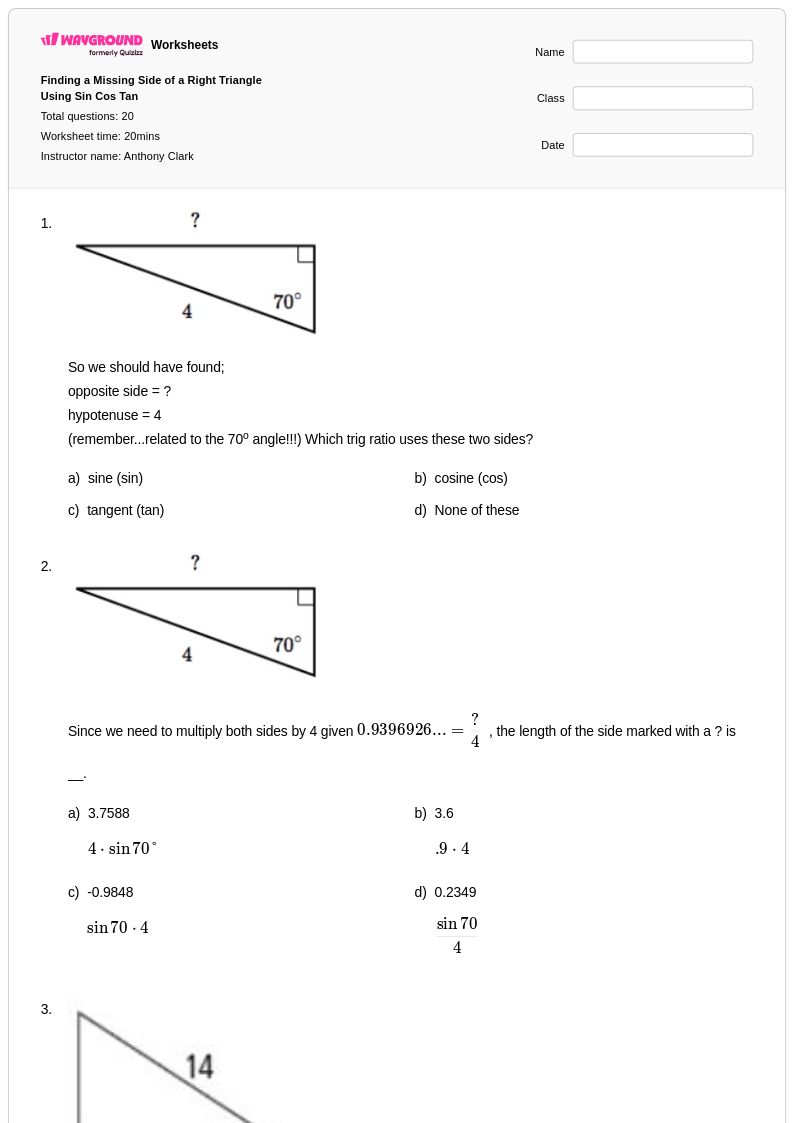
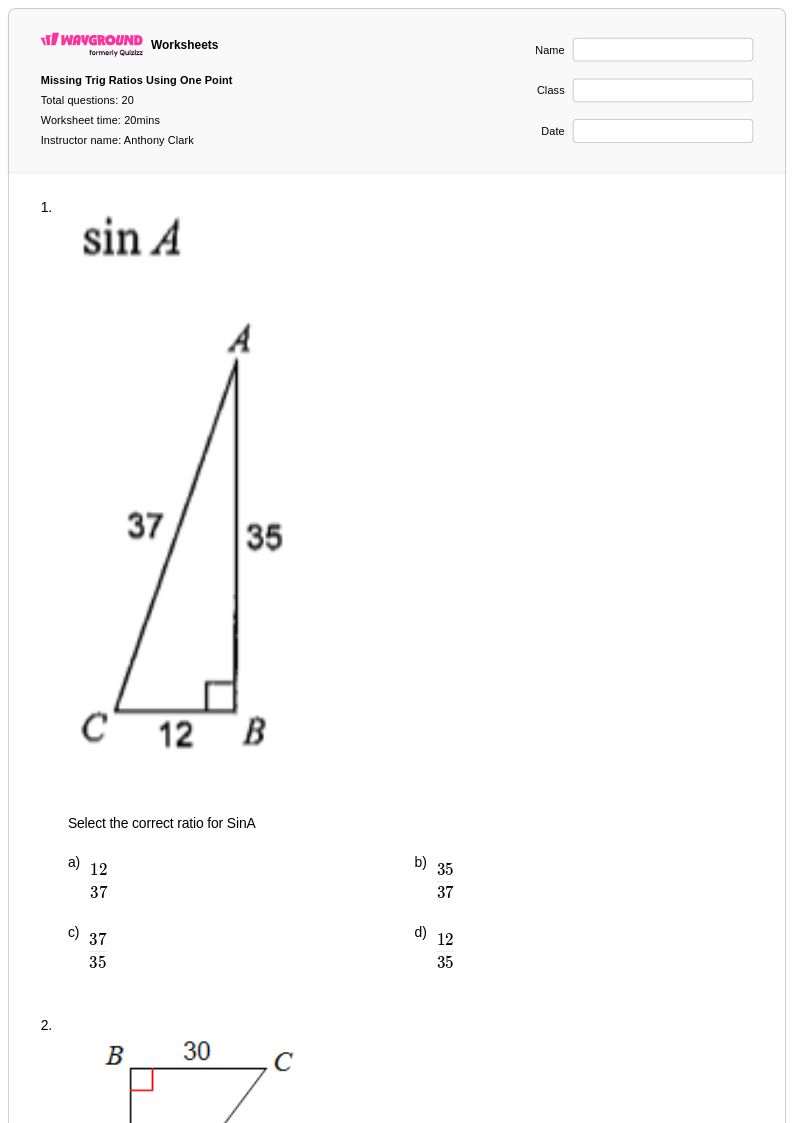
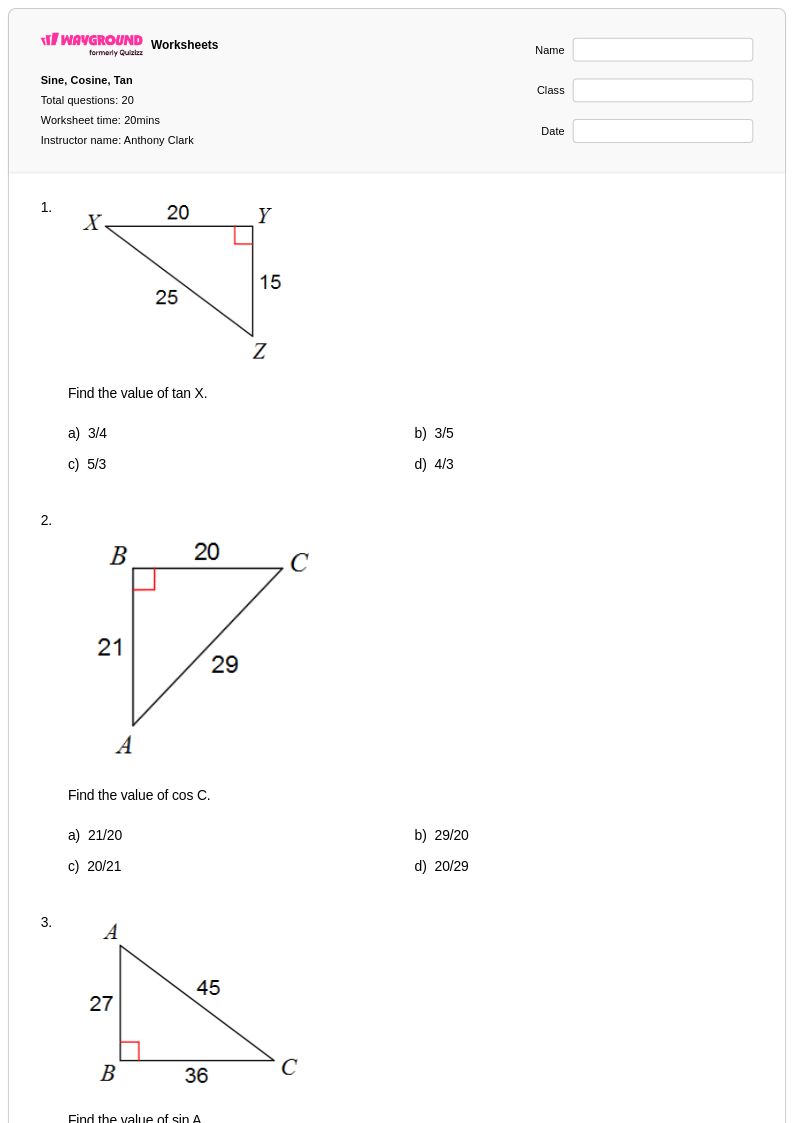
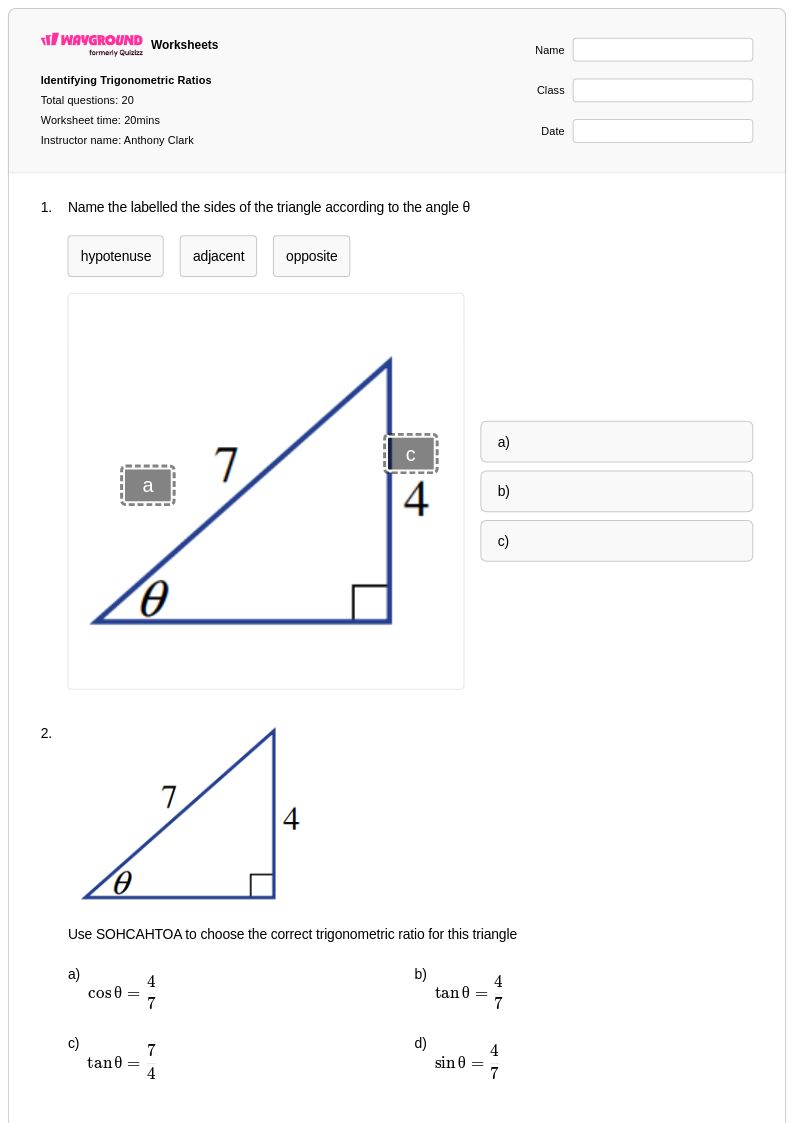
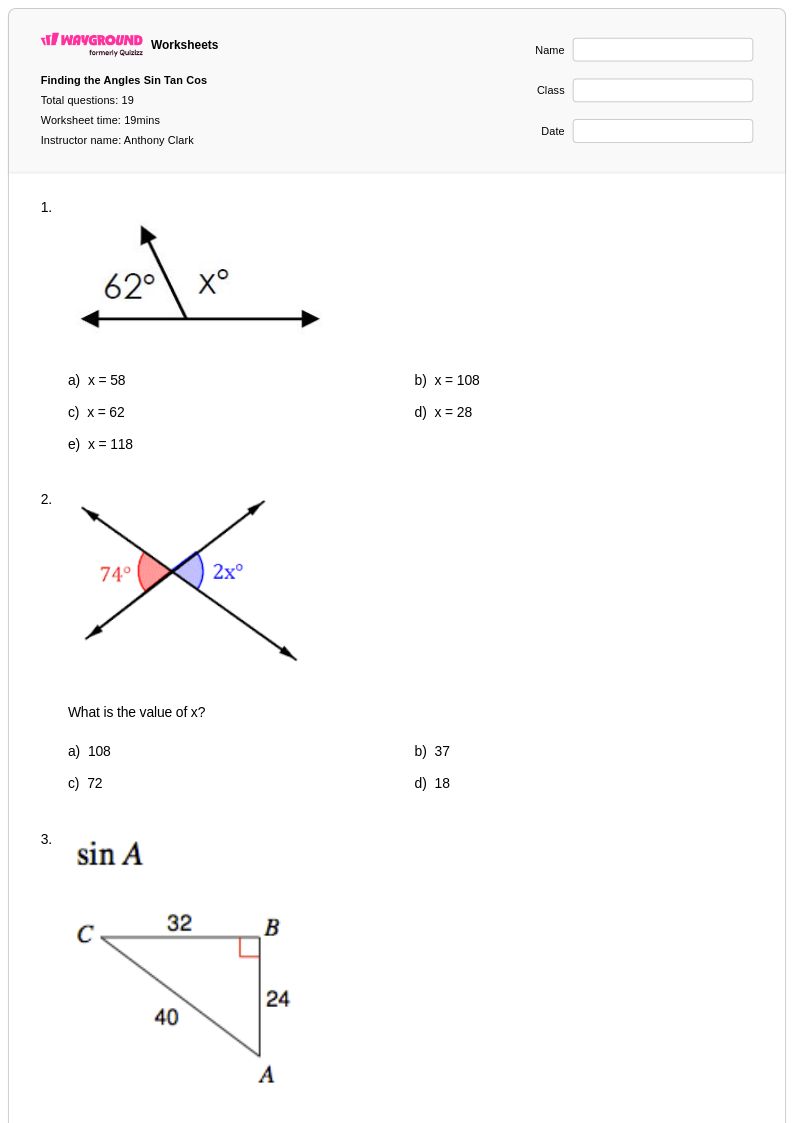
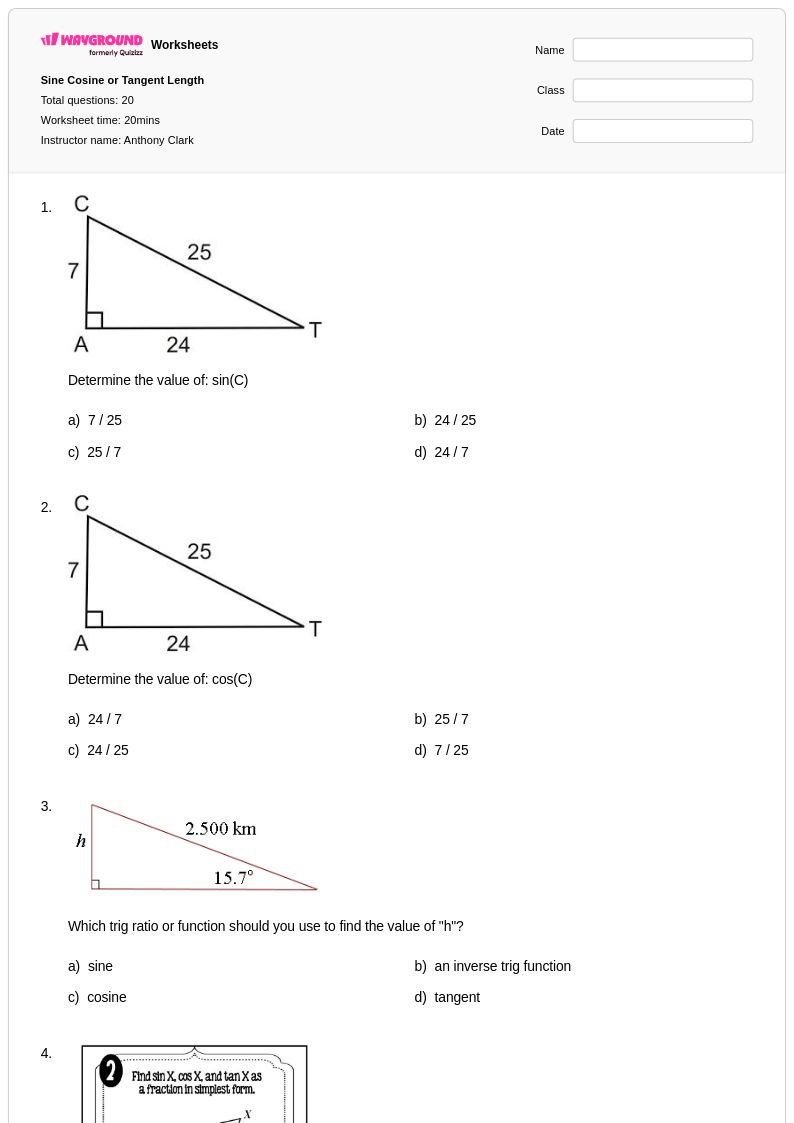
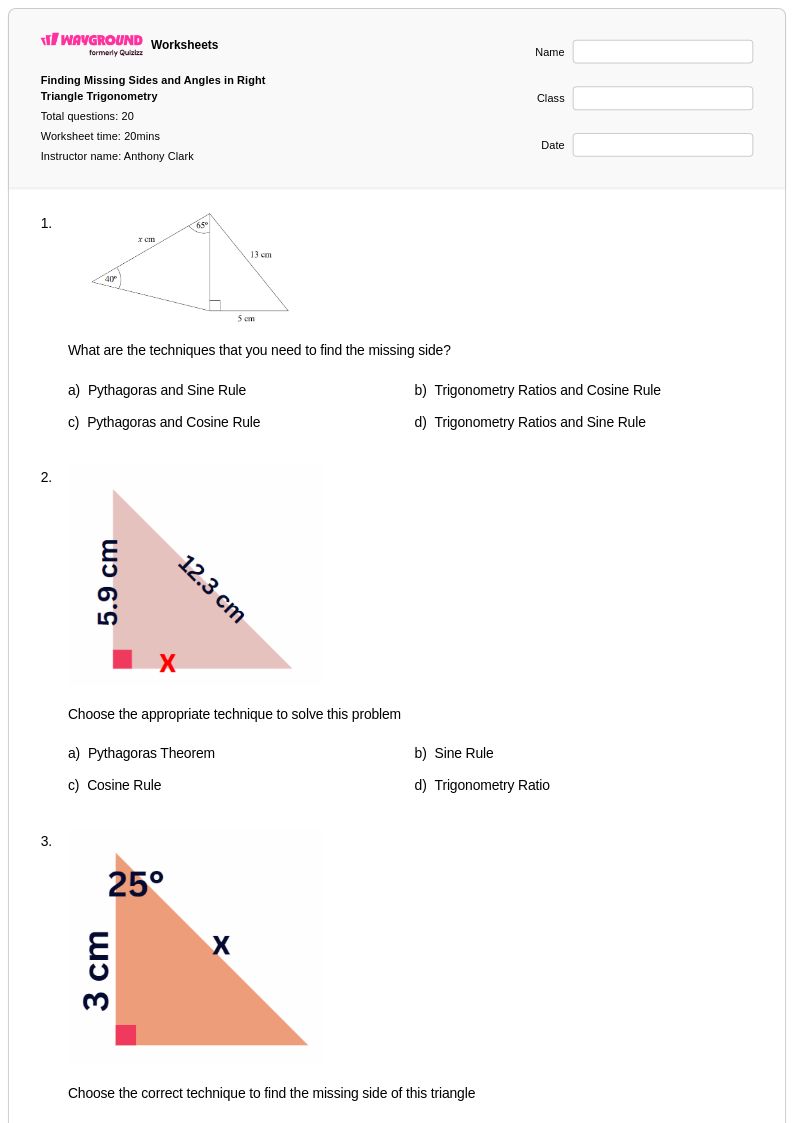
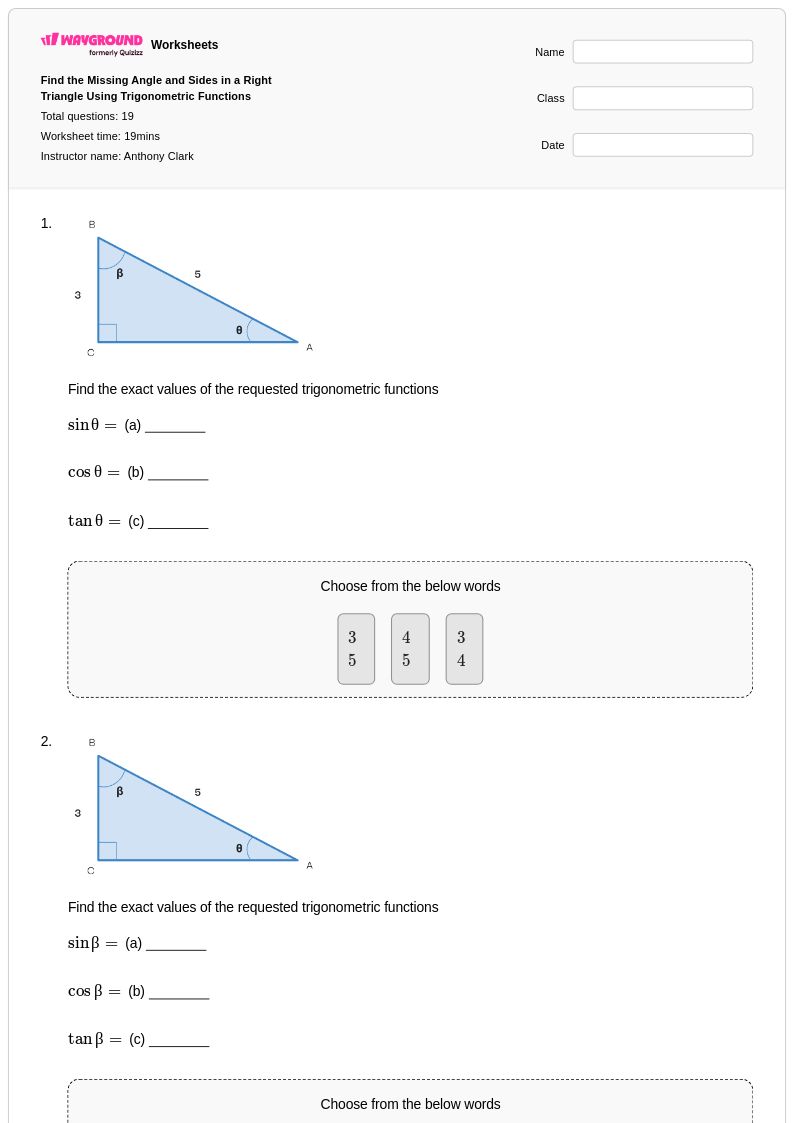
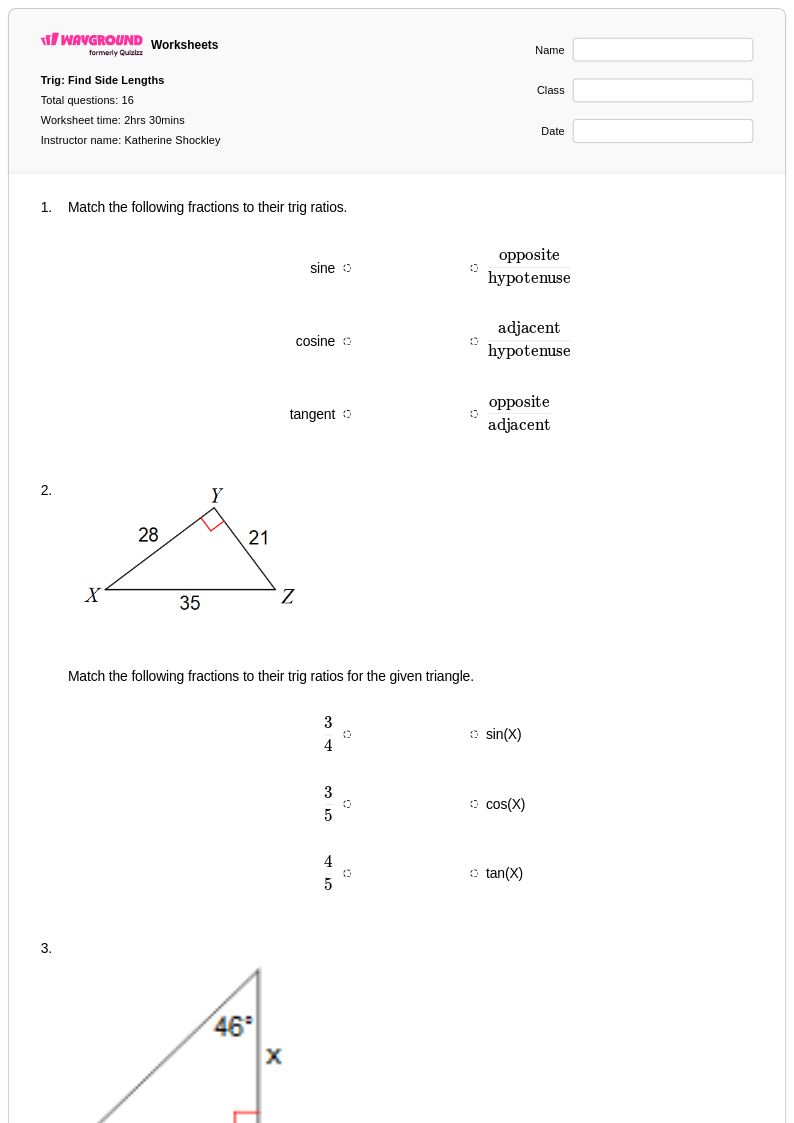
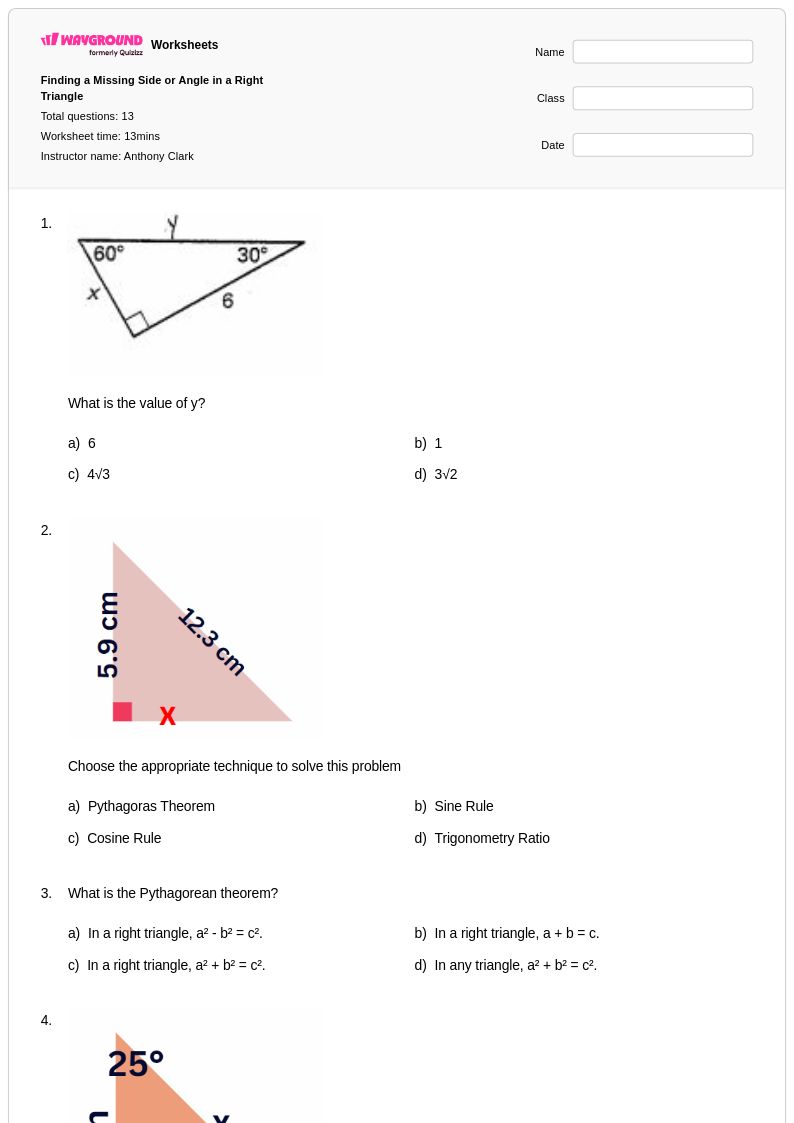
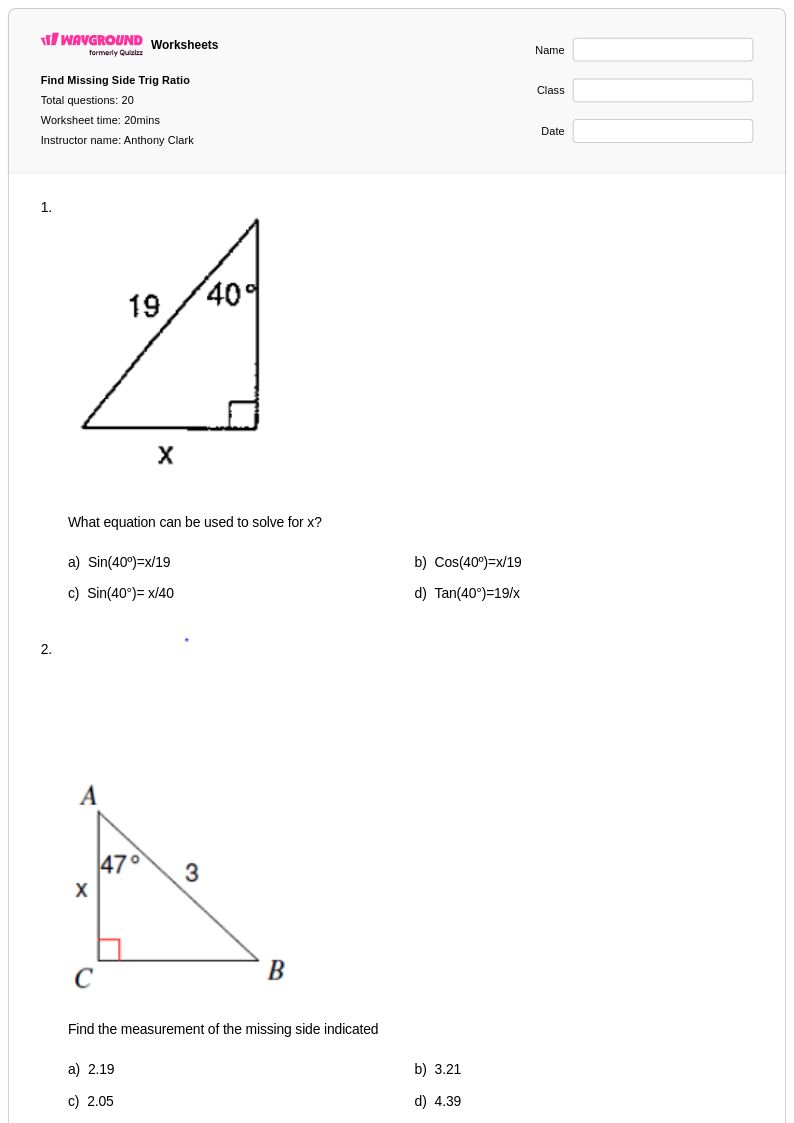
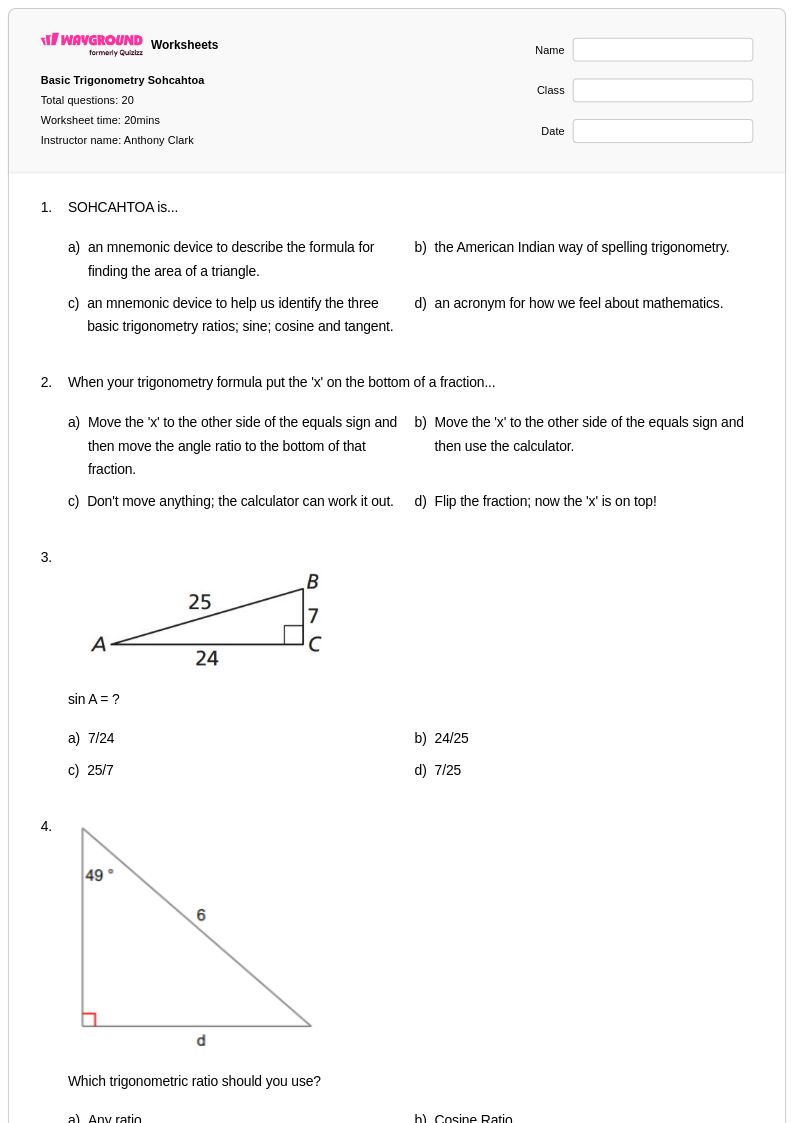
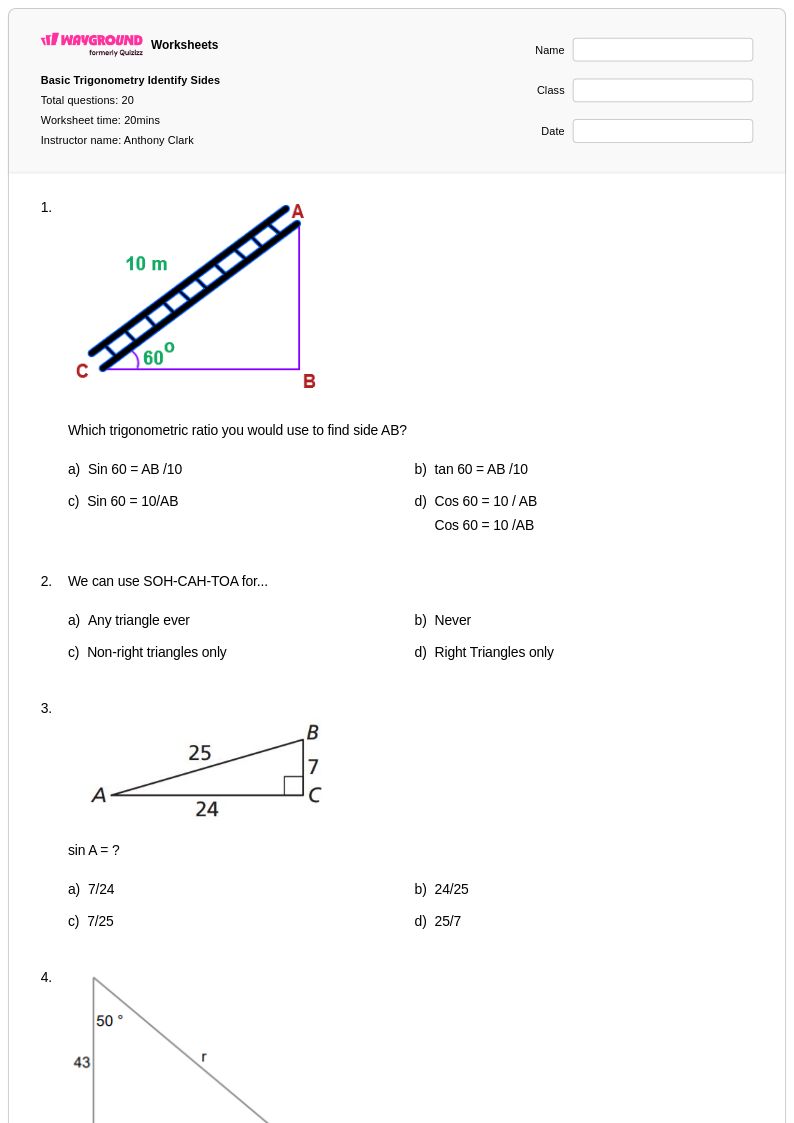
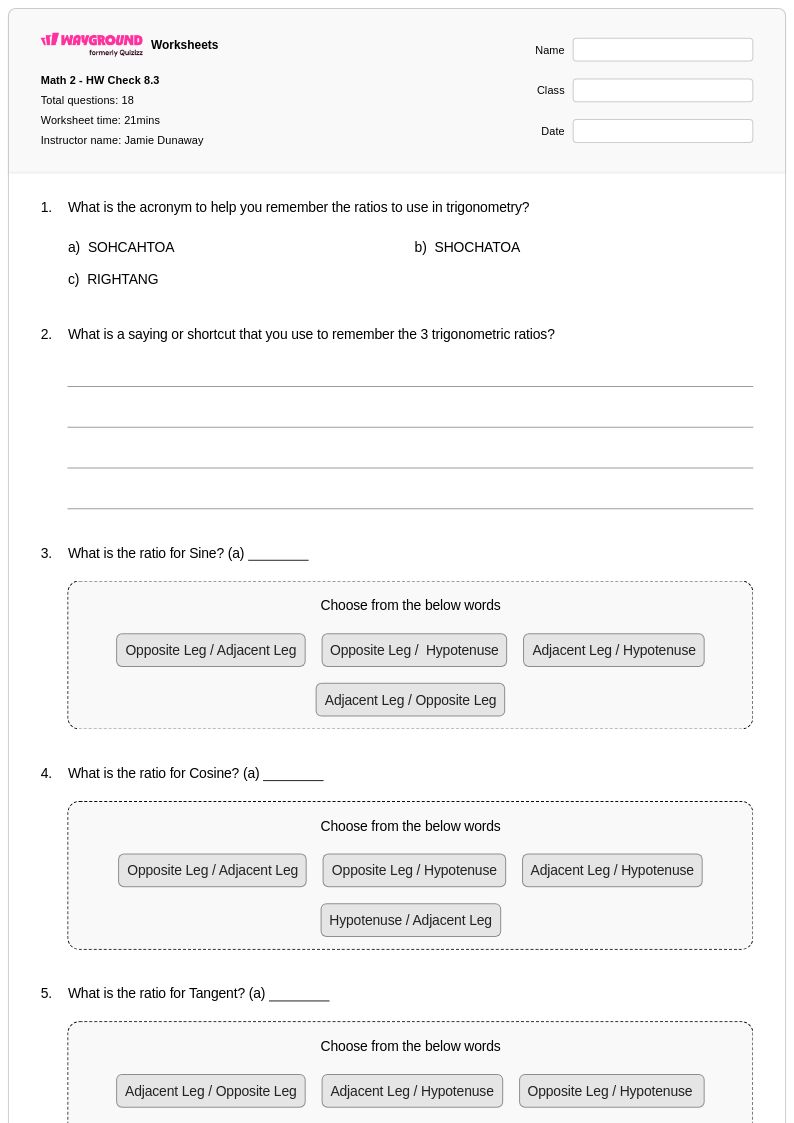
Sine ratio worksheets for Class 11 students provide comprehensive practice with one of trigonometry's most fundamental concepts, helping students master the relationship between opposite sides and hypotenuses in right triangles. These carefully designed practice problems guide students through calculating sine values, solving for unknown sides and angles, and applying the sine ratio to real-world applications such as finding heights and distances. Each worksheet collection includes detailed answer keys that allow students to check their work independently, while the free printable pdf format ensures easy classroom distribution and homework assignments that reinforce critical trigonometric reasoning skills.
Wayground, formerly Quizizz, empowers educators with access to millions of teacher-created sine ratio resources that streamline lesson planning and support diverse learning needs in Class 11 mathematics classrooms. The platform's robust search and filtering capabilities allow teachers to quickly locate worksheets aligned with specific curriculum standards, while built-in differentiation tools enable customization for students requiring additional support or advanced challenges. Whether delivered as printable pdf handouts for traditional practice or integrated into digital learning environments, these flexible worksheet collections support targeted remediation for struggling students, enrichment opportunities for advanced learners, and systematic skill practice that builds confidence with trigonometric concepts throughout the academic year.
FAQs
What new concepts related to sine are introduced in Grade 11?
In Grade 11, typically in Algebra 2 or Pre-Calculus, sine expands from a ratio in a triangle to a circular function. Students learn to define sine using the unit circle, which allows them to find sine values for angles greater than 90° and negative angles. They also begin graphing the sine function and analyzing its properties like period and amplitude.
How can I help students connect the 'triangle' sine to the 'unit circle' sine?
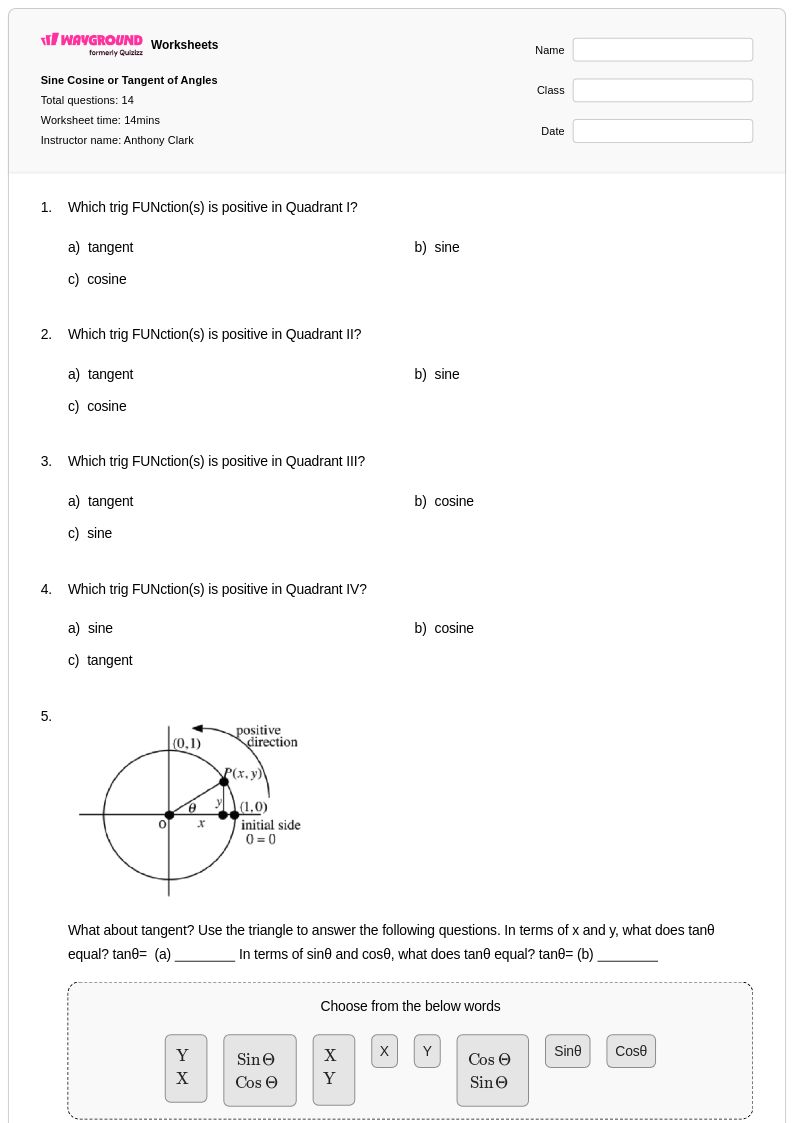
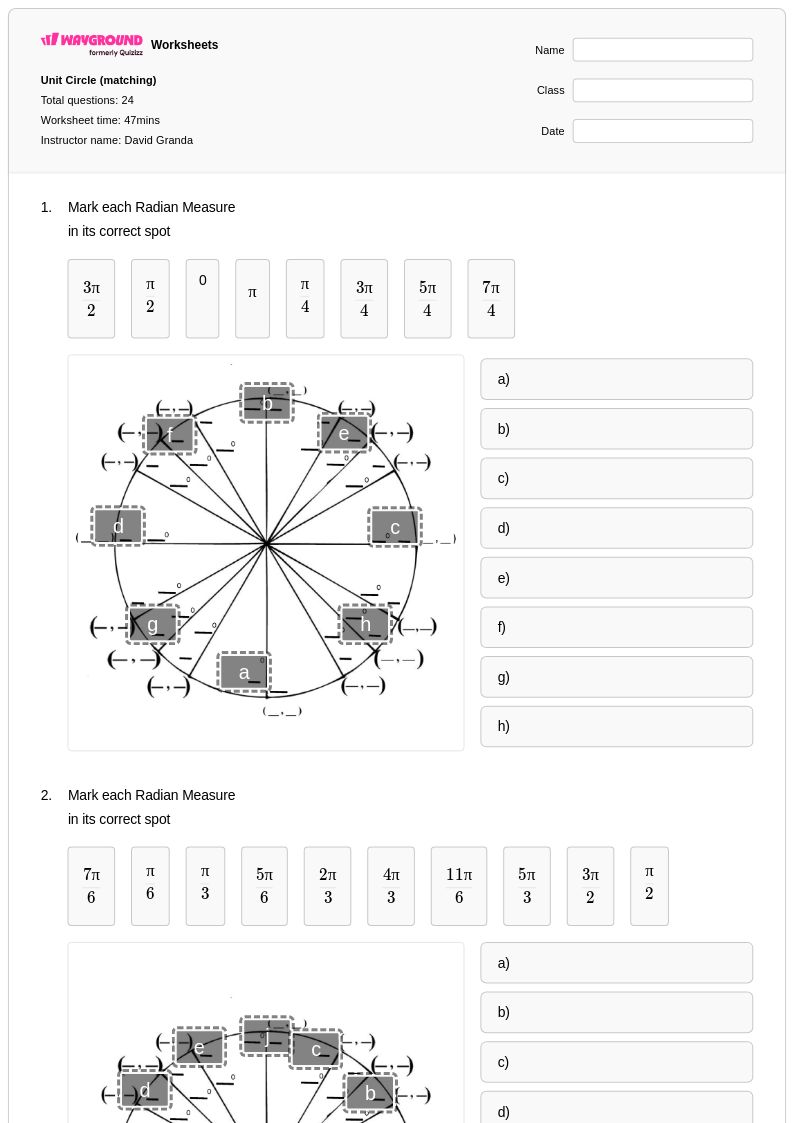
Use a visual demonstration. Show a right triangle inscribed in the first quadrant of the unit circle, with the hypotenuse as the radius (length 1). In this context, sin(θ) = opposite/hypotenuse = y/1 = y. This reveals that the sine ratio is simply the y-coordinate of the point on the unit circle, a connection that holds for any angle.
What types of problems are on a Grade 11 sine worksheet?
Practice at this level should focus on the unit circle and graphing. Include problems asking for the sine of angles like 120°, 225°, or -30° using the unit circle. Also include exercises on graphing transformations of y = sin(x), such as finding the amplitude and period of y = 3sin(2x).
What do students find most confusing about the sine function?
A common point of confusion is the difference between an angle (the input) and the sine of the angle (the output ratio). When working with the unit circle, students may mix up the angle measure, like π/6 radians, with the sine value, which is 1/2. Consistently reinforcing that sin(θ) is the y-coordinate on the unit circle helps clarify this.
How can I use this worksheet for review or assessment?
This worksheet is available in two formats: a printable PDF and a digital version on Wayground. You can use the digital format as a self-grading quiz for a quick formative assessment. The printable PDF is ideal for a more traditional quiz or as part of a cumulative review packet. Both formats include a complete answer key.
How does the sine function fit into the Algebra 2 curriculum?
In alignment with Common Core standards for functions (HSF.TF.A.2 and HSF.TF.B.5), the Grade 11 curriculum extends the sine ratio into a full periodic function. Students use the unit circle to define sine for all real numbers and then model periodic phenomena using the sine graph. This builds directly on the right-triangle foundation from Geometry and is essential for calculus.