Area of Irregular Polygons is a Grade 6 mathematics worksheet with 18 multiple-choice questions on finding the area of composite and irregular figures. Students calculate areas for figures that include triangles, trapezoids, kites, shaded regions, and other composite shapes, selecting answers expressed in square units such as square meters, inches, centimeters, or generic units. The problems require students to apply appropriate area formulas and combine or compare component regions.
This worksheet gives students focused practice recognizing how an irregular figure can be analyzed through familiar geometric shapes. It also helps them attend to units and distinguish area values from distractors involving incorrect operations or missing square units. Use it for independent practice, review, or a quick assessment of Grade 6 area skills. It is a free printable worksheet with a complete answer key.
Worksheet settings
Font size
S
M
L
XL
Worksheets
Area of Irregular Polygons
Total questions: 18
Name
Class
Date
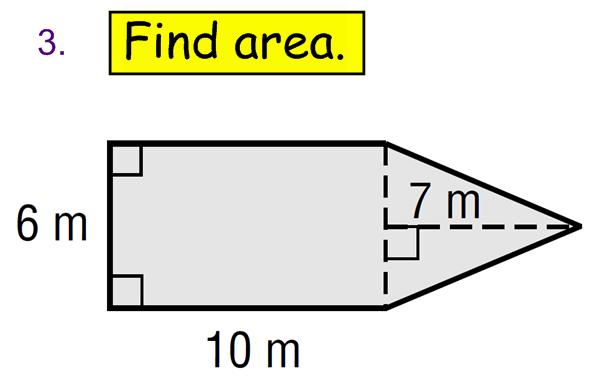
1.
Solve.
a)
102 m2
b)
39 m2
c)
51.2 m
d)
81 m2
2.
What is the area of this composite shape?
a)
6444 m2
b)
6144 m2
c)
4164 m2
d)
4614 m2
3.
What is the area of this composite shape?
a)
868
b)
864
c)
964
d)
1064
4.
What is the area of this composite shape?
a)
14 in2
b)
68 in2
c)
36 in2
d)
24 in2
5.
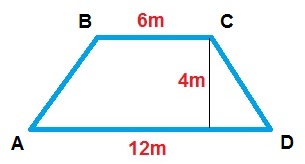
Find the area of the trapezoid.
a)
36 m
b)
36 m2
c)
72 m
d)
72 m2
6.
Find the area of this triangle.
a)
12 in2
b)
22 in2
c)
18 in2
d)
24 in2
7.
a)
6 in
b)
9 in
c)
6 in2
d)
9 in2
8.
a)
64 m
b)
72 m
c)
72 m2
d)
64 m2
9.
a)
6.5 cm2
b)
9.75 cm
c)
13 cm2
d)
8 cm2
10.
a)
91 ft2
b)
77 ft2
c)
78 ft2
d)
105 ft2
11.
What is the area of the composite figure?
a)
40 sq cm
b)
65 sq cm
c)
52.5 sq cm
d)
25 sq cm
12.
What is the area of the composite figure?
a)
80 cm2
b)
16 cm2
c)
96 cm2
d)
32 cm2
13.
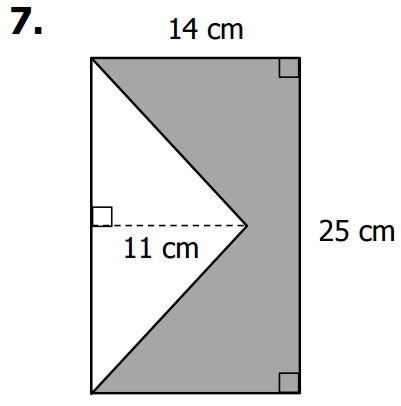
Find the area of the shaded region:
a)
350 cm2
b)
137.5 cm2
c)
212.5 cm2
d)
484.2 cm2
14.
Find the area of the figure shown.
a)
34 units2
b)
960 units2
c)
220 units2
d)
480 units2
15.
Solve for the area of the figure.
a)
124.8 m2
b)
62.4 m2
c)
31.2 m2
d)
120.4 m2
16.
a)
132 ft2
b)
146 ft2
c)
144 ft2
d)
87 ft2
17.
What is the area of this kite?
a)
336in 2
b)
552in 2
c)
336 in
d)
456in 2
18.
What is the area of the shaded region?
a)
14 m2
b)
120 m2
c)
106 m2
d)
134 m2
Answer Key
Area of Irregular Polygons
Total questions: 18
1.
d)
81 m2
2.
b)
6144 m2
3.
b)
864
4.
c)
36 in2
5.
b)
36 m2
6.
a)
12 in2
7.
c)
6 in2
8.
d)
64 m2
9.
a)
6.5 cm2
10.
c)
78 ft2
11.
c)
52.5 sq cm
12.
a)
80 cm2
13.
c)
212.5 cm2
14.
c)
220 units2
15.
b)
62.4 m2
16.
a) 132 ft2
17.
a) 336in 2
18.
c) 106 m2
140 %
Browse by subjects
Browse by grades
Browse by format
FAQs
What does the Area of Irregular Polygons worksheet cover?
This Grade 6 worksheet uses 18 multiple-choice problems to practice finding the area of composite and irregular figures. Students work with triangles, trapezoids, kites, shaded regions, and other combined shapes, applying area formulas and identifying answers in square units.
How can I use this worksheet to teach area of irregular polygons?
Introduce the worksheet by modeling how to break a composite figure into familiar shapes, calculate each part, and combine or subtract the resulting areas. Before students begin the multiple-choice questions, ask them to name the component shapes and explain why the final answer must use square units; then have them justify which formula fits a triangle, trapezoid, kite, or shaded region.
What mistakes should I watch for when students complete this worksheet?
Watch for students selecting a perimeter or side-length value instead of an area, omitting square units, or using the wrong formula for the triangle, trapezoid, or kite items. In the composite and shaded-region questions, students may also add a region that should be subtracted, fail to account for a component shape, or make an arithmetic error that matches one of the multiple-choice distractors.
How do I assign and grade this Area of Irregular Polygons worksheet?
On Wayground, assign it as a digital quiz or download the printable PDF for paper-based work; the worksheet includes a complete answer key for checking the 18 multiple-choice responses. Printable submissions can also be graded by scanning student work with the Wayground for Teachers app.
How can I differentiate this irregular-polygons worksheet for my students?
Use the worksheet’s Advanced Settings to adjust font spacing or font size so the area diagrams, labels, and multiple-choice options are easier to read. You can also enable a dyslexia-friendly font or translate the worksheet into another language when those options support students working through the composite-figure and shaded-region problems.
Where can I find more worksheets like this on Wayground?
Wayground offers a comprehensive collection of free printable worksheets and practice problems across all subjects, with downloadable PDFs and answer keys to help students master essential skills and concepts. Browse more resources at https://wayground.com/en-us/worksheets.

 Worksheets