Fiction vs. Non-Fiction is a Grade 4 English reading worksheet that helps students classify texts as fiction or non-fiction. Across 15 multiple-choice questions, students identify whether examples are imagined, such as a monkey who does karate or a witch who flies on a broom, or based on real people, places, events, and factual information, such as polar bear habitats, volcanoes, and plants. The worksheet also asks students to connect research needs with the correct type of book and recognize the Harry Potter series as fiction.
This free printable worksheet gives students repeated practice using content clues to distinguish factual texts from imaginative stories. It is useful for introducing or reviewing a foundational reading skill before students select sources, begin research, or discuss different kinds of books. Teachers receive a complete answer key for efficient checking and feedback. The multiple-choice format makes the worksheet suitable for independent practice, guided instruction, or a quick formative assessment of Grade 4 reading comprehension and text classification.
Worksheet settings
Font size
S
M
L
XL
Worksheets
Fiction vs. Non-Fiction
Total questions: 15
Name
Class
Date
1.
Contains real people and real pictures
a)
Fiction
b)
Non-Fiction
2.
This is a story about a monkey who does karate.
a)
Fiction
b)
Non-Fiction
3.
This is a story about what polar bears eat and where they live.
a)
Fiction
b)
Non-Fiction
4.
This is a story about how volcanoes erupt.
a)
Fiction
b)
Non-Fiction
5.
This is a story about a witch who flies on a broom.
a)
Fiction
b)
Non-Fiction
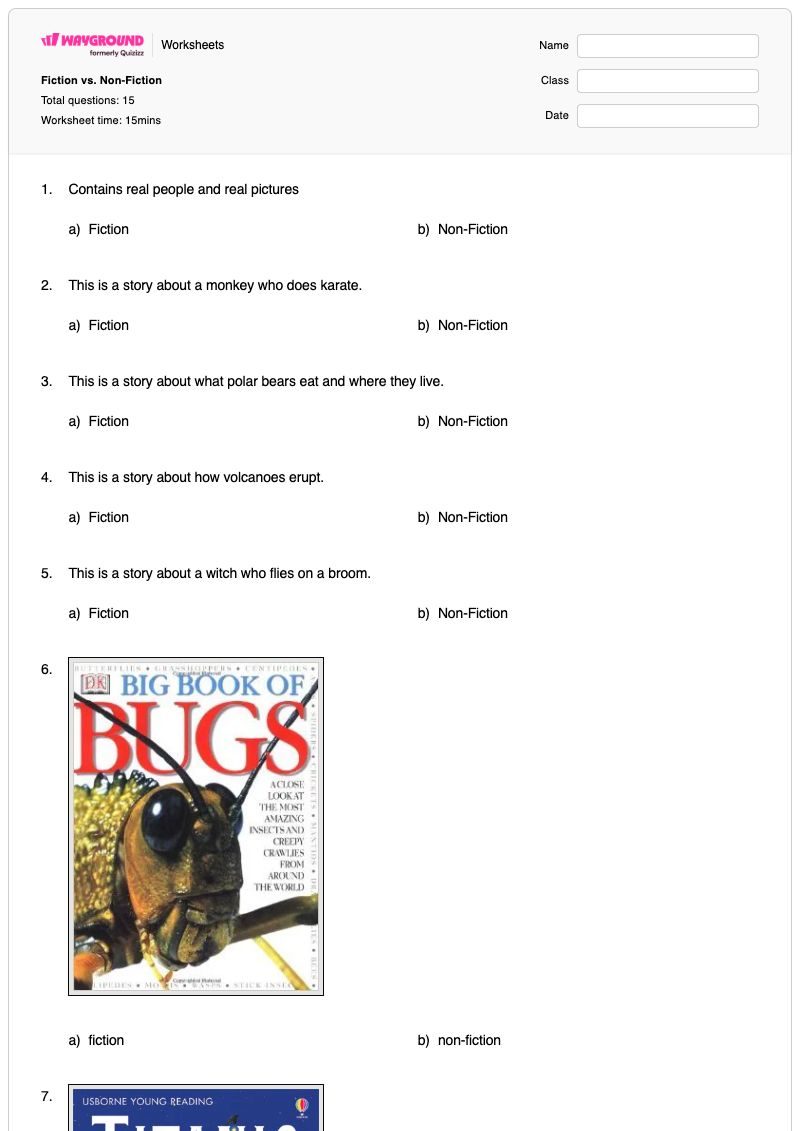
6.
a)
fiction
b)
non-fiction
7.
a)
fiction
b)
non-fiction
8.
a)
fiction
b)
non-fiction
9.
a)
fiction
b)
non-fiction
10.
a)
fiction
b)
non-fiction
11.
a)
fiction
b)
non-fiction
12.
a)
fiction
b)
non-fiction
13.
Your class has to find factual information about plants so you need a __________ book.
a)
Fiction
b)
Non-Fiction
14.
What kind of books are the Harry Potter series?
a)
Fiction
b)
Non-Fiction
15.
These books have real facts about people, places, things, and events?
a)
Fiction
b)
Non-Fiction
Answer Key
Fiction vs. Non-Fiction
Total questions: 15
1.
b)
Non-Fiction
2.
a) Fiction
3.
b) Non-Fiction
4.
b) Non-Fiction
5.
a) Fiction
6.
b) non-fiction
7.
b) non-fiction
8.
a) fiction
9.
a) fiction
10.
b) non-fiction
11.
a) fiction
12.
a) fiction
13.
b) Non-Fiction
14.
a) Fiction
15.
b) Non-Fiction
140 %
Browse by subjects
Browse by grades
Browse by format
FAQs
What does this fiction versus non-fiction worksheet cover?
This Grade 4 worksheet uses 15 multiple-choice questions to help students classify examples as fiction or non-fiction. Students use clues such as whether a text describes imagined characters and events, like a karate-performing monkey or flying witch, or provides factual information about topics such as volcanoes, polar bears, and plants. The practice builds accurate text classification and helps students choose the right type of book for research.
How can I use this worksheet to teach fiction and non-fiction?
First, model how to look for evidence in an example: imagined characters or events suggest fiction, while real people, real pictures, and factual information suggest non-fiction. Then have students explain the clue they used for each multiple-choice answer, especially when an item is introduced as a “story” but describes facts, such as where polar bears live or how volcanoes erupt. Finish by discussing why a class researching plants would select a non-fiction book.
What mistakes should I watch for on this fiction and non-fiction worksheet?
Students may focus on the topic instead of how the information is presented, or assume that any item called a “story” must be fiction. They may also confuse factual books about people, places, or events with imaginative stories, or overlook the research purpose in the plants question. Ask students to identify whether the details could be factual or are invented before they select an answer.
How do I assign and grade the Fiction vs. Non-Fiction worksheet?
The 15-question worksheet is available as a printable PDF and as a digital quiz on Wayground, and it includes a complete answer key. You can grade printable submissions by scanning student work with the Wayground for Teachers app, while the digital quiz supports online assignment and grading.
How can I differentiate this fiction versus non-fiction worksheet for my students?
For the 15 multiple-choice items, use the worksheet’s Advanced Settings to adjust font spacing or choose a larger font size so the fiction and non-fiction choices are easier to read. You can also enable a dyslexia-friendly font or translate the worksheet into another language when those options support access to the text-classification practice.
Where can I find more worksheets like this on Wayground?
Wayground offers a broad collection of free printable worksheets and practice problems across subjects, with downloadable PDFs and answer keys to help students master essential skills and concepts. Browse more resources at https://wayground.com/en-us/worksheets.


 Worksheets


