
NEW
Font size
S
M
L
XL
 Worksheets
Apartheid
Total questions: 21
Worksheet time: 12mins
Name
Class
Date
1.
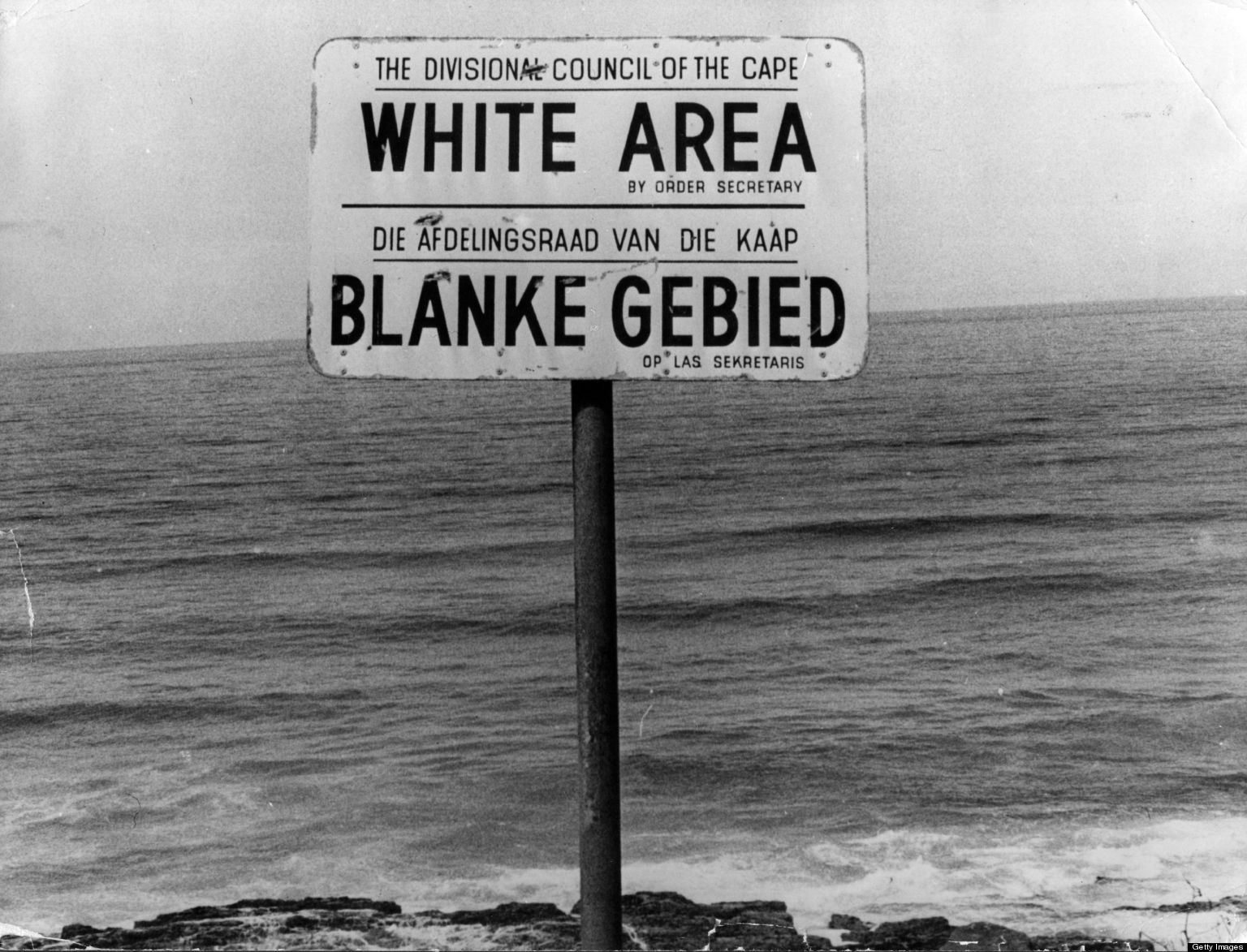
In what African country would you likely have seen this sign during 1975? (Click text to reveal the picture)
a)
Nambia
b)
Egypt
c)
United States
d)
South Africa
2.
Which of the following was not one of the four race based groups under the system of Apartheid?
a)
Coloreds
b)
White
c)
Indians
d)
Europeans
3.
Apartheid is an Afrikaans word meaning?
a)
A state of being apart
b)
Separate but equal
c)
Equality for all
d)
Racism
4.

What was the purpose of the African National Congress (ANC)?
a)
To draw more Europeans to the country to oppress black people
b)
To promote segregation between the races
c)
To unite South Africans to fight for equality for black South Africans
d)
To force Europeans out of their homelands
5.

Why did the National Party pass apartheid laws in 1948?
a)
To gain independence from the British
b)
To imprison Nelson Mandela
c)
To boost the sale of gold and diamonds
d)
To maintain white control of the country
6.

Which of the following was NOT an effect of apartheid laws?
a)
separate homelands
b)
black South Africans and white South Africans worked together
c)
black South Africans being forced to carry pass books
d)
use of separate services and buildings
7.

What was apartheid?
a)
equality for all
b)
western-style democracy
c)
constitutional monarcy
d)
segregation of races
8.

What was the name of Nelson Mandela's political party?
a)
Zulu Nation
b)
African National Congress
c)
African Union
d)
Kenyan National Unity Party
9.

What was the role of F.W. deKlerk in ending apartheid?
a)
he added new and harsher apartheid laws
b)
he began to repeal apartheid laws
c)
he worked to spread apartheid to neighboring countries
d)
he lifted segregation laws in the cities
10.

What percentage of South Africans were black when the country achieved indepenence?
a)
25%
b)
40%
c)
50%
d)
70%
11.

What was the significance of Nelson Mandela's election to office in South Africa?
a)
he became the first black president
b)
he released political prisoners
c)
he united the Zulu and Ashanti people to win the election
d)
he won the election with the support of the British
12.

What was Nelson Mandela's attitude towards the people who supported apartheid laws in South Africa?
a)
he believed they should be punished for their actions
b)
he wanted to unite all races in South Africa
c)
he wanted to turn over those leaders to the nsUnited Natio
d)
he forced those leaders out of the country
13.
What are the dates of Apartheid ?
a)
At the end of the XIXs and during the XXs
b)
From 1948 to 1994
c)
From 1847 to 1988
14.
What was Nelson Mandela's way of thinking ?
a)
He was for Apartheid.
b)
He believed that Blacks and Whites were able to live together.
c)
He was against Apartheid.
d)
He wanted to expeled Whites from Africa.
15.
Were blacks allowed to marry Whites ?
a)
Yes
b)
No
16.
When did Nelson Mandela pass away ?
a)
In 2013
b)
In 2011
c)
I didn't know about it
d)
In 2010
17.
What did Deklerk and Nelson Mandela share together?
a)
Mandela's release
b)
Nobel Peace Prize
c)
Mandela being elected as President
d)
Mandela's new marriage
18.

What was Nelson Mandela's attitude towards the people who supported apartheid laws in South Africa?
a)
he believed they should be punished for their actions
b)
he wanted to unite all races in South Africa
c)
he wanted to turn over those leaders to the nsUnited Natio
d)
he forced those leaders out of the country
19.
What consequence did Mandela face for his actions?
a)
He was given a prison sentence but didn't have to serve it.
b)
He was tried, found guilty, and sentenced to hang.
c)
He was exiled to the United States.
d)
He was imprisoned for 27 years.
20.
What was the South African government's response to Mandela and his group with their anti-apartheid demonstrations?
a)
They changed laws and determined to do what was right.
b)
They responded with more restrictions and violent repression.
c)
They became more willing to listen once they realized they were wrong.
d)
They saw the difficulties the U.S. was having and decided to wait and see what would happen.
21.
Mandela never answered racism with
a)
violence
b)
hatred
c)
revenge
d)
love
Reset

