
 Worksheets
Chemistry Review
Total questions: 56
Worksheet time: 28mins
Name
Class
Date
1.

What process is taking place?
a)
conduction
b)
convection
c)
radiation
d)
insulation
2.

What process is taking place?
a)
conduction
b)
convection
c)
radiation
d)
insulation
3.

What process is taking place?
a)
conduction
b)
convection
c)
radiation
d)
insulation
4.

What process is taking place?
a)
conduction
b)
convection
c)
radiation
d)
insulation
5.

What process is taking place?
a)
conduction
b)
convection
c)
radiation
d)
insulation
6.

Thermos bottles keep the coffee hot by __?__.
a)
Collecting heat from the sun
b)
It just re-circulates the hot air
c)
It slows down the heat transfer
d)
It uses a battery-powered heater
7.

This model represents which molecule?
a)
NH3
b)
CH4
c)
C6H12O6
d)
H2O
8.

A seashell made of Calcium Chloride (CaCO3) was put into Hydrogen Chloride (HCl ). Bubbles formed. What gas do you think was in the bubbles?
a)
H20
b)
H2
c)
CO2
d)
H2SO4
9.

What else is true about an atom?
a)
Protons and electrons are grouped together in an alternating pattern.
b)
A core of electron and neutrons are surrounded by protons.
c)
Protons and electrons grouped together in a random pattern.
d)
Protons and neutrons are grouped together inside a core surrounded by electrons.
10.

Which of the following elements have the most similar properties?
a)
Li and K
b)
H and He
c)
Fe and Co
d)
Ga and Ge
11.

The majority of the periodic table is made up of what class of elements?
a)
Metals
b)
Nonmetals
c)
Metalloids
12.

What are all the green color-coded elements in the middle of the periodic table?
a)
Metals
b)
Nonmetals
c)
Metalloids
d)
Noble Gases
13.

What are all the bright yellow color-coded elements in the upper right of the periodic table?
a)
Metals
b)
Nonmetals
c)
Metalloids
d)
Noble Gases
14.

What are all the purple color-coded elements in the far right column of the periodic table?
a)
Metals
b)
Nonmetals
c)
Metalloids
d)
Noble Gases
15.

What is happening when you take your Coke can outside in the heat of summer?
a)
Cold flows from the cold pop to the warm air.
b)
Cold flows from the warm air to the cold pop.
c)
Heat flows from the cold pop to the warm air.
d)
Heat flows from the warm air to the cold pop.
16.

If I were to eat two servings of this food, how many Calories of energy would I take in?
a)
230
b)
460
c)
28.75
17.

If I were to eat two servings of this food, how many Calories of energy would I take in?
a)
250
b)
320
c)
500
18.
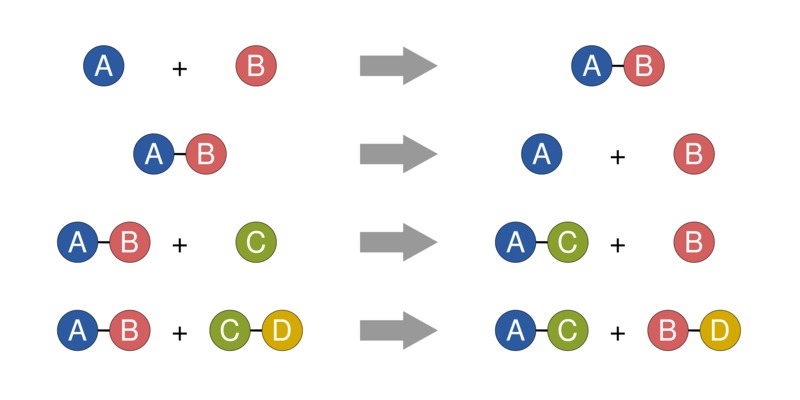
As a result of a chemical reaction, _?_.
a)
new elements form.
b)
new atoms form.
c)
new substances form.
d)
new matter forms.
19.

Which of the following is NOT a method by which heat energy is transferred from a warmer object to a cooler one?
a)
conduction
b)
convection
c)
radiation
d)
insulation
20.

What holds this water molecule together?
a)
freezing
b)
magnetism
c)
glue
d)
bonds
21.

The tea cools down by energy flowing from the ___?_____ to the ___?___ to the ____?____.
a)
cup, hot tea, back to cup
b)
cup, air, hot tea
c)
air, cup, hot tea
d)
hot tea, cup, air
22.

The properties of Barium Chloride are BaCl2 different than the individual properties of Barium and Chlorine because Barium Chloride is a __?__.
a)
element
b)
compound
c)
mixture
d)
solution
23.

What phase change is the picture showing?
a)
melting
b)
freezing
c)
sublimation
d)
deposition
24.

What phase change is the picture showing (frost, water vapor to ice)?
a)
melting
b)
freezing
c)
sublimation
d)
deposition
25.

What phase change is the picture showing?
a)
freezing
b)
melting
c)
sublimation
d)
deposition
26.

What phase change is the picture showing (a pop can "sweating")?
a)
freezing
b)
melting
c)
condensation
d)
evaporation
27.

What phase change is the picture showing (water turns to ice)?
a)
freezing
b)
melting
c)
condensation
d)
evaporation
28.

What phase change is the picture showing (water disappearing from the sidewalk)?
a)
evaporation
b)
condensation
c)
freezing
d)
melting
29.

What most likely happened to produce these results?
a)
Evaporation
b)
Filtration
c)
Precipitate formed
d)
Freezing
30.

What do the elements Fluorine, Chlorine, and Bromine have in common?
a)
They are all noble gases.
b)
They are all alkali metals.
c)
They are all nonmetals.
d)
They are all halogens.
31.

What is the name of the ONE ELEMENT that the arrow is pointing to it?
a)
carbon
b)
nitrogen
c)
hydrogen
d)
nickel
32.

The Statue of Liberty gets its blue-green color mainly from copper oxide? What are the chemical symbols for the two elements found in copper oxide?
a)
I and O
b)
Fe and O
c)
Cu and O
d)
Cu and P
33.

Atoms that collide frequently and move independently of one another are MOST likely in a _?_ state.
a)
solid
b)
liquid
c)
gases
d)
plasma
34.

Which observation would provide the best evidence that a chemical reaction occurred between baking soda and vinegar?
a)
Baking soda will dissolve into the vinegar and become a solution.
b)
We can filter out the baking soda after it has been added to the vinegar.
c)
Vinegar could be evaporated, leaving behind just the baking soda.
d)
Bubbles of gas will form.
35.

What do the elements Iron, Copper, and Nickel have in common?
a)
They are all noble gases.
b)
They are all metals.
c)
They are all nonmetals.
d)
They are all halogens.
36.

What process is taking place (pan touching stove)?
a)
conduction
b)
convection
c)
radiation
d)
insulation
37.

Which way is the energy flowing in this picture?
a)
Air to bottle to water
b)
Bottle to water to cup
c)
Cup to water to bottle
d)
Hands to Bottle to air
38.
In any physical or chemical changes, what is ALWAYS conserved?
a)
matter and total energy
b)
density and thermal energy
c)
light and acoustic energy
d)
gravity and potential energy
39.
Which is a chemical change?
a)
Coal moving along a conveyor belt
b)
Boiling water
c)
Coal burning to give off heat
d)
Steam turning the turbine
40.
Which is a physical change?
a)
Coal burning and giving off heat
b)
Boiling water
c)
Electricity getting produced
41.

What type of change is occurring if you use bleach on a black shirt and it changes to pink?
a)
Physical
b)
Chemical
42.
What type of change is occurring if water is boiling?
a)
Physical
b)
Chemical
43.
What type of change is occurring if coal is burning and giving off a new gas and heat?
a)
Physical
b)
Chemical
44.
In physical and chemical changes, what is always conserved?
a)
density and heat
b)
gravity and weight
c)
mass and volume
d)
Mass (matter) and energy
45.

Two clear liquids are mixed. The temperature changed from 25-23 0C. A white substance formed and sank to the bottom. What happened?
a)
One of the substances came out of the solution.
b)
Some of the water changed to solid ice.
c)
The 2 liquids had a chemical reaction.
d)
Water evaporated and left a solid on the bor
46.
In our lab experiment, which one was a solution and which was just a mixture?
a)
CaCO3 (chalk) = mixture
NaCl (salt)= solution
NaCl (salt)= solution
b)
CaCO3 (chalk) = solution
NaCl (salt)= mixture
NaCl (salt)= mixture
c)
Both are mixtures
d)
Both are solutions
47.
What method would you use to separate sand from water?
a)
Dissolving
b)
Freezing
c)
Evaporating
d)
Filtering
48.
What method would you use to separate copper sulfate (forms crystals) from water?
a)
filtering
b)
evaporating
c)
freezing
d)
dissolving
49.
What is a mixture?
a)
The particles of the solute are evenly distributed in the solvent.
b)
2 or more elements chemically combined.
c)
2 or more substance not chemically combined that be separated.
50.
What is a solution?
a)
A heterogeneous mixture.
b)
2 or more substance not chemically combined that be separated, evenly mixed
c)
2 or more elements chemically combined.
51.
In an aqueous solution, what is the Ice tea powder?
a)
Solute
b)
Solvent
c)
Solubility
52.
In an aqueous solution, what is the water?
a)
Solute
b)
Solvent
c)
Solubility
53.
What is the concentration?
Mass of Salt 10g
Volume of Water 40mL
Mass of Salt 10g
Volume of Water 40mL
a)
4 g/mL
b)
0.25 g/mL
c)
0.4 g/mL
54.
What is the concentration?
Mass of CaCO3 6g
Volume of Water 35mL
Mass of CaCO3 6g
Volume of Water 35mL
a)
4 g/mL
b)
1.7 g/mL
c)
0.17 g/mL
55.
What is the formula for concentration?
a)
mass/volume
b)
mass of solvent/ volume of solute
c)
mass of solute/volume of solvent
d)
volume of solute/mass of solvent
56.
What method would you use to separate iron filings from sand?
a)
evaporation
b)
magnetism
c)
filtering
d)
titration
100 %

