
 Worksheets
8th Grade Science Review 11 (Periodic Table of Elements)
Total questions: 9
Worksheet time: 8mins
Name
Class
Date
1.
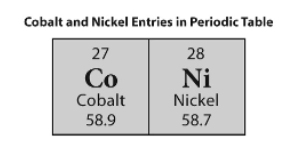
What is the biggest difference between an atom of cobalt (Co) and an atom of nickel (Ni) as shown in the periodic table entries?
a)
An atom of nickel has more protons.
b)
An atom of cobalt has more electrons.
c)
An atom of cobalt has a lower number of neutrons.
d)
An atom of nickel has a higher value for atomic mass.
2.
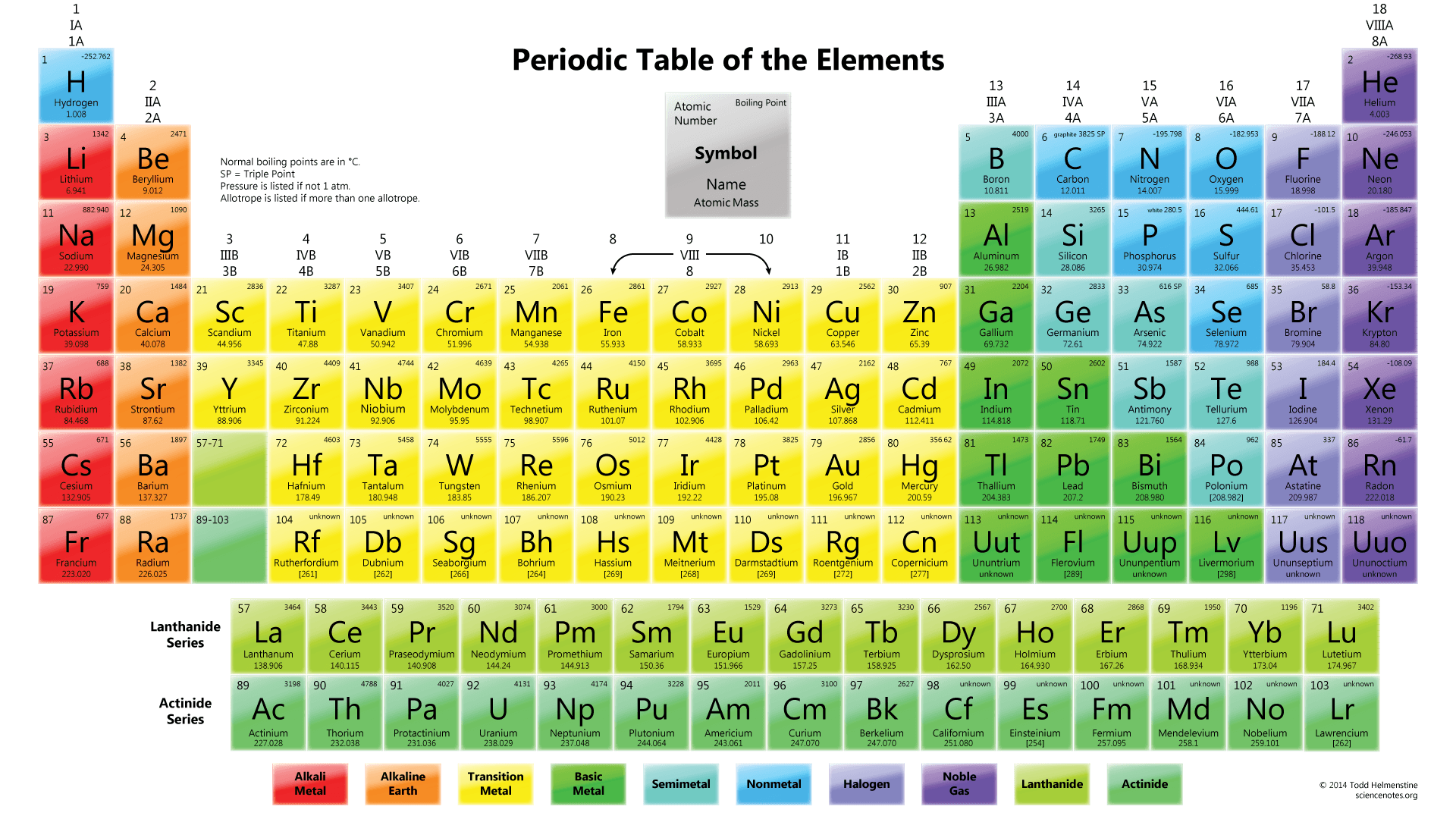
Charles needs a very lightweight metal. Use the periodic table to determine which he would choose.
a)
silicon
b)
magnesium
c)
iondine
d)
tungsten
3.
In what order are the regions arranged on the periodic table, reading left to right?
a)
inert gases, metals, nonmetals, metalloids
b)
metalloids, metals, nonmetals, inert gases
c)
metals, metalloids, nonmetals, inert gases
d)
nonmetals, inert gases, metals, metalloids
4.
Fluorine, chlorine, bromine, iodine, and astatine make up Group 17, the halogens. Why are these elements grouped together?
a)
They are all very reactive nonmetals with similar chemical
properties.
b)
They are all nonreactive gases with similar physical properties.
c)
Their atoms all have eight electrons in their outer energy levels.
d)
They all have the same atomic number.
5.
Which of the following best describes the properties of metals?
a)
hard, brittle, and nonconductive
b)
liquid, dark, and conductive
c)
shiny, malleable, and conductive
d)
soft, oily, and very reactive
6.
How are the elements in the periodic table arranged?
a)
by their atomic mass
b)
by their chemical symbol
c)
by their chemical name
d)
by their atomic number
7.
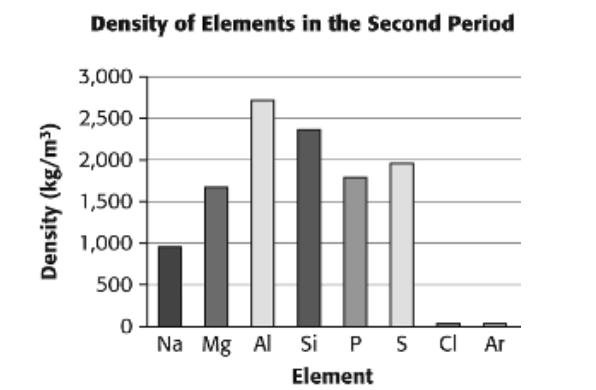
The graph above shows the densities in kilograms per cubic meter (kg/m3) of the elements in Period 2 of the periodic table. Given a 100m3 sample of each element in Period 2, which sample would have the greatest mass?
a)
the sample of Aluminum (Al)
b)
the sample of Chlorine (Cl)
c)
the sample of Sulphur (S)
d)
the sample of Argon (Ar)
8.
What does the number of electrons in the outer level indicate about the element?
a)
how reactive the element is
b)
how malleable the element is
c)
how brittle the element is
d)
how ductile the element is
9.
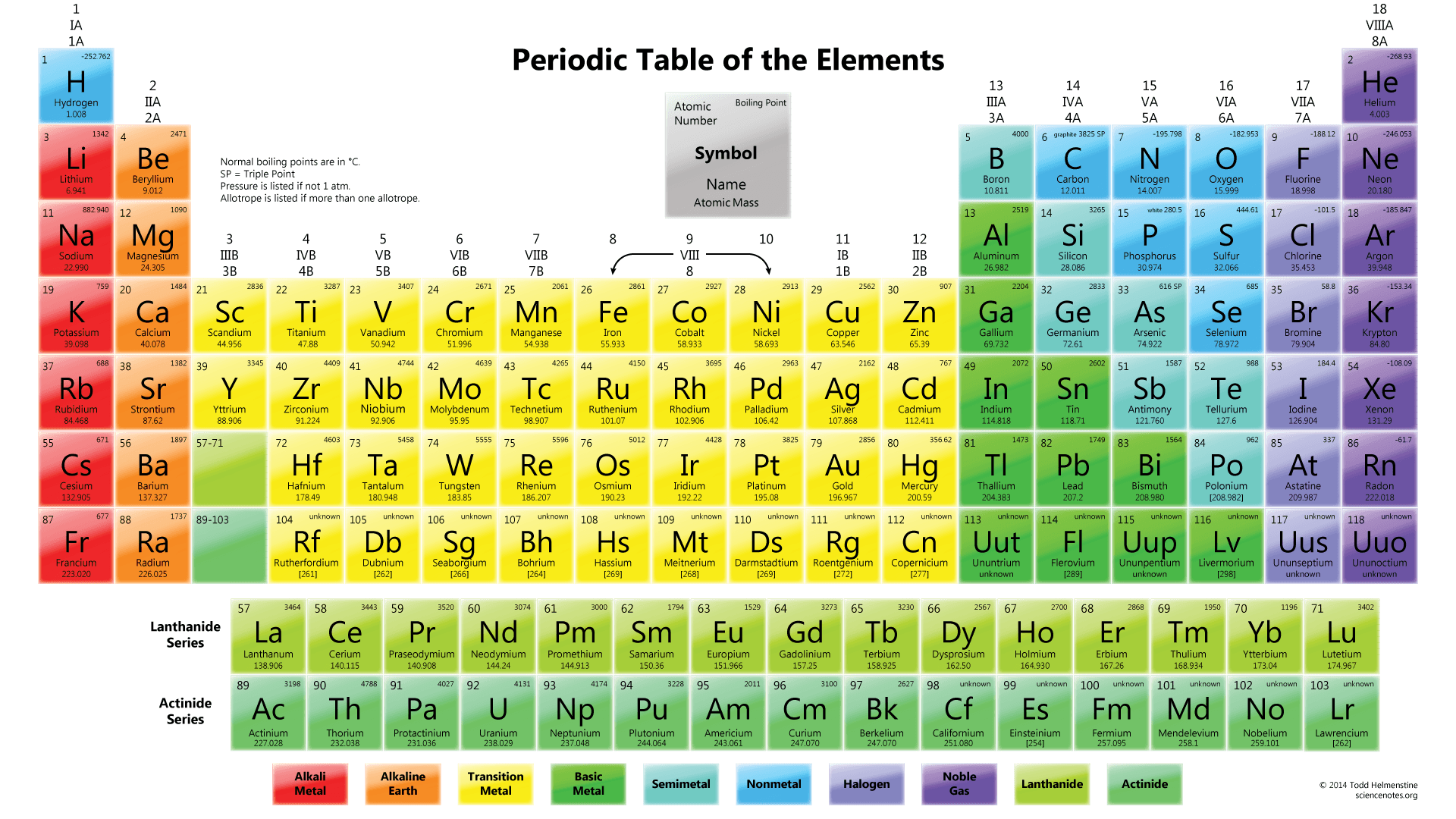
According to its location on the periodic table, sodium (Na) can be described as
a)
an alkaline-earth metal.
b)
a transition metal.
c)
an alkali metal.
d)
a metalloid.
100 %

