
 Worksheets
Unit 10 - Road to the Civil War
Total questions: 15
Worksheet time: 10mins
Name
Class
Date
1.

Which statement BEST describes the results of the presidential election of 1860?
a)
Regional attitudes toward slavery played a small role in the outcome.
b)
Regional attitudes toward slavery decided the outcome.
c)
Moderate voters who wanted a compromise on slavery determined the winner.
d)
National unity led to a landslide victory for the Republican candidate.
2.
How did the South react to Abraham Lincoln’s election as President in 1860?
a)
To save the Union, southern leaders agreed to support the new President.
b)
North Carolina and Virginia seceded, followed by South Carolina.
c)
Seven southern states seceded and formed the Confederate States of America.
d)
Southern leaders called for a new presidential election to be held in the spring.
3.

What Supreme Court decision in 1857 divided the nation even more before the Civil War?
a)
Fugitive Slave Case
b)
Compromise of 1850
c)
Dred Scott Decision
d)
John Brown Decision
4.

The abolitionist who led a raid on U.S. Army weapons stored at Harper's Ferry was...
a)
John Brown
b)
Henry Clay
c)
Dred Scott
d)
Robert E. Lee
5.

Who said that slavery was a moral and political wrong during a series of debates in the Illinois Senate election of 1858?
a)
Stephen A. Douglas
b)
John Brown
c)
Abraham Lincoln
d)
Dred Scott
6.

The Compromise of 1850 helped create which state?
a)
Texas
b)
Florida
c)
California
d)
Pennsylvania
7.
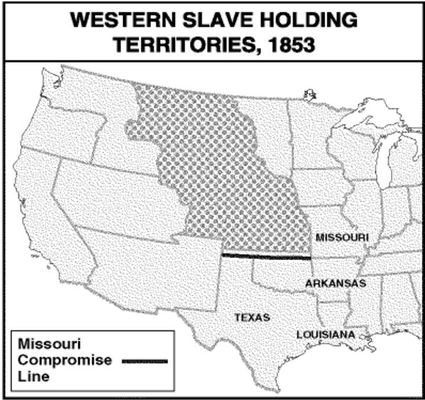
Stephen Douglas helped create a law in 1854 that created which two new territories?
a)
New Mexico and Utah
b)
Maine and Missouri
c)
Kansas and Nebraska
d)
Colorado and Wyoming
8.
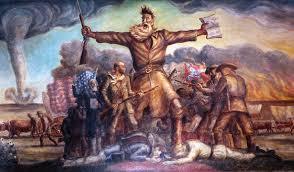
In the 1850s, the phrase “Bleeding Kansas” was used to describe clashes between
a)
proslavery and antislavery groups
b)
Spanish landowners and new American settlers
c)
Chinese and Irish railroad workers
d)
Native American Indians and white settlers
9.
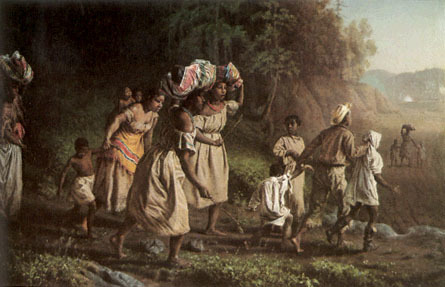
What former slave was the famous "conductor" of the Underground Railroad that helped over 300 other slaves escape to the North and Canada?
a)
Levi Coffin
b)
Frederick Douglass
c)
Harriet Tubman
d)
John Brown
10.
The first fighting of what became the Civil War occurred at...
a)
Fort Ticonderoga
b)
Fort Sumter
c)
Fort McHenry
d)
Fort Myers
11.
Which influential novel was written by Harriet Beecher Stowe and published in 1852?
a)
Uncle Tom's Cabin
b)
Gone with the Wind
c)
Animal Farm
d)
Great Expectations
12.
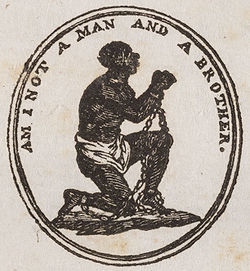
What reform movement worked for the end of slavery?
a)
Women's Rights
b)
Transcendentalism
c)
Temperance
d)
Abolitionism
13.
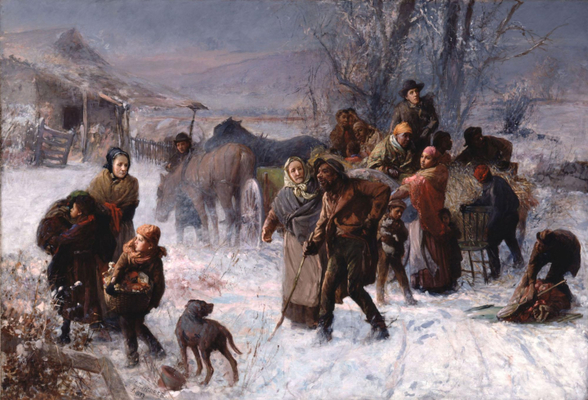
The network of escape routes out of the South for enslaved people was the...
a)
Escape Network.
b)
Slave Network.
c)
Underground Railroad.
d)
Southern Escape Route.
14.
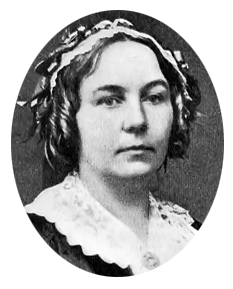
As the primary author of the Declaration of Sentiments, Elizabeth Cady Stanton helped advance the...
a)
Temperance Movement
b)
Women's Rights Movement
c)
Prison-Reform Movement
d)
Education Reform Movement
15.
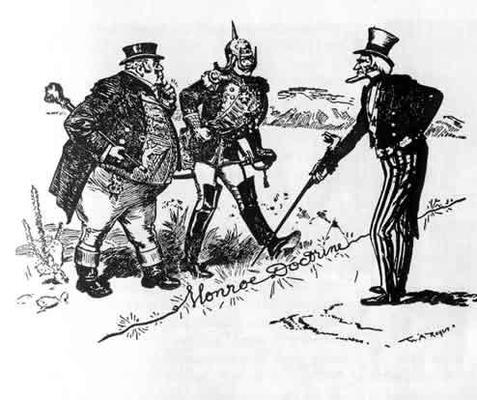
The purpose of the Monroe Doctrine in 1823 was to...
a)
open Canada to American settlers.
b)
acquire Florida for the United States.
c)
prevent European expansion in the Americas.
d)
end the United States' alliance with Great Britain.
100 %

