
Font size
S
M
L
XL
 Worksheets
Chapter 5 Review: Soil & Rocks
Total questions: 115
Worksheet time: 2hrs 31mins
Name
Class
Date
1.

Metallic to earthy gray, hardness of 1-2, unclear cleavage, writes on paper
a)
graphite
b)
galena
c)
pyrite
d)
hematite
2.

What is plowing in curved rows that follow the shape of the land?
a)
contour plowing
b)
soil
c)
subsoil
d)
terrace farming
3.
Rocks that are made from bits of rock that have been pressed together under water are called:
a)
Metamorphic
b)
Igneous
c)
Sedementary
d)
Moonstone
4.
Rocks that have been changed into a different kind of rock from heat, time and pressure are called:
a)
Metamophic
b)
Igneous
c)
Sedementary
d)
Rocky
5.
A mineral is a living object
a)
True
b)
False
6.
A solid made of one or more minerals.
a)
metamorphic rock
b)
rock
c)
copper
d)
lead
7.
Which is most important in forming igneous rocks?
a)
fossil models
b)
melting
c)
cool temperatures
d)
dead plants and animals
8.
Which is an imprint fossil.
a)
a petrified tree
b)
a dinosaur footprint
c)
a dinosaur bone
d)
an insect trapped in sap
9.
Which would be needed to form sedimentary rocks?
a)
a volcano
b)
casts and molds
c)
pressure and temperature
d)
wind and water
10.
The trace of remains of a living thing that died long ago.
a)
mineral
b)
sedimentary rock
c)
fossil
d)
rock
11.
Rock that was once melted and then cooled and hardened is called what?
a)
metamorphic rock
b)
volcanic rock
c)
igneous rock
d)
concrete
12.
An object that is solid, has never been alive, and was formed in nature.
a)
rock
b)
fossil
c)
mineral
d)
outer layer of crust
13.
A rock formed from material that settled in layers.
a)
sedimentary rock
b)
lead
c)
granite
d)
fossils
14.
hardest form of rock
a)
igneous
b)
sedimentary
c)
metomorphic
15.

What is the layer of soil that contains humus, leaf litter, and other organic matter?
a)
O - Organic
b)
A - Topsoil
c)
B - Subsoil
d)
R - Bedrock
16.
Rock that was melted and then cooled and hardened is called what?
a)
metamorphic rock
b)
clastic rock
c)
igneous rock
d)
sedimentary rock
17.
In order for a metamorphic rock to form, _______ is needed.
a)
melting and cooling
b)
weathering and erosion
c)
heat and pressure
d)
compaction and cementation
18.

This rock was heated and compressed over time. What type of rock is this?
a)
Sedimentary
b)
Igneous
c)
Metamorphic
d)
Mineral
19.

This rock was formed by smaller pieces of rock that settled at the bottom of a lake millions of years ago. What type of rock is this?
a)
Sedimentary
b)
Igneous
c)
Metamorphic
d)
Mineral
20.

This rock was found near the mouth of a volcano. What type of rock is this?
a)
Sedimentary
b)
Igneous
c)
Metamorphic
d)
Mineral
21.

This rock cooled on the outside of a volcano and contained air bubbles when it was forming. What type of rock is this?
a)
Sedimentary
b)
Igneous
c)
Metamorphic
d)
Mineral
22.
When rocks are broken and moved by things such as water, this is called...
a)
Heat
b)
Erosion
c)
Metamorphisis
d)
Compaction
23.
Igneous rocks that form as magma cools underground are called...
a)
extrusive
b)
intrusive
c)
felsic
d)
mafic
24.
Which process creates sediments?
a)
weathering and erosion
b)
cementation and compaction
c)
heat and pressure
d)
melting and cooling
25.
Which type of rock will form when sediments are compacted and cemented together?
a)
igneous
b)
metamorphic
c)
sedimentary
d)
magma
26.
The characteristic of the rock based on the shape and size of its grains is...
a)
texture
b)
composition
c)
breakage
d)
luster
27.
The minerals in a rock are described as the rock's...
a)
composition
b)
texture
c)
luster
d)
hardness
28.
Which of the following is the best description of a mineral?
a)
solid, man-made, non-living
b)
solid, non-crystalline, naturally formed
c)
solid, crystalline, non-living
d)
liquid, inorganic, natural
29.

Which property of minerals breaks in flat, smooth pieces?
a)
fracture
b)
streak
c)
luster
d)
cleavage
30.

Limestone can form when water evaporates and leaves behind the minerals that form it. Limestone is
a)
an igneous rock
b)
a parent rock
c)
a metamorphic rock
d)
a sedimentary rock
31.
The rock cycle
a)
ends with igneous rock
b)
begins with igneous rocks
c)
ends with metamorphic rocks
d)
has no beginning or end
32.
Which of the following shows the correct order of events in the formation of sedimentary rock?
a)
weathering, erosion, deposition, cementation
b)
weathering, cementation, erosion, deposition
c)
erosion, cementation, deposition, weathering
d)
cementation, weathering, transportation, erosion
33.
What are the three components of soil?
a)
insects, sand, topsoil
b)
clay, sand, humus
c)
topsoil, subsoil, bedrock
d)
earthworms, sand, silt
34.

Which of the following is NOT one of the three types of soil?
a)
clay
b)
sand
c)
silt
d)
mud
35.

Humus is.....
a)
the dead parts of plants and animals in soil.
b)
A food we eat with pretzels.
c)
The tiny particles inside of soil
d)
The roots that come off of a plant and live in soil.
36.
Ellen grabs a topsoil sample in her hand. She rolls it into a ball. The soil feels gritty and the ball falls apart. What part of the topsoil most likely made the topsoil feel gritty?
a)
clay
b)
sand
c)
silt
d)
humus
37.
When there are not enough plants to hold topsoil in place, water and _______ carry the topsoil away, leaving the subsoil exposed
a)
sunlight
b)
birds
c)
magnetic fields
d)
wind
38.
When plants, animals, and other organisms die, they break down and become part of the soil. What is this part of the soil called?
a)
sand
b)
silt
c)
clay
d)
humus
39.
Many plants cannot grow in clay soil. Why is this true?
a)
Clay soil does not have many nutrients.
b)
Roots cannot easily push through clay soil.
c)
Water doesn't drain well through clay.
d)
All of these choices.
40.

Which layer of soil are these roots growing in?
a)
subsoil
b)
topsoil
41.
Decayed organic material turns into dark colored material called __.
a)
litter
b)
clay
c)
humus
d)
soil
42.
What are some things that you can add to a compost pile?
a)
leaves, apple core, and tin foil
b)
grass clippings, banana peel, and newspaper
c)
egg shells, plastic spoon, and ziploc bags
d)
metal fork, rubber spatula, and shoelaces
43.
Where does most of the water go when it rains?
a)
in the ocean
b)
in the rivers
c)
in the gutters
d)
it absorbs into the soil
44.

True or false:
We end up eating the minerals that are in soil.
We end up eating the minerals that are in soil.
a)
true
b)
false
45.

Are there minerals in soil?
a)
Yes
b)
No
46.

Which layer of soil is on the bottom?
a)
topsoil
b)
subsoil
c)
bedrock
d)
bottomsoil
47.

Which layer of soil has the BIGGEST pieces of rock in it?
a)
topsoil
b)
subsoil
c)
bedrock
d)
midsoil
48.
The texture of soil depends mainly on
a)
the types of plants that grow in the soil.
b)
the size of the particles in the soil.
c)
the color of the soil.
d)
the number of worms in the soil.
49.
Many plants cannot grow in sandy soil. Why is this true?
a)
Sandy soil does not hold enough water.
b)
Oxygen cannot pass through sandy soil.
c)
Roots cannot easily push through clay soil.
d)
Sandy soil has too many nutrients.
50.

What is the layer of soil just below the topsoil?
a)
soil
b)
subsoil
c)
topsoil
d)
terrace farming
51.

Which layer of soil are these roots growing in?
a)
subsoil
b)
topsoil
52.

Layers of soil are also known as:
a)
Soil Profiles
b)
Soil Horizons
c)
Soil sheets
d)
Soil cores
53.

Which layer of soil contains bedrock that has been cracked slightly?
a)
A - Topsoil
b)
B - Subsoil
c)
C- Partially Weathered Parent Material
d)
R - Bedrock
54.
Which layer of soil is best for plant growth?
a)
wet soil
b)
subsoil
c)
topsoil
d)
parent material
55.
Which mineral smells like rotten eggs?
a)
talc
b)
sulfer
c)
mica
d)
pyrite
56.

Which of the following are associated with volcanoes?
a)
Sediments and soil
b)
Crystals and sand
c)
Magma and lava
d)
Mica and granite
57.
A __________ is a natural, nonliving substance that makes up rocks.
a)
Sedimentary rock
b)
Igneous Rock
c)
Mineral
d)
Sediment
58.

This rock started as lava that cooled and then was heated and put under pressure over time. What type of rock is this?
a)
Sedimentar
b)
Igneous
c)
Metamorphic
59.

This rock was molten magma that slowly cooled under the ground. What type of rock is this?
a)
Sedimentary
b)
Igneous
c)
Metamorphic
60.
Organic matter is made of materials that….
a)
Were once living
b)
Were once nonliving
c)
Were once living and nonliving
61.
Soil formation begins with the weathering of_______.
a)
Humas
b)
Subsoil
c)
Litter
d)
Rock
62.
The layer of soil which the topsoil is found.
a)
Horizon A
b)
Horizon B
c)
Horizon C
d)
Horizon D or R
63.
The movement of rocks and weathered materials is called_________.
a)
Chemistry
b)
Physical
c)
Weathering
d)
Erosion
64.
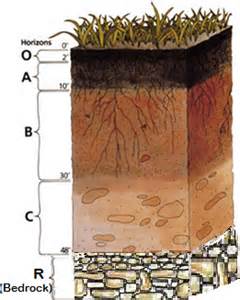
Which horizon is made up of partially weathered rocks?
a)
Horizon A
b)
Horizon B
c)
Horizon C
d)
Horizon D or R
65.
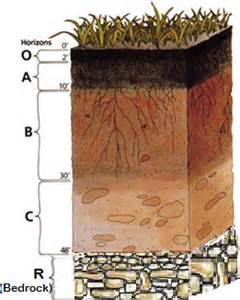
In which horizon is most of the HUMUS?
a)
Horizon A
b)
Horizon B
c)
Horizon C
d)
Horizon D or R
66.
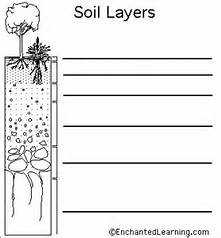
Which horizon contains clay, silt, minerals, and a little humus?
a)
Horizon A
b)
Horizon B
c)
Horizon C
d)
Horizon D or R
67.
There is an unlimited supply of fertile soil.
a)
True
b)
False
68.
Soil's one of the Earth’s most valuable resources. Everything on Earth depends on soil somehow.
a)
True
b)
False
69.
Soil layers are called horizons because...
a)
The layers are all different
b)
The layers are vertical
c)
The layers are horizontal
d)
The layers are above one another
70.
What do we call the layers of soil?
a)
Deposits
b)
Horizons
c)
Minerals
d)
Rocks
71.

Which layer of soil is on the bottom?
a)
topsoil
b)
subsoil
c)
bedrock
d)
bottomsoil
72.

Which of the following is NOT one of the three layers of soil?
a)
topsoil
b)
undersoil
c)
subsoil
d)
bedrock
73.
When plants, animals, and other organisms die, they break down and become part of the soil. What is this part of the soil called?
a)
sand
b)
silt
c)
clay
d)
humus
74.
Movement of soil and rocks from one place to another is called...
a)
weathering
b)
humus
c)
erosion
75.
Breaking down or wearing away of rocks is called....
a)
weathering
b)
humus
c)
erosion
76.

This rock was formed when magma cooled very slowly inside the Earth. What specific type of rock is it?
a)
Intrusive Igneous Rock
b)
Extrusive Igneous Rock
c)
Foliated Metamorphic Rock
d)
Clastic Sedimentary Rock
77.
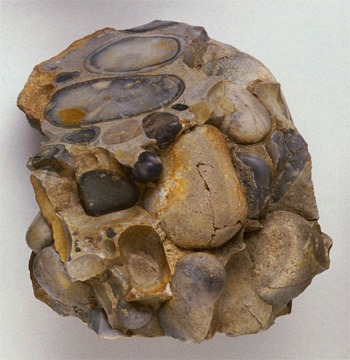
This rock was formed by smaller pieces of rock that settled at the bottom of a lake millions of years ago. What type of rock is this?
a)
Sedimentary
b)
Igneous
c)
Metamorphic
78.
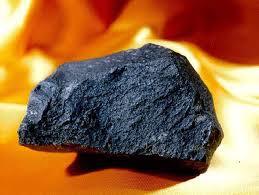
This rock was found near the mouth of a volcano. What type of rock is this?
a)
Sedimentary
b)
Igneous
c)
Metamorphic
79.

The process when rocks break into smaller pieces due to exposure to natural elements is called
a)
erosion
b)
weathering
c)
sediments
80.

the fertile, upper part of the soil
a)
clay
b)
sand
c)
silt
d)
topsoil
81.
Decayed organic material in soil is called______.
a)
Litter
b)
Silt
c)
Humus
d)
Clay
82.
the process of dropping sediments
a)
deposition
b)
erosion
c)
weathering
d)
sediments
83.
What conservation method refers to forming steps in a hill to prevent water erosion?
a)
windbreaks
b)
contour plowing
c)
terrace farming
d)
strip cropping
84.

What soil conservation is this?
a)
Cover Crops
b)
Soil Conservation
c)
Crop Rotation
85.
The very top layer of soil is mostly made of
a)
Solid rock
b)
Clay and mineral deposits
c)
A mixture of minerals and organic material
d)
Mostly organic material (humus)
86.

This rock formed when bits of other rocks became pressed into a solid. What type of rock is it?
a)
Sedimentary Rock
b)
Metamorphic Rock
c)
Igneous Rock
87.
Sedimentary rock is formed through the process of
a)
Cementation
b)
Stratification
c)
Erosion
d)
Foliation
88.
What has to increase for metamorphism to occur?
a)
weathering and erosion
b)
temperature and pressure
c)
melting and cooling
d)
compaction ad cementation
89.
What is process in which water, wind, and heat break down rock?
a)
weathering
b)
exfoliation
c)
cementation
d)
composition
90.
During the rock cycle, what forms when the magma cools?
a)
igneous rocks
b)
sedimentary rock
c)
metamorphic rock
d)
foliated rock
91.
Besides texture, how else are rocks classified?
a)
by the amount of foliation
b)
by their grain size
c)
by grain shape
d)
by their composition
92.
process in which sediment is dropped and comes to rest
a)
deposition
b)
erosion
c)
rock
d)
rock cyle
93.
process by which new rock is made from old rock
a)
rock
b)
texture
c)
rock cycle
d)
composition
94.
layers of rock found in sedimentary rock
a)
non-foliated
b)
extrusive igneous rock
c)
strata
d)
intrusive igneous rock
95.

Each rock type can follow only one pathway of the rock cycle.
a)
True
b)
False
96.
a solid object made naturally in Earth's crust and contains one or more minerals
a)
Mineral
b)
Rock
97.
a rock that forms from sediment. The sediment compacts over time and the pressure cements the minerals together
a)
Sedimentary Rock
b)
Igneous Rock
c)
Metamorphic rock
98.
forms when lava or magma cools and hardens
a)
Sedimentary Rock
b)
Igneous Rock
c)
Metamorphic Rock
99.
a rock that forms when sedimentary or igneous rocks change under heat and pressure without melting
a)
Sedimentary Rock
b)
Igneous Rock
c)
Metamorphic Rock
100.
the changing of rocks over time from one type to another
a)
Organic
b)
Rock Cycle
c)
Rock
101.
having to do with or coming from living things
a)
Rock Cycle
b)
Mineral
c)
Organic
102.
a mixture of bits of rock and once-living parts of plats and animals
a)
Soil
b)
Rock
c)
Humus
103.
soil layers
a)
Rock Horizons
b)
Soil Horizons
c)
Soil Mixtures
104.
holds the most nutrients, contains humus
a)
A Horizon
b)
B Horizon
c)
C Horizon
105.
the part of the soil that is made of decayed plants and animals
a)
Rocks
b)
Humus
c)
Minerals
106.
also called A Horizon
a)
Topsoil
b)
subsoil
c)
bedrock
107.
less humus and lots of fine particles of rock
a)
A Horizon
b)
B Horizon
c)
C Horizon
108.
also called B Horizon
a)
Topsoil
b)
Subsoil
c)
Bedrock
109.
made mostly of larger pieces of weathered bedrock
a)
A Horizon
b)
B Horizon
c)
C Horizon
110.
the addition of harmful materials to soil, air, or water
a)
Pollution
b)
Humus
c)
organic
111.
the preservation or protection of natural resources
a)
Conservation
b)
Pollution
c)
Conceal
112.
a pure substance that cannot be broken down into a simpler substance
a)
Element
b)
Rock
c)
Mineral
113.
a solid, natural material made from nonliving substances in the ground.
a)
Mineral
b)
Rock
114.

This rock was formed when magma cooled very slowly inside the Earth. What specific type of rock is it?
a)
Igneous Rock
b)
Metamorphic Rock
c)
Sedimentary Rock
115.
Rocks that come from hot lava and magma that is cooled and hardened are called:
a)
Metamorphic
b)
Igneous
c)
Sedementary
d)
Comets
Reset

