
 Worksheets
Forms of Energy, Transformations, Electric Circuits
Total questions: 50
Worksheet time: 45mins
Name
Class
Date
1.
Which two metals will be attracted by a magnet?
a)
iron and steel
b)
gold and rubber
c)
plastic and lead
d)
copper and paper
2.
If you pick up a book from the floor and place it on a shelf, energy is transferred to the book and stored in the form of __________ energy
a)
kinetic
b)
potential
c)
chemical
d)
electrical
3.
A simple electromagnet can be made with which of the following?
a)
an electric current
b)
a turbine and nail
c)
an iron core, a wire, and a battery
d)
a compass and a battery
4.
When you move your arm, your body changes chemical energy supplied by food into _____________ energy.
a)
radiant
b)
electrical
c)
potential
d)
mechanical
5.
A toy helicopter's blades spin when its circuit is connected to a battery. Which sequence shows the energy changes taking place in the helicopter?
a)
heat > mechanical >potential
b)
electrical >mechanical > potential
c)
chemical > electrical > potential
d)
chemical > electrical > kinetic
6.
When you plug a radio into an outlet in the wall, what energy change happens?
a)
electrical energy changes into sound energy
b)
electrical energy changes into thermal energy
c)
chemical energy changes into electrical energy
d)
sound energy changes into radiant energy
7.
Which of the following best describes the energy transformation in a CD player?
a)
electrical energy > kinetic energy > sound energy
b)
electrical energy > potential energy
c)
sound energy > electrical energy
d)
electrical energy > thermal energy> radiant energy >
8.
Energy causes ___________ to occur.
a)
change
b)
motion
c)
age
d)
laziness
9.

Solar Energy is transferred to _____ Energy.
a)
Mechanical
b)
Solar
c)
Sound
d)
Electrical
10.

Mechanical Energy is transferred to _____ Energy.
a)
Solar
b)
Mechanical
c)
Electrical
d)
Thermal
11.

What will happen when these magnets are brought close together?
a)
They will attract each other.
b)
They will repel each other.
c)
Both magnets will turn to the left.
d)
Both magnets will turn to the right.
12.
The Law of Conservation states that energy can _______________ from one form into another.
a)
created
b)
destroyed
c)
transform
d)
hotter
13.

Zion throws a baseball into the air. It rises, stops when it reaches its greatest height, and then falls back to the ground.
At what point does the ball have the most kinetic energy?
At what point does the ball have the most kinetic energy?
a)
when the baseball is rising
b)
when the baseball is falling
c)
just after the baseball hits the ground
d)
while the baseball is stopped in the air
14.

A fire is what type of energy?
a)
Thermal/heat
b)
Sound
c)
Gravitaional
d)
Electrical
15.

Food is an example of _______ energy.
a)
Mechanical
b)
Chemical
c)
Thermal
d)
Sound
16.
How is an electromagnet different from a permanent magnet?
a)
An electromagnet is smaller and less powerful.
b)
An electromagnet's magnetism can be turned off.
c)
An electromagnet can be built without using metal.
d)
An electromagnet does not attract objects containing iron.
17.

The glow sticks produce light for a short amount of time. The material stored in the glow stick is ____________.
a)
heat energy
b)
gravity
c)
magnetism
d)
chemical energy
18.

What do the lines around this magnet represent?
a)
North Pole
b)
South Pole
c)
Magnetic Declination
d)
Magnetic Field
19.

Jenna made an electric circuit as seen in the picture. She placed a thermometer near her light bulb. After the light bulb was turned on for an hour, what did she MOST LIKELY observe?
a)
The bulb glowed brighter over time.
b)
The temperature in the thermometer went up.
c)
The temperature in the thermometer went down.
d)
Both the light and temperature remained the same over time.
20.

A student needs help completing an energy transfer diagram for a ceiling fan. Which BEST fills in the blanks labeled M and N to describe the transfer of energy?
a)
N: Electrical and M: Potential
b)
N: Radiant and M: Electrical
c)
N: Electrical and M: Kinetic
d)
N: Mechanical and M: Electrical
21.

Energy from the battery is transformed into electricity to turn on the light.
What type of energy is stored in the battery BEFORE it is used?
(click to view picture)
What type of energy is stored in the battery BEFORE it is used?
(click to view picture)
a)
chemical
b)
nuclear
c)
thermal (heat)
d)
radiant (light)
22.

At what position does the rock have the greatest potential energy?
(click to view picture)
(click to view picture)
a)
A
b)
B
c)
C
d)
E
23.
Water in a pot on a stove begins to move faster. The faster the water molecules move, the higher the temperature of the water. This illustrates what form of energy?
a)
chemical
b)
mechanical
c)
thermal
d)
electrical
24.
As the distance between two magnets increases (they get farther apart), the force between them:
a)
Increases
b)
Decreases
c)
Stays the Same
25.
How can the strength of an electromagnet be increased?
a)
by rubbing it with a stronger magnet
b)
by increasing the coils of wire around the iron
c)
by increasing the length of the wire from the battery
d)
by loosening the coil of wire around the iron
26.
The relationship between electricity and magnetism is called
a)
sound energy.
b)
induced current.
c)
electromagnetism.
d)
ferromagnetism.
27.
Which of the following shows an energy transformation from chemical energy to electrical to light energy?
a)
A bolt of lightning lights the night sky.
b)
A candle glows brightly in the dark.
c)
A fire in a fireplace lights up a room.
d)
A battery causes a flashlight to shine.
28.

The diagram shows a complete circuit with a battery and a buzzer making noise. This circuit works by transforming -
a)
chemical energy > electrical > sound.
b)
electrical energy > thermal > light.
c)
sound energy > electrical > chemical.
d)
mechanical energy > electrical > sound.
29.
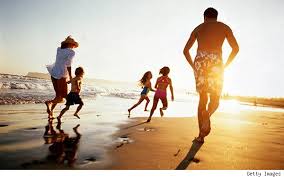
The sun shines down on this family as the play on the beach.
a)
conduction
b)
convection
c)
radiation
30.
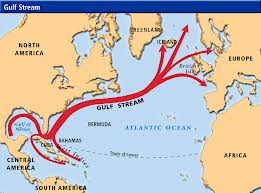
The Gulf Stream is a current that brings warm ocean water from the south to the north.
a)
conduction
b)
convection
c)
radiation
31.
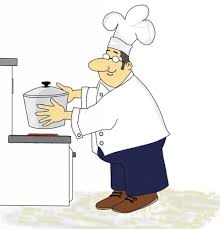
The man goes to take the hot pot off the stove with his bare hands.
a)
conduction
b)
convection
c)
radiation
32.
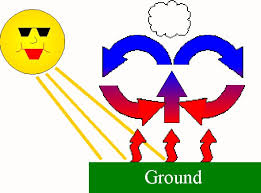
Warm air rises and the cool air sinks.
a)
conduction
b)
convection
c)
radiation
33.

In this experiment, the WARM red dye and the COLD blue dye was placed in the water at the same time. The warm red dye rose to the top while the cold blue dye sank to the bottom.
a)
conduction
b)
convection
c)
radiation
34.
Poor conductors like wood and plastic are called:
a)
conductors
b)
insulators
c)
burners
35.
The wire in an electromagnet acts as the:
a)
conductor
b)
insulator
c)
burner
36.
During a heat transfer demonstration, students observed water being pumped around a closed loop in an engine. The moving water carries heat from the hot engine to the radiator. Which type of heat transfer is involved when the cooler water absorbs heat while in contact with the hot engine?
a)
Convection
b)
Conduction
c)
Insulation
d)
Radiation
37.
Heat would best be transferred by conduction between
a)
a candle and the air.
b)
an oven and a glass dish.
c)
a stove and a copper pot.
d)
water and a wooden spoon
38.
Why does food wrapped in aluminum foil keep warm for a long time?
a)
Aluminum foil is an insulator and prevents heat loss by conduction.
b)
Aluminum foil forms an air-tight seal and prevents heat loss by convection.
c)
The silver surface of the foil reflects heat in and prevents heat loss by radiation.
d)
The silver surface of the foil absorbs heat from the surroundings and keeps the food warm.
39.
A house burns down. The vinyl siding of the house next door warps due to
a)
conduction
b)
convection
c)
radiation
40.

What happens when ice cubes melt in a glass?
a)
Heat travels from the ice to the warmer water.
b)
No energy is transferred.
c)
Heat is transferred from the warmer water to the ice cubes.
d)
The water warms up due to the humidity
41.
What happens to particles as they heat up?
a)
They slow down
b)
Nothing
c)
They don't move
d)
They speed up
42.
The Law of Conservation of Energy states:
a)
Energy can created or destroyed but not transformed
b)
Energy cannot be created or destroyed, it can only transformed
c)
Energy can't be created, destroyed or transformed
43.
A crayon placed on a dark driveway in bright sunlight melted into a colorful puddle. What caused the crayon to melt?
a)
Solar radiation heated the driveway and then heat transferred to the crayon by conduction.
b)
Solar radiation heated the driveway and then heat transferred to the crayon by radiation.
c)
Solar convection heated the driveway and then heat transferred to the crayon by radiation.
d)
Solar convection heated the driveway and then heat transferred to the crayon by conduction.
44.
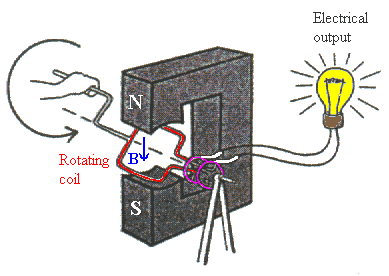
What is the transfer of electricity in a generator?
a)
Mechanical to Electrical
b)
Physical to Potential
c)
Electrical to Mechanical
d)
Yogurt to Light
45.
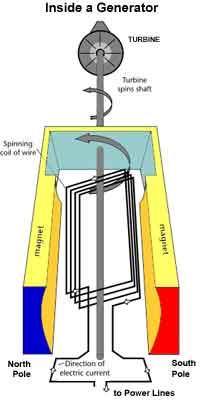
In large generators in power plants, ___________ rotate inside a coil of wire to produce an electric current.
a)
Wind
b)
Water
c)
Magnets
d)
Circuits
46.
What device turns electrical energy into mechanical energy?
a)
a solenoid
b)
a motor
c)
an electromagnet
d)
an electric generator
47.
Which of these pairs of devices operate in reverse of each other?
a)
generator and motor
b)
generator and electromagnet
c)
motor and electromagnet
d)
electromagnet and resistor
48.
This device is used to open or close a circuit
a)
battery
b)
wire
c)
switch
d)
solar cell
49.
Which statement best describes the relationship between electric generators and electric motors?
a)
Both generators and motors use motion in a magnetic field to produce electric current.
b)
Both generators and motors transform current from a magnetic field into mechanical energy.
c)
Generators transform mechanical energy into electrical energy and motors transform electrical energy into mechanical energy.
d)
Generators transform electrical energy into mechanical energy and motors transform mechanical energy into electrical energy.
50.
A compass needle responds to a magnetic field, because the compass needle is a
a)
A. generator.
b)
B. motor.
c)
C. magnet.
d)
D. transformer.
100 %

