
 Worksheets
Newton's Laws of Motion
Total questions: 16
Worksheet time: 16mins
Name
Class
Date
1.
If you double the mass of an object with the same force apply on it, the acceleration will
a)
double
b)
cut in half
c)
the same
d)
zero
2.
What kind(s) of objects have inertia?
a)
all objects with mass
b)
only objects at rest
c)
only objects in motion
d)
only objects whose motion is being changed
3.
Which one needs a greater net force to move, a kilogram of feathers or a kilogram of iron?
a)
feathers
b)
iron
c)
same
d)
depends on their friction
4.
After a cannonball is fired into frictionless space, the amount of force needed to keep it going equals
a)
twice the force with which it was fired
b)
the same amount of force with which it was fired
c)
1/2 the force with which it was fired
d)
zero, since no force is required to keep it moving.
5.
The acceleration produced by a net force on an object is
a)
inversely proportional to the mass of the object.
b)
directly proportional to the magnitude of the net force.
c)
in the same direction as the net force.
d)
all of the above
6.
A 10-kg brick and a 1-kg book are dropped in a vacuum. The Fg (weight) on the 10-kg brick is
a)
10 times as much as the force on the 1-kg book
b)
zero.
c)
the same as the force on the 1-kg book.
d)
none of the above
7.
A book weighs 4 N. When held at rest in your hands, the net force on the book is
a)
0 N.
b)
0.4 N.
c)
4 N.
d)
39 N.
8.
A 20 kg bike accelerates at 10 m/s2. what was the net force
a)
25 Newtons
b)
20 Newtons
c)
200 Newtons
d)
10 Newtons
9.
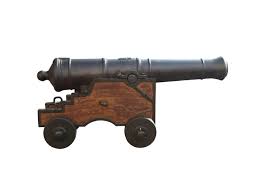
When a cannon fires a cannonball we observe Newton's third law. Which force is the reaction force?
a)
The cannon moving forward
b)
The cannonball moving forward
c)
The cannon moving backward
d)
The cannonball moving backward
10.

Which one of Newton’s Laws of Motion best explains why the dishes do not move when the table cloth is removed?
a)
Newton's 1st Law
b)
Newton's 2nd Law
c)
Newton's 3rd Law
d)
Newton's Law of Biology
11.
The tendency of an object to stay in motion or at rest is called
a)
velocity
b)
acceleration
c)
speed
d)
inertia
12.
What is the difference between mass and weight?
a)
mass is how much matter is in an object, and weight is the gravitational pull on that object
b)
mass and weight are the same
c)
weight affects how much mass is in an object
d)
weight is determined by how many atoms make up an object
13.

What is the net force?
a)
5000 N right
b)
4000 N right
c)
40 N left
d)
4000 N left
14.

What is happening at C?
a)
Stationary
b)
Accelerating
c)
Fast steady speed; moving away from the starting position
d)
Slower steady speed; moving away from the starting position
15.

What is happening at D?
a)
Stationary
b)
Accelerating
c)
Fast steady speed; moving away from the starting position
d)
Slower steady speed; moving away from the starting position
16.

Which of the following shows the direction of the friction force?
a)
A
b)
B
c)
C
d)
D
100 %

