wayground logo

Free Printable Worksheets

Font size

S
M
L
XL
Worksheets

6th Grade Fall Review

Total questions: 53

Worksheet time: 27mins

Name
Class
Date
1.
Explaining things that you observe based on what you already know is called
a)
classifying
b)
inferring
c)
observing
d)
predicting
2.
Measurement of how much mass is contained in a given volume is called
a)
boiling point
b)
weight
c)
density
d)
melting point
3.
Official SI unit of temperature
a)
Fahrenheit
b)
Kelvin
c)
Celsius
4.
5 g/cm cubed
a)
mass
b)
volume
c)
density
d)
time
5.
10 ms
a)
mass
b)
volume
c)
density
d)
time
6.
10 L
a)
mass
b)
volume
c)
density
d)
temperature
7.
4 g
a)
mass
b)
volume
c)
time
d)
temperature
8.
1 hg
a)
volume
b)
mass
c)
density
d)
time
9.
6 kg
a)
mass
b)
volume
c)
density
d)
temperature
10.
1 cm
a)
time
b)
length
c)
volume
d)
density
11.
5 g/mL
a)
density
b)
volume
c)
mass
d)
length
12.
2 m
a)
length
b)
mass
c)
volume
d)
time
13.
2 s
a)
mass
b)
density
c)
length
d)
time
14.
What is the first step in any scientific investigation?
a)
inferring
b)
classifying
c)
asking a question
d)
making a model
15.
Volumes of liquids are measured with
a)
scales
b)
graduated cylinders
c)
TBB
d)
electrodes
16.
Basic unit of length
a)
mile
b)
kilometer
c)
meter
d)
foot
17.
Organized way to collect observations
a)
graph
b)
hypothesis
c)
data table
d)
picture
18.
Observations that deal with descriptions
a)
quantitative
b)
qualitative
19.
Using your sense to gather information
a)
observing
b)
inferring
c)
predicting
d)
classifying
20.
Mass and weight are different because
a)
mass measures volume
b)
weight measures gravity
c)
mass measures gravity
d)
weight measures matter
21.
Variable that changes in due to the manipulated variable
a)
independent variable
b)
dependent variable
22.
Putting things into categories or grouping based on similar characteristics
a)
predicting
b)
classifying
c)
observing
d)
grouping
23.
Answer to a scientific question is called
a)
law
b)
theory
c)
hypothesis
d)
prediction
24.
Scientists with the attitude of ____________ always report their findings truthfully.
a)
skepticism
b)
honesty
c)
curiosity
d)
lying
25.
A common tool used to measure length is the ___________.
a)
TBB
b)
graduated cylinder
c)
metric ruler
d)
thermometer
26.
Scientists with the attitude of ________________ are eager to learn more about the topics they study.
a)
honesty
b)
ethics
c)
curiosity
27.
Temperature is measure using a 
a)
clock
b)
TBB
c)
graduated cylinder
d)
thermometer
28.
A summary of what you have learned from a scientific experiment is called a(n)
a)
conclusion
b)
law
c)
inquiry
d)
hypothesis
29.
In SI, the kilogram is the basic unit of
a)
length
b)
volume
c)
mass
d)
weight
30.
During an experiment, the variable changed on purpose is called
a)
manipulated
b)
responding
31.
Volume of an irregular object is measured by
a)
multiplying density by mass
b)
placing object on TBB
c)
multiplying length times width times height
d)
submerging object in water in a graduated cylinder
32.
Volumes of liquids are generally used measuring with a
a)
graduated cylinder
b)
measuring cup
c)
TBB
d)
scale
33.
Making a claim about what will happen in the future is called
a)
inferring
b)
guesing
c)
predicting
d)
classifying
34.
I threw four darts on a board and they all landed close together, but not near the bull's eye, I am
a)
precise
b)
accurate
c)
precise and accurate
d)
neither precise not accurate
35.
Observations that deal with numbers
a)
quantitative
b)
qualitative
36.
measurement tool is a clock
a)
mass
b)
volume
c)
density
d)
time
37.
TBB
a)
mass
b)
volume
c)
density
d)
time
38.
liters
a)
mass
b)
volume
c)
density
d)
temperature
39.

Bending of waves around an edge of a barrier

a)

refraction

b)

reflection

c)

diffraction

d)

scattering

40.

a disturbance that transfer energy from place to place

a)

medium

b)

energy

c)

wave

d)

vibration

41.

When does refraction occur?

a)

Wave bounces back

b)

Wave goes through medium

c)

Wave enters a new medium

d)

Wave goes around new medium

42.

Sound is what type of wave?

(a)  

43.

the speed of sound depends on what?

a)

source of sound

b)

loudness of sound

c)

pitch of sound

d)

properties of the medium

44.

bending of a wave due to a change in speed is called

a)

refraction

b)

reflection

c)

absorption

d)

transmission

45.

T or F: the speed of sound in air decreases with increase temperature

a)

true

b)

false

46.

T or F: frequency of a sound wave increases as the tension of a string decreases

a)

true

b)

false

47.

if two sound waves are different in intensity, the what that is more intense sounds

a)

more quiet

b)

louder

c)

same

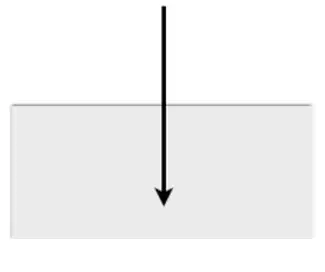
48.

Name the image above

a)

absorption

b)

transmission

c)

reflection

d)

scattering

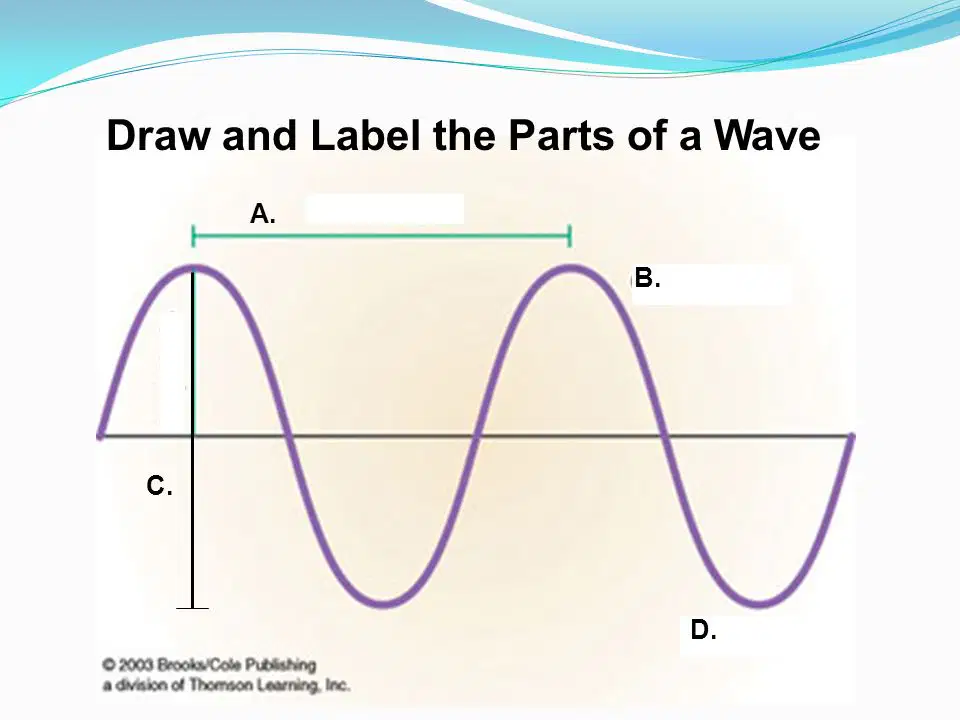
49.

What is part A?

a)

crest

b)

trough

c)

wavelength

d)

wave height

50.

What is part B?

a)

crest

b)

trough

c)

wavelength

d)

wave height

51.

What is part C?

a)

crest

b)

trough

c)

wavelength

d)

wave height

52.

What is part D?

a)

crest

b)

trough

c)

wavelength

d)

wave height

53.

A wave transports __________ from one place to another

a)

friction

b)

boats

c)

whales

d)

energy