
 Worksheets
First Semester Exam Quizizz Review 2017
Total questions: 100
Worksheet time: 50mins
Name
Class
Date
1.

The Paleolithic Age refers to the period when
a)
agriculture started
b)
simple stone tools were developed
c)
early cities were created
d)
hunting and gathering ended
2.

Which of the following changes took place as a result of the agricultural revolution?
a)
the belief in many gods
b)
living in small nomadic clans
c)
domestication of plants and animals
d)
decrease in the size of the population
3.
The early cities of Aleppo, Jericho and Catal Huyuk were established near the
a)
Indus and Ganges rivers
b)
Huang He and Yangtze rivers
c)
Tigris and Euphrates rivers
d)
Nile and Rosetta rivers
4.

What effect did the inventions of the plow, pottery, and weaving have on early societies?
a)
They helped people move about to find food.
b)
They increased incidences of fighting among neighbors.
c)
They helped create agricultural surpluses and encouraged settlements.
d)
They gave rise to early forms of government.
5.

Which of the following advancements were made by homo sapiens during the Paleolithic Era?
a)
developed a complex system of worship
b)
create specialized tools and weapons
c)
make and use fire effectively
d)
learn to communicate using written language
6.

Archaeologists use the carbon-dating method to determine the
a)
size of an artifact
b)
placement of an object
c)
age of an object
d)
function of an object
7.

The primary reason that civilization first developed in river valleys was that
a)
large grasslands made it easy to feed domesticated animals in the valley
b)
the soil was fertile for farming and irrigation was relatively easy
c)
farmers could count on an even amount of rain each year
d)
the land was free of pests and disease
8.

How did geography impact the life of early hunter-gatherer societies?
a)
Hunter-gatherer clans settled in river valleys.
b)
Hunter-gatherer clans plowed the land for farming.
c)
Hunter-gatherer clans had a steady supply of food at all times.
d)
Hunter-gatherer clans migrated as food sources were depleted.
9.

When studying prehistoric people, cave drawings allow archaeologists to–
a)
speculate about daily lives
b)
understand spoken languages
c)
interpret written records
d)
study farming techniques
10.

What was the major change caused by the agricultural revolution?
a)
Increase of spoken languages
b)
End of hunting
c)
Development of permanent settlements
d)
Elimination of trade
11.

During the Paleolithic Era, how did most early humans acquire food?
a)
By planting crops
b)
From domesticated animals
c)
By following animal migrations
d)
From nearby settlements
12.

Which characteristic was most common in ancient river valley civilizations?
a)
Hereditary rule
b)
Limited population growth
c)
Social equality
d)
Limited economy
13.

Modern Humans
a)
Homo Habilis
b)
Homo Erectus
c)
Australopithecine
d)
Homo Sapiens Sapiens
14.

Hunter/gatherers may have created cave art in order
a)
have magical power over their prey
b)
keep a written record of their history
c)
sell the paintings for money
d)
provide entertainment for their parties
15.

What does “domestication of animals” mean?
a)
taming of animals
b)
slaughtering of animals
c)
hunting of animals
d)
hunting of animals
16.

What is the best tittle for this map?
a)
Contemporary World War Zones
b)
Old World Centers of Religious Conflict
c)
Cradles of Civilization
d)
International Economic Centers
17.

Who possibly created the world's first empire?
a)
Alexander
b)
Cyrus
c)
Menes
d)
Hammurabi
18.

Which civilization is credited with inventing irrigation, the plow, and other tools made of bronze?
a)
Chaldeans
b)
Sumerians
c)
Hebrews
d)
Persians
19.

What is true concerning the Code of Hammurabi?
a)
Crimes were punished mildly.
b)
All punishments resulted in death.
c)
Punishments were based on the type of crime committed as well as the person’s social class standing.
d)
A guilty punishment was always harsh and reflected the philosophy of an eye for an eye.
20.

What was main purpose of cuneiform?
a)
It was used as a census.
b)
It was used to keep records of trade.
c)
It helped educate all Sumerians.
d)
It helped start civil wars.
21.

Mesopotamia kings based their rule primarily on:
a)
the wisdom of their laws
b)
their judicial authority
c)
how popular they were
d)
their connection to the gods
22.

What does “polytheism” mean?
a)
the belief in many gods
b)
the belief in good and evil
c)
the belief in one god
d)
the belief in an afterlife
23.

Which ancient civilization dominated Mediterranean Sea 3,000 years ago and also created the world's first alphabet?
a)
Egyptian
b)
Greek
c)
Persian
d)
Phoenician
24.

Sumerian cuneiform and the Phoenician alphabet were created to
a)
record history
b)
paint pictures
c)
speak traditions
d)
organize farming
25.

The Hittites were able to launch successful invasions of Mesopotamia because they
a)
tricked people into giving them land
b)
could shape iron into tools and weapons
c)
knew the secrets of the Code of Hammurabi
d)
brought a great deal of private property
26.

Who is considered to be the founder of Judaism, Christianity and Islam?
a)
Abraham
b)
Moses
c)
Jesus
d)
Muhammad
27.

What is the moral code of the Jews called?
a)
Code of Hammurabi
b)
Golden Rule
c)
Ten Commandments
d)
Analects
28.

Where did the ancient Hebrews establish their civilization?
a)
Eastern coast of the Nile
b)
Southern coast of the Indus
c)
Eastern coast of South Asia
d)
Western coast of the Fertile Crescent
29.

The Ten Commandments established a ______ between the Jews and God.
a)
covenant
b)
business
c)
disagreement
d)
seperation
30.

What does “the Exodus” refer to in the history of the Jews?
a)
their flight from Egypt
b)
their captivity in Babylon
c)
the founding of Israel
d)
their scattering across the world
31.

Hebrew leader that delivered the Ten Commandments and led the Jews/Hebrews out of slavery from Egypt
a)
Abraham
b)
Moses
c)
Jesus
d)
Hammurabi
32.

What does “the Exile” refer to in the history of the Jews?
a)
their flight from Egypt
b)
their captivity in Babylon
c)
the founding of Israel
d)
building of the Temple
33.

The term for scattering of Jews across the Fertile Crescent, North Africa and Southern Europe
a)
Exodus
b)
Exile
c)
Captivity
d)
Diaspora
34.

The ancient Hebrews were among the first to develop a religious tradition that included
a)
sacrifices
b)
holy pilgrimages
c)
ancestor worship
d)
monotheism
35.

The central document of Judaism is the
a)
Analects
b)
Qur'an
c)
Torah
d)
Upanishads
36.

Empire that created coin money, had a monotheistic religion, and also had a long range road system
a)
Persia
b)
Greece
c)
Inca
d)
Rome
37.

Which type of government was used in the Persian Empire?
a)
democratic republic
b)
religious theocracy
c)
constitutional democracy
d)
imperial bureaucracy
38.

Persian religion that had good vs. evil and heaven and hell
a)
Judaism
b)
Hinduism
c)
Zoroastrianism
d)
Buddhism
39.

Upon conquering a people practicing a different religion, Persian conquerors would be most likely to:
a)
allow them to keep their religion and customs
b)
destroy their temples but spares their priests
c)
destroy their temples and holds their priests captive in Babylon
d)
convert the people to Assyrianism
40.

How did the Nile enable (help) the Egyptians to build a civilization?
a)
It flooded regularly.
b)
It allowed them to trade with Sumer.
c)
It provided for their defense.
d)
It was red in color
41.

The area surrounding the Nile helped the ancient Egyptians by
a)
providing large amounts of cedar
b)
protecting Egyptians from invasions
c)
supplying the snails for purple dye
d)
limiting the size of the floods
42.

Where was the base of classical Egyptian civilization?
a)
Tigris and Euphrates river
b)
Indus river
c)
Huange He river
d)
Nile river
43.

The King and God of Egypt was the
a)
Emperor
b)
Czar
c)
President
d)
Pharaoh
44.

What did the Rosetta Stone help modern people understand?
a)
the history of the gods & goddesses
b)
the history of Akhenaton
c)
the meaning of hieroglyphics
d)
the meaning of cuneiform
45.

The Egyptian calendar is ased on the phases of the
a)
moon
b)
sun
c)
stars
d)
comets
46.

What form of mathematics was created by the Egyptians?
a)
Calculus
b)
Algebra
c)
Geometry
d)
Trigonometry
47.

Which ancient writing system was created by the Egyptians?
a)
calligraphy
b)
alphabet
c)
hieroglyphics
d)
cuneiform
48.

What is the name of this Egyptian structure?
a)
pyramids of Giza
b)
Sumerian Ziggurat
c)
Valley of the Kings
d)
Temple of Amon
49.

What is the name of this Sumerian structure?
a)
pyramids
b)
ziggurat
c)
temple
d)
church
50.

Difference between the pyramids of Giza and Sumerian Ziggurat?
a)
one was triangle shaped and the other was square
b)
one was built entirely by slaves while the other was built by priests and nobles
c)
one was built on an island while the other was the center of a city
d)
one was used as a tomb while the other was used as a temple
51.

Which statement best supports the conclusion that the Indus Valley civilization had a centralized government?
a)
the cities had an organized pattern of streets
b)
the farms produced annual crop surpluses
c)
goods were imported from coastal cities
d)
house were constructed with baked bricks
52.

Where was Indian civilization located?
a)
Tigris and Euphrates
b)
Nile
c)
Indus
d)
Huang He
53.
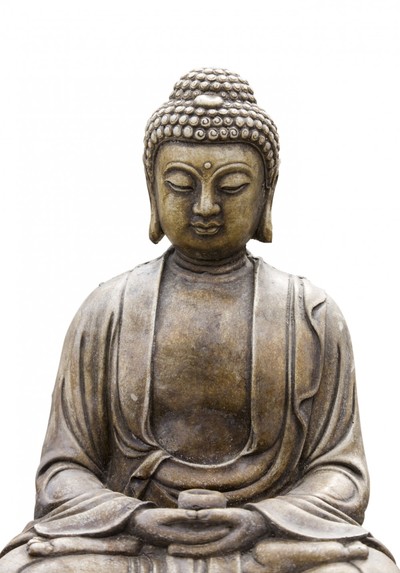
Religion started by Siddhartha Gautama in India?
a)
Islam
b)
Hinduism
c)
Buddhism
d)
Confucianism
54.
The Gupta Empire made a major contribution to world civilizations by developing -
a)
the concept of zero
b)
the production of porcelain
c)
long-lasting roads
d)
wind-powered boats
55.

The Aryans migrated from Europe to India through
a)
the Ganges River
b)
the Gobi Desert
c)
the Hindu Kush Mountains
d)
the Himalayan Mountains
56.

Once the Aryans arrived in India, they were able to take control by
a)
asserting dominance over the Indus people
b)
buying land from the Indus people
c)
converting the Indus people to Hinduism
d)
demonstrating tolerance to the Indus people
57.

The Aryans started a caste system which was hereditary, meaning that your place in society was determined by
a)
work
b)
money
c)
birth
d)
choice
58.

Which of the following is true about the caste system in India?
a)
people could marry whomever they wanted to
b)
the Aryans were at the bottom of the caste system
c)
a person’s occupation did not depend on their caste
d)
the caste system determined a person’s marriage
59.

Hindus believe that _____ is one God that shows himself in many forms
a)
Brahman
b)
Krishna
c)
Vishnu
d)
Shiva
60.

What major religion teaches both reincarnation and the conformity to a caste system?
a)
Hinduism
b)
Judaism
c)
Zoroastrianism
d)
Buddhism
61.

What does the diagram represent?
a)
Class system of China
b)
Political system of Greece
c)
Feudal system of Japan
d)
Caste system of India
62.

The Hindu belief that all thoughts and actions result in future consequences
a)
dharma
b)
nirvana
c)
karma
d)
enlightenment
63.

Hinduism spread along trade routes to which of the following countries?
a)
Europe
b)
Egypt
c)
China
d)
Mesopotamia
64.

The Vedas and Upanishads are the religious books of
a)
Buddhism
b)
Zoroastrianism
c)
Hinduism
d)
Judaism
65.

What ancient cities created a complex grid system as well as indoor plumbing?
a)
Thebes and Memphis
b)
Harappa and Mohenjo Daro
c)
Babylonia and Ur
d)
Athens and Sparta
66.

This image represents the founder of
a)
Buddhism
b)
Hinduism
c)
Islam
d)
Confucianism
67.

The main teachings of the Buddha
a)
Four Noble Truths
b)
Ten Commandments
c)
Vedas
d)
Code of Hammurabi
68.

Buddhists achieve enlightenment by following the
a)
laws of the Old Testament
b)
decrees (orders) of the Upanishads
c)
Five Pillars of Faith
d)
Eightfold Path
69.

Indian king who spread Buddhism from India to China, Korea and Japan
a)
Chandragupta
b)
Asoka
c)
Sargon
d)
Menes
70.

Empire that created a zero, set bones during surgery, were astronomers
a)
Egyptian
b)
Gupta
c)
Babylonian
d)
Han
71.

Where did Chinese civilization start?
a)
Tigris and Euphrates
b)
Nile
c)
Indus
d)
Huang He
72.

What natural barrier separated India from China?
a)
Mediterranean Sea
b)
Red Sea
c)
Ural Mountains
d)
Himalayan Mountains
73.

This was emphasized by Confucius as a way to improve society
a)
wealth
b)
education
c)
fame
d)
slavery
74.
This practice helps Chinese society run smoothly, even in the 21st century
a)
politeness
b)
selfishness
c)
money
d)
rewards
75.

The ruling authority of China’s ancient dynasties was based on the-
a)
Code of Hammurabi
b)
Mandate of Heaven
c)
Twelve Tables
d)
Ten Commandments
76.

Respect for parents and elders in China
a)
Mandate of Heaven
b)
Filial Piety
c)
Taoism
d)
Legalism
77.

The Tao Te Ching is the philosophical book of
a)
Confucianism
b)
Legalism
c)
Buddhism
d)
Taoism
78.

The belief that ancestors can affect life and should be honored and cared for is
a)
ancestor worship
b)
moon worship
c)
self worship
d)
sun worship
79.

Philosophy that teaches to live in harmony with nature, have a simple life and exercise humility in all things is based in
a)
China
b)
Egypt
c)
Greece
d)
Mesopotamia
80.

The Yin and Yang represents the opposites of
a)
Confucianism, Legalism
b)
Legalism, Taoism
c)
Confucianism, Taoism
d)
Shintoism, Confucianism
81.

The Great Wall of China was built by
a)
Nobles under Ch’in Shih Huangdi
b)
Peasants under Ch’in Shih Huangdi
c)
Nobles under Liu Bang
d)
Peasants under Liu Bang
82.

Classical age of China
a)
Chin Dynasty
b)
Zhou Dynasty
c)
Han Dynasty
d)
Sui Dynasty
83.

The Chinese civil service test was based on the teachings of
a)
Confucianism
b)
Legalism
c)
Taoism
d)
Buddhism
84.

118. The Silk Road was important to China because
a)
it provided a way to have contact with other cultures through trade
b)
it was a means of administering civil service examinations
c)
it provided a military route for the defense of the northern border
d)
it was a means for the country to expand its empire
85.

Dynasty that created paper money, porcelain and silk
a)
Zhou
b)
Han
c)
Sui
d)
Chin
86.

At the end of the Han Dynasty,
a)
China enter a golden age under the Mongols
b)
ancient Chinese writings were destroyed
c)
Buddhism had become a major religion in China
d)
both Hinduism and Buddhism was banned
87.
Which of the following had the greatest impact on the economic and political development of ancient Greece?
a)
The rugged mountains limited land travel and communication.
b)
Its proximity to the major river systems of Europe.
c)
Its mild climate that encouraged outdoor activities like theatre and sports.
d)
The harsh deserts made agriculture difficult.
88.

The pottery shows Greece’s appreciation for-
a)
movies and television
b)
poetry and architecture
c)
art and mythology
d)
plays and government
89.

What allowed the Greek city-states to share a common culture despite their geographic isolation?
a)
government and social structure
b)
currency and economy
c)
religion and language
d)
attitude toward slaves
90.

Which of the following resulted from Greek trade?
a)
Greek knowledge of how to forge iron tools spread to the Hittites
b)
The Greeks adopted the Phoenician alphabet and learned to use coins
c)
Greek religion was heavily influenced by the religion of the Romans
d)
The Greeks were influenced by Chinese ideas on government
91.

Which civilization influenced the architecture in the picture?
a)
Greece
b)
Rome
c)
Byzantium
d)
Arabia
92.

Athena, Apollo and Aphrodite were a god and goddesses from
a)
India
b)
China
c)
Greece
d)
Rome
93.

Greek city-state that created the world's first democracy
a)
Byzantium
b)
Sparta
c)
Rome
d)
Athens
94.

Which Greek city-state was ruled by an oligarchy?
a)
Sparta
b)
Thebes
c)
Athens
d)
Corinth
95.

The Athenian leader who created the first written law code of Athens was
a)
Pheidippides
b)
Draco
c)
Zeus
d)
Philip
96.

According to the Athenian leader Pericles, the most important role of a citizen was to
a)
be the best buisnessman possible
b)
conquer new city states
c)
give praise to the gods and goddesses
d)
be an active participant in politics
97.

Herodotus and Thucydides are known for what type of writings?
a)
Poetry
b)
History
c)
Drama
d)
Philosophy
98.
Three decade war between Athens and Sparta that ended the Golden Age of Greece
a)
The Gallic Wars
b)
The Peloponnesian War
c)
The Trojan War
d)
The Punic Wars
99.

City-state that had a limited democracy, stressed the importance of the individual, home of Socrates, Plato and Aristotle
a)
Athens
b)
Sparta
c)
Argos
d)
Sicyon
100.

Cave drawings were probably created for all of the following reasons EXCEPT
a)
to have magical power over their prey
b)
written documents
c)
to teach and keep records of animals
d)
religious rituals
100 %

