
 Worksheets
Evolution by Natural Selection
Total questions: 24
Worksheet time: 28mins
Name
Class
Date
1.
What is it called when better adapted organisms survive to pass traits along to their offspring.
a)
Evolution
b)
Natural Selection
c)
Extinction
d)
Artifical Selection
2.
A trait that helps a species survive
a)
characteristic
b)
adaptation
c)
survival trait
d)
pizza trait
3.
A change in the DNA of an organism.
a)
meoisis
b)
mutagen
c)
evolution
d)
mutation
4.
Why are advantageous traits more likely to be passed onto offspring?
a)
Because they are more likely to survive and reproduce.
b)
Because they look cooler.
c)
Because they come from recessive alleles.
d)
Because the trait is an acquired phenotype.
5.
Which animals and features did Darwin study on his journey to the Galapagos Islands?
a)
Finches' wings
b)
Finches' beaks
c)
Lizards' claws
d)
Penguins' feet
e)
Tortoise necks
6.
You look at two species and see very similar DNA. What does this likely tell you?
a)
These are the same animal.
b)
These animals have a common ancestor.
c)
These animals are not likely related.
d)
These animals are likely becoming one species.
7.
What is the advantage of having different shaped beaks?
a)
To look different from other species.
b)
To be able to eat the food readily available in the environment.
c)
To protect itself against predators.
d)
To protect itself against prey.
8.
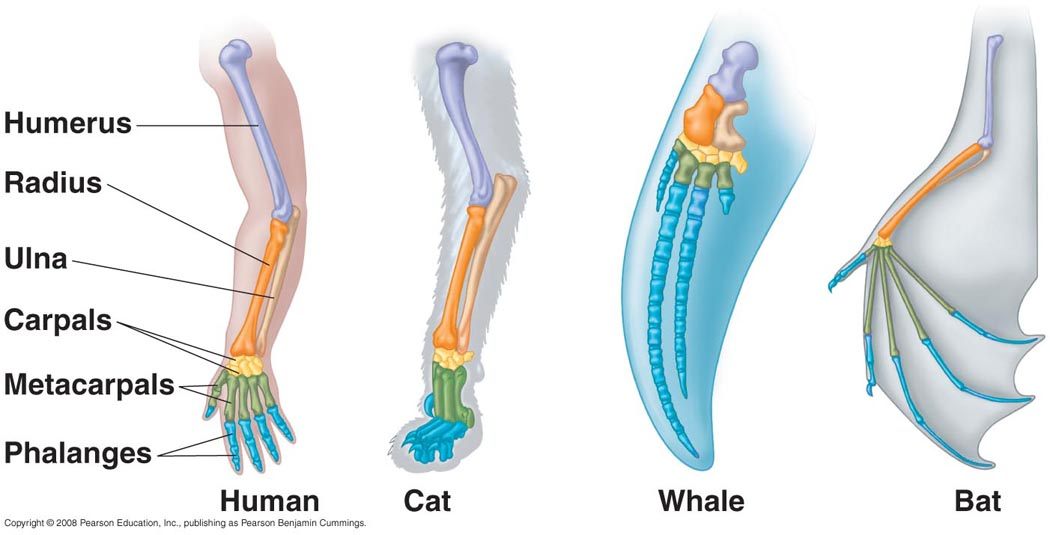
If an organism has a vestigial structure, that structure likely once had a function in a(n)
a)
close relative
b)
early ancestor
c)
unrelated organism
d)
embryological stage
9.
Bird wings and butterfly wings are an example of
a)
Homologous structure
b)
Analogous structure
c)
Mimicry
d)
Camoflague
10.
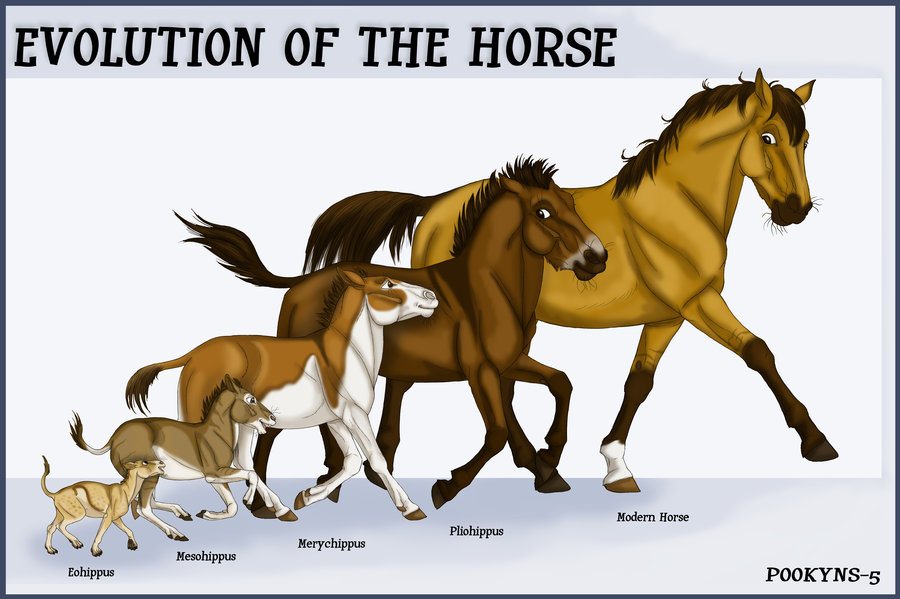
Some organisms that share a common ancestor have features that have different functions, but similar structures. These are known as
a)
vestigial structures
b)
analogous structures
c)
homologous structures
d)
fossil structures
11.
The famous scientist who came up with the theory of natural selection
a)
Jacobson
b)
Skubal
Einstein
Einstein
c)
Darwin
d)
Curie
12.

How are camels especially suited to their environment? Choose best
a)
Their humps make them good pack animals for humans
b)
Their long eyelashes make them look pretty
c)
They can go long without water
d)
They get along well with other animals
13.
Which of the following is most likely an example of a favorable mutation?
a)
Mutation that allows rabbits to run faster
b)
Mutation that changes color of a rabbit's fur to bright orange
c)
Mutation that changes rabbit's eyes
d)
Mutation that gives rabbit a third ear
14.

The term "fittest" from the phrase "survival of the fittest" means..
a)
best adapted organisms
b)
biggest organisms
c)
smarter organisms
d)
fastest organisms
15.
Can natural selection change the genetic makeup of individuals in a population?
a)
yes, because the genes are exposed to the environment
b)
no, because it selects based on physical characteristics
16.
Fill in the missing word:
Reproduction -> mutation -> ________________ -> selection
a)
mutation
b)
natural
c)
competition
d)
variation
17.
Try this analogy: Mutation::variation as adaptation::_________________
a)
natural selection
b)
genetic diversity
c)
artificial selection
d)
sexual reproduction
18.
What is an example of a vestigial structure of a HUMAN?
a)
Femur
b)
Wisdom Teeth
c)
Brain
d)
Finger
19.
Why do frogs and other organism reproduce so many eggs or offspring?
a)
so that their babies can have friends to play with
b)
the more offspring the more likely the offspring will survive
c)
the more offspring the less likely offspring will survive
d)
the more offspring the less competition
20.
Almost all adaptations started off as?
a)
selective breeding
b)
physiological
c)
structural
d)
mutation
21.
Which of the following means "genetic change over time"
a)
natural selection
b)
speciation
c)
evolution
d)
fitness
22.
The differences among a species, like different bird beaks, are called
a)
genes.
b)
variations.
c)
traits.
d)
theories.
23.
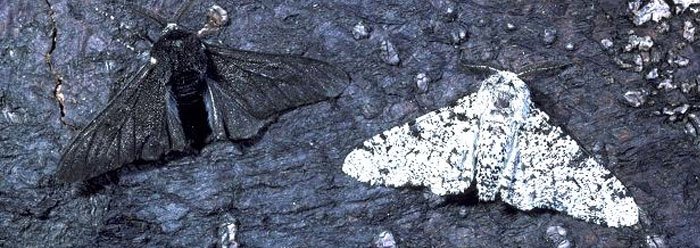
The trees these moths used to live on were white, but have been covered in soot from coal factories. Which moth will be more successful in this environment?
a)
Dark moth
b)
Light moth
c)
Both will be equally successful
d)
Neither will be successful
24.

Since the 1800s humans have stopped burning coal, and the trees have returned to their original color. Which moth will be more successful in this environment?
a)
Dark moth
b)
Light moth
c)
Both will be equally successful
d)
Neither will be successful
100 %

