
NEW
Font size
S
M
L
XL
 Worksheets
Fossils
Total questions: 27
Worksheet time: 14mins
Name
Class
Date
1.
the trace or remains of an organism that lived a loooong time ago, often preserved in sediment
a)
half-life
b)
fossil
c)
geologic time-scale
d)
evolution
2.

this type of fossil is a mark or cavity made in sediment in the shape of a shell or other body
a)
cast
b)
trace
c)
petrified
d)
mold
3.
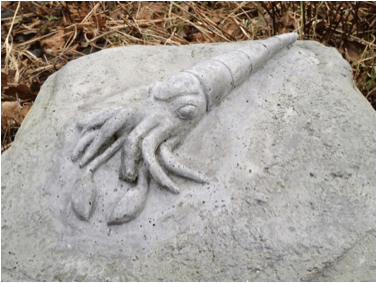
this type of fossil is a mold filled with sediment that creates a solid copy of an organism
a)
mold
b)
petrified
c)
cast
d)
trace
4.

this type of fossil is created when an organism's tissue is replaced by minerals
a)
cast
b)
mold
c)
amber
d)
petrified
5.

this type of fossil is created during a process that preserved the delicate parts of plant leaves and insects
a)
amber
b)
petrified
c)
carbon film
d)
trace
6.

this type of fossil provides evidence of the activities of ancient organisms; examples include marks left by footprints or tails
a)
mold
b)
carbon film
c)
trace
d)
cast
7.
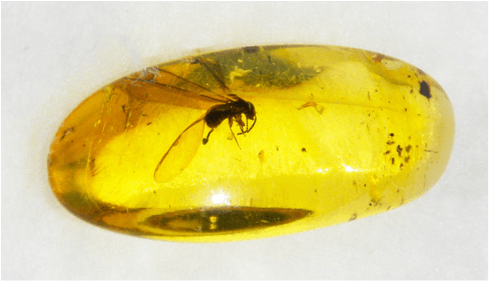
this material does an excellent job of preserving insect remains
a)
cast
b)
amber
c)
mold
d)
carbon film
8.

a scientist who studies fossils
a)
geologist
b)
biologist
c)
paleontologist
d)
chemist
9.

provides evidence about the history of life and past environments on earth, and how life has changed over time
a)
relative dating
b)
fossil record
c)
unconformities
10.

the age of a rock compared to the ages of other rocks
a)
absolute age
b)
relative age
11.
process where scientists compare rock lays with others to determine a rock's age
a)
relative dating
b)
absolute dating
12.
absolute age
a)
the age of a rock compared to the ages of other rocks
b)
the number of years that have passed since a rock formed
13.
superposition: a principle which states that in ______________, _______________ sedimentary rock layers, the OLDEST layer is on the BOTTOM.
a)
disturbed, horizontal
b)
undisturbed, horizontal
c)
disturbed, vertical
d)
undisturbed, vertical
14.
"younger over oldest" means that the the OLDEST rock layer is on the _________.
a)
top
b)
bottom
15.
gaps in rock layers, often caused by erosion
a)
unconformities
b)
superpositions
c)
molds
16.
used to date surrounding rock layers
a)
half-life
b)
radioactive dating
c)
index fossil
17.
the time it takes for half of the radioactive remains in a sample of radioactive element to decay
a)
relative dating
b)
half-life
c)
geologic time-scale
d)
index fossil
18.
developed by scientists studying the fossil record when they noticed MAJOR CHANGES in life forms
a)
fossil record
b)
geologic time scale
c)
radioactive dating
d)
absolute dating
19.
a record that depends on the events in the history of life on earth
a)
fossil record
b)
geologic time scale
c)
radioactive dating
d)
absolute dating
20.
scientists need to know the ______ of decay for a radioactive element in order to determine the ____ age of a rock
a)
age; absolute
b)
index fossil; relative
c)
age; relative
d)
rate; absolute
21.
used to divide earth's loooong history into manageable parts
a)
fossil record
b)
geologic time scale
c)
radioactive dating
d)
absolute dating
22.
In the geologic time-scale, major _______ in life forms as seen in the fossil record mark where one _____ of geologic time ends and another begins
a)
changes; second
b)
mammals; unit
c)
changes; unit
23.
__ may have caused the dinosaurs to become extinct, after an asteroid struck earth and clouded the atmosphere
a)
the jurassic era
b)
the evolution into birds
c)
climate change
24.
an animal with a backbone
a)
invertebrate
b)
vertebrate
25.
warm-blooded vertebrates
a)
amphibians
b)
reptiles
c)
mammals
26.

On top of Mt. Everest, there are fossilized remains of sea life; this tells us that the rocks at the top of world's highest mountain
a)
used to be above sea level
b)
used to be below sea level
c)
used to be on Mars
d)
came from an asteroid
27.
a cavity is a:
a)
empty, hollow area
b)
solid copy
Reset

