wayground logo

Free Printable Worksheets

NEW

Font size

S
M
L
XL
Worksheets

Section #2: Surface Processes

Total questions: 60

Worksheet time: 58mins

Name
Class
Date
1.
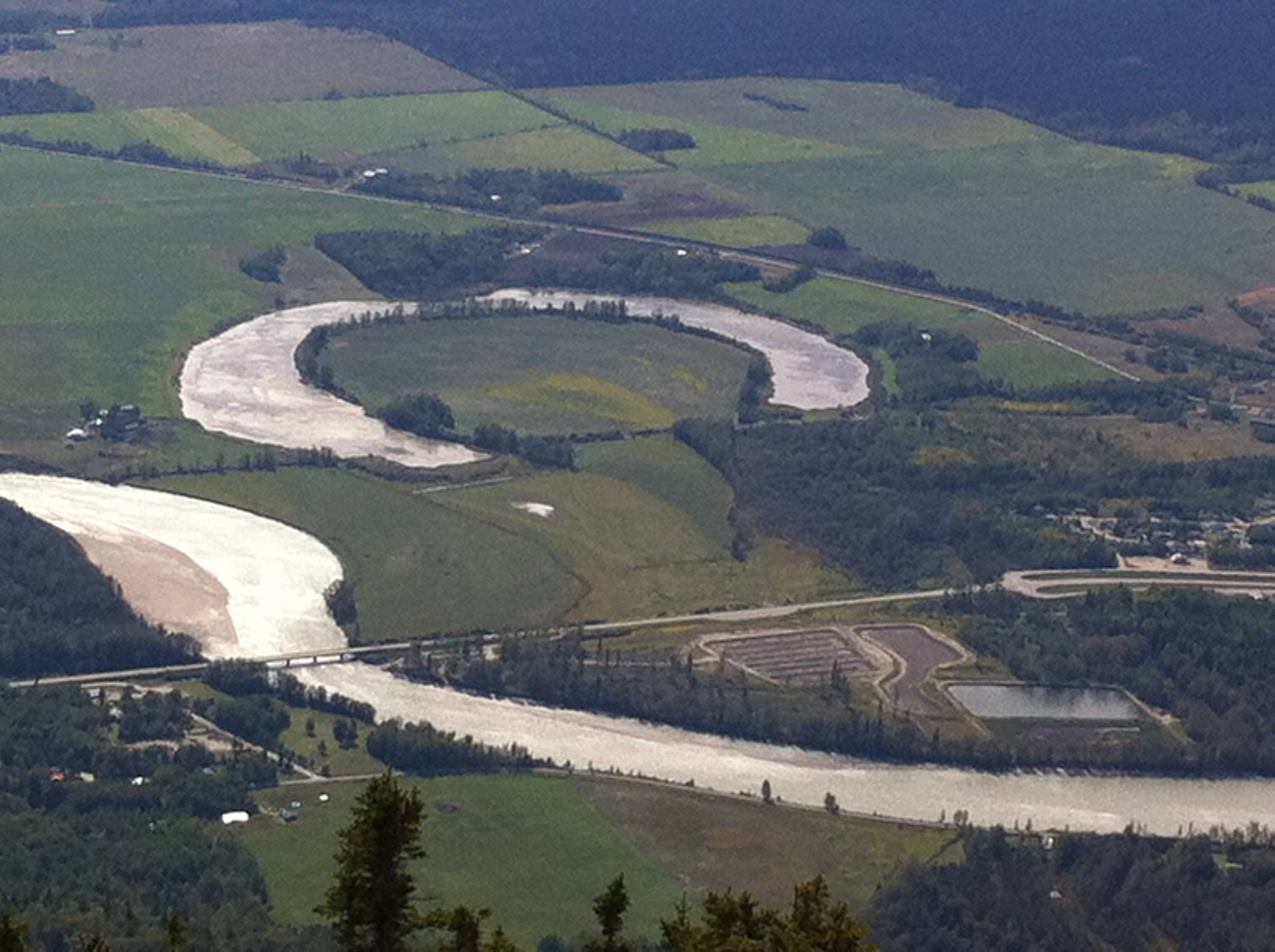
A curve in a stream's channel caused by erosion is called...
a)
Beach
b)
Geyser
c)
Meander 
d)
Groundwater
2.
Which type of sediment will be dropped first as the wind slows?
a)
flattest
b)
smallest
c)
heaviest
d)
lightest
3.
What forms as wind slows?
a)
mudflows
b)
rockfalls
c)
dunes
d)
glaciers
4.
What is a type of mass movement by gravity?
a)
dune
b)
loess
c)
glacier
d)
mudslide
5.
How does an alluvial fan form?
a)
where a stream enters an ocean
b)
when a stream overflows
c)
when a meandering stream is cut off
d)
when a stream reaches a flat area of land
6.
A delta at the mouth of a river is the direct result of 
a)
runoff from sewage
b)
deposition of sediment
c)
an ancient glacier that passed through
d)
an underground river flowing to the ocean
7.
Rocks sometimes show evidence of ancient glaciers.  Which is the best sign that glaciers once covered an area?
a)
Rocks have many scratches
b)
Rocks contain fossils
c)
Rocks are covered by moss
d)
Rocks are deep underground
8.
Where would you find the deepest layer of sediment in a river?
a)
The inside of a meander.
b)
Along a straight run
c)
The outside of a meander
d)
The head of a river
9.
After a heavy rainfall, rock and soil on a desert hill slides to the bottom. This is an example of a ...
a)
slump
b)
landslide
c)
mudslide
d)
creep
10.
Which of the following statements is true about wind transport?
a)
wind, like water, can only move materials downhill
b)
wind and water have the same relative ability to erode materials
c)
wind transport and erosion primarily occur in areas with little vegetative cover
d)
generally, wind can carry particles as large as those transported by moving water
11.
What glacial features are indicated by the labels C and D on the figure?
a)
moraines
b)
outwash plains
c)
kettle lakes
d)
ice sheets
12.
This forms from a depression left by a glacier and fills with water.
a)
Moraine
b)
Arete
c)
Kettle
d)
Fiord
13.
Forms when a flowing glacier scoops out an area between two mountains. 
a)
U-Shaped Valley
b)
Fiord
c)
Kettle
d)
Moraine
14.
What is it called when a large land area drains into a stream/river?
a)
Deposition
b)
Watershed
c)
Discharge
d)
Flood
15.
The measure of the volume of water that flows over a particular location within a given period of time is called what?
a)
Run off
b)
Erosion
c)
Deposition
d)
Discharge
16.
What is feature F?
a)
tributary
b)
meander
c)
oxbow lake
d)
waterfall
17.
Alluvial fans are formed when:
a)
Streams with low load suddenly spread out
b)
Streams with a high gradient empty onto flat ground
c)
Streams have very low discharge and dry up
d)
Streams empty into a lake or ocean
18.
Which natural event would likely lead to higher rates of erosion in a stream?
a)
A storm that increases the stream's discharge
b)
An earthquake that decreases the stream's gradient
c)
A sunny day that has no effect on the stream's load
d)
A slight breeze that carries pollen over the stream
19.
Stream X causes more erosion than Stream Y.  Which of the following is NOT a reason for this difference?
a)
Stream Y flows slower than Stream X
b)
Stream X has a lower gradient than Stream Y
c)
Stream Y carries smaller particles than Stream X
d)
Stream X has a higher discharge than Stream Y
20.
The sediment deposited by the valley glacier at position X is best described as
a)
sorted according to particle density
b)
sorted according to particle size
c)
sorted according to particle texture
d)
unsorted
21.
The particles in a sand dune deposit are small and very well-sorted and have surface pits that give them a frosted appearance.  This deposit most likely was transported by
a)
Gravity
b)
Wind
c)
Glacial Ice
d)
Ocean currents
22.
A state of dynamic equilibrium exists in an erosional-depositional system when
a)
The rate of erosion is the same as the rate of deposition
b)
The rate of erosion exceeds the rate of deposition
c)
The amounts of kinetic energy and potential energy both equal zero
d)
all sediments are transported to the sea and erosion stops
23.
The sediment deposited in each bed is best described as
a)
sorted mainly according to particle shape
b)
a mixture of sorted and unsorted particles
c)
sorted mainly according to particle size
d)
showing no evidence of sorting
24.
Which rock particles will remain suspended in water for the longest time?
a)
pebbles
b)
silt
c)
clay
d)
sand
25.
When water from the river enters the lake, particles of which size will usually settle out first?
a)
silt
b)
pebbles
c)
clay
d)
cobbles
26.
Which characteristic would most likely decrease along the reference line from A to B?
a)
the density of the water
b)
the size of the sediments
c)
the amount of salt in solution
d)
the depth of the water
27.
The rate at which particles are deposited by a stream is least affected by the
a)
size and shape of the particles
b)
velocity of the stream
c)
stream's elevation above sea level
d)
density of the particles
28.
This hill is most likely composed of
a)
cemented sediments
b)
unsorted sediments
c)
horizontally layered sediments
d)
vertically layered sediments
29.
At which location would sediments have the most potential energy?
a)
A
b)
B
c)
C
d)
D
30.
Why do the particles carried by a river settle to the bottom as the river enters the ocean?
a)
Velocity of the river water decreases as it enters the ocean
b)
Kinetic energy of the particles increases as the particles enter the ocean
c)
Density of the ocean water is greater than the density of the river water
d)
Large particles have a greater surface area than the small particles
31.
Which deposits contain particles 0.001 cm in diameter?
a)
A and B
b)
A and D
c)
C and D
d)
B and C
32.
Which deposit contains the highest percentage of sediments that would stay in suspension for the longest time before settling?
a)
deposit C
b)
deposit B
c)
deposit D
d)
deposit A
33.
What was the most probable agent of erosion that deposited the unsorted sediments in deposit B?
a)
stream
b)
ocean water
c)
glacier
d)
wind
34.
According to the ESRT, what must be the size of a boulder?
a)
greater than 25.6 cm in diameter
b)
0.2 to 6.4 cm in diameter
c)
less than 0.2 cm in diameter
d)
6.4 to 25.6 cm in diameter
35.

Where would the greatest amount of sediments most likely be deposited in this system?

a)

B

b)

F

c)

D

d)

E

36.
Which kind of sediment would probably be deposited farthest out in the lake?
a)
silt
b)
sand
c)
clay
d)
pebbles
37.
At which points along the stream at erosion and deposition dominant?
a)
Erosion is dominant at B and C, and deposition is dominant at A and D
b)
Erosion is dominant at A and D and deposition is dominant at B and C
c)
Erosion is dominant at A and C, and deposition is dominant at B and D
d)
Erosion is dominant at B and D, and deposition is dominant at A and C
38.
In which zone would the stream normally deposit particles of largest size?
a)
B
b)
D
c)
C
d)
A
39.
Which zone would contain particles mostly in the range of 0.05 to 0.10 cm in diameter?
a)
C
b)
D
c)
B
d)
A
40.
Trees growing on the edge of a river’s meander are most likely to fall into the river due to
a)
 deposition on the inside of the meander
b)
deposition on the outside of the meander
c)
erosion on the inside of the meander
d)
erosion on the outside of the meander
41.

The process that wears down rock into smaller pieces is...

a)

erosion

b)

deposition

c)

weathering

d)

compaction

42.

The process that moves material is...

a)

erosion

b)

deposition

c)

weathering

d)

compaction

43.

The process that puts down material is...

a)

erosion

b)

deposition

c)

weathering

d)

compaction

44.

This valley was carved by...

a)

a river

b)

a road

c)

a glacier

d)

an earthquake

45.

This valley was carved by...

a)

a river

b)

a road

c)

a glacier

d)

an earthquake

46.

What type of weathering does not change the composition of a rock?

a)

chemical weathering

b)

dissolution

c)

mechanical weathering

d)

oxidation

47.

What type of climate is required for strong chemical weathering?

a)

Hot and wet

b)

Hot and dry

c)

Cold and wet

d)

Cold and dry

48.

What type of erosion is pictured?

a)

rock fall

b)

glacial movement

c)

landslide

d)

creep

49.

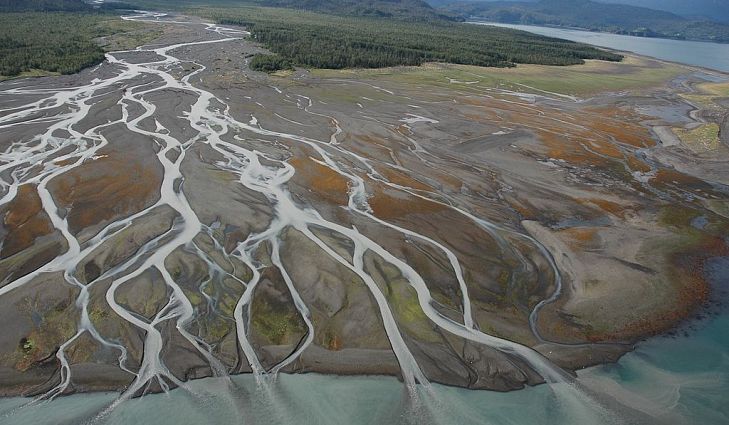
What feature is pictured?

a)

oxbow lake

b)

braided river

c)

U-shaped valley

d)

landslide

50.

When a river meets a large body of water...

a)

it speeds up, picking up more material

b)

it continues at the same speed

c)

it slows down, depositing material

d)

it makes a whirlpool

51.

How do sand dunes move?

a)

Wind blows sand over the edge of the dune and drops it on the other side.

b)

Wind moves the entire sand dune at once.

c)

Wind blows the bottom part of the sand dune, and makes it move.

d)

Wind picks up the sand dune and drops it somewhere else.

52.

Compare and contrast deltas and alluvial fans.

a)

Often contain rapids and waterfalls, the water in a mountain stream moves quickly because it is flowing down.

b)

As water flows down a hillside through fillies, the gullies flow together to form streams.

c)

Deltas and alluvial fans both form when a river slows down or ends, depositing sediment. However, deltas form in water and alluvial fans form on land.

53.
How does vegetation in the soil affect the rate of erosion?
a)
It doesn't affect erosion.
b)
It decreases erosion.
c)
It increases erosion.
54.
What is an enormous mass of ice moving over land?
a)
Ice wedging
b)
Glacier
c)
Iceberg
d)
Dune
55.

What do floodplains, sandbars, and river deltas have in common?

a)

They've all been formed by water erosion

b)

They've all been formed by glacial erosion

c)

They've all been formed by wind erosion

d)

They've all been formed by sandblasting

56.

What causes the greatest erosion effect on our beaches?

a)

Waves

b)

Gravity

c)

Glaciers

d)

Wind

57.

Which of the following is NOT a slow change to Earth's surface?

a)

Weathering

b)

Erosion

c)

Deposition

d)

Landslides

58.
What caused the edges of these rocks to become smooth?
a)
rocks bumping and scraping against each other in a river
b)
ice scraping from a glacier
c)
sand blowing in the wind
d)
plants growing roots
59.

Which of the following causes of the Dust Bowl were due to HUMAN IMPACT?

  1. Over-tilling the land
  2. Severe heat and drought for almost a decade
  3. Overgrazing of farm animals
  4. High winds in the area
a)

All answer options

b)

1 and 3

c)

1, 2, and 3

d)

1 and 2

60.
Jekyll & Tybee are only two of the many ___________________ off the Georgia coast.  They form a wall, blocking ocean waves and wind from directly hitting the mainland.
a)
barrier islands
b)
beaches
c)
marshes
d)
rivers