
 Worksheets
EEn Review pages Water, Weather & Atmosphere
Total questions: 42
Worksheet time: 52mins
Name
Class
Date
1.
Some factories can increase the amount of thermal pollution by dumping heated water into lakes and rivers. How can this type of pollution affect aquatic environments?
a)
It can increase the life expectancy of animals in the aquatic environment
b)
It can reduce the decomposition rate of organisms.
c)
It can reduce the number of species in the environment!
2.
How can urbanization affect a local area?
a)
it can increase the number of invasive species in an area
b)
It can decrease the risk of water pollution in an area
c)
It can increase the risk of flooding in an area
d)
It can decrease the need for natural resources in an area
3.
Which is a farming technique that could improve the soil and the environment?
a)
using fueled machines that will turn the soil continuously
b)
creating undisturbed layers of mulch in the soil
c)
placing inorganic chemical fertilizers in the soil
d)
irrigation the soil with salty water
4.
Subsurface ocean currents continually circulate from the warm waters near the equator to the cooler waters in other parts of the world. What is the main cause of these currents?
a)
differences in the topography along the ocean floor
b)
differences in density of ocean water
c)
the rotation of Earth on its axis
d)
movement of the jet stream
5.
Which is the most common contamination source for freshwater resources?
a)
runoff
b)
digging wells
c)
melting glaciers
d)
lightning
6.
A community decides to upgrade its water purification and management systems. What lasting impact could this have on available freshwater?
a)
it could cause a decrease in water demand
b)
it could cause a decrease in the water levels
c)
it could cause an increase in waterborne diseases
d)
it could cause an increase in the freshwater supply
7.
Which change would best aid a farmer in making the transition from conventional farming techniques to more sustainable farming techniques?
a)
reduce the ratio of essential elements in the fertilizer
b)
irrigate crops using well water
c)
rotate the types of crops grown
d)
plant only genetically modified crops
8.
Which is the best way to conserve worldwide freshwater resources?
a)
build more roads and highways for cars and trucks
b)
increase the amount of land used to raise cattle
c)
develop more modern coal-powered plants
d)
use more efficient irrigation techniquies
9.
The boundary between two air masses is known as:
a)
front
b)
storm
c)
climate
d)
flood
10.
Why are ocean currents important to coastal regions?
a)
They produce high and low tides along coastal regions.
b)
They can warm or cool the air temperature along coastal regions.
c)
They move vertically pushing warm water and nutrients to the surface along coastal regions.
11.
In which atmospheric layer of Earth do thunderstorms occur?
a)
thermosphere
b)
mesosphere
c)
stratosphere
d)
troposphere
12.
Which statement describes the general movement of air masses?
a)
They move from areas of high pressure to areas of low pressure.
b)
They move from areas of low temperature to areas of high temperatures.
c)
They move from areas of low humidity to areas of high humidity.
13.
How is climate different from weather?
a)
Climate is constantly changing, whereas weather changes slowly over time.
b)
Climate influences people's daily activities, whereas weather influences people's seasonal activities.
c)
Climate refers to the atmopsheric conditions on a given date, whereas weather refers to the atmospheric conditions during a given season.
d)
Climate is based on observations made for a region over several years, whereas weather is based on day-to-day observations made for a region.
14.
Human activities alter the water cycle by...
a)
Withdrawing large amounts of freshwater
b)
Clearing vegetation and eroding soils
c)
Polluting surface and underground water
d)
All of the choices
15.

What is it called when plants give off water vapor as a waste product?
a)
condensation
b)
evaporation
c)
sublimation
d)
transpiration
16.
What is the energy source that powers the water cycle?
a)
Gravity
b)
Running Water
c)
Internal Heat of the Earth
d)
Sun
17.
The way Earth's rotation makes the winds curve
a)
Coriolis Effect
b)
Cuticle Effect
c)
Revolution
d)
rotation
18.
Where is most of the freshwater found on Earth?
a)
lakes
b)
glaciers
c)
oceans
d)
rivers
19.

What is D?
a)
Evaporation
b)
Condensation
c)
Precipitation
d)
Runoff
20.
Which weather tool measures air pressure?
a)
thermometer
b)
barometer
c)
anemometer
d)
psychrometer
21.
This weather tool measures wind speed...
a)
thermometer
b)
barometer
c)
anemometer
d)
psychrometer
22.
A cold front usually brings what kind of weather?
a)
snow
b)
sunny and fair
c)
rain and/or thunderstorms
d)
cool and dry
23.

This symbol represents what type of front?
a)
cold front
b)
warm front
c)
stationary front
d)
occluded front
24.

This symbol represents what type of front?
a)
cold front
b)
warm front
c)
stationary front
d)
occluded front
25.
If this is damaged, skin cancer rates may increase.
a)
Greenhouse Effect
b)
Mesosphere
c)
Stratolayer
d)
Ozone Layer
26.
This is based on day to day observations of the atmosphere for a specific region.
a)
Weather
b)
Climate
27.
This gas makes up 78% of the atmosphere
a)
oxygen
b)
nitrogen
c)
ozone
d)
carbon dioxide
28.
This layer is where weather occurs
a)
troposphere
b)
thermosphere
c)
exosphere
d)
stratosphere
29.
This type of water holds LESS dissolved oxygen/gases and is LEAST dense.
a)
cold water
b)
warm water
30.
Where is ocean water the densest.
a)
The surface
b)
The middle
c)
The bottom
d)
Lake Michigan
31.
Most water pollution is the result of __________________.
a)
natural processes
b)
animal waste
c)
human activities
d)
acid rain
32.

Which of the following statements are true?
a)
Cold water is denser than warm water.
b)
Warm water is denser than cold water.
c)
Warm and cold water have equal densities.
d)
The density of water is not affected by temperature.
33.
Which of these is an example of nonpoint source pollution?
a)
an unlined landfill
b)
a leaking waste water pipe
c)
a leaking oil tanker
d)
runoff from feedlots
34.
Water pollution that comes from a single source is considered...
a)
point source pollution
b)
nonpoint source pollution
c)
thermal pollution
d)
ocean pollution
35.
Hurricanes form when the temperature of the ocean is _____.
a)
cold
b)
warm
36.

Cold ocean currents generally come from
a)
The North & South Poles
b)
The Equator
37.

Warm ocean currents generally come from
a)
The North Pole
b)
The South Pole
c)
The Equator
d)
Both A and B
38.

The Coriolis Effect is caused by
a)
Earth revolving around the sun
b)
Earth rotating on its axis
c)
Rising and falling tides
d)
Pull of gravity
39.

A ship carrying gasoline runs into shore and spills large amount of gasoline.
a)
Point
b)
Non-Point
40.
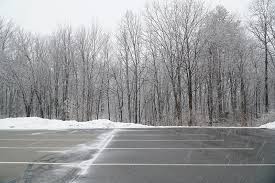
Snow melts in parking lots and carries oils into nearby waterways
a)
Point
b)
Non-Point
41.
A[n] ______________ tide occurs when the sun is at right angles to the line between Earth and the moon.
a)
high
b)
neap
c)
low
d)
spring
42.
A[n] ___________ tide occurs when the sun, Earth, and the moon are in a straight line.
a)
spring
b)
high
c)
low
d)
neap
100 %

