
NEW
Font size
S
M
L
XL
 Worksheets
EEn Final Review p.13-16 Climate & Human Impact
Total questions: 30
Worksheet time: 34mins
Name
Class
Date
1.
What consequence could an exponentially growing human population have on drinkable water?
a)
It could cause a decrease in needing water for survival.
b)
It could cause an increase in cases of waterborne diseases.
c)
It could cause an increase in the amount of water available for the population.
2.
Why is it important to conserve the biodiversity of Earth?
a)
to decrease the amount of global predator populations
b)
to decrease the stability of major global ocean currents
c)
to increase the stability of ecosystems during environmental changes
d)
to increase the amount of nonrenewable resources located in the lithosphere
3.
How could the introduction of a nonnative species of plant affect an ecosystem in North Carolina?
a)
It could pollinate the native plant species, producing a disease-resistant species
b)
It could reduce the competition for space and light with native plant species.
c)
It could take over the habitats of the native plant species.
d)
It could cause some insect species to destroy native plant species.
4.
Which change would best aid a farmer in making the transition from conventional farming techniques to more sustainable farming techniques?
a)
reduce the ratio of essential elements in the fertilizer
b)
irrigate crops using well water
c)
rotate the types of crops grown
d)
plant only genetically modified crops
5.
Which would most likely cause a reduction in the amount of coal and natural gas on Earth?
a)
a continual increase in the amount of pollution in Earth's atmosphere
b)
a continual increase in the number of people on Earth
c)
a continual decrease in the amount of water in Earth's aquifers
d)
a continual decrease in the amount of rain forests on Earth
6.
Which is a biotic factor that could affect an ecosystem?
a)
dust storms moving through an ecosystem
b)
bacteria harming the health of organisms in an ecosystem
c)
large amounts of acid rain precipitation seeping into the soil in an ecosystem
d)
high levels of carbon dioxide entering the atmosphere within an ecosystem
7.
________ refers to the number of different species living in the area
a)
Biodiversity
b)
Ecotourism
8.
How can oil and natural gas be extracted from the earth?
a)
by digging in areas of volcanoes
b)
by drilling deep beneath the ground
c)
by strip-mining in mountainous areas
d)
by removing limestone deposits from the ground
9.
What are the two main factors that determine the climate of an area?
a)
precipitation and humidity
b)
temperature and air pressure
c)
wind conditions and humidity
d)
temperature and precipitation
10.
Fossil fuels include coal, oil and natural gas. Fossil fuels are classified as nonrenewable because they —
a)
Take many, many years to be replaced
b)
require expensive equipment
c)
Can be found all over Earth's surface
d)
Provide much of the energy we use
11.
A large tract of land is purchased by a commercial agricultural company. The land is cleared of its native flora (plants), and a single crop is planted instead. What is the effect of this action?
a)
There is an increase in the variety of foods.
b)
The biodiversity of the area is reduced.
c)
There is a reduction in the size of the land
d)
The cost of the planted crop increases
12.
The maximum population size of a species that the environment can sustain indefinitely, given the food, habitat, water and other necessities available in the environment.
a)
sparse population
b)
environmental
c)
carrying capacity
d)
dense population
13.

plants and animals that have migrated to areas where they are not native; often displace native species by out-competing them for resources
a)
predators
b)
biological magnification
c)
invasive (non-native) species
d)
prey
14.
The ozone layer is damaged by
a)
CFCs
b)
Increase in greenhouse gases (CO2)
c)
Increased global temperatures
d)
Sulfuric and nitric acids
15.
Biotic means
a)
nonliving
b)
living
c)
biology
d)
biotech
16.

Which of the following is NOT an alternative energy source?
a)
fossil fuels
b)
geothermal energy
c)
hydroelectric energy
d)
wind energy
17.

This Picture Represents Which Type of Alternative Energy?
a)
Wind
b)
Solar
c)
Hydroelectric
d)
Geothermal
18.
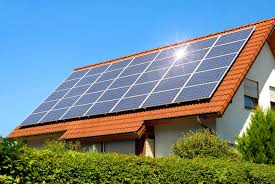
Why are not American's roofs crammed with more solar panels?
a)
They are ugly.
b)
They are uninformed.
c)
Expensive start-up cost
d)
People enjoy paying bills.
19.
Which of the following is a disadvantage of using fossil fuels such a coal, oil, and natural gas energy?
a)
they are cheap
b)
they are efficient
c)
they can be used almost anywhere
d)
they cause pollution such as greenhouse gasses
20.
What is the result of a maritime polar air mass?
a)
cold, wet air
b)
cold, dry air
c)
warm, dry air
d)
warm, cool air
21.
We can expect rain on Tuesday.
a)
Weather
b)
Climate
22.
Since 1901, global surface temperatures have risen at an average rate of 0.13⁰F every Ten years. In which way could the average increase in global temperatures influence Earth?
a)
by increasing the formation of sea ice within polar regions
b)
by increasing the amount of flooding because of rising sea levels
c)
by decreasing erosion within coastal ecosystems
23.
What is an ecological footprint?
a)
the maximum number of individuals that the environment can support
b)
measures the amount of renewable and nonrenewable resources that are used due to our activities
c)
the print we leave in the mud and sand
24.
All of the following are limiting factors except...
a)
space, natural disaster
b)
food
c)
phone service
d)
water
25.
Why is it important to recycle?
a)
It saves landfill space
b)
It saves natural resources
c)
It saves money
d)
All of these statements are true
26.
Studies have shown that Sunspots cause a...
a)
decrease in climate due to magnetic field changes in the Sun
b)
increase in climate due to magnetic field changes in the Sun
27.
Temperate climates have warm and cold seasons.
a)
True
b)
False
28.
Kudzu, a vine in NC, was introduced to the US in 1876 to control erosion. BUT Kudzu creates problems by growing rapidly and preventing other plants from getting sunlight. What best describes Kudzu?
a)
abiotic factor
b)
noncompetitive species
c)
agent of erosion
d)
an invasive, nonnative species
29.
Which could most likely have a lasting negative impact on the BIODIVERSITY of an area?
a)
reduction of fertilizers
b)
clear-cutting tree areas
c)
selective cutting of trees
d)
increase in the plant populations
30.
Which BEST describes the relationship between carrying capacity and Earth's resources?
a)
a population that is above the carrying capacity will have a decrease in natural resources
b)
a population that is below the carrying capacity wll have an increase in diseases
c)
a population that is below the carrying capacity will experience a descrease in freshwater resources
Reset

