
 Worksheets
Fossils
Total questions: 20
Worksheet time: 35mins
Name
Class
Date
1.
the trace or remains of an organism that lived a loooong time ago, often preserved in sediment
a)
half-life
b)
fossil
c)
geologic time-scale
d)
evolution
2.

this type of fossil is a mark or cavity made in sediment in the shape of a shell or other body
a)
cast
b)
trace
c)
petrified
d)
mold
3.
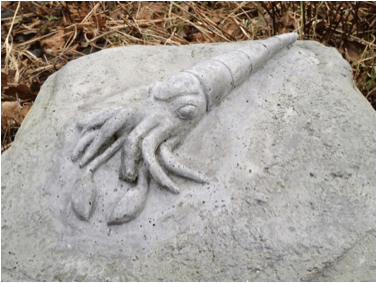
this type of fossil is a mold filled with sediment that creates a solid copy of an organism
a)
mold
b)
petrified
c)
cast
d)
trace
4.

this type of fossil provides evidence of the activities of ancient organisms; examples include marks left by footprints or tails
a)
mold
b)
carbon film
c)
trace
d)
cast
5.
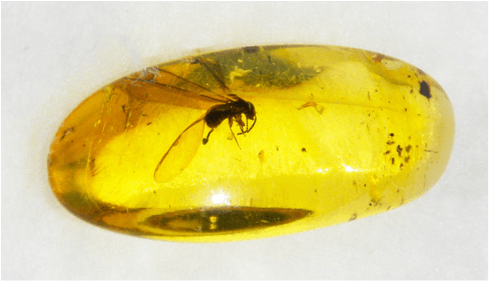
this material does an excellent job of preserving insect remains
a)
cast
b)
amber
c)
mold
d)
carbon film
6.

a scientist who studies fossils
a)
geologist
b)
biologist
c)
paleontologist
d)
chemist
7.

Which of the following is NOT an example of a fossil?
a)
a petrified dinosaur bone
b)
a footprint captured in mud
c)
a seashell found on the beach
8.
a fossil made inside a mold when minerals seeped in and hardens into shapes of the mold
a)
glue
b)
resin fossil
c)
sap
d)
cast fossil
9.
gone forever. all one kind of a plant or animal dies
a)
trace fossil
b)
extinct
c)
preserved
d)
paleontologist
10.
What are the remains, imprints, or traces of once-living organisms?
a)
index fossils
b)
fossil
c)
mold
d)
cast
11.
After studying about fossils, a student said, "I want to be a paleontologist when I grow up." Which describes the work of a paleontologist?
a)
A paleontologist studies the remains of organisms that have been fossilized.
b)
A paleontologist studies cultures of the past.
c)
A paleontologist is a park ranger.
d)
A paleontologist is a scientist who studies living things.
12.

These are dinosaur footprints. What is this a example of?
a)
All of the below!!!!!
b)
index fossil
c)
permineralized remains
d)
trace fossil
13.
Why do bones and teeth remain as part of some fossils?
a)
they are white
b)
bones are large
c)
the parts are hard
d)
bones decay easily
14.
Which animal part would MOST LIKELY form a fossil?
a)
fur
b)
lung
c)
bone
d)
muscle
15.
Fossils of fish are found under land where cows now live. What does this tell you?
a)
the fish were dropped their by flying birds
b)
this land was once under the ocean
c)
farmers fed the fish to the cows
d)
fish used to live on land
16.
Donna wants to make something that looks like a fossil. Which should she do?
a)
mix sand and clay and let it dry
b)
cover a seed with soil and water it
c)
push a shell into clay and pull it out
d)
wrap a leaf around a rock and freeze it
17.

In which kind of rock do we usually find a fossil?
a)
sedimentary rock
b)
rock candy
c)
hard rock
18.

What would probably happen if dinosaur remains are not covered quickly?
a)
It could decay, or rot away.
b)
It would become a fossil.
c)
It would not be able to decay.
19.
What is hardened tree sap?
a)
coprolites
b)
index fossils
c)
gastroliths
d)
amber
20.
Why don't all living things become fossils?
a)
because some living things are too small
b)
because some living things are too big
c)
because some are subject to catastrophism and others are not
d)
because environmental conditions have to be just right to prevent decay
100 %

