
NEW
Font size
S
M
L
XL
 Worksheets
Rocks and Minerals
Total questions: 34
Worksheet time: 25mins
Name
Class
Date
1.
Inorganic, solid materials found in nature are called ___.
a)
minerals
b)
carbons
c)
matter
d)
lattices
2.
Two or more minerals generally go to make up a(n) ___.
a)
diamond
b)
rock
c)
fluid
d)
element
3.
Solid materials whose atoms have an orderly, repeating, pattern are called ___.
a)
rocks
b)
elements
c)
crystals
d)
lava
4.
Minerals that split into pieces with smooth planes are said to have ___.
a)
cleavage
b)
breakability
c)
mass
d)
value
5.
Minerals that break apart in jagged ways are said to have ____.
a)
cleavage
b)
fracture
c)
mass
d)
breakability
6.
If you want to find out what type of mineral a sample is, scrape it across a ___.
a)
rock
b)
streak plate
c)
litmus paper
d)
board
7.
Melted rock flowing underground.
a)
lava
b)
magma
c)
intrustive rock
d)
extrusive rock
8.
Melted rock flowing on the Earth's surface.
a)
lava
b)
magma
c)
intrusive rock
d)
extrusive rock
9.
Forms when melted rock cools on Earth's surface.
a)
fissure
b)
intrusive rock
c)
extrusive rock
d)
magma
10.
Forms when melted rock cools below Earth's surface.
a)
lava
b)
magma
c)
intrusive rock
d)
extrusive rock
11.
The ________ measures how hard a mineral is.
a)
Miller Scale
b)
Dishong Scale
c)
Curly Scale
d)
Mohs Scale
12.
___________ is the color of powdered mineral.
a)
Luster
b)
Streak
c)
Fracture
13.
_________ is how easily something can be scratched.
a)
specific gravity
b)
luster
c)
hardness
14.
___________ describes how the mineral reflects light.
a)
cleavage
b)
magnetic
c)
luster
15.

_____ is if something breaks into smooth flat layers.
a)
fracture
b)
cleavage
c)
streak
16.

__________ is if a mineral breaks apart in a jagged or rough layer.
a)
cleavage
b)
luster
c)
fracture
17.

This rock formed when bits of other rocks became pressed into a solid. What type of rock is it?
a)
Sedimentary Rock
b)
Metamorphic Rock
c)
Igneous Rock
18.
This rock was formed when molten rock cooled into a solid. What type of rock is it?
a)
Igneous Rock
b)
Metamorphic Rock
c)
Sedimentary Rock
19.
What are the 3 major types of rocks?
a)
Igneous, Metamorphic, Sedimentary
b)
Metamorphic, Igneous, Cementation
c)
Brown, Red, Gray
d)
Streak, Hardness, Breakage
20.
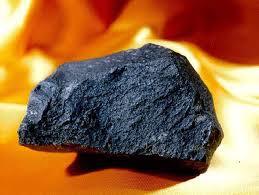
This rock was found near the mouth of a volcano. What type of rock is this?
a)
Sedimentary
b)
Igneous
c)
Metamorphic
21.

The process when rocks break into smaller pieces due to exposure to natural elements is called
a)
erosion
b)
weathering
c)
sediments
22.
What is deposition?
a)
Dropping off sediment
b)
Movement of sediment
c)
Breaking down of sediment
23.
Extreme Heat and Pressure creates a _________ rock.
a)
Igneous
b)
Metamorphic
c)
Sedimentary
d)
Mineral
24.
An igneous rock containing large crystals is most likely a(n)
a)
Chemical Rock
b)
Foliated Rock
c)
Extrusive Rock
d)
Intrusive Rock
25.
a natural, nonliving substance that makes up rock
a)
mineral
b)
rocks
c)
plasma
d)
lava
26.
Which of the following is true about rocks?
a)
Rocks are composed of only one mineral.
b)
Rocks do not contain minerals.
c)
Coal is not considered a rock.
d)
Most rocks are a mixture of minerals.
27.
When a rock goes through the melting process ____________.
a)
the amount of matter in the rock decreases.
b)
the amount of matter in the rock increases.
c)
the amount of matter in the rock stays the same.
d)
the amount of matter in the rock decreases when it melts and increases when it cools.
28.
What type of rock would you most likely find a fossil inside of?
a)
sedimentary
b)
igneous
c)
metamorphic
d)
diamond
29.
What type of rock forms when sand, particles of rock, bits of soil, and remains of once-living things are cemented?
a)
igneous
b)
sedimentary
c)
minerals
d)
metamorphic
30.
Which of the following is NOT the best way to determine one type of mineral from another?
a)
Streak
b)
Color
c)
Density
d)
Luster
31.
When rock is changed by the atoms bonding together because of
a)
Weathering
b)
Erosion
c)
Melting
d)
Heat and Pressure
32.
Rock that changes from Sedimentary rock to metamorphic rock__________
a)
keeps the same amount of matter.
b)
decreases the amount of matter.
c)
increases the amount of matter.
33.
Rocks and Minerals are similar in that they both_______________.
a)
have a crystalline structure.
b)
neither have organic material in them.
c)
are naturally occurring.
d)
can only occur in the ground.
34.
Rocks and minerals are different in that___________.
a)
rocks are are naturally occurring and minerals are not.
b)
Rocks are made up of minerals but minerals are NOT made up of rocks.
c)
rocks are formed only in water and minerals are not.
d)
rocks can't have elements in them but minerals are made up of elements.
Reset

