
NEW
Font size
S
M
L
XL
 Worksheets
Weathering
Total questions: 25
Worksheet time: 22mins
Name
Class
Date
1.

Carbon dioxide (CO2) combines with water as raindrops fall through the atmosphere. This makes a weak acid, called carbonic acid. Carbonic acid is a very common in nature, where it works to dissolve rock. Pollutants, such as sulfur and nitrogen from fossil fuel burning, create sulfuric and nitric acid. Sulfuric and nitric acids are the two main components of acid rain, which speeds up chemical weathering.
This statue was probably destroyed by _____.
This statue was probably destroyed by _____.
a)
Wind
b)
Humans
c)
Acid Rain
d)
Animals
2.

Chemical weathering is the other important type of weathering. Chemical weathering may change the size of pieces of rock materials, but definitely changes the composition. So one type of mineral changes into a different mineral. Chemical weathering works through chemical reactions that cause changes in the minerals.
True or false: chemical weathering causes rocks to change into new types of rocks.
True or false: chemical weathering causes rocks to change into new types of rocks.
a)
True
b)
False
3.

Which of the following probably did not cause this statue to wear down?
a)
Rain
b)
Wind
c)
Snow
d)
Animals
4.

Oxidation is a chemical reaction that takes place when oxygen reacts with another element. Oxygen is very strongly chemically reactive. The most familiar type of oxidation is when iron reacts with oxygen to create rust.
Which chemical creates rust?
Which chemical creates rust?
a)
Oxygen
b)
Carbon Dioxide
c)
Nitrogen
d)
Neon
5.

The statue of liberty is made of copper. It was originally brown but has since turned green. This is probably due to _______.
a)
Oxygen
b)
Acid Rain
c)
Carbon Dioxide
d)
Humans
6.
How does freezing water cause the weathering of rocks? The freezing water—
a)
keeps the rocks in place
b)
makes the rocks last longer
c)
expands cracks and breaks rocks
d)
causes rocks to fall in landslides
7.
The process that breaks down rocks and other materials on Earth's surface is called
a)
weathering
b)
erosion
c)
soil conservation
d)
decomposition
8.
How does wind abrasion work?
a)
Sediment is blown off a surface from wind.
b)
Wind-blown sediment strikes a surface.
c)
Wind blows large chunks of rock off a surface.
d)
Sediment falls off of a surface on its own.
9.

During chemical weathering, what can happen to the type of rock that has undergone chemical weathering?
a)
a new rock is produced that is larger than the original rock
b)
a new rock is produced that is the same as the original rock
c)
a new rock is produced that is different from the original rock
d)
no new rock is created - it is just smaller in size
10.

What is mechanical weathering?
a)
Process through which rocks are physically broken into smaller pieces.
b)
Rocks are broken down through chemical changes.
c)
Rocks are worn away from acid in plant roots.
d)
Rocks broken down by machinery.
11.

The diagrams shows a natural process that weathers rock.
Which statement best explains why this process results in weathering?
Which statement best explains why this process results in weathering?
a)
frozen water acts as a solute
b)
water expands when it freezes
c)
the mass of water increases when it freezes
d)
frozen water dissolves most types of rock
12.
Which of the following is an example of mechanical weathering?
a)
Acidic groundwater dissolving limestone
b)
frost wedging
c)
Paper being burned
13.
A marble statue is left exposed to the weather. Within a few years, the details on the statue have begun to weather away. This weathering probably is caused by...
a)
oxygen in the air
b)
carbonic acid in rainwater
c)
lichens
d)
abrasion
14.

What are the two factors that affect the rate at which weathering occurs?
a)
climate and mass of rock
b)
climate and size of rock
c)
type of rock and size of rock
d)
type of rock and climate
15.
Which type of climate will have faster chemical weathering?
a)
Hot and Wet
b)
Cold and Dry
c)
Hot and Cold
d)
Cold and Wet
16.
Acid rain is most likely to cause...
a)
deposition
b)
glaciers to move
c)
chemical weathering
d)
mechanical weathering
17.

How do plants weather rocks?
a)
during photosynthesis
b)
when roots grow into cracks of rocks and expand the rock
c)
when the plant moves water from the roots to the leaves
18.
Mechanical weathering breaks down existing rocks by
a)
Changing them chemically, but not physically.
b)
Changing them physically, but not chemically.
c)
Changing them chemically and physically.
d)
Incorporating them into new rocks.
19.
The process by which water, ice, wind or gravity moves weathered rock and soil from one place to another.
a)
weathering
b)
erosion
c)
deposition
d)
dumptruck
20.
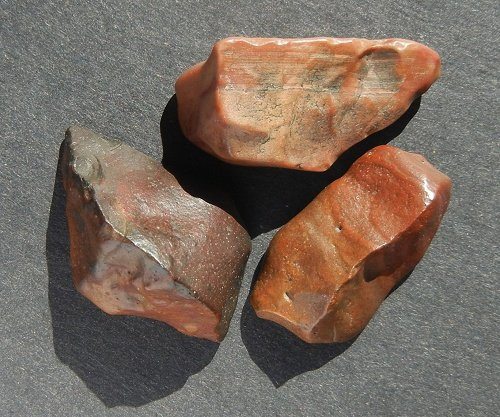
These rocks were made smooth by wind blowing smaller rock particles across their surface. This is an example of:
a)
ice wedging
b)
chemical weathering
c)
acid rain
d)
abrasion
21.

This rock may chemically weather easily because is has many spaces or holes in it that allow water to seep through it called
a)
porosity
b)
abrasive
c)
erosion
d)
unchangable
22.
Potholes forming in the road after a cold winter is an example of:
a)
mechanical weathering
b)
chemical weathering
c)
biological weathering
23.
Lichens (small green plants) growing on a large boulder release enzymes and other acids that slowly break the rock apart. This is an example of:
a)
mechanical weathering
b)
chemical weathering
c)
biological weathering
24.
Which is NOT a factor in the rate of weathering
a)
Precipitation
b)
Rock Composition
c)
Temperature
d)
Altitude
25.
Deposition changes the Earth’s surface because eroded materials _____.
a)
stop the river's flow
b)
make rich farmlands
c)
are dropped in new places
d)
move very slowly
Reset

