
 Worksheets
Dynamic Crust Review
Total questions: 26
Worksheet time: 21mins
Name
Class
Date
1.

The image shows the Mid Atlantic Ridge. Which type of boundary occurs at this ridge where the ocean floor is spreading apart?
a)
convergent
b)
divergent
c)
transform fault
2.
The innermost layer of the Earth is thought to be made of solid iron. What is the name of this layer?
a)
mantle
b)
asthenosphere
c)
inner core
d)
outer core
3.
What causes tectonic plates to move?
a)
ocean currents
b)
convection currents in the mantle
c)
volcanoes
d)
the Coriolis Effect
4.
The upper layer of the mantle is said to be thicker than the lower mantle, but not solid rock like crust. The tectonic plates rest on this layer and it is responsible for the movement of those plates. What is the name of this layer?
a)
crust
b)
asthenosphere
c)
outer core
d)
inner core
5.
What instrument is used to detect the magnitude of earthquakes?
a)
barometer
b)
electrograph
c)
seismograph
d)
pictograph
6.
The movement of Earth's crust along plate boundaries produces
a)
earthquakes
b)
volcanoes
c)
moutains
d)
All of these options.
7.
What is the main cause of most earthquakes?
a)
human activity
b)
hurricanes
c)
changes in temperature in Earth's mantle
d)
pressure deep within the Earth (from rocks crashing) that is being released
8.
When molten rock reaches the Earth's surface, comes out and begins to cool, it is known as
a)
lava
b)
mantle
c)
magma
d)
crater
9.
If the focus of an earthquake occurs beneath the sea floor, as the seismic waves travel through the ocean, they create a massive and destructive
a)
epicenter
b)
tsunami
c)
focus
d)
mountain
10.

In the image, which type of boundary is shown? Hint: its located in the state of California.
a)
divergent
b)
convergent
c)
transform fault
11.

Look at the image. The South American and Nasca plate are moving together. Which type of boundary is this?
a)
divergent
b)
convergent
c)
transform fault
12.

What is represented by the picture?
a)
Sea-floor spreading
b)
Pangea
c)
How the continents are arranged today
d)
Volcanoes
13.
Earth's solid, rocky surface is the
a)
crust
b)
mantle
c)
core
d)
fault
14.
___________ is the point beneath Earth’s surface at which rock under stress breaks and triggers an earthquake.
a)
Focus
b)
Epicenter
c)
Surface waves
d)
Seismograph
15.
__________ is the point on the surface directly above the point at which an earthquake occurs.
a)
Focus
b)
Epicenter
c)
Surface waves
d)
Seismograph
16.
What is the minimum number of seismograph stations needed to locate an earthquake epicenter?
a)
1
b)
2
c)
3
d)
1 billion
17.
One seismograph station, by itself, can determine the
a)
direction of the epicenter
b)
location of the epicenter
c)
distance to the epicenter from the seismograph station
d)
location of the nearest Papa Johns
18.
Primary waves are ______________ waves, meaning they cause material to compress and expand.
a)
violent
b)
compression
c)
shear
d)
transverse
19.
Which wave arrives first to the seismic station?
a)
P - Primary
b)
S - Secondary
c)
Surface
20.
Which wave is moves perpendicular to the motion at right angles?
a)
P - Primary
b)
S - Secondary
c)
Surface
21.
Which wave can only go through solids?
a)
P - Primary
b)
S - Secondary
c)
Surface
22.
You use a travel-time graph (difference in P and S Wave arrival times) to find:
a)
Distance to epicenter
b)
Distance to fault
c)
Distance to core
23.

The huge pieces of the earth's crust are called ____________________________.
a)
crust
b)
plates
c)
directions
d)
seismos
24.
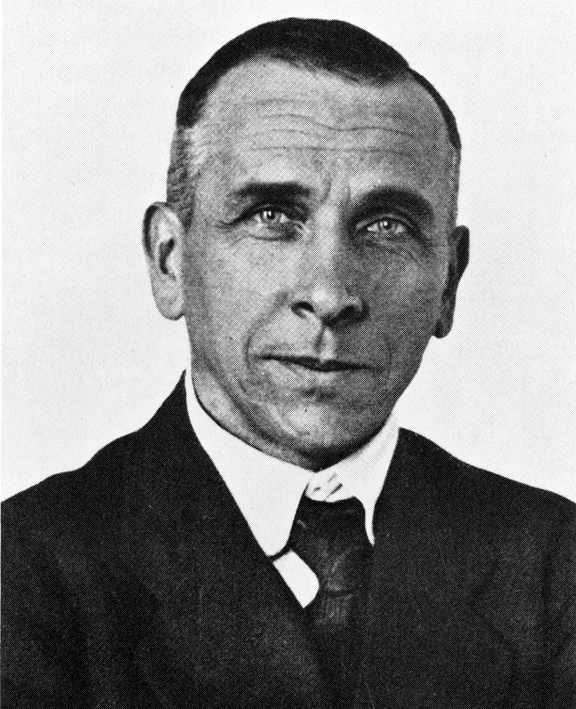
Who is the person credited with developing the theory of continental drift?
a)
Harry Hess
b)
Galileo
c)
Alfred Wegener
d)
Newton
25.
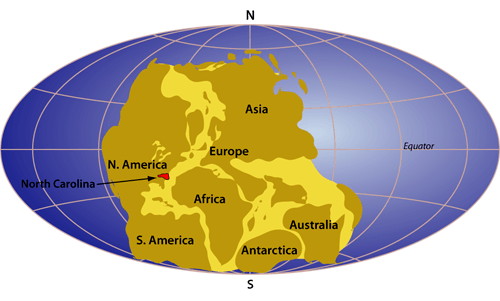
What is this a picture of?
a)
plate tectonics
b)
continental drift
c)
pangea
d)
glacier scaring
26.
What evidence did Wegener use in his theory?
a)
Continents and fossils fitting together/matching-up like puzzle pieces
b)
glacier scars and evidence from temperature
c)
mountain ranges and coal deposits line up across continents
d)
all of the above
100 %

