
 Worksheets
Ancient Egypt
Total questions: 32
Worksheet time: 30mins
Name
Class
Date
1.
What does the term cataract mean?
a)
a small plot of land good for farming
b)
high waterfall or rapids
c)
a large pot of land good for farming
d)
the tomb of a pharaoh
2.
Fine, fertile soil carried by the rivers and deposited by nearby lands is called...
a)
silt
b)
compost
c)
delta
d)
humus
3.

An Egyptian king was called a ___________
a)
scribe
b)
servant
c)
papyrus
d)
pharaoh
4.

What the major river that was in Ancient Egypt?
a)
Amazon
b)
Mississippi
c)
Nile
d)
Tiber
5.
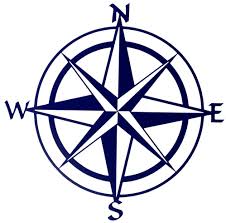
Which way did the Nile flow?
a)
North to South
b)
South to North
c)
East to West
d)
West to East
6.
True or False? There was an Upper and Lower Egypt.
a)
True
b)
False
7.

Egyptians had a written language using pictures. It was called ____________.
a)
cuneiform
b)
English
c)
hieroglyphics
d)
Cursive
8.

Because one physical feature was so vital to ancient settlers of Egypt and Kush, MOST of their settlements were
a)
on hills
b)
in a desert
c)
near a river
d)
around trees
9.
How did the yearly flooding of the Nile River affect the people of Egypt and Kush?
a)
It isolated the settlements.
b)
It left silt that improved the soil.
c)
It spread diseases that destroyed whole empires.
d)
It attracted hunters and gatherers looking for wildlife.
10.
What was a MAJOR purpose for building the pyramids?
a)
temples for religious worship
b)
storehouses for reserves of grain
c)
homes for the pharaohs' servants
d)
tombs for pharaohs when they died
11.
The Nile River is the _____________ river in the world.
a)
widest
b)
shortest
c)
fastest
d)
longest
12.
What was an effect of increased farming and trade in early Egypt?
a)
A complex writing system was formed
b)
An organized government developed
c)
Geometry was developed
d)
The deserts became populated
13.
How did the Egyptians take advantage of the Nile's yearly spring flooding?
a)
They became successful farmers
b)
They created hieroglyphics
c)
They grew papyrus
d)
They irrigated during the dry season
14.

Long-lasting, paper-like material made from reeds
a)
scrolls
b)
papyrus
c)
hieroglyphics
d)
tablets
15.

A four-sides pillar pointed at the top
a)
Sphinx
b)
temple
c)
obelisk
d)
column
16.

Why was finding the Rosetta stone so important?
a)
We could understand the egyptians better
b)
It was written in hieroglyphics
c)
It had a demotic script
d)
The text was in 3 languages so the hieroglyphics could be decoded
17.
The Egyptians believed in an existence after death called ___?
a)
Heaven
b)
Afterlife
18.
The Eqyptians believed that the Pharaoh had _____
a)
To ask the government permission to make decisions
b)
Absolute power- complete authority to act in an area
19.
A piece of land shapes like a triangle that is formed when a river splits into smaller rivers before it flows into an ocean or sea is called ____
a)
Nile River
b)
A stream
c)
Delta
20.
Khufu?
a)
The application of scientific knowledge for practical purposes.
b)
The Egyptian method of preserving dead bodies by wrapping them in cloth.
c)
The most famous pharoah of the Old Kingdom.
d)
People of wealth and power.
21.
Mummies?
a)
The most famous pharoah of the Old Kingdom.
b)
Hieroglyphics can be read from left to right, top to bottom, and right to left.
c)
The application of scientific knowledge for practical purposes.
d)
The Egyptian method of preserving dead bodies by wrapping them in cloth.
22.
Who was the first woman pharaoh?
a)
Cleopatra
b)
Ms. Kell
c)
Hatshepsut
d)
Narmer
23.
Where was the Great Pyramid built?
a)
Memphis
b)
Thebes
c)
Kush
d)
Giza
24.

What is the red and white crown called when combined? War is the purpose of the blue crown?
a)
double crown, war crown
b)
triple crown, ceremonial crown
c)
pink crown, success crown
d)
war crown, ceremonial crown
25.
Why did scribes occupy a high position in Egyptian society?
a)
They came from noble families.
b)
They were among the few who could read and write.
c)
They were specifically chosen by the Pharaoh.
d)
They outnumbered members of the other classes.
26.
What do you call the belief or worship of more than one god, many gods?
a)
Theocracy
b)
Monotheism
c)
Anno Domini
d)
Polytheism
27.
The Nile River is the _____________ river in the world.
a)
widest
b)
shortest
c)
fastest
d)
longest
28.
Who wrote and copied religious and literary texts?
a)
scribes
b)
government officials
c)
soldiers
d)
pharaohs
29.

The Nile River affected ancient Egyptian life by creating
a)
hot winds that blew across the land.
b)
Lower and Upper Egypt.
c)
rich farmland in the river valley.
d)
a large desert.
30.

How did the ancient Egyptians demonstrate their belief in a life after death?
a)
They believed in only one god.
b)
They preserved the bodies of the dead.
c)
They became famous warriors.
d)
They did not think the bodies of the dead should be preserved.
31.

Ancient Egyptian astronomers studied the stars to
a)
predict the flooding of the Nile River.
b)
appoint the next pharaoh.
c)
create new medicines from plants.
d)
create a new writing system.
32.

Because of Nubia's location between Egypt and Central Africa, it was
a)
the first sea empire.
b)
a center for trade.
c)
never very prosperous.
d)
destroyed by the people of Kush.
100 %

