
 Worksheets
Unit 4 Lesson 3 Pretest
Total questions: 15
Worksheet time: 11mins
Name
Class
Date
1.
What is the water cycle?
a)
the 3 forms of water
b)
the movement of water on, above, or below the surface of the Earth
c)
when water melts
d)
when clouds form
2.

What part of the water cycle does this picture show?
a)
condensation
b)
precipitation
c)
evaporation
3.
Which of these is an example of precipitation?
a)
snow
b)
air
c)
clouds
d)
vapor
4.
Which is the opposite of condensation?
a)
runoff
b)
evaporation
c)
precipitation
d)
transpiration
5.
What follows evaporation during the water cycle? How does this occur?
a)
Water evaporates into water vapor
b)
Water vapor condenses and forms a cloud
c)
Water precipitates to the ground
d)
Water runs down into the hydrosphere
6.
What is condensation?
a)
the change of water from a gas to a liquid.
b)
the change of water from a liquid to a gas.
c)
the change of water from a solid to a gas.
d)
the change of water from gas to a solid.
7.
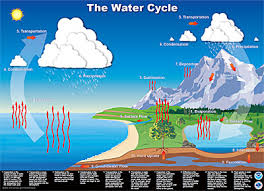
Which stages does liquid water from the ocean turn into water vapor?
a)
condesantion
b)
evaporation
c)
precipitation
d)
run off
8.
what is the meaning of convection?
a)
cold rises heat falls
b)
heat
c)
cold
d)
hot rises cold falls
9.
what is the meaning of conduction
a)
condensation
b)
heat rise
c)
cold fall
d)
when heat transfers from objects that are touching
10.
What kind of heat transfer is happening when the sun heats your body?
a)
conduction
b)
convection
c)
density
d)
radiation
11.
Heat energy traveling through space is an example of _____
a)
convection
b)
density
c)
radiation
d)
conduction
12.
Heat always travels from _____ to ______ objects
a)
hot to cold
b)
cold to hot
c)
cold to cold
d)
hot to hot
13.

The baby chickens are kept warm from the heat lamps demonstrates this type of heat transfer.
a)
conduction
b)
convection
c)
radiation
14.
Ironing a shirt is an example of...
a)
condensation
b)
conduction
c)
convection
d)
radiation
15.
the current condition of the atmosphere
a)
climate
b)
precipitation
c)
temperature
d)
weather
100 %

