Wayground logo

Free Printable Worksheets

Font size

S
M
L
XL
Worksheets

Sci 9 Unit B REVIEW - Use a periodic table

Total questions: 192

Worksheet time: 3hrs 41mins

Name
Class
Date
1.
Ionic bonds form when metals and nonmetals combine.
a)
True
b)
False
2.
Ionic bonds involve a transfer of electrons.
a)
True 
b)
False
3.

Electron sharing occurs in ionic bonding.

a)
True
b)
False
4.
What does this symbol warn you about?
a)
Oxidizing Material
b)

Gas under pressure

c)
Bottle Safety
d)

Corrosive material

5.
What is an example of sublimation?
a)
Ice cream melting
b)
Dry ice
6.

Sublimation is a chemical change.

a)
False
b)
True
7.

Evaporation is a change of state from

a)

solid to liquid

b)

gas to liquid

c)

liquid into solid

d)

liquid to gas

8.

The opposite of sublimation is 

a)

deposition

b)

condensation

c)

evaporation

d)

melting

9.

What process describes a liquid changing to a solid?

a)
Deposition
b)
Sublimation
c)
Evaporation
d)
Freezing
10.

What process describes a gas changing to a liquid?

a)
Deposition
b)
Sublimation
c)
Evaporation
d)
Condensation
11.

This is a picture of what happens when dry ice is added to water.  The dry ice changes immediately from a solid to a gas.

This is a ...

a)

physical change

b)

chemical change

12.

breaking glass

a)

chemical change

b)

physical change

13.
Is burning wood a chemical or physical change?
a)
chemical
b)
physical
14.
Is hammering wood together to build a house a chemical or physical change?
a)
chemical
b)
physical
15.

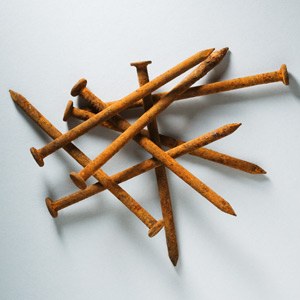
Is a rusting steel bicycle a chemical or physical change?

a)
chemcial
b)
physical
16.
Is melting butter for popcorn a chemical or physical change?
a)
chemical
b)
physical
17.

Is spoiling food a physical or chemical change?

a)

physical

b)

chemical

18.
Is mixing lemonade powder with water a physical or chemical change?
a)
physical
b)
chemical
19.
Density
a)

Physical Property 

b)

Chemical Property

20.
Melting Point
a)

Physical Property 

b)

Chemical Property

21.

Explodes when exposed to heat.

a)

Physical Property

b)

Chemical Property

22.
Flammability
a)

Physical Property

b)

Chemical Property

23.
Freezing Point
a)

Physical Property

b)

Chemical Property

24.

Sugar dissolves in water.

a)

Physical Change

b)

Chemical Change

25.

Sugar burns and turns black.

a)

Physical Change

b)

Chemical Change

26.

Gold (Au) has a shiny lustre.

a)
Physical Property
b)
Chemical Property
c)
Physical Change
d)
Chemical Change
27.

Dynamite explodes.

a)

Physical Change

b)

Chemical Change

28.

Copper is ductile.

a)

Physical Property

b)

Chemical Property

c)

Physical Change

d)

Chemical Change

29.
Can corn be made into plastic?
a)
No
b)
Yes
30.
Corn plastic is biodegradable.
a)
true
b)
false
31.

The first person to use the word 'atomos' came from

a)

Greece

b)

Italy

c)

Britain

32.

Alchemists attempted to transform metals into _______.

a)

gold

b)

copper

c)

nickel

d)

steel

33.

What was Dalton's Theory of Matter?

a)

All matter is made up of atoms.

b)

All matter is made up of 4 different elements.

34.

Cl is the symbol for

a)
Chlorine
b)
Carbon
c)
Calcium
d)
Cesium
35.

What were Aristotle's four parts to his "4 element theory"?

a)

Fire, ice, water, rock

b)

Fire, Water, Air, Earth

c)

Fire, Ocean, Air, Metal

d)

Flame, Sky, Ocean, Earth

36.

Who said that electrons are found in shells around the nucleus?

a)

Dalton

b)

Archimedes

c)

Democritus

d)

Bohr

37.
Who made the first atomic theory?
a)
Herodotus
b)
Aristotle
c)
Dalton
d)
Democritus
38.
Of the following elements, which one is an alkaline earth metal?
a)
Na
b)
K
c)
Be
d)
Fe
39.
Which of the following categories includes the majority of all known elements?
a)
metalloids
b)
liquids
c)
metals
d)
nonmetals
40.
Of the following elements, which one is a noble gas?
a)
O
b)
Ar
c)
Cl
d)
H
41.

To which category of elements does an element belong to if it is brittle and a poor conductor of electricity?

a)

metalloids

b)

nonmetals

c)

metals

42.
Halogens are good disinfectants. Of the following elements, which one is a halogen?
a)
N
b)
Fe
c)
O
d)
Cl
43.

Which subatomic particle is gained or lost during ionic compound formation?

a)

proton

b)

electron

c)

neutron

44.

During electron transfer involving a metal and nonmetal during ionic compound formation, which of the following is correct?

a)
The nonmetal gains electrons from the metal.
b)
The metal gains electrons from the nonmetal.
c)
Both gain electrons.
d)
Neither gain electrons.
45.

Which of the following is the correct IUPAC name of the compound: BaO?

a)
barium oxide
b)
beryllium oxide
c)
bromine oxygen
d)
barium oxygen
46.

Which is the correct formula for the compound: manganese (III) fluoride?

a)
MnF
b)
Mn3F
c)
MnF3
d)
Mn3F3
47.
Which is the correct formula for the compound formed between beryllium and nitrogen?
a)
BeN
b)
Be3N
c)
Be3N2
d)
Be2N3
48.

Which pair of elements is most likely to form a molecular compound?

a)

Mg with Cl

b)

F with Cl

c)

Li with S

d)

Ni with Rn

49.

The element with atomic number 15 has how many electrons?

a)
5
b)
2
c)
8
d)
15
50.

Match the subatomic particle to its charge.

a)

Positive

1.

Proton

b)

Negative

2.

Electron

c)

Neutral

3.

Neutron

51.
Protons and neutrons can be found:
a)
Inside the nucleus
b)

In shells

52.

Neils Bohr stated that electrons move in electron

a)
planets
b)
shells
c)
circles
d)

trajectories

53.
A horizontal row of elements in the periodic table.
a)
column
b)
group
c)
period
54.

A vertical column in the periodic table with elements that share similar properties.

a)

row

b)

group

c)

period

55.
Elements in a ..................have similar chemical properties.  
a)
period
b)
group
c)
row
56.
Elements that display properties of both metals and nonmetals are called
a)
transition meals.
b)
alkaline earth metals.
c)
salts.
d)
metalloids.
57.
What is the name of the basic particle from which everything is made?
a)
An element
b)
An atom
c)

A compound

d)

A molecule

58.

Which group of the periodic table is composed of the least reactive elements?

a)

alkali metals

b)

alkaline earth metals

c)

halogens

d)

noble gases

59.

Elements which are all shiny, conduct electricity and heat are called

a)

metal

b)

nonmetal

c)

metalloid

60.

Two elements chemically bonded together will form...

a)

a colloid

b)

a compound

c)

a mixture

d)

a solution

61.

Calcium has properties most similar to which of the following elements?

a)
Barium
b)
Potassium
c)
Cesium
d)
Nitrogen
62.
Who first arranged the periodic table?
a)

Aristotle

b)

Mendeleev

c)

Chadwick

d)

Bohr

63.

Which property did Mendeleev use to arrange his periodic table?

a)

Alphabet

b)

Ion Charge

c)
Atomic Mass
d)
Metallic Character
64.

How many protons are in one atom of Boron (B) ?

a)
3
b)
5
c)
10
d)
11
65.

How many electrons are in one atom of Bromine (Br) ?

a)
35
b)
80
c)
5
d)
11
66.

Which element has 31 protons ?

a)
Gallium 
b)
Germanium
c)
Gadolinium
d)
Polonium
67.
Which element has 4 neutrons ?
a)
Beryllium
b)
Lithium
c)

Sodium

d)

Aluminum

68.
The number of protons is equal to 
a)
the atomic number
b)
the number of neutrons
c)

the atomic mass number

d)

the group number

69.
Which type of subatomic particles have the LEAST amount of mass?
a)
protons
b)
electrons
c)
neutrons
d)
nucleus
70.

Where is most of the mass in an atom?

a)

protons & electrons in the nucleus

b)

electrons in the shells

c)

protons & neutrons in the nucleus

d)

protons & electrons in the shells

71.

What would be the IUPAC chemical formula for combining Al3+ and Cl-

a)
AlCl3
b)
Al3Cl
c)
AlCl
d)
Al3Cl3
72.
name the following ionic compound: NaF
a)
nitrogen fluorine
b)
sodium fluoride
c)
nitrogen fluoride
d)
sodium fluorine
73.
Name the following ionic compound: MgSO4
a)
magnesium sulfoxide
b)
magnesium sulfide
c)
magnesium sulfate
d)
magnesium oxide
74.

What is the correct formula for Zinc (II) Bromide?

a)

ZnBr2

b)

ZNBr

c)

ZnBr

d)

Z2Br

75.
sodium nitride
a)
NaNO3
b)
NaN
c)
NaN3
d)
Na3N
76.
BaSO4
a)
barium sulfate
b)
barium sulfite
c)
barium sulfur oxide
d)
barium sulfide
77.
MgS 
a)
Magnesium sulfide
b)
Monomagnesium monosulfide
c)
Magnesium monosulfide
78.
Ca3P2
a)
Tricalcium Diphosphide
b)
Calcium phosphide
c)
Calcium Diphosphide
79.
Write the formula for copper (I) phosphide?
a)
Cu3P
b)
CuP
c)
Cu1P
d)
CuP3
80.

What is the formula for iron (III) chloride?

a)

FeCl

b)

FeCl3

c)

FeClO3

d)

Fe3Cl

81.
Name this compound: 
CaCO3
a)
Calcium carbon oxide
b)
Calcium carbonate
c)
Calcium carbonate
d)
Carbonate calcide
82.
What is the correct name for NO?
a)
Mononitrogen monoxide
b)
Nitrogen monoxide
c)
Mononitrogen dioxide
d)
Nitrogen oxide
83.
Carbon dioxide
a)
C2O2
b)
C20
c)
CO
d)
CO2
84.
What happens when an atom loses an electron?
a)
It becomes Negatively Charged
b)
It remains neutral because the proton also leaves.
c)
It becomes Positively Charged
d)
It stays the same.
85.
Where are metals located on the periodic table?
a)
Blue
b)
Green
c)
Red
86.
Where are the nonmetals located on the periodic table? 
a)
Blue
b)
Red
c)
Green
87.

Molecular compound bonds are between...

a)

Metal and Non-metal

b)

Non-metal and Non-metal

c)

Metal and Metal

88.
Is hydrogen considered a metal or a non-metal?
a)
A metal
b)
Nonmetal
c)
Metalloid
89.
Which of these compounds is ionic? 
a)
Carbon dioxide
b)
Dinitrogen trioxide
c)
Silicon tetrachloride
d)
Lithium bromide
90.
What is corrosion?
a)

release of oxygen

b)

rusting of metal

91.
Is this an example of corrosion?
a)
Yes
b)
No
92.
Which is a physical property of metals
a)
reactivity
b)
corrosion
c)
magnetisim
d)
rusting
93.
Where are the MOST reactive metals located on the periodic table?
a)

Group 1 Alkali metals

b)

Group 2 Alkaline Earth metals

94.

Where are the LEAST reactive elements located on the periodic table?

a)

Group 1

b)

Group 2

c)

Group 17

d)

Group 18

95.

Which is one of the reactants of cellular respiration?

a)

energy

b)

glucose

c)

carbon dioxide

d)

water

96.
What are the reactants in the equation for cellular respiration?
a)

oxygen + lactic acid

b)

carbon dioxide + water

c)

glucose + oxygen

d)

water + glucose

97.
Another term for burning is
a)

Respiration

b)

Magnesium oxide

c)

Combustion

d)

Corrosion

98.

True or False: Formation of bubbles is usually evidence of a chemical reaction.

a)

True

b)

False

99.

A chemical reaction in which a compound or element burns by reacting with oxygen is called ...

a)

combination reaction

b)

decomposition reaction

c)

combustion reaction

d)

corrosion reaction

100.
Which of the following is an example of a chemical reaction?
a)
Water evaporating from a pot on a hot stove
b)
Sand being removed from sea water by filtration
c)
A spoonful of sugar dissolving in a glass of water
d)

A white opaque solid forming when two clear liquids are poured together

101.
Which of the following is an example of a chemical reaction?
a)
A marshmallow turning black when heated over a fire
b)
A powder dissolving in water to make lemonade
c)
An ice cube melting into a puddle of water
d)
Salt crystals being crushed into a powder
102.
Which of the following is an example of a physical change?
a)
The surface of a copper penny changing color after being in a drawer for years
b)
Melted butter becoming a solid when placed in the refrigerator
c)
A car rusting when exposed to the air and rain
d)
Bread toasting
103.
CaCO3 represents a chemical
a)
Symbol
b)
Formula
c)
Subscript
d)
Reaction
104.

The substances listed on the left side of a chemical word equation are the

a)

Products

b)

Reactants

105.
In chemical reactions, what does the principle of conservation of mass mean?
a)
Matter is not created or destroyed.
b)
The total mass of the reactants is greater than the total mass of the products.
c)
The total mass of the reactants is less than the total mass of the products.
d)
Matter is not changed.
106.
A chemical reaction that absorbs energy in the form of heat is described as
a)
endothermic
b)
exothermic
c)
combustion
d)
unbalanced
107.

Conservation of mass is true ...

a)

only for reactions that take place in open systems.

b)

only for reactions that take place in closed systems.

c)

for reactions in both open and closed systems.

d)

for no reactions at all.

108.

A solid that forms from 2 transparent solutions during a chemical reaction is called a

(a)  

109.
A change in state (ie. melting, boiling, etc.) is always what type of change?
a)

Physical Change

b)

Chemical Change

c)

Exothermic Change

d)

Exothermic Change

110.
When heated, oxygen reacts with copper to form copper oxide:
If this reaction occurs in a sealed container, will the mass of the container and everything in it increase, decrease, or stay the same and why?
a)
The mass will stay the same because the number of each kind of atom stays the same.
b)
The mass will increase because a new kind of molecule is formed.
c)
The mass will decrease because two substances combine to form one substance.
d)
More information is needed to tell if the mass will change.
111.
What type of reaction is occurring in the diagram?  Which response below explains the reason for that type of reaction?
a)
Exothermic. Heat is released when the candle (wax) burns.
b)
Endothermic. Heat is released when the candle (wax) burns.
c)
Exothermic. Heat is taken in when the candle (wax) burns.
d)
Endothermic. Heat is taken in when the candle (wax) burns.
112.

Identify the reactant(s) and product(s) of the reaction.

hydrogen + oxygen are (a)  

water is (b)  

Choose from the below words

hydrogen + oxygen

water

reactants
product
113.
A boiling pot of water on a stove is what type of system
a)
Closed System
b)
Open System
114.
This type of system does not release products to the environment...
a)
Closed System
b)
Open System
115.
10 g of a solid chemical reacts with a 10 g of a liquid chemical, the reaction bubbles and changes the color of the liquid.  The colored liquid weighs 13 g, what can be concluded?
a)
The gas produced from the bubbles weighed 5 g
b)
The bubbles were evidence of 7 g of matter being destroyed
c)
The gas produced weighed 7 g
d)
The gas produced weighed 13 g
116.
How many nitrogen atoms are in 
Fe(NO3)2
a)
1
b)
2
c)
3
d)
6
117.
How many iron atoms are in 
Fe(NO3)2
a)
1
b)
2
c)
3
d)
6
118.
How many oxygen atoms are in 
Fe(NO3)2
a)
1
b)
2
c)
3
d)
6
119.
A catalyst is a substance that
a)
slows down the rate (speed) of reactions
b)
speeds up the rate (speed) of  reaction
c)
increases the products in a reaction
d)
a substance that makes new products
120.
If reaction starts with 20g of reactants it should produce 
a)
a total of 40g of products
b)
a total of 10g of products
c)
a total of 80 g of products
d)
a total of 20g of products
121.

In a reaction A + B ----> C,  reactant A has 5g and product C has 9g.

How many grams does reactant B have? 

a)

4g

b)

5g

c)

9g

d)

14g

122.
What is a closed system?
a)
a system where none of the reactants or products are allowed to escape
b)
compounds made of thousands of repeating smaller molecules
c)
the output, or result of a chemical reaction
d)
occurs when the atoms and molecules of two or more substances rearrange to form new substances
123.
Sugar water is a 
a)
solution
b)
suspension
c)
colloid
124.
What is the difference between a mixture and a compound?
a)
compounds are easily taken apart
b)
mixtures are easily taken apart
c)
mixtures are chemically combined
d)
there is no difference
125.
How many different elements are represented in the compound Na2CO3?
a)
1
b)
2
c)
3
d)
4
126.
How many oxygen atoms are in this chemical formula: H3PO4?
a)
7 oxygen atoms
b)
4 oxygen atoms
c)
3 oxygen atoms
d)
1 oxygen atoms
127.
Water is an molecule.
a)
true
b)
false
128.
H2O is
a)

a pure substance

b)

a mixture

c)

an element

d)

a solution

129.
An example of a compound would be
a)

hydrogen gas (H2)

b)

sodium chloride (NaCl)

c)

oxygen gas (O2)

130.

The salad dressing in the picture is a

a)

suspension

b)

solution

c)

pure substance

d)

mechanical mixture

131.
The rate of a reaction increases as temperature__________________.
a)

Decreases

b)

Increases

132.
Products will form faster if____________
a)
the particle size of the reactants are larger.
b)
temperature is decreased.
c)
concentration of the reactants are increased.
d)
the reaction is not stirred.
133.
A ______________ is a substance that increases the rate of a reaction without being used up during the reaction. 
a)
catalyst
b)
product
c)
reactant
d)
solute
134.
The ___________ the surface area of the reactants, the faster the reaction rate.
a)
larger 
b)
smaller
135.
Smaller particle size allows for a _________ surface area to be exposed for the reaction.
a)
larger
b)
smaller
136.

Grinding a crystal solid into powder increases the rate of reaction due to increased

a)

concentration

b)

surface area

c)

temperature

d)

reactants

137.

A solution is heated on a hot plate and bubbles form. Do you assume a chemical reaction took place?

a)

Yes

b)

No

138.
Which of the following slows down the rate of a chemical reaction?
a)
Place the reactants in hot water
b)
Place the products in ice bath
c)
Place the reactants in a ice bath
d)
Keep stirring the reactants with a stirring rod
139.

Which factors increase the rate of a reaction?

a)

increasing temperature

b)

increasing concentration

c)

increasing surface area

d)

all of these

140.

See the image for the question.

a)
A
b)
B
c)
C
d)
D
141.

Which of the following increases the reaction rate?

a)

less surface area

b)

lower temperature

c)

an inhibitor

d)

increased concentration

142.
Which of the following decreases the reaction rate?
a)
more surface area
b)
lower temperature
c)
a catalyst
d)
increased concentration
143.

What is an enzyme?

a)

a catalyst

b)

a microorganism

c)

a product

d)

a reactant

144.

What does this pictogram warn you about?

a)

gases under pressure

b)

fire hazard

c)

explosion or reactivity hazard

d)

may cause less serious health effects

145.

What does this pictogram warn you about?

a)

gases under pressure

b)

fire hazard

c)

explosion or reactivity hazard

d)

may cause less serious health effects

146.

What does this pictogram warn you about?

a)

gases under pressure

b)

fire hazard

c)

explosion or reactivity hazard

d)

may cause less serious health effects

147.

What does this pictogram warn you about?

a)

may cause or suspected of causing serious health effects

b)

oxidizing hazard

c)

organisms or toxins that cause diseases

d)

may cause death or toxicity with short exposure to small amounts

148.

What does this pictogram warn you about?

a)

may cause or suspected of causing serious health effects

b)

oxidizing hazard

c)

organisms or toxins that cause diseases

d)

may cause death or toxicity with short exposure to small amounts

149.

What does this pictogram warn you about?

a)

may cause or suspected of causing serious health effects

b)

oxidizing hazard

c)

organisms or toxins that cause diseases

d)

may cause death or toxicity with short exposure to small amounts

150.

What does this pictogram warn you about?

a)

may cause or suspected of causing serious health effects

b)

oxidizing hazard

c)

organisms or toxins that cause diseases

d)

may cause death or toxicity with short exposure to small amounts

151.

What does this pictogram warn you about?

a)

may cause or suspected of causing serious health effects

b)

may cause less serious health effects

c)

corrosive damage to skin, eyes or metals

d)

may cause death or toxicity with short exposure to small amounts

152.

Protons and neutrons have have approximately the same mass.

a)

true

b)

false

153.

Electrons have almost no mass.

a)

true

b)

false

154.

Mg 2+

a)

has lost 2 protons

b)

has lost 2 electrons

c)

has gained 2 electrons

d)

has gained 2 protons

155.

S 2-

a)

has lost 2 protons

b)

has lost 2 electrons

c)

has gained 2 electrons

d)

has gained 2 protons

156.

Which two elements have the most similar properties?

a)

K & Li

b)

K & Ca

c)

Ca & Sc

d)

Ca & Li

157.

How many neutrons in a nickel atom?

a)

28

b)

29

c)

57

158.
If reaction starts with 20g of reactants it should produce 
a)
a total of 40g of products
b)
a total of 10g of products
c)
a total of 80 g of products
d)
a total of 20g of products
159.

Reaction: AB-----> A + B

Reactant AB has 12g and product B has 5g.

How many grams should product A have?

(a)  

160.

What are the products in the following chemical equation?

a)

CH4 and 2O2

b)

CO2 and 2H2O

161.

24 g of magnesium reacts with 38 g of fluorine to produce (a)   g magnesium fluoride

162.
How many elements does PbNO3 have?
a)
2
b)
3
c)
4
d)
5
163.

What state of matter is represented in the picture above?

a)

solid

b)

liquid

c)

gas

164.

The ability to hammered into a thin sheet or be bent is

a)

Ductility

b)

Solubility

c)

Density

d)

Malleability

165.

Which chemical formula could this molecule represent?

a)

H2O3

b)

H3O2

c)

H2O4

d)

H2O2

166.
How many nitrogen atoms does NH3 have?
a)
1
b)
2
c)
3
d)
4
167.

A reaction that releases heat to the surroundings is

a)

exothermic

b)

endothermic

168.

When a chemical reaction happens and the temperature decreases, then it is an

a)

Endothermic reaction

b)

Exothermic reaction

169.

A reaction happening in an uncovered beaker is a(n)...

a)

open system

b)

closed system

c)

isolated system

d)

individual system

170.

Label the parts of the atom.

171.

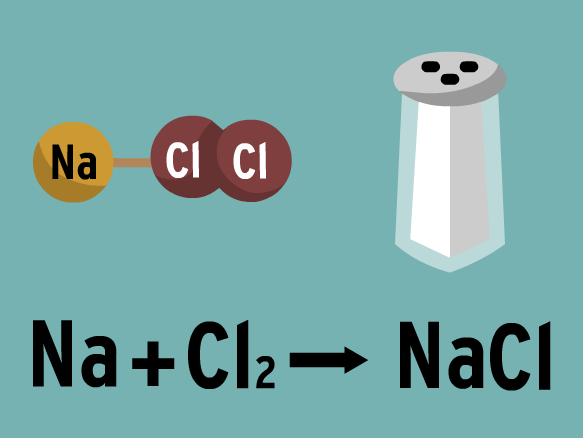
Identify the product(s) in this word equation

a)

Sodium

b)

Sodium chloride

c)

Sodium and Chlorine

d)

Sodium and sodium chloride

172.

Magnesium reacts with oxygen to form magnesium oxide. The correct word equation is...

a)

A

b)

B

c)

C

d)

D

173.

Iron (a grey metal) reacts with sulfur (a brittle yellow solid) to produce iron sulfide (a black solid).

a)

iron + sulfur →\rightarrow iron sulfide

b)

iron + sulfur →\rightarrow iron sulfur

c)

iron + sulfide →\rightarrow iron sulfide

d)

iron + sulfur →\rightarrow iron sulfite

174.

In a chemical reaction, 4 grams of sodium must combine with how many grams of chlorine to produce 10 grams of table salt?

a)

4 grams

b)

6 grams

c)

8 grams

d)

10 grams

175.
Question Image

Match the following

a)

Reactant

Element

1.

O2

b)

Reactant

Compound

2.

CH4

c)

Product

Compound

3.

CO2

176.

Does the image correctly represent the Law of Conservation of Mass?

a)

yes

b)

no

177.

5 g + 3 g  →  2 g  +  ?5\ g\ +\ 3\ g\ \ \rightarrow\ \ 2\ g\ \ +\ \ ?  

a)

6 g

b)

10 g

c)

4 g

178.
A chemical reaction between Hydrogen and Oxygen produces water. If 2g of Hydrogen and 4g of Oxygen react together, how much water is produced?
a)
2g
b)
4g
c)
6g
d)
Not enough information to answer
179.

Mg +  2HCl --->  MgCl2 + H2

Which reactant is a compound?

a)

HCl

b)

H2H_2

c)

MgCl2MgCl_2

d)

Mg and HClHCl

180.

What is the IUPAC name of this compound?

a)

dipotassium phosphide

b)

potassium monophosphide

c)

dipotassium monophosphide

d)

potassium phosphide

181.

What is the chemical name of this compound?

a)

dinitrogen tetroxide

b)

dinitrogen pentoxide

c)

nitrogen oxide

d)

nitrogen oxygen

182.
A precipitate is a 
a)
liquid that forms when two solids are reacted
b)
a solid that forms when two liquids are mixed
c)
a gas that forms when vinegar and baking soda react
d)
a change of color in a solution
183.
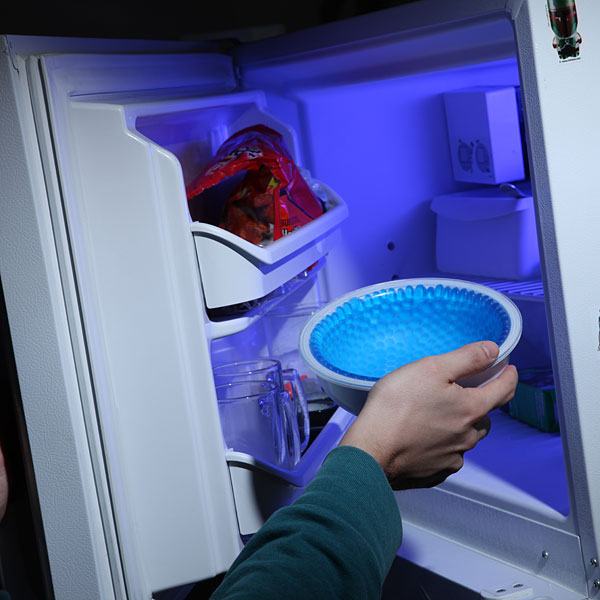
Maria fills a bowl with 200 g of water. She puts the bowl of water in the freezer, and the water freezes. Which will most likely be the mass of the frozen water?
a)
50 g
b)
100 g
c)
200 g
d)
400 g
184.

How many iron (Fe) atoms are in 
Fe(NO3)2

a)
1
b)
2
c)
3
d)
6
185.

Label the reactants and products of the chemical reaction shown.

186.

Examine the experiment shown, then fill in the blanks.

The experiment shows a ​ (a)   system.

The mass at the end of the experiment will be ​ (b)   the initial mass.

Choose from the below words
closed
open
equal to
less than
greater than
187.

Since gases weigh nothing, when they are produced in a reaction, they have a mass of 0g  

a)
True
b)
False
188.

Mr. Brady did an experiment. He started with 15 grams of mass. At the end, he had 13 grams of mass. What happened?

a)

His experiment was in an open system, so some mass escaped.

b)

His experiment was in a closed system so the mass did not change.

189.

According to the law of conservation of mass, how much zinc was present in the zinc carbonate?

a)

256 g

b)

88 g

c)

104 g

d)

40 g

190.

During a chemical reaction, 47 grams of baking soda is combined with 13 grams of vinegar. The total mass of the product is 56 grams. Was this reaction conducted in an open or a closed system? How do you know?

a)

Closed system because mass is gained

b)

Closed system because there is a reactant and product

c)

Open system because there is a remainder

d)

Open system because mass is lost

191.

In photosynthesis, carbon dioxide and water use light energy to react and produce glucose and oxygen as shown below.

Which represents the amount of water needed to completely react with 25.00 grams of carbon dioxide?

a)

10.23 g

b)

17.05 g

c)

25.0 g

d)

35.23 g

192.

According to the law of conservation of mass, how much mercury was present in the mercury (II) oxide?

a)

55.8 g

b)

64.2 g

c)

60.0 g

d)

126.0 g