
Font size
S
M
L
XL
 Worksheets
Landform Vocabulary
Total questions: 87
Worksheet time: 51mins
Name
Class
Date
1.
This is a low place in between two hills or mountains.
a)
Canyon
b)
Valley
c)
Desert
d)
Lake
2.
A landmass with an elevation higher than a hill.
a)
Ocean
b)
Gulf
c)
Mountain
d)
Valley
3.
This body of saltwater covers more than 70% of the Earth's surface.
a)
Lake
b)
Gulf
c)
River
d)
Ocean
4.
A flat, treeless plain covered with tall grass.
a)
Prairie
b)
Canyon
c)
Desert
d)
Swamp
5.
A deep valley with steep walls that cut into the earth caused by erosion from running water.
a)
Valley
b)
Canyon
c)
Gulf
d)
River
6.
A dry area of land that receives less than 10 inches of precipitation (rainfall) per year.
a)
Mountain
b)
Canyon
c)
Desert
d)
Prairie
9.
A large area of sea or ocean that is partly surrounded by land.
a)
Lake
b)
Ocean
c)
Gulf
d)
River
8.
A large natural stream that flows and empties into another body of water.
a)
Lake
b)
River
c)
Ocean
d)
Swamp
9.
A large area of sea or ocean that is partly surrounded by land.
a)
Lake
b)
Ocean
c)
Gulf
d)
River
10.
A large inland body of fresh or salt water surrounded by land.
a)
River
b)
Ocean
c)
Gulf
d)
Lake
11.

What is this landform?
a)
Ocean
b)
Plain
c)
Hill
d)
Desert
12.

What is this landform?
a)
Ocean
b)
Island
c)
Plain
d)
Canyon
13.

What is this landform?
a)
Island
b)
Hill
c)
Desert
d)
Lake
14.

What is this landform?
a)
Mountain
b)
Desert
c)
Canyon
d)
Valley
15.

What is this landform?
a)
Canyon
b)
Plain
c)
River
d)
Lake
16.

What is this landform?
a)
Lake
b)
Island
c)
Volcano
d)
Ocean
17.

What is this landform?
a)
Island
b)
Hill
c)
Mountain
d)
Volcano
18.

What is this landform?
a)
Lake
b)
Valley
c)
Hill
d)
Ocean
19.

What is this landform?
a)
Mountain
b)
Hill
c)
Plain
d)
Wet lands
20.

What is this landform?
a)
Desert
b)
Canyon
c)
Hill
d)
Mountain
21.
A large area of flat land that is higher than the land around it is...
a)
Plain
b)
Plateau
c)
Mountain
d)
Isthmus
22.
Thin strip of land that extends out into a body of water. It is surrounded by water on three sides.
a)
Island
b)
Japan
c)
Peninsula
d)
Mountain
23.

This arch was made by ____ erosion
a)
plant
b)
ice
c)
wind
d)
people
24.

This picture shows a
a)
landform made by depositon
b)
landform made by glacier
c)
landform made by wind
d)
landform made by weathering
25.

This is a
a)
canyon
b)
hill
c)
glacier
d)
mountain
26.

This island is defined as
a)
land surrounded by water
b)
where water meets land
c)
land that is green
d)
where land is cut off by ocean water
27.

This landform has steeps side, typically with a river running through it.
a)
hill
b)
plateau
c)
cliff
d)
canyon
28.
This landform is higher than the area around it and flat.
a)
hill
b)
mountain
c)
beach
d)
plateau
29.
What do we call when water meets land
a)
shore
b)
hill
c)
island
d)
waterfall
30.
Glaciers will form
a)
at the mouth of a river
b)
in cold areas
c)
in the tropics
d)
near the equator
31.
Deltas do NOT
a)
form fertile soil
b)
form because of ice
c)
form at the mouth of rivers
d)
form because of depositon
32.
Deltas can be found when rivers ...
a)
move too slowly
b)
empty into the ocean
c)
move too quickly
d)
turn
33.
Which answer lists all processes that change landforms FAST?
a)
tree roots, flash floods, and chemical weathering
b)
blowing sand, freezing water, and chemical weathering.
c)
flash floods, volcanoes, and earthquakes.
34.
Which answer lists processes that change landforms SLOWLY?
a)
earth quakes, volcanoes, and flash floods
b)
Blowing sand, freezing water, volcanoes, and earthquakes.
c)
freezing water, tree roots, blowing sand, and chemical weathering.
35.
How does flash floods change landforms very fast?
a)
They create new igneous rocks.
b)
They cause earth materials to move in fast-moving water.
c)
Because they cause the earth's crust to shake tremendously.
36.
How does chemical weathering change landforms?
a)
Freezing and thawing causes rocks to spilt.
b)
Acid rain reacts with calcite and wears it away.
c)
Abrasion causes rocks to rub and bang into each other.
37.
What is a similarity between physical and chemical weathering?
a)
Acid rain is an example of physical and chemical weathering.
b)
They change rocks into new substances.
c)
They both break rocks into smaller pieces.
38.
Deposition is when rocks break into smaller pieces.
a)
True
b)
False
39.
Weathering is when rocks breakdown into smaller pieces.
a)
True
b)
False
40.
Deposition is the process by which eroded earth materials settle and build in a new place.
a)
True
b)
False
41.

This photo is an example of
a)
Plateau
b)
Mountain
c)
Canyon
42.

This photo is an example of
a)
Plateau
b)
Valley
c)
Canyon
43.

This photo is an example of
a)
River mouth
b)
Delta
c)
Meander
44.
Which of these landforms was made by deposition?
a)
River mouth
b)
Delta
c)
Meander
d)
Canyon
45.

What landform is this?
a)
valley
b)
delta
c)
river
d)
canyon
46.

What landform is this?
a)
delta
b)
canyon
c)
valley
d)
sand dune
47.

What landform is this?
a)
mountain
b)
canyon
c)
valley
d)
sand dune
48.

What landform is this?
a)
delta
b)
mountain
c)
volcano
d)
sand dune
49.

What landform is this?
a)
mountain
b)
volcano
c)
valley
d)
canyon
50.
How does a delta form?
a)
a river slowing down
b)
it's just a river that empties into an ocean or lake
c)
the current of the river speeds up at the mouth causing sediment to wash away
d)
the current of the river slows down causing sediment to deposit
51.
How does a mountain form?
a)
by rocks eroding
b)
by plate tectonics colliding
c)
by rivers depositing sediment
d)
by wind eroding sediment
52.
How does a valley form?
a)
by a river flowing in between mountains
b)
it just appears
c)
by mountains separating
d)
by volcanoes erupting
53.
What continues to shape canyons?
a)
fast moving water
b)
slow moving water
c)
rocks weathering
d)
rocks eroding
54.
What does weathering mean?
a)
to move
b)
to settle in a new spot
c)
to break apart
d)
to sit still
55.
What does erosion mean?
a)
to break apart
b)
to settle in new spot
c)
to move
d)
to sit still
56.
What does deposition mean?
a)
to settle in a new spot
b)
to break apart
c)
to sit still
d)
to move
57.
The following are agents of erosion EXCEPT...
a)
wind
b)
water
c)
ice
d)
fire
58.
The movement of pieces of weathered rock by water, wind, ice, or gravity.
a)
erosion
b)
mountains
c)
delta
59.
A deep valley with steep sides eroded by a river.
a)
mountains
b)
hills
c)
canyon
60.
The process by which eroded materials settle out in another place.
a)
deposition
b)
erosion
c)
landslide
61.
A small mountain, lower and less steep than a mountain.
a)
mountain
b)
hill
c)
earthquake
62.
The sudden movement downhill of rock and soil.
a)
landslide
b)
volcano
c)
lava
63.
A fan-shaped deposit at the mouth of a river.
a)
delta
b)
creep
c)
valley
64.
A high, uplifted area with steep slopes.
a)
hills
b)
floodplain
c)
mountain
65.
Molten rock that flows from a volcano onto Earth's surface.
a)
river
b)
earthquake
c)
lava
66.
The shaking of Earth's surface caused by movement of rock in the crust.
a)
dune
b)
creep
c)
earthquake
67.
A mountain that forms as molten rock flows through a crack onto Earth's surface.
a)
volcano
b)
lava
c)
landslide
68.
A large mound of sand piled by wind.
a)
delta
b)
dune
c)
glacier
69.
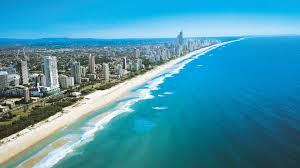
What is this landform?
a)
city
b)
coast
c)
bay
d)
river
70.

What is this landform
a)
valley
b)
mountain
c)
hill
d)
glacier
71.

What is this landform?
a)
lake
b)
peninsula
c)
hills
d)
mountain
72.
Flood water pounding against a canyon wall and wearing it down
a)
Weathering
b)
Erosion
c)
Deposition
73.
Rain washing away soil from a hillside
a)
Weathering
b)
Erosion
c)
Deposition
74.
Layers of sediment forming at the bottom of the ocean floor
a)
Weathering
b)
Erosion
c)
Deposition
75.
Waves dropping sand on the beach
a)
Weathering
b)
Erosion
c)
Deposition
76.
Caves being formed by acid rain dissolving underground limestone
a)
Weathering
b)
Erosion
c)
Deposition
77.
Deltas forming at the mouths of rivers
a)
Weathering
b)
Erosion
c)
Deposition
78.
Water getting into cracks, freezing, and breaking the rocks or pavement apart
a)
Weathering
b)
Erosion
c)
Deposition
79.
Wind blowing sand from one location to another
a)
Weathering
b)
Erosion
c)
Deposition
80.
Wind blasting sand at rock and carving out arches
a)
Weathering
b)
Erosion
c)
Deposition
81.
Glaciers scraping rocks across the earth’s surface
a)
Weathering
b)
Erosion
c)
Deposition
82.
Large flat area of land that is higher than the surrounding land.
a)
Plateau
b)
Valley
c)
Hill
83.
Land formation that is flat on top with steep walls. Usually in a dry area
a)
Hill
b)
Plateau
c)
Mesa
84.
Large body of water surrounded by land on all sides.
a)
Sea
b)
River
c)
Lake
85.
What is the way wind or water wears away the land?
a)
erosion
b)
region
c)
environment
d)
landform
86.
What is a shape or feature on the Earth's surface?
a)
landform
b)
geography
c)
natural resources
d)
environment
87.
What is weathering?
a)
A type of climate
b)
A transport of sediment
c)
The breakdown of rock
d)
The aging of rock
Reset

