
 Worksheets
Soil, Weathering and Erosion
Total questions: 33
Worksheet time: 37mins
Name
Class
Date
1.

Which of the following probably did not cause this statue to wear down?
a)
Rain
b)
Wind
c)
Snow
d)
Animals
2.

Oxidation is a chemical reaction that takes place when oxygen reacts with another element. Oxygen is very strongly chemically reactive. The most familiar type of oxidation is when iron reacts with oxygen to create rust.
Which chemical creates rust?
Which chemical creates rust?
a)
Oxygen
b)
Carbon Dioxide
c)
Nitrogen
d)
Neon
3.
How does freezing water cause the weathering of rocks? The freezing water—
a)
keeps the rocks in place
b)
makes the rocks last longer
c)
expands cracks and breaks rocks
d)
causes rocks to fall in landslides
4.
How does wind abrasion work?
a)
Sediment is blown off a surface from wind.
b)
Wind-blown sediment strikes a surface.
c)
Wind blows large chunks of rock off a surface.
d)
Sediment falls off of a surface on its own.
5.

What is mechanical weathering?
a)
Process through which rocks are physically broken into smaller pieces.
b)
Rocks are broken down through chemical changes.
c)
Rocks are worn away from acid in plant roots.
d)
Rocks broken down by machinery.
6.
A marble statue is left exposed to the weather. Within a few years, the details on the statue have begun to weather away. This weathering probably is caused by...
a)
oxygen in the air
b)
carbonic acid in rainwater
c)
lichens
d)
abrasion
7.

How do plants weather rocks?
a)
during photosynthesis
b)
when roots grow into cracks of rocks and expand the rock
c)
when the plant moves water from the roots to the leaves
8.
The process by which water, ice, wind or gravity moves weathered rock and soil from one place to another.
a)
weathering
b)
erosion
c)
deposition
d)
dumptruck
9.
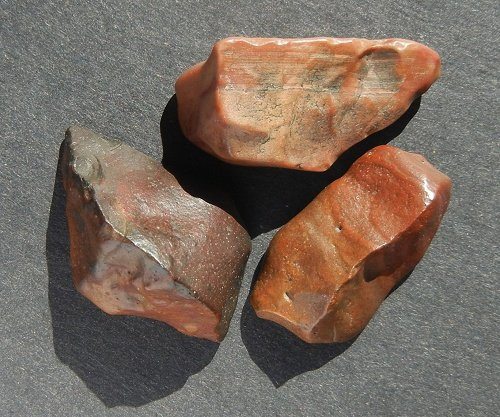
These rocks were made smooth by wind blowing smaller rock particles across their surface. This is an example of:
a)
ice wedging
b)
chemical weathering
c)
acid rain
d)
abrasion
10.
Flood water pounding against a canyon wall and wearing it down
a)
Weathering
b)
Erosion
c)
Deposition
11.
Rain washing away soil from a hillside
a)
Weathering
b)
Erosion
c)
Deposition
12.
Layers of sediment forming at the bottom of the ocean floor
a)
Weathering
b)
Erosion
c)
Deposition
13.
Waves dropping sand on the beach
a)
Weathering
b)
Erosion
c)
Deposition
14.
Deltas forming at the mouths of rivers
a)
Weathering
b)
Erosion
c)
Deposition
15.
Muddy water being carried away by a fast-moving river
a)
Weathering
b)
Erosion
c)
Deposition
16.
Which of the following would probably cause the most damage to an abandoned building in a jungle?
a)
solar heat and acid rain
b)
wind and water
c)
storms
d)
plant growth
17.
All of the following are causes of physical weathering except...
a)
plant growth
b)
wind
c)
acid rain
d)
running water
18.
Plants prevent soil erosion by-
a)
holding dirt in place with their roots
b)
providing food for herbivores
c)
the process of photosynthesis
d)
releasing water into the atmosphere through transpiration
19.

The type of formation shown is at the southern end of the Mississippi river. What is it called?
a)
coastal erosion
b)
a delta
c)
a loess
d)
sand dunes
20.
Which of the following is NOT a rapid change in Earth's surface?
a)
landslides
b)
erosion
c)
volcanoes
d)
earthquakes
21.
Which of the following is NOT a slow change to Earth's surface?
a)
weathering
b)
erosion
c)
deposition
d)
landslides
22.
The very top layer of soil is mostly made of
a)
Solid rock
b)
Clay and mineral deposits
c)
A mixture of minerals and organic material
d)
Mostly organic material (humus)
23.
Decayed organic material in soil is called______.
a)
Litter
b)
Silt
c)
Humus
d)
Clay
24.

Which layer of soil is on the bottom?
a)
topsoil
b)
subsoil
c)
bedrock
d)
bottomsoil
25.

Which of the following is NOT one of the three layers of soil?
a)
topsoil
b)
undersoil
c)
subsoil
d)
bedrock
26.

the fertile, upper part of the soil
a)
clay
b)
sand
c)
silt
d)
topsoil
27.
What is soil?
a)
A mixture of minerals
b)
A mixture of water, minerals, gases and organic matter
c)
A type of rock
d)
A type of bacteria
28.
If a mouse dies, _____________ helps the mouse decay
a)
Bacteria
b)
Rocks
c)
Animals
d)
Earthworms
29.
Why are earthworms important to the soil?
a)
The tunnels they make help oxygen get to the soil
b)
When they eat they release droppings that contain nutrients
c)
They keep soil healthy
d)
All of the above
30.
Inorganic matter is made of materials that…
a)
Were once living and nonliving
b)
Were once nonliving
c)
Were once nonliving
31.
Which of the following is NOT an organic material
a)
Worms
b)
Decayed animals
c)
Rocks
d)
Decayed plants
32.
Organic matter is made of materials that….
a)
Were once living
b)
Were once nonliving
c)
Were once living and nonliving
33.
What do we call the layers of soil?
a)
Deposits
b)
Horizons
c)
Minerals
d)
Rocks
100 %

