
 Worksheets
DNA
Total questions: 34
Worksheet time: 30mins
Name
Class
Date
1.
Which sequence of DNA bases would pair with this partial strand
ATG TGA CAG
ATG TGA CAG
a)
ATG TGA CAG
b)
TAC ACT GTC
c)
GTA AGT GAC
d)
CAT TCA CTG
2.
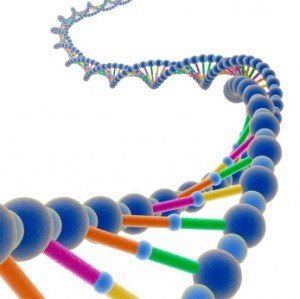
Which of the following best describes a DNA molecule?
a)
double helix
b)
contains ribose
c)
made of amino acids
d)
contains Uracil
3.
Which of the following units are repeatedly joined together to form a strand of DNA?
a)
amino acids
b)
nucleotides
c)
fatty acids
d)
polysaccharides
4.

In a molecule of double-stranded DNA, the amount of Adenine present is always equal to the amount of
a)
cytosine
b)
guanine
c)
thymine
d)
uracil
5.
Adenine bonds with ______________.
a)
Guanine
b)
Thymine
c)
Cytosine
d)
Adenine
6.
Guanine bonds with ______________.
a)
Adenine
b)
Guanine
c)
Cytosine
d)
Thymine
7.
Why is DNA important?
a)
it is very small and very complicated
b)
it's in everything
c)
it serves as the blueprint for traits of all living things
d)
because we eat it every day for energy
8.
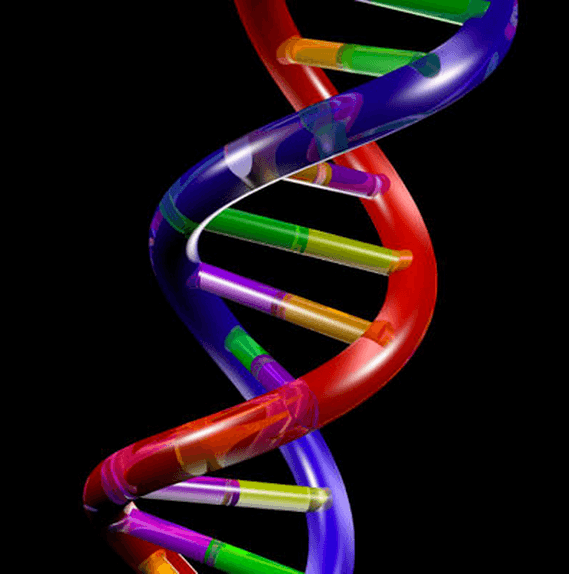
What determines the code, or information, of a DNA molecule?
a)
the shape (structure) of the nitrogen bases
b)
the order (sequence) of the nitrogen bases
c)
the color of the nitrogen bases
d)
the frequency (number) of nitrogen bases
9.
Which 2 molecules form the sides (backbone) of the DNA ladder?
a)
deoxyribose sugar and adenine
b)
deoxyribose sugar and a hydrogen bond
c)
deoxyribose sugar and the nucleus
d)
deoxyribose sugar and phosphate
10.
Which organelle is DNA usually found in?
a)
cell membrane
b)
vacuole
c)
chloroplast
d)
nucleus
11.

Replicate the following strand of DNA:
AATCATGGA
AATCATGGA
a)
AATCATGGA
b)
TTAGTACCT
c)
UUAGUACCU
d)
GGATAUCUA
12.
DNA replication results in two DNA molecules,
a)
each one with two original strands
b)
each one with two new strands
c)
each one with one new strand and one original strand
d)
one with two new strands and the other with two original strands
13.
What is the correct complimentary strand for the following DNA?ATCGAG
a)
TACGAG
b)
ATCGAG
c)
TAGCTG
d)
TAGCTC
14.
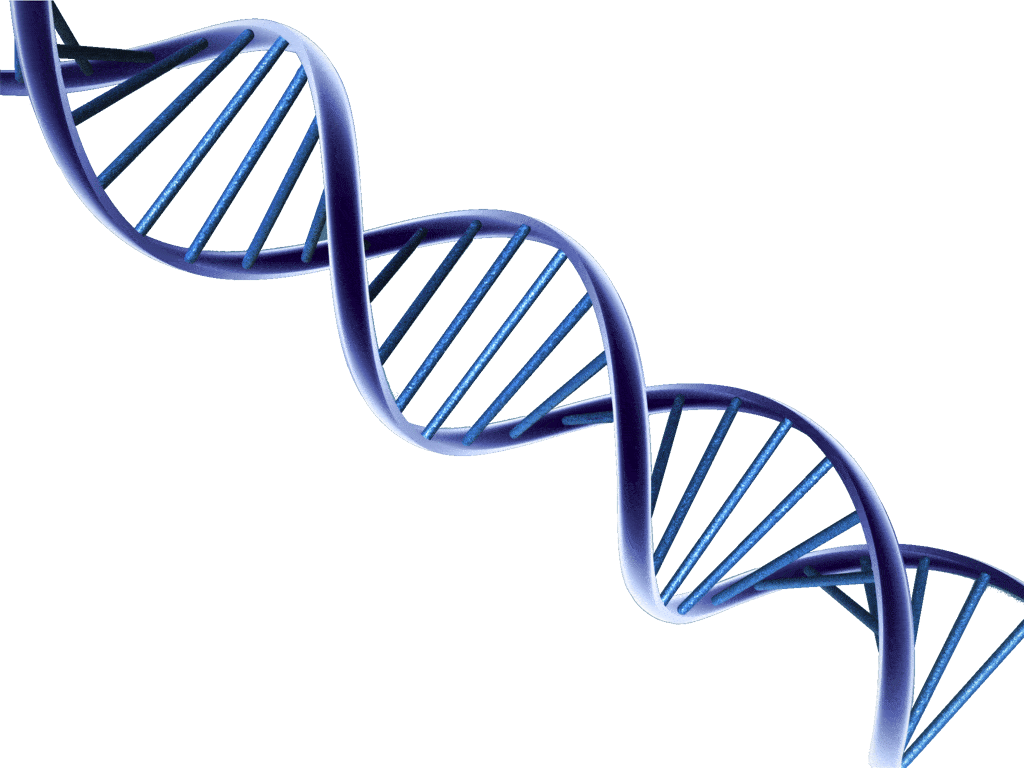
The drawing shows the structure of what molecule?
a)
A DNA molecule
b)
A lipid molecule
c)
A carbohydrate molecule
d)
A protein molecule
15.
What are the three components of a nucleotide?
a)
sugar, hydrogen, nitrogen base
b)
sugar, oxygen, nitrogen base
c)
sugar, phosphate, nitrogen base
d)
sugar, phosphate, protein
16.
When a cell is not actively dividing, it is in what phase?
a)
interphase
b)
anaphase
c)
prophase
d)
telophase
17.
What portion of the cell cycle involves the actual dividing?
a)
interphase
b)
mitosis
c)
Gap 1
d)
Gap 2
18.
When a cell divides, what do we call the 2 new cells?
a)
mother cells
b)
father cells
c)
daughter cells
d)
son cells
19.
Before a cell can divide, what must happen?
a)
Nothing, it is always ready to divide
b)
The number of chromosomes must be cut in half
c)
The number of chromosomes must double
d)
The number of chromosomes must triple.
20.
Why don't cells just stretch when you grow, instead of making copies of themselves?
a)
The muscles in the cells can't stretch that far.
b)
The cell won't be able to bring in food fast enough or get waste out fast enough.
c)
The cell membrane doesn't like the feeling of stretching.
d)
The lysosomes don't want to work so hard.
21.
In which type of cells will mitosis occur?
a)
egg cells
b)
sperm cells
c)
jail cells
d)
Body cells except the sperm and egg cells
22.
In meiosis, the haploid number of chromosomes in a human sex cell is:
a)
46
b)
92
c)
22
d)
23
23.
What is the diploid number of cells found in a human body cell?
a)
23
b)
46
c)
92
d)
47
24.
When you start with 1 cell, at the end of mitosis, how many identical cells will you have?
a)
1
b)
2
c)
3
d)
4
25.
After meiosis is complete how many cells will there be?
a)
1
b)
2
c)
3
d)
4
26.
Another name for a sex cell is a:
a)
gamete
b)
embryo
c)
bone cell
d)
muscle cell
27.
After meiosis is complete:
a) how many egg cells are usuable (viable)?
b) how many sperm cells are viable?
a) how many egg cells are usuable (viable)?
b) how many sperm cells are viable?
a)
a) 1
b) 1
b) 1
b)
a) 4
b) 1
b) 1
c)
a) 1
b) 4
b) 4
d)
a) 4
b) 4
b) 4
28.
If you were able to count the number of chromosomes of a body cell in every organism, you would find:
a)
Every organism has the same number of chromosomes
b)
Each organism has a specific number of chromosomes that are associated with it.
c)
There are different numbers of chromosomes in different cells of the same organism.
d)
There is no way to determine the number of chromosomes in any organism except humans.
29.
Why is sexual reproduction better than asexual reproduction?
a)
It gives an advantage to organisms to be different than the rest, if the environment changes.
b)
It is better for all organisms to be the same.
c)
It happens faster.
d)
It helps skin cells divide faster to heal wounds.
31.
If you have a gap in your skin (such as a cut), what will happen?
a)
The cells next to it will divide faster until the hole is covered up, and then go back to normal mitosis speed.
b)
The cells next to it will stretch to cover the hole.
c)
The cells next to it will send a signal to the brain to stop mitosis.
d)
The cells of the brain will send repair cells to fix the problem.
31.
If you have a gap in your skin (such as a cut), what will happen?
a)
The cells next to it will divide faster until the hole is covered up, and then go back to normal mitosis speed.
b)
The cells next to it will stretch to cover the hole.
c)
The cells next to it will send a signal to the brain to stop mitosis.
d)
The cells of the brain will send repair cells to fix the problem.
32.
After you have produced a clone, what will you have?
a)
3 identical organisms
b)
2 different organisms
c)
2 identical organisms
d)
3 different organisms
33.

The process on the left is:
The process on the right is:
The process on the right is:
a)
Left: meiosis
Right: meiosis
Right: meiosis
b)
Left: meiosis
Right: cloning
Right: cloning
c)
Left: mitosis
Right: meiosis
Right: meiosis
d)
Left: mitosis
Right: mitosis
Right: mitosis
34.
What was the first mammal to be cloned?
a)
cat
b)
dog
c)
mouse
d)
sheep
100 %

