
 Worksheets
Chapter 9 Reflections & Mirrors
Total questions: 111
Worksheet time: 3hrs 19mins
Name
Class
Date
1.
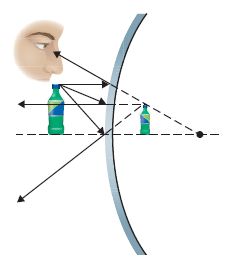
What kind of mirror is shown here?
a)
plane
b)
concave
c)
convex
d)
diffuse
2.

The following is a picture of what type of mirror?
a)
Convex Mirror
b)
Concave Mirror
c)
Plane Mirror
d)
Flat Mirror
3.

The following is a picture of what type of mirror?
a)
Convex Mirror
b)
Concave Mirror
c)
Plane Mirror
d)
Flat Mirror
4.
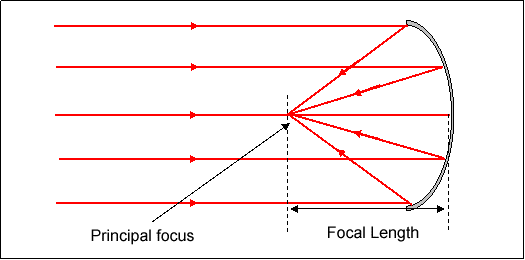
This is an example of a __________ mirror.
a)
Concave
b)
Convex
c)
Plane
d)
Magnifying
5.

This is an example of a _____________ mirror
a)
Concave
b)
Convex
c)
Plane
d)
Magnifying
6.

Which color of light in the visible light spectrum has the most energy?
a)
Red
b)
Yellow
c)
Violet
d)
Green
7.
An image that you can see , but does not really exist is called which of the following?
a)
Real Image
b)
Fake Image
c)
Virtual Image
d)
Digital Image
8.

The following is a picture of what type of mirror?
a)
Convex Mirror
b)
Concave Mirror
c)
Plane Mirror
d)
Flat Mirror
9.

The following is a picture of what type of mirror?
a)
Convex Mirror
b)
Concave Mirror
c)
Plane Mirror
d)
Flat Mirror
10.

Why does light bend when it moves from one material to another?
a)
because it travels slow
b)
because it travels fast
c)
because it changes speed and bends
d)
light does not bend
11.

Which is the angle of refraction? (in which angle does the image change? )
a)
Angle 1
b)
Angle 2
12.
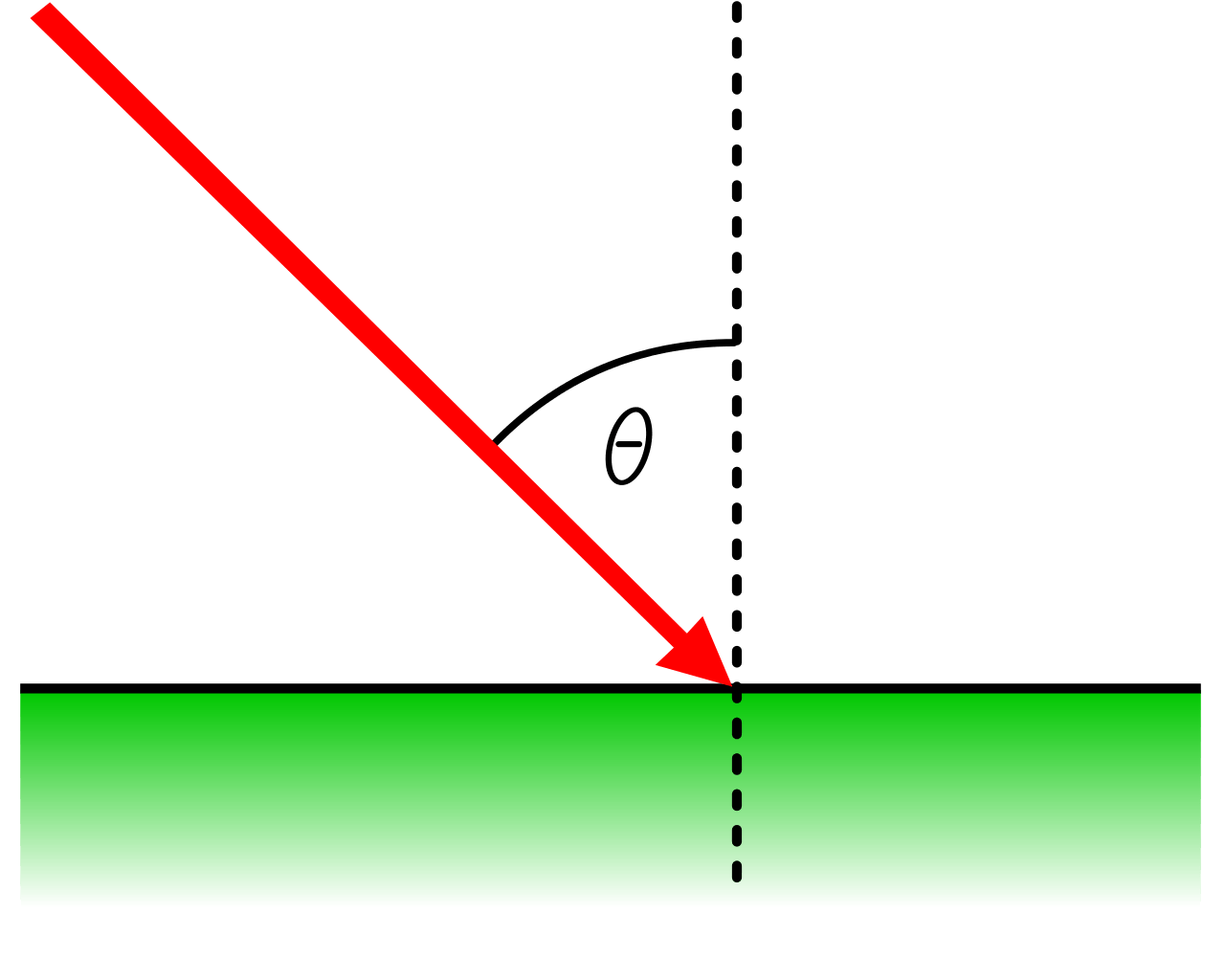
According to the Law of reflection, a light ray striking a mirror
a)
continues moving through the mirror in the same direction
b)
moves into the mirror at a slightly different angle
c)
bounces off the mirror toward the direction it came from
d)
bounces off the mirror at the same angle it hits.
13.

The fact the two angles are the same is an example of....
a)
Refraction
b)
Angle of Incidence
c)
Law of reflection
d)
Magnification
14.

This shows the phenomenon known as....
a)
reflection
b)
refraction
c)
mirrors
d)
focal point
15.
Light travels in...
a)
one direction
b)
two directions
c)
three directions
d)
four directions
16.

The further away a light is the...
a)
longer the shadow
b)
shorther the shadow
17.

To see my reflection an object must be
a)
smooth and shiny
b)
dull and bumpy
18.
a smooth, polished surface like glass, coated with aluminum or silver, that reflects an image of whatever is in front of it
a)
mirror
b)
plane
c)
reflected
d)
convex
19.

According to the Law of reflection, a light ray striking a mirror
a)
continues moving through the mirror in the same direction
b)
moves into the mirror at a slightly different angle
c)
bounces off the mirror toward the direction it came from
d)
bounces off the mirror at the same angle it hits.
20.
Which color is good absorber of heat?
a)
Black
b)
Yellow
c)
White
21.
a reflection that occurs when parallel rays of light hit a smooth surface
a)
regular reflection
b)
diffuse reflection
c)
real image
d)
virtual image
22.
a reflection that occurs when parallel rays of light hit an uneven surface
a)
regular reflection
b)
diffuse reflection
c)
real image
d)
virtual image
23.

We see a green shamrock as being green because:
a)
All of the colors are absorbed except for green.
b)
All of the colors are being reflected except for green.
24.

This is an example of a __________ mirror.
a)
Concave
b)
Convex
c)
Plane
d)
Magnifying
25.

This is an example of a _____________ mirror
a)
Concave
b)
Convex
c)
Plane
d)
Magnifying
26.
The line that passes through the center of a curved mirror is called
a)
focal point
b)
center of curvature
c)
principle axis
d)
light ray
27.
light waves strike a rough surface and reflect in many directions
a)
polarization
b)
regular reflection
c)
refraction
d)
diffuse reflection
28.
light bounces off a surface that it can’t pass thru
a)
polarization
b)
regular reflection
c)
refraction
d)
diffuse reflection
29.
We can see objects because of_______
a)
reflection
b)
refraction
c)
transmission
d)
diffraction
30.
Swimming pools and the ocean look shallower than they really are due to:
a)
reflection
b)
dispersion
c)
refraction
d)
total internal reflection
31.

The fact the two angles are the same is an example of....
a)
Refraction
b)
Angle of Incidence
c)
Law of reflection
d)
Magnification
32.

The point where the rays meet is known as....
a)
Fire
b)
the focal point
c)
refraction
d)
Plane of the lens
33.
The bouncing of light is known as
a)
Mirror
b)
Refraction
c)
Index of refraction
d)
reflection
34.
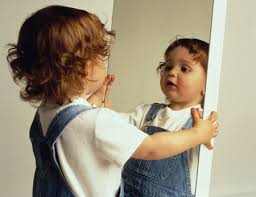
A reflection or the image formed in a flat mirror is
a)
larger than the object and farther away.
b)
reduced and closer to the mirror.
c)
a real image of the object.
d)
equal to the height and distance of the object.
35.

Why does the lower part of the child appear so much different in size from the upper part?
a)
The light rays that travel through water and then into air are refracted because of the change in mediums (material).
b)
The light rays that travel through water and then into air are enlarged.
c)
The light rays that travel through air and then into water are reflected.
d)
The light rays that travel through air and then into water are reduced.
36.
A material or substance that a matter wave travels through is ________
a)
a block
b)
a wall
c)
a medium
d)
an electromagnetic spectrum
37.
What occurs when light hits a medium with a different optical density (the ability to absorb or block the passage of light)?
a)
reflection
b)
optical density reaction
c)
electromagnetic spectrum
d)
refraction
38.
When you look into a mirror, the reflection is reversed.
a)
True
b)
False
39.
When light bends it is ______
a)
Reflection
b)
Absorption
c)
refraction
d)
optical density
40.
Visible light (the rainbow), makes up most of the electromagnetic spectrum. Don't forget that the electromagnetic specturm is made up of radio waves, microwaves, infrared rays, visible light, ultra-violet rays, x-rays, and gamma rays.
a)
True
b)
False
41.

The higher the frequency the ______ the energy.
a)
higher
b)
lower
c)
neither, stays the same
42.

This wave has the second highest frequency on the spectrum.
a)
microwaves
b)
visible light
c)
x-rays
d)
gamma ray
43.

Refract or Reflect?
a)
Refract
b)
Reflect
44.

Refract or Reflect?
a)
Refract
b)
Reflect
45.

Refract or Reflect?
a)
Refract
b)
Reflect
46.

Refract or Reflect?
a)
Refract
b)
Reflect
47.

Absorb or Reflect all colors?
a)
Absorb
b)
Reflect
48.

Absorb or Reflect all colors? This is why you don't wear black in the sun.
a)
Absorb
b)
Reflect
49.

Absorb or Reflect all colors?
a)
Absorb
b)
Reflect
50.

Absorb or Reflect all colors?
a)
Absorb
b)
Reflect
51.

Which letter represents wavelength?
a)
A
b)
B
c)
C
d)
D
52.

Which letter represents the wave crest?
a)
A
b)
B
c)
C
d)
D
53.

Which letter represents the wave trough?
a)
A
b)
B
c)
C
d)
D
54.

What is measured from crest to crest or trough to trough?
a)
Frequency
b)
Amplitude
c)
Wavelength
d)
Origin
55.

What does it mean to refract?
a)
bounce off
b)
to bend
c)
curve outward
d)
reflect
56.

What do you see when water droplets refract and diffract sunlight? The raindrops are acting as tiny prisms.
a)
thunderstorm
b)
eclipse
c)
rainbow
d)
clouds
57.
All waves carry
a)
energy
b)
light
c)
matter
d)
particles
58.

Name the type of wave that matter moves at right angles to the direction of the wave?
a)
compressional waves
b)
mechanical waves
c)
transverse waves
d)
ultraviolet rays
59.
Why would a wave change direction?
a)
Because it kept traveling through the same medium
b)
Because it went from one medium to another
c)
the amplitude was too large
d)
the frequency was too small
60.

We see the color _______ when a material absorbs all visible light. This color makes it warmer to wear it, so you don't want to wear it in the summer but do want to wear it in the winter.
a)
white
b)
black
61.

Which color travels the quickest and has the shortest wavelength?
a)
Red
b)
Violet
62.

The distance between two crests or two troughs is the...
a)
Crest/Peak
b)
Trough
c)
Wavelength
63.

A prism separating white light is an example of...
a)
Refraction
b)
Reflection
64.

Light is a form of _______ that is needed to support life on Earth.
a)
Vibration
b)
Compression
c)
Energy
d)
Motion
65.

We see the color _______ when all visible light is reflected off an object.
a)
White
b)
Black
66.

The high point of a light wave is the...
a)
Crest/Peak
b)
Trough
c)
Wavelength
67.

It's called _______ when light bounces off the smooth surface of an object.
a)
Refraction
b)
Reflection
68.
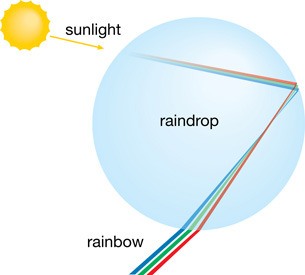
Light bending as it passes through a rain drop is an example of...
a)
Refraction
b)
Reflection
69.

Light will _______ through transparent materials.
a)
transmit
b)
transparent
c)
translucent
d)
transverse
70.

What do we call this tool that separates white light into the colors of the Visible Spectrum?
a)
tuning fork
b)
prism
c)
microscope
d)
graduated cylinder
71.

This is an example of ..............
a)
Refraction
b)
Reflection
72.

This is an example of ...............
a)
refraction
b)
reflection
73.

What is this?
a)
Concave lens
b)
Convex lens
c)
Prism
d)
Sound Wave
74.

What is this?
a)
Concave Lens
b)
Convex Lens
c)
Prism
d)
Sound Wave
75.

The following is a picture of what type of mirror?
a)
Convex Mirror
b)
Concave Mirror
c)
Plane Mirror
d)
Flat Mirror
76.

The following is a picture of what type of mirror?
a)
Convex Mirror
b)
Concave Mirror
c)
Plane Mirror
d)
Flat Mirror
77.

Light travels in straight lines called
a)
beams
b)
rays
c)
arrows
d)
energy
78.

allows light to pass through with almost no disturbance
a)
transparent
b)
translucent
c)
opaque
d)
glass
79.

the angle of the incoming light ray IS EQUAL TO the reflected angle of light
a)
refraction
b)
law of refraction
c)
law of reflection
d)
law of light
80.

a _______ mirror has a inward curve surface. Reflection appears larger.
a)
plane
b)
convex
c)
concave
d)
fun house
81.

a _______ mirror has an outward curving surface. Reflection looks smaller.
a)
plane
b)
convex
c)
concave
d)
fun house
82.
An object can appear larger in a
a)
material with a dull surface
b)
a concave mirror
c)
a plane mirror
d)
a convex mirror
83.
A change in the direction of a wave is called
a)
reflection
b)
diffraction
c)
attraction
d)
refraction
84.
When an object lets light pass right through it, the object is described as
a)
translucent
b)
opaque
c)
transparent
85.
a real image...
a)
is produced by virtual rays and can be projected on a screen
b)
is produced by real rays and cannot be projected on a screen
c)
is produced by virtual images and cannot be projected on a screen
d)
is produced by real rays and can be projected on a screen
86.

What does Reflection mean?
a)
A mirror
b)
Light being absorbed
c)
Light bouncing off an object
d)
Light changing material
87.
___________ is a from of energy that we can see with our eyes.
a)
shadow
b)
light
c)
energy
d)
reflection
88.

What is intensity?
a)
the measurable amount of a property, such as brightness
b)
How difficult something is
c)
A challenge
d)
Light force
89.

Smooth surfaces _______ a lot of light.
a)
reflect
b)
bend
c)
absorb
d)
twist
90.

The Law of Reflection:
The angle of incidence is _________ the angle of reflection
The angle of incidence is _________ the angle of reflection
a)
bigger than
b)
the same as
c)
smaller than
91.
Opaque means...
a)
No light passes through it
b)
All light passes through it
c)
Some light passes through it
92.

Which window is opaque?
a)
Window 1
b)
Window 2
c)
Window 3
d)
None
93.

_____ is a lens that is thicker in the middle and makes an object appear bigger.
a)
prism
b)
convex lens
c)
concave lens
d)
mirror
94.

______ is a lens that is thicker on its edges and makes an object appear smaller?
a)
mirror
b)
convex lens
c)
concave lens
d)
prism
95.

the bending of light when it passes though a medium, such as water or a prism
a)
reflection
b)
refraction
c)
absorbtion
d)
medium
96.

allows some light to pass through
a)
opaque
b)
translucent
c)
clear
d)
transparent
97.

allows all light to pass through
a)
transparent
b)
translucent
c)
opaque
98.

This shape is
a)
convex
b)
odd
c)
concave
99.

The bouncing back of a wave when it hits a surface through which it can NOT pass is called —
a)
rarefaction
b)
reflection
c)
diffraction
d)
refraction
100.

Which travels faster: sound or light?
a)
light
b)
sound
101.

____________________ is the number of waves that move past one spot in a second
a)
energy
b)
amplitude
c)
wavelength
d)
frequency
102.

Which wave has a greater frequency?
a)
A
b)
B
103.

Which letter represents wavelength?
a)
A
b)
B
c)
C
d)
D
104.

Based on the picture, choose the best description of how wavelength and frequency are related
a)
As wavelength increases, frequency increases
b)
As frequency increases, wavelength remains the same
c)
As frequency increases, wavelength decreases
d)
frequency and wavelength mean the same thing
105.

Which letter represents the wave crest?
a)
A
b)
B
c)
C
d)
D
106.
What is frequency?
a)
any disturbance that transmits energy through a medium
b)
the distance from any point on a wave to an identical point on the next wave
c)
the number of waves produced in a given amount of time
d)
when the particles in a longitudinal wave are spread apart
107.
a reflection that occurs when parallel rays of light hit a smooth surface
a)
regular reflection
b)
diffuse reflection
c)
real image
d)
virtual image
108.
a reflection that occurs when parallel rays of light hit an uneven surface
a)
regular reflection
b)
diffuse reflection
c)
real image
d)
virtual image
109.
an image that forms where light seems to come from
a)
virtual image
b)
real image
c)
diffuse reflection
d)
regular reflection
110.
a flat sheet of glass that has a smooth, silver-colored coating on one side
a)
plane mirror
b)
concave mirror
c)
convex mirror
d)
solid mirror
111.

Based on your 16 squares, a _____ _____ has a surface that curves outward and causes light to spread out, or diverge.
a)
convex mirror
b)
concave mirror
c)
plane mirror
100 %

