
 Worksheets
SEASONS, MOON PHASES, AND TIDES
Total questions: 79
Worksheet time: 1hrs 6mins
Name
Class
Date
1.

What causes the seasons to change?
a)
The warming and cooling of Earth's core.
b)
The distance from the sun.
c)
Earth's tilt in relation to the sun.
d)
Earth's rotation on its axis.
2.

What happens when the area in which you live tilts away from the sun?
a)
It is summer.
b)
It is spring.
c)
It is winter.
d)
It is fall.
3.

Why does the area around the equator stay the same temperature all year?
a)
The equator rotates slower than the poles.
b)
The equator remains the same distance from the sun.
c)
The equator always receives direct sunlight.
d)
The equator has 18 hour days.
4.

What season is it in the Southern Hemisphere when it is fall in the Northern Hemisphere?
a)
winter
b)
spring
c)
summer
d)
fall
5.
In the Northern Hemisphere, on which day will you receive the most daylight?
a)
September 21
b)
December 21
c)
March 21
d)
June 21
6.

Which season is taking place in the Southern Hemisphere in Position 1?
a)
Winter
b)
Spring
c)
Summer
d)
Fall
7.

Which season is taking place in the Northern Hemisphere in Position 2?
a)
Winter
b)
Spring
c)
Summer
d)
Fall
8.

Which season is taking place in the Northern Hemisphere in Position 3?
a)
Winter
b)
Spring
c)
Summer
d)
Fall
9.
One rotation of Earth is equal to
a)
a day.
b)
a year.
10.
Objects in the sky appear to move from _______ to _______.
a)
East to West
b)
West to East
c)
North to South
d)
South to North
11.
Objects appear to move from east to west because Earth turns from _______ to ________.
a)
East to West.
b)
West to East.
c)
North to South.
d)
South to North.
12.
What would seasons be like if Earth's axis were straight up and down?
a)
Seasons would be the same.
b)
Seasons would be more extreme.
c)
There would be no seasons.
13.
If Earth rotated slower, we would have...
a)
shorter days.
b)
longer days.
c)
shorter years.
d)
longer years.
14.
Which seasons have an equal amount of daylight and darkness?
a)
Spring and Fall
b)
Winter and Summer
c)
Winter and Spring
d)
Summer and Fall
15.
Where on Earth can you experience entire days of darkness?
a)
The equator
b)
The poles
c)
The Tropic of Cancer
d)
The Tropic of Capricorn
16.
When will the sun reach the highest altitude at noon?
a)
December
b)
March
c)
September
d)
June
17.
_____________ happens as we begin to turn towards the sun.
a)
Sunset
b)
Sunrise
18.
The Northern Hemisphere gets __________ sunlight in the winter, which leads to _________ temperatures.
a)
less direct, hotter
b)
less direct, colder
c)
more direct, hotter
d)
more direct, colder
19.
Which angle of sunlight produces the most heat?
a)
90 degrees
b)
60 degrees
c)
30 degrees
d)
0 degrees
20.
Which movement of Earth causes day and night?
a)
rotation
b)
revolution
21.

Which season is taking place in the Southern Hemisphere in Position 4?
a)
Winter
b)
Spring
c)
Summer
d)
Fall
22.
What is Earth's annual motion around the sun called?
a)
Rotation
b)
Revolution
23.
How long does Earth take to make a complete rotation?
a)
365 days
b)
24 hours
24.

Why do globes lean sideways?
a)
To allow them to spin easier.
b)
To demonstrate the tilt of Earth's axis.
c)
To demonstrate the effects of gravity.
d)
To demonstrate day and night.
25.
Which season has the least amount of daylight in the Northern Hemisphere?
a)
Winter
b)
Spring
c)
Summer
d)
Fall
26.
Tides are caused by ___________
a)
wind
b)
gravitational pull of moon
c)
waves gravitation toward land
d)
rain
27.
Which way does the moon revolve?
a)
clockwise
b)
counter clockwise
c)
some times it changes direction
d)
it doesn't revolve
28.
When the moon is in between the earth and the sun it is a
a)
New Moon
b)
Full Moon
c)
First Quarter
d)
Third Quarter
29.
Waxing means...
a)
Growing
b)
Dying
c)
Losing light
d)
Moving
30.
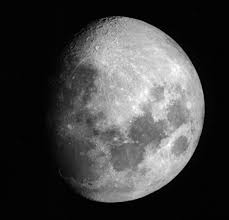
Name the moon phase
a)
waning crescent
b)
waxing crescent
c)
waning gibbous
d)
waxing gibbous
31.
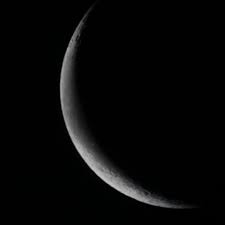
Name the moon phase
a)
waning crescent
b)
waxing crescent
c)
waning gibbous
d)
waxing gibbous
32.
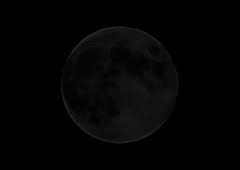
Name the moon phase
a)
First Quarter
b)
Last Quarter
c)
New Moon
d)
Full Moon
33.
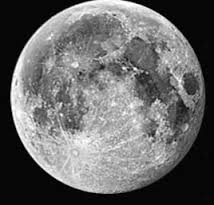
Name the moon phase
a)
First Quarter
b)
Last Quarter
c)
New Moon
d)
Full Moon
34.
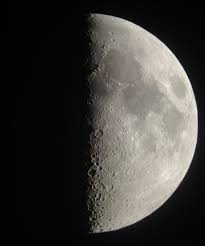
Name the moon phase
a)
First Quarter
b)
Last Quarter
c)
New Moon
d)
Full Moon
35.

Name the moon phase that would come AFTER this moon.
a)
waning crescent
b)
waxing crescent
c)
waning gibbous
d)
waxing gibbous
36.
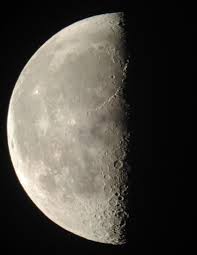
Name the moon phase
a)
First Quarter
b)
Last Quarter
c)
New Moon
d)
Full Moon
37.
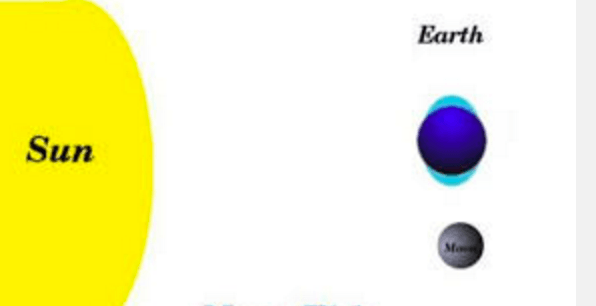
Which moon phase is shown in this diagram?
a)
new moon
b)
1st quarter
c)
full moon
d)
last quarter/3rd quarter
40.

Which moon phase is shown in this diagram?
a)
new moon
b)
first quarter
c)
full moon
d)
last quarter/3rd quarter
40.
Which moon phase is shown in this diagram?
a)
new moon
b)
first quarter
c)
full moon
d)
last quarter/3rd quarter
40.
Which moon phase is shown in this diagram?
a)
new moon
b)
first quarter
c)
full moon
d)
last quarter/3rd quarter
41.

What phase is this?
a)
Waning Gibbous Moon
b)
Waxing Gibbous Moon
c)
Waning Crescent Moon
d)
Waxing Crescent Moon
42.

What would be the result if the Earth's axis was not tilted but straight up and down?
a)
Nothing would change
b)
There would be no seasons
c)
Days would get longer
d)
The Equator would burn up and the poles would freeze
43.
Which of the following statements is most accurate about the Movement of Earth and the Sun?
a)
The Sun revolves around the Earth
b)
The Earth rotates around the Sun
c)
The Earth revolves around the Sun
d)
The Earth rotates and revolves around the Sun
44.

Name the phase of the moon for letter f
a)
Waning Gibbous
b)
Waxing Gibbous
c)
Waning Crescent
d)
Waxing Crescent
45.

Name the phase of the moon for letter a
a)
First Quarter
b)
Last Quarter
c)
Waxing Gibbous
d)
Waning Gibbous
46.
What is a lunar month?
a)
The time from one new moon to the next new moon.
b)
The time from one full moon to the next full moon.
c)
The time it takes the moon to orbit the earth.
d)
The month of October .
47.
What is illuminating the Moon?
a)
Nuclear Fusion
b)
Sunlight
c)
Mirrors
d)
Flood Lights
54.

Name the moon phase
a)
waning crescent
b)
waxing crescent
c)
waning gibbous
d)
waxing gibbous
49.

What phase comes AFTER this one?
a)
Waning Crescent
b)
Waning Gibbous
c)
Waxing Crescent
d)
Third Quarter
50.

What phase comes BEFORE this one?
a)
Waxing Gibbous
b)
Waxing Crescent
c)
Waning Gibbous
d)
Waning Crescent
51.

What Moon phase is this?
a)
Waxing Crescent
b)
Waning Gibbous
c)
Waxing Gibbous
d)
Waning Crescent
52.

What Moon phase is this?
a)
Full Moon
b)
Waxing Gibbous
c)
New Moon
d)
Half Moon
53.
The Moon ________ around the Earth.
a)
moves parallel
b)
rotates
c)
moves perpendicular
d)
revolves
54.
Name the moon phase
a)
waning crescent
b)
waxing crescent
c)
waning gibbous
d)
waxing gibbous
55.

How long does it take the moon to complete an orbit around Earth?
a)
23 days
b)
29 days (1 month)
c)
2 weeks (half a month)
d)
365 days (a year)
62.
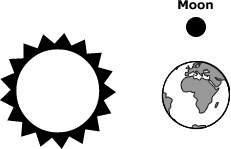
What type of tide is occurring on Earth?
a)
Reverse tide
b)
Quarter tide
c)
Neap tide
d)
Spring tide
57.

What moon phases will you see at #1?
a)
Full moon
b)
New moon
c)
Waxing crescent
d)
Waning Gibbous
61.

What phase comes BEFORE this one?
a)
Waxing Gibbous
b)
Waxing Crescent
c)
Waning Gibbous
d)
Waning Crescent
59.

When the Northern Hemisphere of Earth is Leaning away from the Sun, What season is the Southern Hemisphere experiencing?
a)
Summer
b)
Winter
c)
Spring
d)
Fall
60.

If the Northern Hemisphere is experiencing Summer, What season is the Southern Hemisphere experiencing?
a)
Summer
b)
Winter
c)
Spring
d)
Fall
61.
What phase comes BEFORE this one?
a)
Waxing Gibbous
b)
Waxing Crescent
c)
Waning Gibbous
d)
Waning Crescent
62.
What type of tide is occurring on Earth?
a)
Reverse tide
b)
Quarter tide
c)
Neap tide
d)
Spring tide
64.

Approximately how much time passes between the new moon and full moon?
a)
one month
b)
two weeks
c)
3 days
d)
24 hours�
64.
Approximately how much time passes between the new moon and full moon?
a)
one month
b)
two weeks
c)
3 days
d)
24 hours�
65.

What moon phase came right BEFORE this one?
a)
First Quarter
b)
Last Quarter
c)
New Moon
d)
Full Moon
66.
How much of the moon is always lit?
a)
can't tell
b)
always changes
c)
half
d)
3/4
67.
A[n] ______________ tide occurs when the sun is at right angles to the line between Earth and the moon.
a)
high
b)
neap
c)
low
d)
spring
68.
A[n] ___________ tide occurs when the sun, Earth, and the moon are nearly in a line.
a)
spring
b)
high
c)
low
d)
neap
69.
The bulge of water on the side of the Earth closest to the moon produces ___________.
a)
high tide
b)
low tide
c)
neap tide
d)
spring tide
70.
A neap tide is a tide with the greatest difference between low and high tides
a)
true
b)
false
71.
Neap tides occur once a month.
a)
True
b)
False
72.
Changes in the positions of Earth, the moon, and the sun affect the height of high tides during a month.
a)
True
b)
False
73.

What is a difference between spring and neap tides?
a)
Spring tides occur when the earth and sun are IN LINE with the new or full moon.
b)
Spring tides occur when moon in 3rd or 1st quarter phases
c)
Spring tides are LOWER than neap tides
d)
Spring tides occur in Spring and neap tides can occur in any season
74.
What do we call tides that have a smaller range that happen when the sun and moon are at right angles to each other?
a)
Neap Tide
b)
Spring Tide
c)
Larger Change
d)
Smaller Change
78.

What type of tides would this arrangement of earth-moon-sun create?
a)
neap tide
b)
spring tide
c)
new moon tide
d)
full moon tide
76.

What type of tide would this arrangement of earth-moon-sun create?
a)
full moon tide
b)
new moon tide
c)
neap tide
d)
spring tide
77.

What type of tides would this arrangement of earth-moon-sun create?
a)
neap tide
b)
spring tide
c)
new moon tide
d)
full moon tide
78.
What type of tides would this arrangement of earth-moon-sun create?
a)
neap tide
b)
spring tide
c)
new moon tide
d)
full moon tide
79.

Which body has the greater effect on Earth's tides?
a)
Sun
b)
Saturn
c)
Moon
d)
Venus
100 %

