
 Worksheets
Overseas Expansion and WWI
Total questions: 41
Worksheet time: 27mins
Name
Class
Date
1.

The actions used by one nation to exercise political and/or economic control over a smaller nation
a)
Nationalism
b)
Imperialism
c)
Isolationism
d)
Militarism
2.

What country did Commodore Perry travel to with the U.S. Navy to open up trade with America?
a)
China
b)
Japan
c)
Cuba
d)
Philippines
3.

What is the term for scandalous stories and/or shocking illustrations based on little factual information?
a)
Fake News
b)
Yellow Journalism
c)
Politics
d)
What is news?
4.

Which of the following did NOT become a U.S. territory following the Spanish-American War?
a)
Cuba
b)
Puerto Rico
c)
Guam
d)
Philippines
5.

Why did the United States adopt the Open Door Policy?
a)
To gain equal trading rights in China.
b)
To gain equal trading rights in Japan.
c)
To gain exclusive trading rights in China.
d)
To gain exclusive trading rights in Japan.
6.
What was the purpose of the Open Door Policy in China?
a)
End the Boxer Rebellion
b)
Ensure trading rights with China
c)
Win leaseholds in China
d)
Establish a sphere of influence
7.
Journalists often printed fictional headlines to
a)
Report lies
b)
Sell more papers
c)
Betray the American readers
d)
Start an anarchist uprising
8.

What did Germany send to Mexico that offered to help them win land back from the United States if Mexico would start a war with the US?
a)
The Zimmerman Telegram
b)
The Outlandish Letter
c)
The Surprising Phone Call
9.

What was the nickname given to the popular poster that encouraged young men to join the U.S. Military?
a)
U.S. Army Wants you
b)
Uncle Sam
c)
Army Man
10.
This word means strengthening a country's military; it's a cause of World War I.
a)
Nationalism
b)
Militarism
c)
Alliances
d)
Imperialism
11.
This word means seeking other colonies; it was a cause of World War I.
a)
Militarism
b)
Imperialism
c)
Alliances
d)
Nationalism
12.
This word means support for different sides during war; there were the Allied and Central powers during WWI.
a)
Nationalism
b)
Imperialism
c)
Alliances
d)
Militarism
13.
Germany used their U-boats to sink ships of the Allied powers; this British passenger liner was destroyed in 1917.
a)
Lusitania
b)
USS Maine
14.
Who won WWI?
a)
Allied powers
b)
Central Powers
15.
World War I left millions dead, and even millions more wounded. Which of the following best describes the reason for so many casualties never seen in prior wars?
a)
better military leaders served in World War
b)
it was the first war to feature gunpowder
c)
it was the first war to feature modern machinery
d)
less sanitary conditions existed for the troops
16.
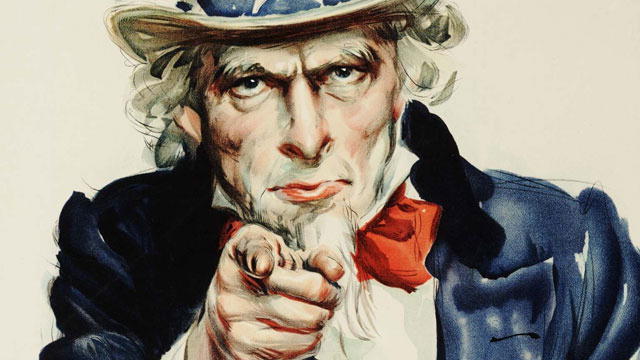
In what year did the U.S. enter the war?
a)
1915
b)
1916
c)
1917
d)
1918
17.
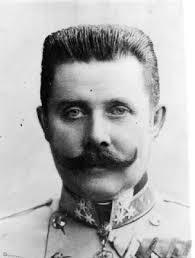
Who was assassinated by a Serbian National and began WWI?
a)
Archduke Franz Ferdinand
b)
Prince Charles
c)
Queen Elizabeth
18.
What was the immediate cause of WWI?
a)
The invasion of France
b)
The assassination of Archduke Francis Ferdinand
c)
The assassination of Kaiser Wilhelm II
d)
The rise of militarism
19.
What style of fighting came to dominate the Western Front?
a)
Blitzkrieg
b)
Trench warfare
c)
Fast attacks with tanks
d)
Guerrilla warfare
20.
What were German u-boats?
a)
military ships used to block ports
b)
submarines used against non-military ships from neutral countries
21.
What is a stalemate?
a)
one side gets the other to surrender
b)
no side can win
22.
He was the president that "kept us out of war", but his second term the U.S. joined the war.
a)
William McKinley
b)
Theodore Roosevelt
c)
Franklin D. Roosevelt
d)
Woodrow Wilson
23.
What is it called when one country takes over the economy and government of another country?
a)
imperialism
b)
reformation
c)
renaissance
d)
circumnavigation
24.
Which country was NOT part of the Allied force?
a)
France
b)
Russia
c)
Britain
d)
Germany
25.
A statement of principles for peace that was to be used for peace negotiations to endWWI.
a)
14 Points
b)
Ultimatum
26.
Formed by the victorious powers in 1919, designed to enforce the Treaty of Versailles.
a)
League of Nations
b)
Mandate System
27.
One of the peace treaties at the end of World War I.
a)
Treaty of Versailles
b)
Utimatum
28.
Yellow journalists created support for the Spanish-American War by writing articles about the-
a)
political popularity of Theodore Roosevelt
b)
efforts of the United States to control Mexico
c)
sinking of the United States battleship the Maine in Havana Harbor
d)
destruction of United States sugar plantations by Hawaiians
29.
An important result of the Spanish-American War was that the United States-
a)
acquired territories in Africa
b)
became a world power with an overseas empire
c)
improved its relations with Germany
d)
lost interest in Latin American affairs
30.
How did the Panama Canal help businesses and the Navy?
a)
It made trans-Atlantic flight a reality
b)
It made travel time between the West Coast and the Atlantic shorter
c)
It increased the number of immigrants coming to the U.S. from Latin America
d)
It protected the right of the U.S. to trade with European nations
31.
The principle that the United States has the right to act as the "policeman of the Western Hemisphere" and intervene in the internal affairs of Latin American nations was established by the
a)
Good Neighbor policy
b)
Open Door policy
c)
Roosevelt Corollary to the Monroe Doctrine
d)
Truman Doctrine
32.

This political cartoon support the American view of -
a)
isolationism
b)
overseas expansion
c)
neutrality
d)
alliances
33.
The “Rough Riders” were
a)
Cuban revolutionaries who battled the Spanish for independence.
b)
a volunteer cavalry unit in the Spanish-American War.
c)
newspaper owners who influenced public opinion by exaggerating the truth.
d)
Spanish generals in Cuba who mistreated the civilian population.
34.
The United States wanted overseas territories because the territories had
a)
access to ports.
b)
customers who would buy U.S. products.
c)
access to raw materials.
d)
All of these
35.
Whose idea was it to purchase Alaska?
a)
John Hay
b)
William Seward
c)
Sanford Dole
d)
George Dewey
36.
Teddy Roosevelt fought in the Spanish-American war to help ____________ gain their independence from Spain
a)
Mexico
b)
Philippines
c)
Cuba
d)
Puerto Rico
37.
Responsible for organizing a volunteer cavalry unit, he became a national hero at the Battle of San Juan Hill and quickly became president.
a)
Leonard Wood
b)
Teddy Roosevelt
c)
Pancho Villa
d)
John Pershing
38.
Cornerstone of American foreign policy that told European powers to stay out of the affairs of the Western Hemisphere.
a)
Roosevelt Corollary
b)
Adams Doctrine
c)
Truman Doctrine
d)
Monroe Doctrine
39.
What area is known as "Seward's Folly"?
a)
Hawaii
b)
Cuba
c)
Alaska
d)
Puerto Rico
40.
Leader of Hawaii when the American businesses over threw the government
a)
Sanford Dole
b)
Queen Liliokahlani
c)
Emilio Zapata
d)
Jose Marti
41.
What was the effect of soldiers using trenches to defend themselves in WWI?
a)
More people died from poison gas attacks
b)
Japan developed a nuclear weapon to destroy the trenches
c)
a stalemate developed on the western front
d)
the U.S. dropped out of the war early
100 %

