
NEW
Font size
 Worksheets
FS-06: Water, Acids and Bases Info
Total questions: 25
Worksheet time: 15mins
What is the contamination of water by humans? (FS-6.5)
BMPs
pollution
nutrition
transpiration
What is a source of pollution that is not able to be identified? (FS-6.5)
point source pollution
best management practice
non-point source pollution
weathering
Bacteria are a form of __________________ contamination. (FS-6.5)
radiological
biological
physical
chemical
Dispersion is one of the many functions of water in food preparation. Which aspect of water is responsible for this? (FS-6.1)
Nonpolar covalent bonds that enable water to dissolve other substances
Polar covalent bonds that help molecules of water push and pull other substances around in the liquid
Hydrogen bonds between water and another substance
Ionic bonds that enable electrons to flow through water and into another substance
What property of water allows it to be such a versatile solvent that it is often called the "universal solvent?" (FS-6.1)
Purity
Polarity and cohesion
High heat capacity
Expansion upon freezing
Water striders can walk across the surface of calm water. Their feet push the surface of the water down slightly, but they do not break the surface. Why? (FS-6.1)
The insects are light enough so they do not break the hydrogen bonds holding the water molecules together
The insects actually use their wings to hover slightly above the water’s surface and they only skim it with their feet.
The insect’s feet are non-polar, so they are repelled by the polar water molecules and are pushed away from the water’s surface.
The insects are small enough to see the individual water molecules, so they are able to step carefully from one molecule to the next

What word describes when water is attracted to other substances? (FS-6.1)
cohesion
adhesion
capillary action
surface tension
Why can water have no net charge but have slight charges in different parts of the molecule? (FS-6.1)
The oxygen end is slightly negative and the hydrogen end is slightly positive
The hydrogen end is slightly negative and the oxygen end is slightly positive
The hydrogen and oxygen ends change in polarity
Because it is hydrophobic
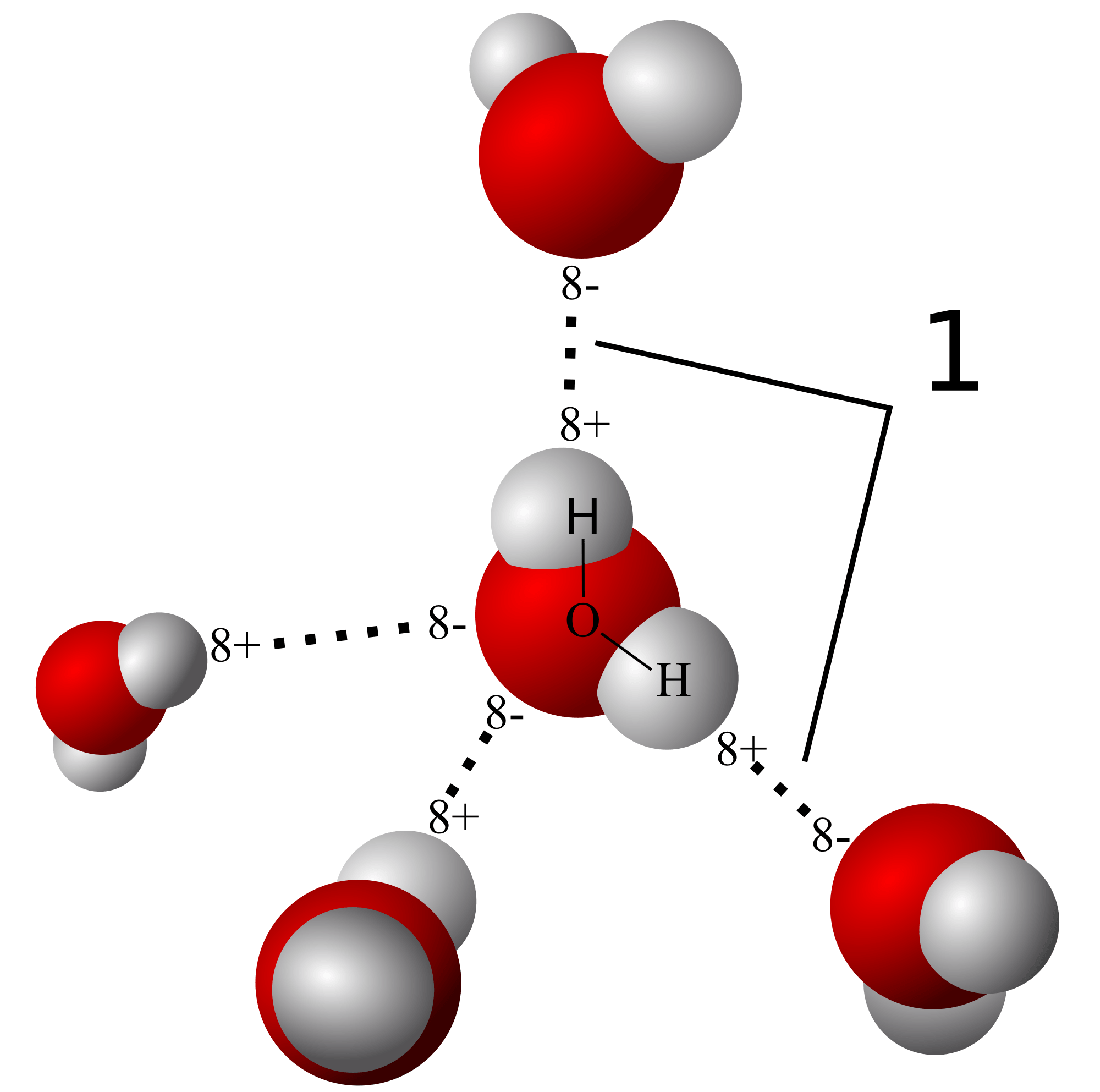
Attractions between water molecules are called (FS-6.1)
Covalent bonds
Ionic bonds
Polar bonds
Hydrogen bonds

The attraction that causes water and other liquids to form drops on thin films is called ________________. This is also water’s ability to be attracted to other water molecules. (FS-6.1)
adhesion
capillary action
cohesion
surface tension
Water is a universal solvent because it... (FS-6.1)
It can be found anywhere
It freezes when it gets cold
floats when frozen
Dissolves most substances
How do bases affect foods in cooking? (FS-6.6)
The color is bright, but the texture is mushy
they make the food dull colored but crisp
they add hydroxide ions that break the water out of the cells
they increase the speed at which the fiber in the food breaks down

The substance in a solution that is dissolved and is present in a lesser amount (FS-6.2)
base
solution
solvent
solute

The substance in a solution that dissolves the other substance and is present in the greater amount (FS-6.2)
solvent
solute
solution
acid

A uniform mixture of two or more substances (FS-6.2)
solvent
acid
solution
base
What is the overall charge of water? (FS-6.1)
Positive
Neutral
Negative
Unable to determine.
How many atoms make up a molecule of water? (FS-6.1)
1
2
3
4
An acid has a pH of (FS-6.8)
Greater than 7
Greater than 14
Less than 7
From 7-14
Acids have a _____ taste. (FS-6.6)
Sour
Bitter
Sweet
Spoiled
Bases have a pH of (FS-6.8)
Less than 7
From 7-14
From 0-7
From 0-14
When found in food, bases are _______. (FS-6.6)
Sour
Bitter
Salty
Soggy
The pH of a solution is tested, and it is found to be a basic solution. Of the following choices, what could the pH have been? (FS-6.8)
3
9
7
5
Free water is: (FS-6.4)
Water that is trapped in the molecules that make up the food
Water that is available for chemical reactions or transfer
Water that doesn't cost anything
Water that is available for heating
When acids and bases "cancel" each other out in solution, they ___________ each other. (FS-6.6)
neutralize
balance
strengthen
reinforce
Water changes phase when its ___________ move more or less quickly. (FS-6.3)
molecules
ions
bonds
electrons

